wayground logo

Free Printable Worksheets

Font size

S
M
L
XL
Worksheets

DPM 2 review

Total questions: 102

Worksheet time: 2hrs 50mins
Name
Class
Date
1.
This is the process of dropping sediment in a new location.
a)
Weathering
b)
Erosion
c)
Deposition
2.
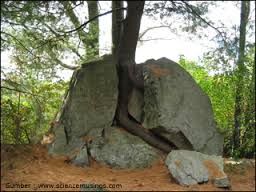
The driveway is long and winding because it bends around a huge old oak tree. The pavement near the tree bulges upward and has many more cracks than the other sections of the driveway
a)
Weathering
b)
Erosion
c)
Deposition
3.
When camping in west Texas, we wake one morning to discover that our car and tent are covered with a thin layer of sand. 
a)
Weathering
b)
Erosion
c)
Deposition
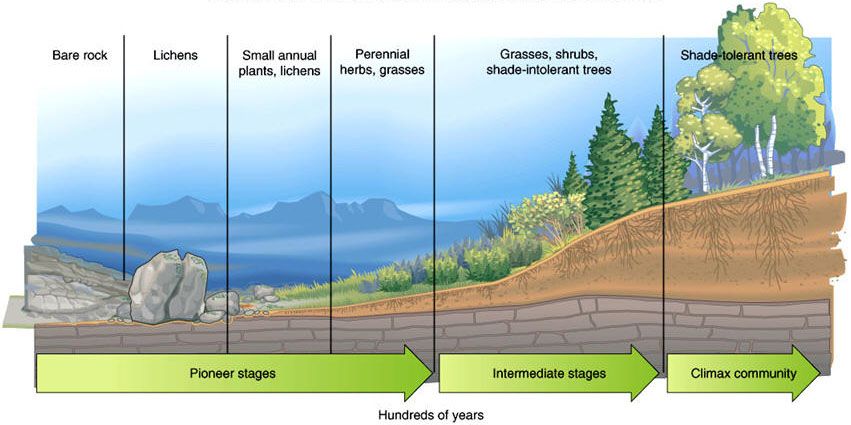
4.
This is the process of breaking rock into smaller pieces.
a)
Weathering
b)
Erosion
c)
Deposition
5.
We love to go rock climbing on the rugged cliffs in the mountains, but our first challenge is to scramble up the large pile of sand and pebbles at the base of the cliff.
a)
Weathering
b)
Erosion
c)
Deposition
6.

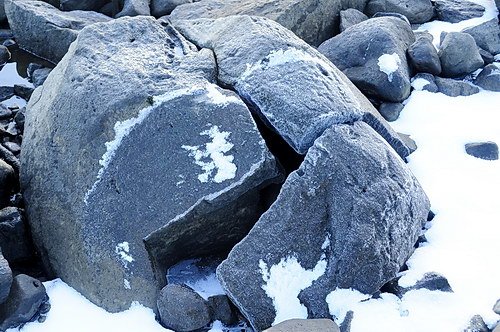
How does freezing water cause the weathering of rocks? The freezing water—

a)

keeps the rocks in place.

b)

makes the rocks last longer.

c)

expands cracks and breaks rocks.

d)

causes rocks to fall in landslides.

7.

The process that breaks down rocks and other materials on Earth's surface is called

a)

Weathering

b)

Erosion

c)

Deposition

d)

Decomposition

8.

Over long periods of time, deposition may change the Earth’s surface by _____.

a)

forming new land features.

b)

breaking down large rocks into smaller ones.

c)

washing away beaches.

d)

moving topsoil.

9.

A cliff formed near the ocean. Which statement best describes how this cliff formed?

a)

Warm air melted the rock.

b)

Sun rays evaporated the rock.

c)

Ocean waves washed away rock.

d)

Plant roots pushed away the rock.

10.
What is the process that picks up and moves weathered rocks?
a)
Deposition
b)
Landslide
c)
Weathering
d)
Erosion
11.

What causes the greatest erosion effect on our beaches?

a)

Waves

b)

Gravity

c)

Glaciers

d)

Wind

12.

How do plants weather rocks?

a)

During photosynthesis

b)

When roots grow into cracks of rocks and expand the rock breaks.

c)

When the plant moves water from the roots to the leaves, the rock breaks.

d)

Plants don't weather rocks.

13.
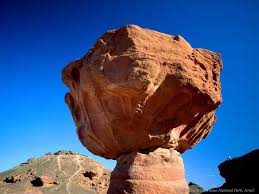
What caused the edges of these rocks to become smooth?
a)
rocks bumping and scraping against each other in a river
b)
ice scraping from a glacier
c)
sand blowing in the wind
d)
plants growing roots
14.

A type of chemical weathering in which a substance combines with oxygen, as when iron oxidizes, forming rust.

a)

Acid rain

b)

Oxidation

c)

Reaction to water

d)

Exfoliation

15.

The image above depicts the effects of chemical weathering breaking down limestone. Which type of chemical weathering causes this reaction?

a)

Acid rain

b)

Oxidation

c)

Exfoliation

d)

Abrasion

16.

The tallest sand dunes in North America are found in Great Sand Dunes National Park and Preserve in Colorado. These dunes were formed from the sand at the bottom of a dry lake bed. Which of the following agents is most likely responsible for the formation of the sand dunes?

a)

Wind

b)

Water

c)

Ice

d)

Gravity

17.

What is it called when creeks and smaller rivers join together to make a larger river?

a)

River Systems

b)

Topography

c)

Watershed

d)

Groundwater

18.
Abiotic means: 
a)
Living
b)
Dead
c)
Non-living
d)
Water
19.
Biotic means:
a)
Living
b)
Non-living
c)
Man made
d)
Found in nature
20.
Pollutants from a highway enter a stream or creek and travel to a river. River water tested with the pollutant found is called  
a)
point source pollution
Available space for crops
b)
nonpoint source pollution.
c)
eutrophic pollution
d)
riparian pollution
21.
What is all the water that runs off the surface of the land and washes into rivers, streams, and other waterways called?
a)
Runoff
b)
Storm Drain
c)
Surface Water
d)
Tributary
22.
When fertilizers enter surface water, they cause problems in 
the watershed by -
a)
increasing the amount of nutrients available to fish in lakes and streams.
b)

clogging narrow streams and preventing water from flowing properly.
c)
raising the water level in nearby rivers to levels leading to flooding.
d)
causing rapid algal growth that decrease oxygen levels and choke aquatic life.
23.
Pollutants from a factory that enter the water in a watershed 
will have a negative effect on which of the following?
a)

Available space for crops
b)
Local pond life
c)
Rainfall rates
d)
Direction of river flow
24.
The use of pesticides and fertilizers is carefully monitored 
because of the effect they can have on the environment. 
Which of the following is a possible negative effect of the use 
of these chemical on the environment?
a)
Runoff carries these chemicals into lakes and streams.
b)
Theses chemicals cannot be purchased in large bulk.
c)

These chemicals are expensive to produce.
d)
Storage space for these chemicals is limited.
25.
The illustration provided shows a river and four cities on that river. When the water from the river was sampled at location X, it was determined to be polluted with various chemicals. What would be the most likely source for this pollution?
a)
City 1 and City 2
b)
City 2 and City 3
c)
City 3 and City 4
d)
City 1 and City 4
26.
Overflow during a heavy rainstorm from a wastewater treatment plant would result in -
a)

over-treated drinking water.
b)

flooding in the local aquifer.
c)
polluted runoff into nearby ponds.
d)
weakened housing foundations.
27.
What is a watershed?
a)
Land that collects and channels water froma small body of water to a larger body of water
b)
the shape of the land determined by elevation
c)
A natural stream of water of considerable  volume
d)
a river and all its tributaries
28.
Why is gravity a factor in watersheds? 
a)
it causes the water to flow away from a watershed
b)
it causes the water to flow towards a watershed
29.
The water that fills lakes and rivers
a)
groundwater
b)
surface water
c)
water table
d)
saturated zone
30.
An area of permeable layer of rock or soil that holds a large amount of water in the saturated zone is called what?
a)
Aquifer
b)
Spring
c)
Well
d)
Reservoir
31.
Water stored  in cracks and pores below the Earth's surface is called:
a)
Groundwater
b)
Bogs
c)
Water in the ground
d)
surface water
32.
Sand is ___________, meaning that water can pass through easily.
a)
Permeable
b)
Impermeable
c)
Solid
d)
Soft
33.
Pollution has ___________
a)
a negative human impact
b)
positive human impact
c)
humans have no impact 
34.
Which would increase the amount of runoff you get?
a)
Vegetation
b)
More plants
c)
Urban Development
35.
The top of the groundwater’s zone of saturation - E
a)
Zone of Aeration
b)
Aquifer
c)
Surface water
d)
Water table
36.

What is a measure of how well a material absorbs water? There are multiple answers.

a)

permeability

b)

occlusion

c)

porosity

d)

exclusion

37.

This aquifer is bounded above and below by impermeable layers of rock.

a)

unconfined aquifer

b)

confined aquifer

c)

well

d)

aquitard

38.

Which of the following best describes primary succession?

a)

Volcano wipes out ecosystem that gradually grows back from ash covered soil

b)

Volcano creates a new island of rock that must break down to form an ecosystem

c)

Forest fire burns down forest that must bounce back over time

d)

Tornado destroys a crop that must slowly grow back over time.

39.
What type of succession is shown going from figure A to figure B?
a)
primary succession
b)
eutrophication
c)
secondary succession
d)
intermediate
40.

The picture shows what type of succession?

a)

primary

b)

secondary

c)

tertiary

d)

quadanary

41.
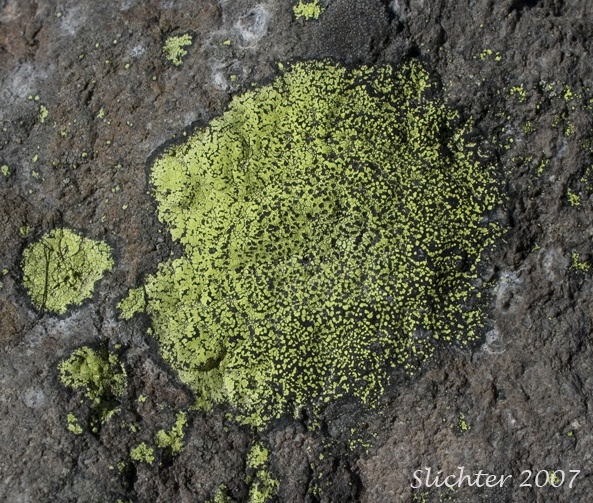
What is the name given to lichen or algae after a primary succession?
a)
pioneer species
b)
volunteer species
c)
founder species
d)
conqueror species
42.

The forest in panel #8 is a...

a)

pioneer species

b)

climax community

c)

tertiary community

d)

intermediate species

43.

Succession type?

a)

primary succession

b)

secondary succession

c)

tertiary succession

d)

variable succession

44.
What is unicellular? 
a)
one cell 
b)
many cells 
c)
no nuclues 
d)
DNA 
45.
What is multicellular? 
a)
one cell 
b)
no cells 
c)
many cells 
d)
no nucleus 
46.
What type of cell has a nucleus? 
a)
eukaryotic
b)
prokaryotic 
47.
What type of cell does not have a nucleus?
a)
eukaryotic 
b)
prokaryotic 
48.
Plants and animal cells are examples of ___ cells 
a)
prokaryotic cells 
b)
eukaryotic cells 
49.
Which of the following would be found in both eukaryotic AND prokaryotic cells?
a)
chloroplast
b)
cytoplasm
c)
nucleus
d)
endoplasmic reticulum
50.
All living things are made of...
a)
atoms 
b)
cells 
c)
bacteria 
d)
plants 
51.
What is unicellular? 
a)
one cell 
b)
many cells 
c)
no nuclues 
d)
DNA 
52.
What is multicellular? 
a)
one cell 
b)
no cells 
c)
many cells 
d)
no nucleus 
53.
What type of cell has a nucleus? 
a)
eukaryotic
b)
prokaryotic 
54.
What type of cell does not have a nucleus?
a)
eukaryotic 
b)
prokaryotic 
55.
A path of energy that flows from one organism to the next (it flows from the sun to the producers to the primary consumers, then to the secondary consumers, to the tertiary consumers).
a)
Food Web
b)
Food Chain
c)
Consumers
d)
Decomposers
56.
An organism that eats the producer- (animals that eats plants)
a)
Secondary Consumer
b)
Primary Consumer
c)
Tertiary Consumer
d)
Consumer
57.
An organism that eats the producer- (animals that eats plants)
a)
Secondary Consumer
b)
Primary Consumer
c)
Tertiary Consumer
d)
Consumer
58.
An organism that eats the primary consumer.
a)
Primary Consumer
b)
Secondary Consumer
c)
Tertiary Consumer
d)
Producer
59.
An organism that eats the secondary consumer.
a)
Primary Consumer
b)
Secondary Consumer
c)
Tertiary Consumer
d)
Consumer
60.
An organism that eats other living things to get energy;  an organism that does not produce its own food.
a)
Decomposer
b)
Producer
c)
Consumer
d)
Biotic
61.
An organism that makes its own food; an organism that does not consume other plants or animals.
a)
Producer
b)
Consumer
c)
Decomposer
d)
Habitat
62.
Which terms best describe heterotrophs?
a)
Plants; producers
b)
Animals; producers
c)
Plants; consumers
d)
Animals; consumers
63.
Which terms best describe autotrophs?
a)
Plants; producers
b)
Animals; producers
c)
Plants; consumers
d)
Animals; consumers
64.
From where do autotrophs obtain their energy?
a)
The sun
b)
Other organisms
65.
What is another name to describe an autotroph?
a)
Consumer
b)
Producer
66.
What is another name to describe a heterotroph?
a)
Consumer
b)
Producer
67.
How can animals and fungi best be classified?
a)
Autotroph
b)
Heterotroph
68.
Which type of organisms are typically plants?
a)
Autotrophs
b)
Heterotrophs
69.
What is another term to describe a producer?
a)
Autotroph
b)
Heterotroph
70.
Which type of organisms perform photosynthesis?
a)
Autotrophs
b)
Heterotrophs
71.
What is an autotroph?
a)
an organism that can make their own food. 
b)
an organism that cannot make their own food
c)
Herbivore
d)
Omnivore
72.

BUNNY

a)

AUTOTROPH

b)

HETEROTROPH

c)

AUTOPHOTOTROPH

d)

NONE OF THE ABOVE

73.
Features of the surface of the Earth such as mountains, hills, dunes, oceans, and rivers are called
a)
delta
b)
erosion
c)
landforms
74.
The movement of weathered material on the Earth's surface by wind, water, and ice is
a)
erosion
b)
deposition
c)
landslides
75.
The buildup of land by depositing sediment and soil in a new location is
a)
earthquake
b)
weather
c)
deposition
76.
A delta forms when the river meets the ocean because 
a)
the river is colder than the ocean
b)
the river slows down and drops sediments
c)
the earth builds up pressure in the river
77.

Which catastrophic event would most likely result in trees being knocked over and the disappearance of many plants and animals along a NARROW path? *

a)

hurricane

b)

tornado

c)

tsunami

d)

flood

78.

Which catastrophic event would most likely result in trees being knocked over and the disappearance of many plants and animals along a NARROW path? *

a)

hurricane

b)

tornado

c)

tsunami

d)

flood

79.

Which catastrophic event would most likely result in trees being knocked over and the disappearance of many plants and animals along a NARROW path? *

a)

hurricane

b)

tornado

c)

tsunami

d)

flood

80.

Which catastrophic event would most likely result in trees being knocked over and the disappearance of many plants and animals along a NARROW path? *

a)

hurricane

b)

tornado

c)

tsunami

d)

flood

81.

Which catastrophic event would most likely result in trees being knocked over and the disappearance of many plants and animals along a NARROW path? *

a)

hurricane

b)

tornado

c)

tsunami

d)

flood

82.

Which catastrophic event would most likely result in trees being knocked over and the disappearance of many plants and animals along a NARROW path? *

a)

hurricane

b)

tornado

c)

tsunami

d)

flood

83.
Which storms have the strongest winds?
a)
hailstorms
b)
tornadoes
c)
earthquakes
d)
hurricanes
84.
Which storms have the strongest winds?
a)
hailstorms
b)
tornadoes
c)
earthquakes
d)
hurricanes
85.
a)
Caused by an asteroid or meteor entering the Earth's atmosphere and hitting the Earth.
b)
Caused by shift in the Earth's tectonic plates
c)
Caused by rotation and convection currents rising up over warm ocean water
d)
Sometimes created when two air masses with different temperatures meet
86.
a)
Usually the result of human negligence, but can also be caused by lightning
b)
Created by a weakness in the Earth's crust.  Magma rises up from mantle
c)
Storm surge causes massive flooding.  Wind damage causes structural damage to homes and businesses
d)
High winds cause destruction to everything in its path.
87.
rock deterioration
a)
chemical weathering
b)
physical weathering
88.
Statue of Liberty has changed overtime due to...
a)
chemical weathering
b)
physical weathering
89.
stream (abrasion)
a)
chemical weathering
b)
physical weathering
90.
freezing water
a)
chemical weathering
b)
physical weathering
91.
oxidation
a)
chemical weathering
b)
physical weathering
92.
oxidation produces rust on some rocks containing iron
a)
chemical weathering
b)
mechanical weathering
c)
erosion
d)
deposition
93.
oxidation produces rust on some rocks containing iron
a)
chemical weathering
b)
mechanical weathering
c)
erosion
d)
deposition
94.
oxidation produces rust on some rocks containing iron
a)
chemical weathering
b)
mechanical weathering
c)
erosion
d)
deposition
95.

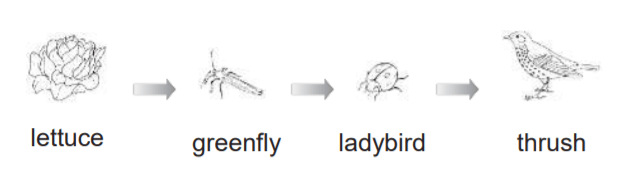
Who is the producer?

a)

lettuce

b)

greenfly

c)

ladybird

d)

thrush

96.
this type of succession occurs after a forest fire
a)
primary succession
b)
secondary succession
c)
both
97.

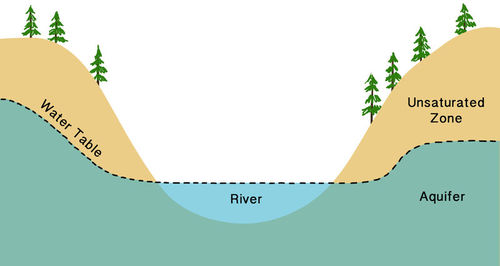
What is the best definition of a water table?

a)

The level to which a river rises when it floods

b)

The boundary between the land and the ocean

c)

The top of the saturated zone in an aquifer

d)

The bottom of the saturated zone in an aquifer

e)

The top of the unsaturated zone in an aquifer

98.

What would cause the water table to lower?

a)

High rates of evaporation and transpiration

b)

Low rates of evaporation and transpiration

c)

Increasing amounts of runoff

d)

A heavy rainstorm with a lot of precipitation

99.
The top boundary of the zone of saturation in an aquifer which can fluctuate based on precipitation and the amount of draw from wells
a)
aquifer
b)
water table
c)
watershed
d)
drainage system
100.
The top boundary of the zone of saturation in an aquifer which can fluctuate based on precipitation and the amount of draw from wells
a)
aquifer
b)
water table
c)
watershed
d)
drainage system
101.
The area of an aquifer in which rock pores are completely filled with water.
a)
water table
b)
watershed
c)
zone of saturation
d)
surface water
102.

How would the groundwater be affected by the garbage placed on the surface of the old dump?

a)

Drain through the soil but are blocked from the groundwater

b)

Drain through the soil and are diverted from the groundwater

c)

Drain through the soil and into the groundwater

d)

Do not drain through the soil and do not affect the groundwater