wayground logo

Free Printable Worksheets

Font size

S
M
L
XL
Worksheets

Biology Exam review

Total questions: 95

Worksheet time: 32mins

Name
Class
Date
1.
Which biomolecule is made of nucleotides and contain you DNA?
a)
Carbohydrate
b)
Lipids
c)
Protein
d)
Nucleic Acid
2.
Which biomolecule includes fats, such as triglycerides, oils, waxes, and steroids (cholesterol); insoluble in water; provides energy storage, insulation, part of cell membrane, and hormones 
a)
Nucleic Acid
b)
Lipids
c)
Carbohydrate
d)
Protein
3.
What is the monomer for a protein?
a)
Monosaccharide
b)
Triglyceride
c)
Amino Acid
d)
Nucleotide
4.
What is the monomer of nucleic acids?
a)
Glycerol
b)
Monosaccharides
c)
Amino Acids
d)
Nucleotides
5.
If you want a reaction to speed up you need an _________.
a)
nucleic acid
b)
enzyme
c)
nerve cell
d)
carbohydrate
6.

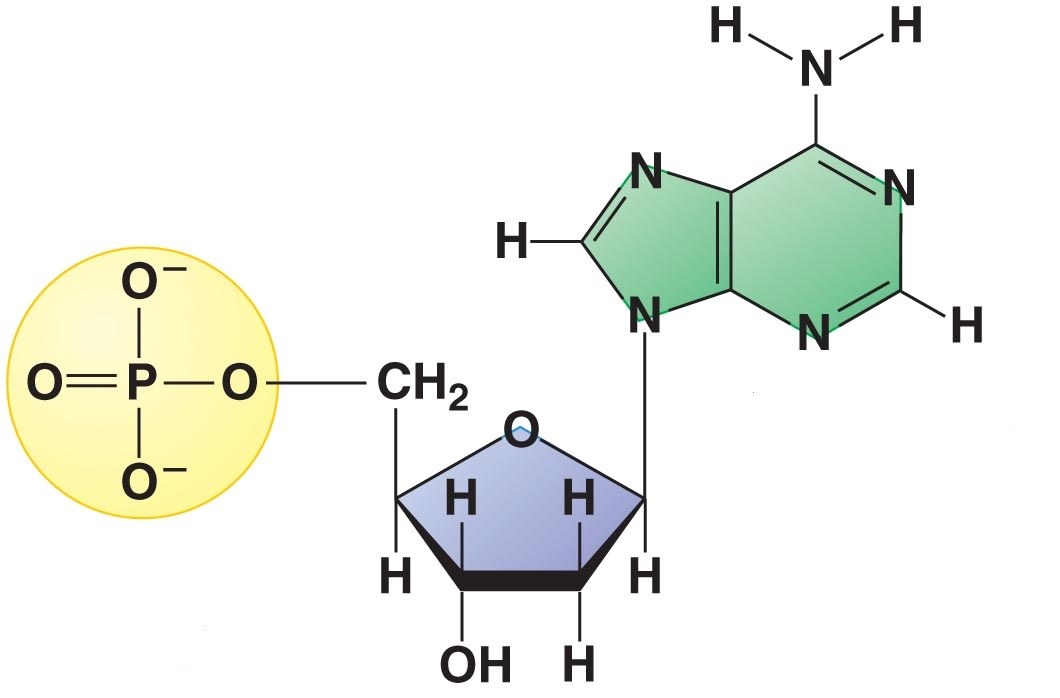
Which of the following is represented in the image?

a)

Nucleotide

b)

Carbohydrate

c)

Lipid

d)

Protein

7.

What is a function of lipids?

a)

To provide short term energy to living organisms

b)

The provide the structure in muscles

c)

To provide long term storage of energy

d)

Storing your genetic information

8.
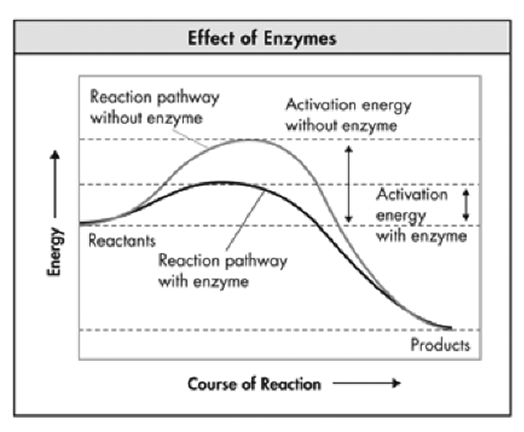
The graph shows how enzymes affect reactions in cells. Which statement best summarizes the information shown in the graph?
a)
Enzymes increase the energy of the reactants.
b)
Enzymes decrease the energy level of the products.
c)
Enzyme decrease the activation energy of the reaction.
d)
Enzymes reverse the direction of the reaction.
9.
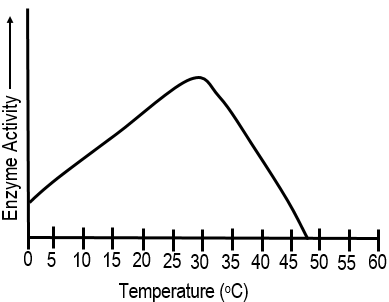
Based on the graph, what is the optimal temperature for this enzyme? 
a)
15oC
b)
40oC
c)
30oC
d)
35oC
10.
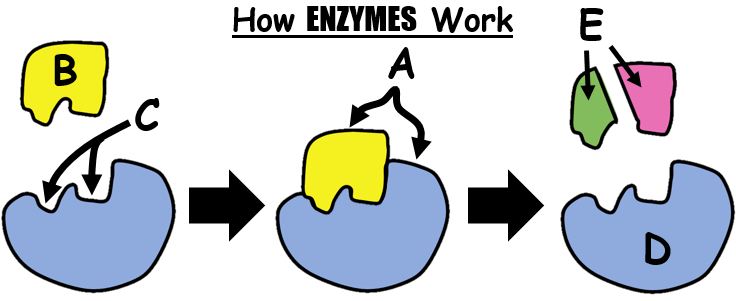
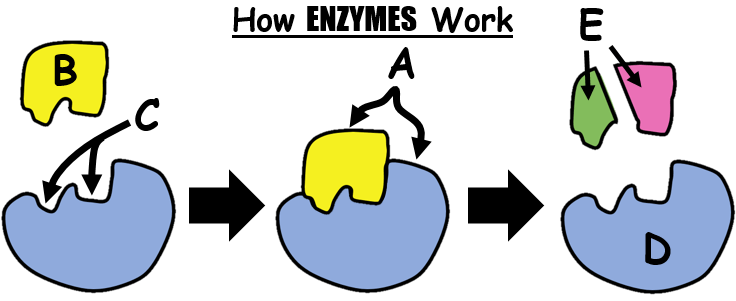
In the diagram, what is letter A? 
a)
product
b)
substrate
c)
enzyme-substrate complex
d)
active site
11.
Letter E...
a)
active site
b)
enzyme
c)
substrate
d)
products
12.
Which of the following are NOT found in animal cells
a)
chloroplasts and cytoplasm
b)
chloroplasts and cell wall
c)
cell wall and cell membrane
d)
mitochondria and nucleus
13.

Which of the following converts food into energy for the cell?

a)

vacuole

b)

mitochondria

c)

cytoplasm

d)

cell membrane

14.

Which organelle takes in "sun showers" and helps plants with the process or photosynthesis?

a)

Vacuole

b)

Mitochondria

c)

Cytoplasm

d)

Chloroplast

15.
What do vacuoles do? 
a)
They actually do not have an important role
b)
They protect the cell
c)
They are the brain of the cell
d)
storage area for cells; water storage in plants 
16.

Which part of the cell is considered to be "selectively permeable" because it allows certain things to enter or leave the cell?

a)

Cell Membrane

b)

Nucleus

c)

Lysosome

d)

Cytoplasm

17.
What type of cell has a nucleus? 
a)
eukaryotic
b)
prokaryotic 
18.
Plants and animal cells are examples of ___ cells 
a)
prokaryotic cells 
b)
eukaryotic cells 
19.
Which is true of prokaryotic and eukaryotic cells?
a)
Prokaryotic cells are larger than eukaryotic cells.
b)
Eukaryotic cells do not have nuclei, and prokaryotic cells do have nuclei.
c)
Prokaryotic cells lack membrane-bound organelles, and eukaryotic cells contain membrane-bound organelles.
d)
Eukaryotic cells are simpler than prokaryotic cells.
20.

All of the following contain a cell wall except:

a)

prokaryotes

b)

animal cells

c)

plant cells

d)

bacteria

21.

Which do BOTH prokaryotes and eukaryotes contain?

a)

nucleus

b)

mitochondria

c)

ribosomes

d)

cell wall

22.
This is a picture of:
a)
Prokaryote
b)
Eukaryote
23.
A fossilized cell is discovered, and evidence suggests it reproduced on its own and had DNA, but a membrane did not enclose its DNA. Which type of organism would this most likely be?
a)
prokaryote
b)
eukaryote
c)
plant cell
d)
animal cell
24.
What do viruses need to reproduce?
a)
they need genetic material
b)
They need a host cell
c)
They need  bacteria
d)
They need insulin
25.
What part of the phage is the DNA?
a)
A
b)
B
c)
C
d)
D
26.
What part of a virus is the protein capsule that houses the genetic material (DNA/RNA)?
a)
tail
b)
nucleus
c)
capsid
d)
glycoprotein
27.
Which viral life cycle allows viral genetic material to lay dormant while the host cell reproduces?
a)
lytic
b)
mitosis
c)
lysogenic
d)
S phase
28.
Is a virus considered living or non-living?
a)
Living
b)
Non-Living
c)
Neither
29.
Why do scientists classify viruses as non-living?
a)
They DO respond to a stimulus
b)
They need a host's energy because they do not have their own energy 
c)
They produce wastes
d)
They are really small 
30.
What is the first step of the virus reproduction cycle?
a)
The viruses genetic material (DNA) starts to take over the functions of the cell
b)
The host cell bursts open, releasing the new viruses
c)
The virus injects its genetic material into the cell
d)
A virus attaches to the surface of a host cell
31.
Which of the following helps prevent the spread of infectious diseases?
a)
Surgery
b)
Medication
c)
Vaccines
32.
Viruses are cells. 
a)
True 
b)
False
33.
Why do doctors suggest people get a flu vaccine every year?
a)
Flu viruses replicate more rapidly over time
b)
Flu viruses can mutate from year to year
c)
Vaccines are absorbed by the body after a year
d)
Vaccines get stronger over time
34.
Which of the following is one important difference between a virus and a bacterial cell?
a)
a virus is much larger in size than a bacterial cell
b)
a virus always causes more severe disease than a bacterial cell
c)
a virus can never reproduce on its own, but a bacterial cell can
d)
a virus does not contain genetic material, but a bacterial cell does
35.
What happens in the lytic cyle?
a)
Virus goes in and leaves the host cell
b)
Virus quickly kills the host cell
c)
Virus sleeps inside of the host cell
d)
Virus stay dormant for a long time
36.
What happens in the lysogenic cycle? 
a)
Virus goes in and leaves the host cell
b)
Virus quickly kills the host cell
c)
Virus inject the nucleic acid into the host cell, and the nucleic acid integrates into the host cell DNA, and stay dormant for a long time
d)
Bacteria injects DNA into a host cell
37.
This infectious viral disease has many symptoms, from chills, fever, and aching muscles to coughing and sneezing to nausea and vomiting. The symptoms show up within 2-7 days after the cell is infected.  This is an example of?
a)
Lytic Cycle
b)
Lysogenic Cycle
c)
Meiosis
38.
Symptoms of HIV do not show up immediately because the virus can 
a)
stay dormant for years
b)
mutate quickly 
c)
stay outside the cell for a long time
39.
What is the difference between the lytic and lysogenic virus reproductive cycles?
a)
lysogenic is longer
b)
they are the same
c)
Lytic is longer
d)
Both are different each time
40.
What phase is this cell in?
a)
Cytokinesis
b)
Mitosis
c)
Prophase
d)
Metaphase
41.
What phase is this cell in?
a)
Mitosis
b)
Interphase
c)
Anaphase
d)
Telophase
42.
What phase is this cell in?
a)
Mitosis
b)
Cytokinesis
c)
Prophase
d)
Telophase
43.
What phase is this cell in?
a)
Mitosis
b)
Interphase
c)
Prophase
d)
Telophase
44.

Select ALL stages of Interphase

a)

G1

b)

S

c)

G2

d)

Mitosis

45.

In which stage of the cell cycle does the DNA replicate?

a)

G1

b)

S

c)

G2

d)

Mitosis

46.

Human somatic sells contain 46 chromosomes; during meiosis, haploid SEX CELLS are formed with ________ chromosomes each.

a)

46

b)

23

c)

92

d)

54

47.

When you start with 1 cell, at the end of mitosis, how many identical cells will you have?

a)

1

b)

2

c)

3

d)

4

48.

After mitosis is complete, the new cells:

a)

are all identical

b)

are half identical and half different

c)

are all different

d)

are all stretched out

49.
Place these cells in order of mitosis.
a)
A, B, C, D, E
b)
B, E, D, A, C
c)
C, E, A, D, B
d)
B, D, A, E, C
50.

A pair of similar chromosomes are called:

a)

homocycular

b)

homologous

c)

homocellular

d)

homonucleus

51.
During which part of the cell cycle does the cell divide?
a)
Interphase
b)
Mitosis
c)
S phase
52.
During which parts of the cell cycle does the cell grow?
a)
G1 and G2
b)
G1 and S
c)
M phase and cytokinesis
53.
During which part of the cell cycle is DNA copied?
a)
Mitosis
b)
Cytokinesis
c)
S phase
54.
Which phase of mitosis is shown in the picture?
a)
Prophase
b)
Anaphase
c)
Telophase
55.
What causes genetic variation in meiosis?
a)
chromosomes lining up
b)
crossing over of chromosomes
c)
separation of chromosomes
d)
chromosomes pulling apart
56.
What kind of cells are made in MEIOSIS?
a)
Haploid cells
b)
Diploid Cells
c)
Skin Cells
d)
Liver Cells
57.
Diploid Cells are represented by
a)
2n
b)
n
c)
4n
d)
1/2 n
58.
If the Diploid number of Carrots is 18, the haploid number is
a)
18
b)
9
c)
27
d)
36
59.
Which cellular process is shown?
a)
meiosis
b)
endocytosis
c)
mitosis
d)
phagocytosis
60.
Meiosis makes sperm and egg cells. In humans, sperm and egg cells each have _____ chromosomes. Therefore a fertilized human egg cell (sperm and egg cell combined) would create a cell with _____ chromosomes.
a)
23, 46
b)
46, 23
c)
2, 4
d)
50, 100
61.
The purpose of sexual reproduction and meiosis is to form ________ cells.
a)
body
b)
sex
c)
somatic
d)
brain
62.
In meiosis, Prophase 1 is when chromosomes...
a)
cross over
b)
mutate
c)
hybridize
d)
fertilize
63.
Which of the following cells is a gamete?
a)
egg
b)
bone
c)
heart
d)
muscle
64.
In mitosis cells are genetically _______, but in meiosis cells are genetically ______.
a)
diverse, identical
b)
identical, diverse/different
65.
Why is DNA important?
a)
it is very small and very complicated
b)
it's in everything
c)
it serves as the blueprint for traits of all living things
d)
because we eat it every day for energy
66.
Which 2 molecules form the sides (backbone) of the DNA ladder?
a)
deoxyribose sugar and adenine
b)
deoxyribose sugar and a hydrogen bond
c)
deoxyribose sugar and the nucleus
d)
deoxyribose sugar and phosphate
67.
Nitrogenous bases are joined by which type of bond?
a)
polar bonds
b)
ionic bonds
c)
covalent bonds
d)
hydrogen bonds
68.
What are the three components of a nucleotide?
a)
sugar, hydrogen, nitrogen base
b)
sugar, oxygen, nitrogen base
c)
sugar, phosphate, nitrogen base
d)
sugar, phosphate, protein
69.
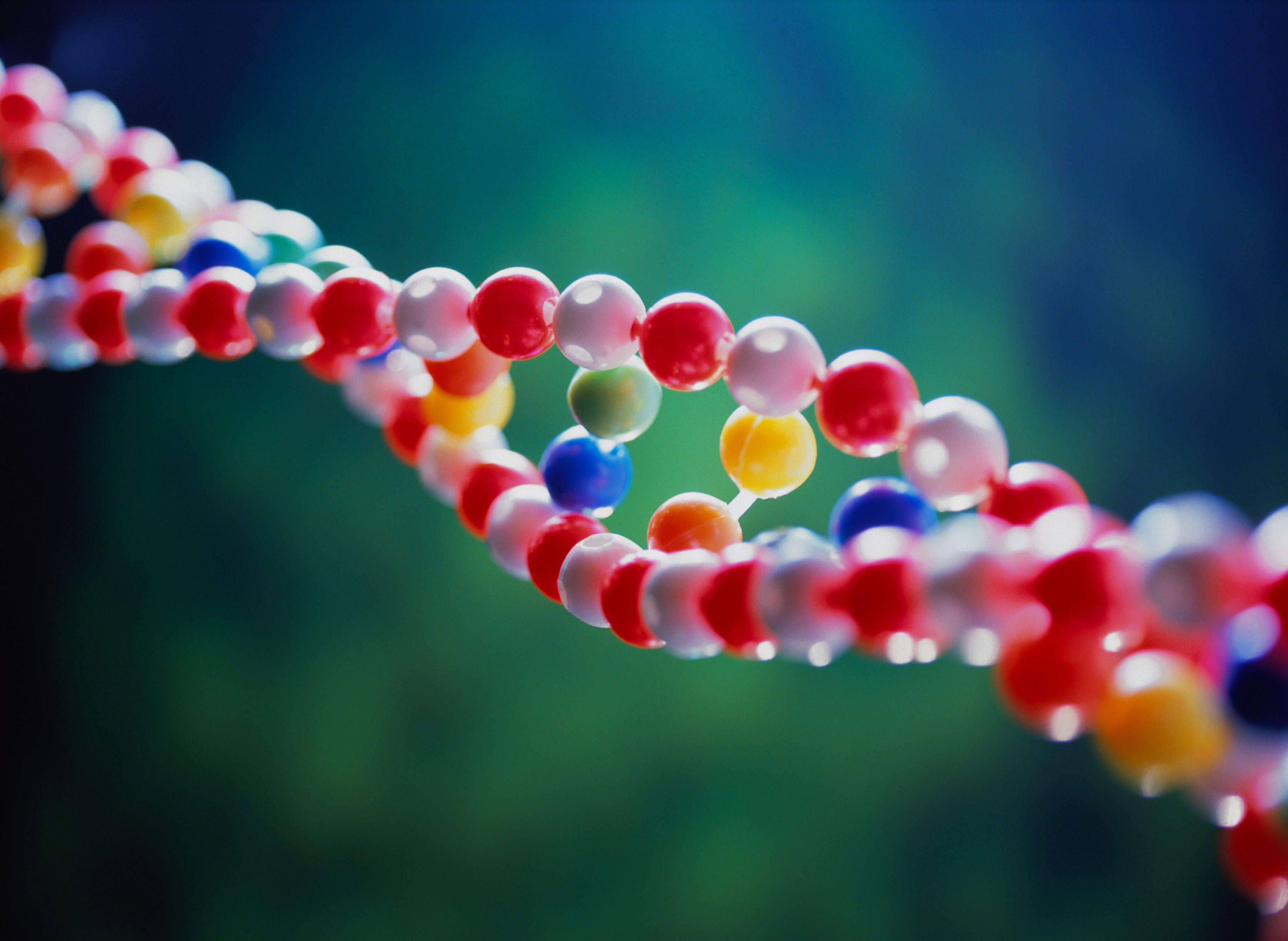
Name this structure
a)
double helix
b)
nucelotide
c)
twisted ladder
d)
hydrogen bond
70.
What is the complement to the DNA strand below:
5'-ATGCCAT-3'
a)
5'-TACGGTA-3'
b)
3'-TACGGTA-5'
c)
3'-ATGGCAT-5'
d)
5'-ATGGCAT-3'
71.

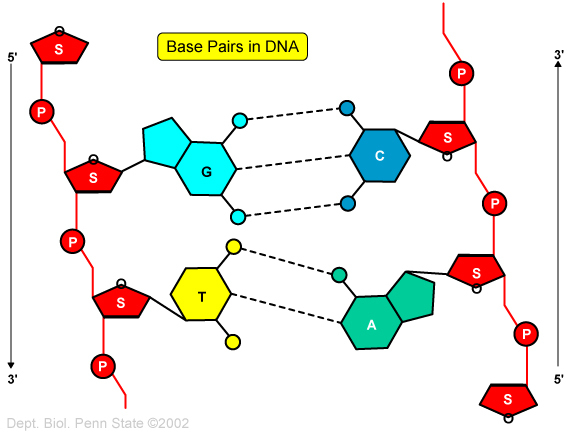
Which of the following is a base pair?

a)

Adenine - Cytosine

b)

Cytosine - Thymine

c)

Deoxyribose - Cytosine

d)

Cytosine - Guanine

72.
Which of the following is not a nitrogen base found in DNA?
a)
Thymine
b)
Uracil 
c)
Guanine
d)
Adenine
73.
What is the significance of the sequence (order) of the Nitrogen Bases in DNA?
a)
The order of the Nitrogen Bases determines the number of chromosomes present in an organism.
b)
The order of the Nitrogen Bases determines the traits that an organism will possess (have).
c)
The order of the Nitrogen Bases determines the gender of an organism.
d)
The order of the Nitrogen Bases determines whether an organism is abiotic biotic.
74.
Assume that you have straight hair and your sibling has curly hair. What accounts for this difference?
a)
You have DNA and your sibling does not.
b)
The your sequence of nitrogen bases is different than your sibling.
c)
Your sibling has a weave. 
d)
Your sibling has a genetic mutation. 
75.

DNA is an acronym for _____

a)

Diphosphorus Nucleic Acid

b)

Ribose Nucleic Acid

c)

Deoxyribonucleic Acid

d)

Deoxyribonucleic Acetate

76.
There 3 types of 
a)
DNA
b)
RNA
77.
The results of mutation are 
a)
can be bad.
b)
can be good. 
c)
cannot show.
d)
 can be good, bad or neutral. 
78.
In RNA, adenine goes with __________.
a)
adnine
b)
cytosine
c)
thymine
d)
uracil
79.

Which of the following are properties of RNA?

a)

Deoxyribose, uracil, and a globular structure

b)

Deoxyribose, ribose, and uracil

c)

Ribose, uracil, and single stranded

d)

Deoxyribose, thymine, and single stranded

80.

In what process is mRNA synthesized?

a)

Transcription

b)

Translation

c)

DNA Replication

d)

Mitosis

81.

Where does TRANSCRIPTION occur?

a)

Nucleus

b)

Ribosome

c)

Cytoplasm

d)

Mitochondria

82.

TRANSCRIBE this DNA sequence: TACGTTACT

a)

AUGCAAUGA

b)

ATGCAATGA

c)

AUGGATUGA

d)

TACGTTACT

83.

Which of the following are differences in the structure between RNA and DNA

a)

DNA uses deoxyribose sugar, RNA uses sugar ribose

b)

DNA pairs Adenine with Uracil, RNA pairs Adenine with Thymine

c)

DNA is a double helix, RNA is a single helix

d)

DNA pairs Adenine with Thymine, RNA pairs Adenine with Uracil

84.

Which organelle is the location where protein is made?

a)

Ribosome

b)

Nucleus

c)

Cytoplasm

d)

Nucleotide

85.

During transcription, this type of ribonucleic acid is responsible for copying the DNA and carrying it out of the nucleus.

a)

tRNA

b)

mRNA

c)

rRNA

d)

dRNA

86.

Which of the following is the complementary mRNA sequence to this DNA strand: AACTGAA

a)

UUGACUU

b)

TTGACTT

c)

AACTGAA

d)

AACUGAA

87.
Where do mutations occur?
a)
DNA and RNA
b)
DNA 
c)
RNA
d)
mRNA and tRNA
88.

A mutation can occur if a base pair is ____________, deleted, or substituted for another.

a)

modified

b)

added

c)

transferred

89.

Another name for a point mutation is:

a)

Substitution

b)

Frameshift

c)

Insertion

d)

Deletion

90.

ATTTGAGCC- Original

ATTGAGCC - Mutated

The example above is an example of a

a)

Insertion

b)

Point mutation

c)

Deletion

d)

Substitution

91.

Mutations are SOMETIMES helpful to the organism.

a)

true

b)

false

92.

True or false, mutations create genetic diversity?

a)

True

b)

False

93.

In order for offspring to get a genetic mutation, the mutation must occur in what type of cell?

a)

Cells with no nucleus.

b)

Any body cell after birth.

c)

Cells with no cell wall or cell membrane.

d)

Cells like eggs or sperm cells that are undergoing reproduction.

94.
What mutation has occurred here? 
T-G-A-C-C-A
T-G-A-G-C-A
a)
Substitution
b)
Deletion
c)
Insertion
d)
Frameshift 
95.
Which of the following would result in a frameshift mutation?
a)
Insertions only
b)
Substitution only
c)
Deletion only
d)
Insertions and Deletions