
 Worksheets
Tissue
Total questions: 122
Worksheet time: 1hrs 22mins
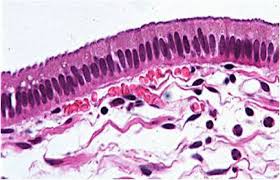
Name the type of epithelium
simple squamous
stratified squamous
simple cuboidal
simple columnar
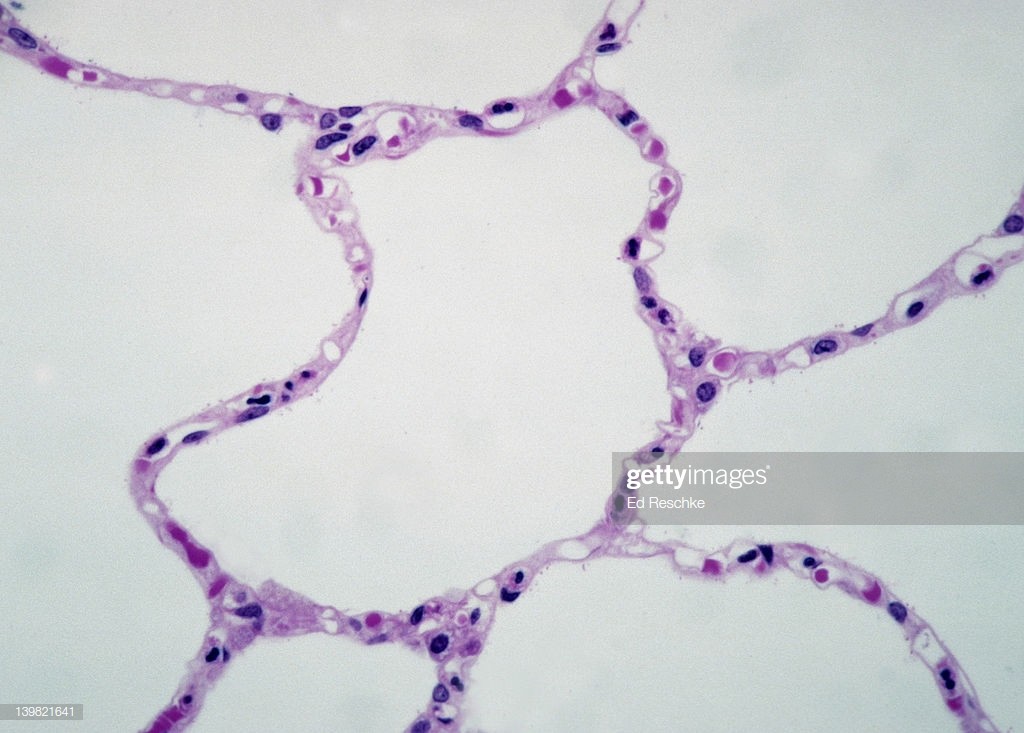
What type of epithelium lines the air sacs in this slide of lung tissue?
simple cuboidal
simple columnar
simple squamous
pseudostratified columnar
Which of the following is NOT a function of epithelial tissues?
covering exposed surfaces
lining internal passageways
producing glandular secretions
contracting to produce movement
Blood is example of __ tissue.
Nervous
muscle
epithelial
connective
Which of the following epithelial functions is the primary role of glandular epithelium?
Protection
Secretion
Absportion
Support
This type of epithelial tissue is found in the bladder.
simple squamous
stratified squamous
transitional
pseudostratified columnar
Which tissue type lacks its own blood supply?
stratified squamous epithelium
adipose
areolar
Skeletal muscle
Most of your respiratory tract is lined with ___ tissue.
hyaline cartilage
ciliated pseudostratied columnar epithelium
stratified squamous epithelium
transitional epithelium
This type of tissue makes up glands like your salivary glands.
Epithelial
Nervous
Connective
Muscle
Which of these is another way to say Smooth Muscle?
striated voluntary
striated involuntary
Nonstriated voluntary
nonstriated involuntary
Microvilli and goblet cells are common adaptations found in ___ tissue.
Skeletal muscle
Simple columnar epithelial
Blood
Nervous Tissue
This type of tissue has an extensive amount of collagen fibers?
Epithelial
Connective
Nervous
Muscular
Osteoblasts are bone cells that:
have ruptured
immature cell still diving and undergoing cell division
excreting something
break down old bone material
Which type of tissue has the LEAST amount of matrix?
stratified squamous epithelium
areolar connective tissue
Blood
Dense irregular connective tissue
Which of the following are NOT true of Epithelial tissue?
attaches to connective tissues via a basement membrane
has a rich blood supply
has a high rate of cell division
has little extracellular space between cells
Which of the following epithelial tissues is known for being located in an area of high diffusion like walls of blood vessels or in the alveoli of the lungs.
Stratified Columnar
Simple Columnar
Stratified Squamous
Simple Squamous
Which type of tissue contains specialized cells called neurons?
Epithelial
Nervous
Muscular
Connective
Which of the following is NOT a function of Connective tissue?
movement/transport
support
defense
communication
Which of the following is NOT a function of adipose tissue?
Insulation
Formation of glands
Protection
Support
Which tissue is associated with having a matrix?
Epithelial
Nervous
Muscular
Connective
All of the following are types of Loose Connective Tissue EXCEPT:
Areolar
Adipose
Reticular
Cartilage
How many layers are found in pseudostratified columnar epithelium?
1
2
more than 2
it varies
What function does the basement membrane serve?
provide blood to the epithelial tissue
hold cartilage to bone
anchor epithelial tissues to underlying connective tissue
secretes the matrix.


Cover and line body surfaces
Epithelial Tissue
Muscle Tissue
Connective Tissue
Nervous Tissue
Has wide variety of functions: supporting, binding, protecting, and insulating
Epithelial Tissue
Muscle Tissue
Connective Tissue
Nervous Tissue
Voluntary movement and involuntary movement
Epithelial Tissue
Muscle Tissue
Connective Tissue
Nervous Tissue
Send electrical messages
Epithelial Tissue
Muscle Tissue
Connective Tissue
Nervous Tissue
Function primarily to provide protection
Bone Tissue
Adipose Tissue
Dense Connective Tissue
Blood Tissue
Cartilage Tissue
Insulation
Bone Tissue
Adipose Tissue
Dense Connective Tissue
Blood Tissue
Cartilage Tissue
Binding
Bone Tissue
Adipose Tissue
Dense Connective Tissue
Blood Tissue
Cartilage Tissue
Transport
Bone Tissue
Adipose Tissue
Dense Connective Tissue
Blood Tissue
Cartilage Tissue
Involuntary movement of digestive organs, lungs, etc.
Skeletal Muscle Tissue
Smooth Muscle Tissue
Cardiac Muscle Tissue
Fuel
Bone Tissue
Adipose Tissue
Dense Connective Tissue
Blood Tissue
Cartilage Tissue
Function primarily to provide support and stability
Bone Tissue
Adipose Tissue
Dense Connective Tissue
Blood Tissue
Cartilage Tissue

Identify the structures circled in yellow.
osteons
medullary cavity
central Haversian canal
perforating Volkmann's canal
osteocyte in lacuna

Identify the structures circled in red.
osteons
medullary cavity
central Haversian canal
perforating Volkmann's canal
osteocytes in lacunae

Identify the format of lamellae in the image.
interstitial
irregular
outer circumferential
concentric
inner circumferential

Identify the format of lamellae marked in green in the image.
interstitial
concentric
irregular
inner circumferential
outer circumferential
Which term refers to a layer of bone tissue?
osteon
canaliculi
lamella
lacuna
trabecula
Compact bone tissue includes all of the following formats of lamellae except:
interstitial
irregular
concentric
inner circumferential
outer circumferential

Identify the format of lamellae in area 3.
interstitial
irregular
concentric
outer circumferential
inner circumferential

Identify the specific structure at arrow 6
inner osteogenic periosteum
endosteum
outer fibrous periosteum
Sharpey's fibers
outer circumferential lamellae

Identify the specific structure at arrow 8
osteon
perforating Volkmann's canal
concentric lamellae
central Haversian canal
medullary cavity

Identify the cell marked A.
osteogenic (osteoprogenitor) cell
osteoblast
osteocyte
osteoclast
Identify the spaces marked C
central Haversian canal
perforating Volkmann's canal
medullary cavity
lacuna
canaliculi
Tissues functions are
support & protection, fills spaces, produces blood cells, stores fat
protection,support and storage
reproduce, support
change a person
White fibers of the matrix are
made up of elastin more elastic than collagen but not as strong
long and stringy like cheese
made up collagen which gives the fibers flexibility and strength
thin, highly branched collagenous fibers that provide support
Reticular fibers are
made up of elastin more elastic than collagen but not as strong
made up ofcollagen which gives the fibers flexibility and strength
made up of collagen which gives the fibers flexibility and strength
thin, highly branched collagenous fibers that provide support
Yellow fibers in the matrix are
made up of elastin more elastic than collagen but not as strong
long and stringy
are made up of collagen which gives the fibers flexibility and strength
thin, highly branched collagenous fibers that provide support
3 types of cartilage are
reticular connective, dense connective and hyaline cartilage
reticular connective, dense connective and fibrocartilage
hyaline cartilage, elastic cartilage, fibrocartilage
hyaline cartilage, dense connective, fibrocartilage

A muscle that is involuntary and found in walls of internal organs such as a stomach and intestines and bladder and blood vessels.
Smooth Muscle
Muscle
Cardiac Muscle
Cells and tissues that allow movement of an organ or body part. Can only contract, not extend.
Smooth Muscle
Muscle
Cardiac Muscle
Muscles that are under your control. Smiling, turning a page in a book and getting out of your chair are some examples.
Involuntary Muscles
Voluntary Muscles
Skeletal Muscles
Makes up the interior of the bone, soft part of the bone, and provides most of the strength and support.
Spongy Bone
Red bone marrow
Compact bone
Joint
The part of the bone that is rigid and dense.
Spongy Bone
Red bone marrow
Compact bone
Joint
The organ system that consists of bones, their associated cartilages, ligaments and joints. Provides protection, movement, produces red blood cells, and stores minerals.
Circulatory System
Respiratory System
Skeletal System
Digestive System
Which type of fiber is the thickest and has the highest tensile strength?
collagen
elastin
reticular
Which type of fiber is long and thin and allows for stretch and recoil?
collagen
elastin
reticular
Which type of fiber has short, fine highly branched fibers?
collagen
elastin
reticular
Which type of cell is found in bone tissue?
fibroblast
chondrocyte
fat cell
osteocyte
Which type of tissue is the most widely distributed, supports and binds other tissues, the universal packing material?
adipose
bone
reticular
areolar
Which type of cartilage is found in your ear and epiglottis?
elastic cartilage
hyaline cartilage
fibrocartilage
Which type of cartilage is found in your trachea, nose, larynx and cartilage of ribs?
elastic cartilage
hyaline cartilage
fibrocartilage
Which type of cartilage is found in between vertebrate and knees, provides cushion?
elastic cartilage
hyaline cartilage
fibrocartilage

Which type of tissue is shown?
blood
adipose
reticular
bone

Which type of tissue is shown?
dense irregular
fibrocartilage
elastic cartilage
bone

Which type of tissue is shown?
areolar
elastic cartilage
reticular
blood

Which type of tissue is shown?
elastic cartilage
fibrocartilage
hyaline cartilage
dense irregular
Which of the following is NOT a function of connective tissue?
protects
supports
binds
covers & lines
Which of the following are the 2 main elements of the extracellular matrix?
ground substance, fibers
ground substance, cells
fibers, cells
Which type of connective tissue has collagen fibers and fibroblasts, it is found in tendons and ligaments?
elastic cartilage
fibrocartilage
dense fibrous
reticular
Which type of tissue has a delicate network of woven fibers and is found in lymph nodes, the spleen and bone marrow?
dense fibrous
adipose
reticular
elastic cartilage

Identify
Dense Irregular Connective Tissue
Dense Regular Connective Tissue
Elastic Cartilage
Hyaline Cartilage

Identify
Dense Regular Connective Tissue
Dense Irregular Connective Tissue
Howship's Lacunae
Osteon

Identify
Reticular Fibers
Hyaline Cartilage
Elastic Fibers
Elastic Cartilage

Identify
Chondrocyte
Fibrocyte
Erythrocyte
Osteocyte
Which of these is true of adipose tissue?
site of energy storage
a type of connective tissue
acts as a protective cushion
functions as a heat insulator
all of the above
Blood is an example of
epithelial tissue
connective tissue
muscle tissue
nervous tissue
Which of these statements about nervous tissue is NOT true?
neurons have cell processes (extensions) called axons
electrical signals (action potentials) are conducted along axons
Dendrites contain the nucleus and control general cell function
Neurons are nourished and protected by neuroglia
A bullet that passes through one's upper arm without hitting bone could contract which of these tissue types?
nervous
muscle
connective
epithelial
all of the above



