Wayground logo

Free Printable Worksheets

Font size

S
M
L
XL
Worksheets

Biology Paper 1 Assessment

Total questions: 79

Worksheet time: 2hrs 35mins

Name
Class
Date
1.
Protective layer around cells
a)
cell blanket
b)
cell membrane
c)
nucleus
d)
chloroplast
2.
What molecule absorbs sunlight for photosynthesis?
a)
chloroplast
b)
thylakoid
c)
grana
d)
chlorophyll
3.
Animal cells DO NOT have ...
a)
Mitochondria
b)
Lysosomes
c)
Vacuoles
d)
Chloroplasts
4.
What job does the chloroplast do?
a)
Collects water
b)
Provides structure for the plant cell
c)
Collects sunlight for photosynthesis
d)
is the cells control center
5.
How many chromosomes do humans have?
a)
46
b)
21
c)
10
6.
15 mm would be equal to how many μm?
a)
150
b)
1 500
c)
15 000
d)
150 000
7.
When using a microscope, how do you work out the real size of an image?
a)
image size ÷ magnification
b)
magnification ÷ image size
c)
image size × magnification
d)
image size + magnification
8.
If an image measured 3.5 mm and the magnification was x 1,000, how big would the actual object be?
use:  real size = image size ÷ magnication
a)
0.0035 mm
b)
0.035 mm
c)
3500 mm
d)
0.35 mm
9.
Identify letter B.
a)
cell membrane
b)
nucleus
c)
cell wall
d)
cytoplasm
10.
Which statement is true about cell walls?
a)
found only in plants
b)
contains chlorophyll
c)
produces energy
d)
it has magical powers
11.
identify the cell
a)
nerve cell
b)
blood cell
c)
fat cell
d)
Epithelial cell
12.
Which of the following is a prokaryote?
a)
Virus
b)
Plant
c)
Animal
d)
Bacteria
13.
An eyepiece has a magnification of 10x.  If the medium power objective has a magnification of 15x, what is the total magnification?
a)
1.5x
b)
5x
c)
25x
d)
150x
14.
Which process is shown in this picture?
a)
mitosis
b)
meiosis
c)
reproduction
15.

During osmosis

a)

water moves from high to low concentration

b)

large or oddly shaped molecules move across a cell membrane

c)

water moves when energy is used

d)

proteins are built

16.
What is transpiration?
a)
Excess water being released from the leaves
b)
Excess sugar being released from the leaves
c)
The way a plant makes its food
d)
When the plant uses sugar for energy
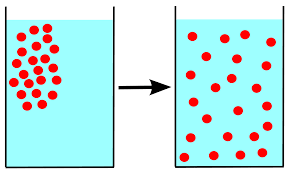
17.

The picture below is an example of _________________.

a)

osmosis

b)

isotonic

c)

diffusion

d)

active transport

18.
Osmosis is the diffusion of what specific molecule?
a)
Glucose
b)
Carbon Dioxide
c)
Oxygen
d)
Water
19.

Osmosis

a)

diffusion of water molecules through a semi-permeable mebrane from an area of low concentration to an area of high concentration

b)

the diffusion of particles from an area of high concentration to an area of low concentration

c)

diffusion of water molecules through a semi-permeable membrane from an area of high concentration to an area of low concentration

d)

the diffusion of particles from an area of low concentration to an area of high concentration

20.
Stem cells are
a)
cells that grow uncontrollably
b)
undifferentiated and can be any type of cell
c)
never go through cell division
d)
only found in embryos
21.
Stem cells can be obtained from
a)
embryos
b)
some adult tissues
c)
umbilical cord blood
d)
all of the above
22.
Bacteria can move.  What is the name of the structure that moves them?
a)
Flagellum
b)
Tail
c)
Appendage
d)
Whip
23.
The two chambers of the heart which receive blood are known as the _________
a)
atria
b)
ventricles
c)
systemics
d)
pulmonic
24.
The ___________ is the basic unit of life
a)
organ
b)
cell
c)
atom
d)
tissue
25.
This is a example of........ 
a)
organ system
b)
cells
c)
organ
d)
tissue
26.
This is a example of ........
a)
cell
b)
organ system
c)
organ
d)
tissue
27.
Moving from areas of LOW concentration to areas of HIGH concentration is called?
a)
Passive Transport
b)
Active Transport
c)
Diffusion
d)
Osmosis
28.
This system includes heart, blood and blood vessels.  It transports materials throughout the body.
a)
Respiratory
b)
Circulatory
c)
Endocrine
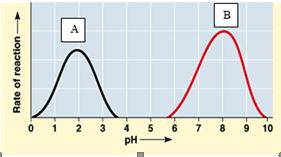
29.
What is the optimal pH of enzyme A?
a)
pH 8
b)
pH 2
c)
pH 5.7 - 10
d)
pH 10
30.
What is true about enzymes?
a)
They are unaffected by changes in pH
b)
They are unaffected by changes in temperature
c)
Their overall shape can change without affecting their function
d)
They catalyze one specific type of reaction
31.
Why does enzyme activity decrease when it is in solution that has either a too high or too low pH?
a)
All enzymes only work in neutral solutions
b)
Enzyme activity remains unchanged in different pH's
c)
The shape of the active site changes
d)
The shape of the substrate changes
32.
Which organ of the digestive produces bile?
a)
gallbladder
b)
common bile duct
c)
liver
d)
pancreas
33.
Which type of blood vessel has the thickest walls and carries blood that has high pressure?
a)
Arteries
b)
Capillaries
c)
Veins
d)
Bronchi
34.
What can prevent heart disease?
a)
A healthy diet
b)
Exercise
c)
Avoiding smoking
d)
All of the above
35.
B2.2.7 Cancer is caused by...
a)
Controlled meiosis
b)
Controlled mitosis
c)
Uncontrolled mitosis
d)
Uncontrolled meiosis
36.
B2.2.7 Tumours that do not spread from the site of origin are known as...
a)
Malignant 
b)
Secondary
c)
Metastatic
d)
Benign
37.
________ is a disease that can be passed to a person from another person, animal or object.
a)
Non-communicable disase
b)
Communicable Disease
c)
Pathogens
38.
B3.1.1  Which of these could be considered pathogens? 
a)
Bacteria
b)
Viruses
c)
Protists and fungi
d)
All of the above
39.
B3.1.7 Vaccination involves...
a)
A live pathogen
b)
A dead or weakened pathogen
c)
A cloned pathogen
d)
A mutated pathogen
40.
A pathogen is .....
a)
A protein on the surface of bacteria
b)
A drug taken to cure an illness
c)
A protein produced by the body to stop infection
d)
Any micro-organism that causes infectious disease
41.
Most infectious diseases can be prevented by vaccination.
What does a vaccine contain?
a)
white blood cells
b)
antibiotics
c)
a mixture of toxins and antitoxins
d)
dead or weakened microbes
42.
Which of the following statements does not apply to antibodies?
a)
They are proteins produced by white blood cells
b)
They are prescribed by doctors if you have a bacterial infection
c)
They are specific to particular pathogens
d)
They attache to antigens on the surface of pathogens
43.
Which of the following is not a communicable disease?
a)
Measles
b)
Flu
c)
Heart Disease
d)
Salmonella
44.
 Following a vaccination, the white cells produce . . .
a)
antibiotics
b)
antibodies
c)
statins.
d)
toxins.
45.
Vaccination saves money spent on health care. What is the most likely reason for the difference in cost?
a)
Vaccines cure diseases.
b)
Vaccines do not cost much to buy.
c)
 People who have been vaccinated never become ill
d)
People who have been vaccinated need less treatment in hospital.
46.
Tuberculosis (TB) is a disease caused by a bacterium.
The bar chart shows the number of reported cases of TB from 1920 to 1990.
What was the maximum number of reported cases of TB in a year during the period from 1920 to 1990?
a)
 60
b)
62
c)
44000
d)
62000
47.
This can prevent being infected with Malaria…?
a)
Antibiotics
b)
Nets
c)
Condom
d)
Vaccination
48.
These live and reproduce inside your cells…?
a)
Bacteria
b)
Virus
c)
Fungus
d)
Protist
49.
These treat bacterial infections…?
a)
Antivirals
b)
Antifungals
c)
Antibiotics
d)
Antibodies
50.
A mosquito is a...?
a)
Pathogen
b)
Malaria
c)
Vector
d)
Protist
51.
The ________ is the first line of defense.
a)
eyes
b)
stomach
c)
t-cells
d)
skin
52.
What three examples of non-specific defense systems ?
a)
Skin
Feet
Heart
b)
Skin
Ear
Feet 
c)
Skin 
Nose
Mouth
d)
Skin
Nose
Stomach 
53.
How do white blood cells help to destroy the pathogen ?
a)
Phagocytosis
b)
Antibody production
c)
Antitoxin production 
d)
All of them 
54.
What are the two types of white blood cells? 
a)
Lymphocytes 
Phagocytes
b)
Phagocytes
Antibodies 
c)
Lymphocytes 
Antibodies 
d)
Lymphocytes 
Plasma 
55.
What is an antigen?
a)
 a drug
b)
a lethal side effect from antibodies
c)
molecule that kills antibodies
d)
molecule that  causes antibodies to be prodiced against it
56.
What is phagocytosis? 
a)
Phagocytes engulf the bacteria cells 
b)
Phagocytes engulf the pathogen and help them grow
c)
Phagocytes engulf the pathogen and release enzymes causing it to be destroyed
d)
None of these 
57.
What is the name of a drug trial where the patient and the doctor doesn't know which patients have the drug?
a)
Double bind trial
b)
Double blind trial
c)
Single blind trial
d)
Single bind trial
58.
Which of the following is the correct equation for PHOTOSYNTHESIS?
a)
6CO2 + 6H2O --> 6O2 + C6H12O6
b)
6CO2 + C6H12O6 + 6H2O --> O2 
c)
6O2 + 6H2O --> 6CO2 + C6H12O6
d)
C6H12O6 + 6O2 ---> 6H2O + 6CO2 
59.
B4.2 Which of these chemical reactions takes place in muscle cells during intense exercise?
a)
Glucose --> lactic acid
b)
Glucose + oxygen --> carbon dioxide + water
c)
Glucose --> ethanol + carbon dioxide
d)
Carbon dioxide + water --> glucose + oxygen
60.
What is the original source of almost all energy in most ecosystems?
a)
carbohydrates
b)
sunlight
c)
water
d)
carbon
61.
Where does carbon dioxide enter plants?
a)
The leaves (in the holes called Stomata)
b)
Flowers
c)
Roots
d)
Stem
62.
B4.1 Complete this equation for photosynthesis: water + carbon dioxide --> 
a)
Glucose + water
b)
Glucose + carbon dioxide
c)
Carbon dioxide + water
d)
Glucose + oxygen
63.
B4.2 Which of these chemical reactions takes place in muscle cells during mild exercise?
a)
Glucose --> lactic acid
b)
Glucose + oxygen --> carbon dioxide + water
c)
Glucose --> ethanol + carbon dioxide
d)
Carbon dioxide + water --> glucose + oxygen
64.
B4.2 Which of these chemical reactions takes place in fermenting yeast cells?
a)
Glucose --> lactic acid
b)
Glucose + oxygen --> carbon dioxide + water
c)
Glucose --> ethanol + carbon dioxide
d)
Carbon dioxide + water --> glucose + oxygen
65.
B4.1 Which of the following do plants use the glucose from photosynthesis for?
a)
Respiration
b)
Store it as starch
c)
Produce fats, oils, cellulose and amino acids
d)
All of the above
66.
B4.2.2 Why does the heart rate increase during exercise?
a)
supply the muscles with more oxygenated blood
b)
remove CO2 from the blood more quickly
c)
neither of these
d)
both of these
67.
B4.2.3 Which of these is involved in metabolism?
a)
conversion of glucose into starch, glycogen and cellulose
b)
formation of lipids and proteins
c)
respiration
d)
all of the above
68.
What are the reactants (what's needed) for photosynthesis?
a)
glucose and oxygen
b)
light, water, and carbon dioxide
69.
What is the purpose of photosynthesis?
a)
make glucose
b)
make ATP
c)
make light
d)
release carbon dioxide
70.
What type of organism uses photosynthesis?
a)
plants
b)
bacteria
c)
animals
d)
both plants and bacteria
71.
This is referred to as the energy currency of the cell
a)
ADP
b)
ATP
c)
Mitochondria
d)
Nucleus
72.
Cellular respiration takes place in the
a)
nucleus
b)
cytoplasm
c)
ribosomes
d)
mitochondria
73.
This means that oxygen is needed
a)
anaerobic 
b)
aerobic
74.
This means that oxygen is not needed
a)
anaerobic 
b)
aerobic
75.
How do cells get energy to perform their necessary functions?
a)
Cells get energy by dissolving waste products of the body.
b)
Cells get energy by moving water from one organelle to another.
c)
Cells get energy by taking in nutrients from food.
d)
Cells get energy only by taking in oxygen from the atmosphere.
76.
What is the function of stomata in plants?
a)
to transport materials from the soil to the leaves
b)
to allow gas exchange between the environment and the inside of leaves
c)
to absorb light energy from the Sun
d)
to transport materials from the leaves to the soil
77.

A green pigment that captures the energy from sunlight

a)

chlorophyll

b)

stroma

c)

thylakoid

d)

glycolysis

78.

Vascular plant tissue that conducts water up the stem of the plant

a)

Glucose

b)

Xylem

c)

Chlorophyll

d)

phloem

79.

Vascular tissue in plants that helps sap/sugar flow from the leaves to the roots.

a)

Phloem

b)

chlorophyll

c)

Xylem

d)

Glucose