wayground logo

Free Printable Worksheets

Font size

S
M
L
XL
Worksheets

Review for Learning Check (BIO)

Total questions: 119

Worksheet time: 30hrs 45mins

Name
Class
Date
1.
What is an example of Radiant energy?
a)
Electromagnetic waves
b)
Burning Logs
c)
Vibrations
d)
Gravitational potential
2.
Kinetic energy is energy due to...
a)
interactions between objects or particles
b)
motion
c)
elasticity
d)
mass
3.

Potential energy is energy due to..

a)

mass

b)

motion

c)

position of the object

d)

work

4.

What is energy?

a)

the ability to cause change or do work

b)

the ability to resist change

c)

the ability to lack change

d)

the ability to dab

5.
Which is an example of sound energy?
a)
light energy
b)
plucking a guitar string
c)
turning the lights on
d)
splitting nuclei
6.
What is friction?
a)
a force that resists the sliding of two surfaces
b)
a force that lubricates the sliding of two surfaces
c)
a force that allows two surfaces to slide that are not touching each other
d)
a forces that transforms the sliding of two surfaces to make it easier.
7.
"Energy can be transformed from one form into another or transformed from one region or another, but energy cannot be created or destroyed."
Which law is this?
a)
Law of Conservation of Mass
b)
Newton's Second Law
c)
Law of Conservation of Energy
d)
Newton's Third Law
8.
Can energy be created or destroyed?
a)
Yes
b)
No
9.
You have just turned on a fan.
What type of energy is this?
a)
Electric
b)
Radiant
c)
Nuclear
d)
Thermal
10.
Thermal energy is...
a)
burning logs
b)
turning on a fan
c)
sun energy
d)
splitting of nuclei
11.
This makes it harder to move objects along a surface
a)
kinetic energy
b)
work
c)
friction
d)
elasticity
12.
What energy is given off when a cell phone rings?
a)
Sound Energy
b)
Gravitational Energy
c)
Thermal Energy
d)
Nuclear Energy
13.
What is the KE of a 1.00 kg hammer swinging at 20.0 m/s?
a)
200 Joules
b)
1500 Joules
c)
950 Joules
14.
A cheetah can run briefly with a speed of 31.0 m/s. Suppose a cheetah with a mass of 47.0 kg runs at this speed. What is the cheetah’s kinetic energy?
a)
15,500 Joules
b)
22,583 Joules
c)
15 Joules
d)
45,543 Joules
15.
A baby carriage that is carrying twins is sitting at the top of a knoll that is 21 m high. The carriage
with the babies are 48kg. What is the Potential Energy of the twins and the carriage?
a)
5,524 Joules
b)
45,125 Joules
c)
9,888 Joules
16.
A roller coaster has a mass of 250 kg, and is 50 meters above the ground, what is the potential energy?
a)
122,625 Joules
b)
5,600 Joules
c)
234,799 Joules
17.
Kinetic energy is the energy of ____________ and potential energy is the energy of ________.
a)
heat, position
b)
static, motion
c)
motion, position
18.

Conservation of energy states that energy cannot be ________ or ________, but can be altered from one form to another.

a)

created, destroyed

b)

gravity, force

c)

heat, created

19.
Energy of motion is which type of energy?
a)
Potential
b)
Kinetic
c)
Sound
d)
Gravitational
20.

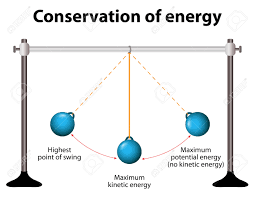
What type of energy is in this picture?

a)

Kinetic

b)

Elastic Potential

c)

Chemical Potential

d)

Sound

21.
A battery converts what type of energy to another?
a)
sound to kinetic
b)
light to heat
c)
mechanical to electrical
d)
chemical to electrical
22.
On a roller coaster, where is maximum potential energy?
a)
At the bottom of a big hill
b)
When going around a corner
c)
When going upside down
d)
At the top of a big hill
23.
Energy caused by the movement in the particles of matter. It is a form of kinetic energy.
a)
Nuclear energy
b)
Sound energy
c)
Light energy
d)
Thermal energy
24.
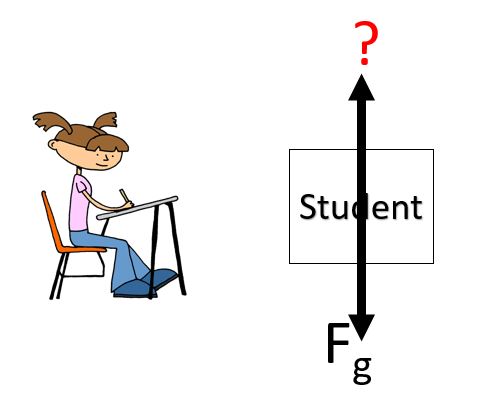
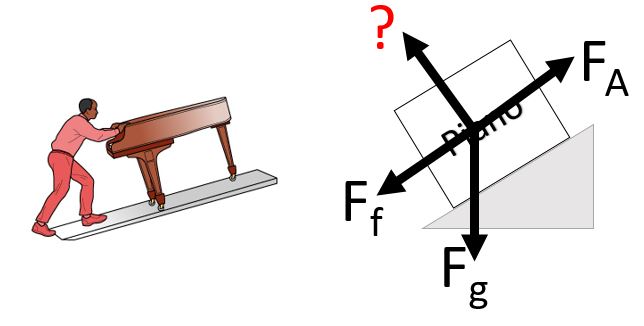
Name the missing force....
a)
weight force
b)
normal force
c)
frictional force
d)
tension force
25.
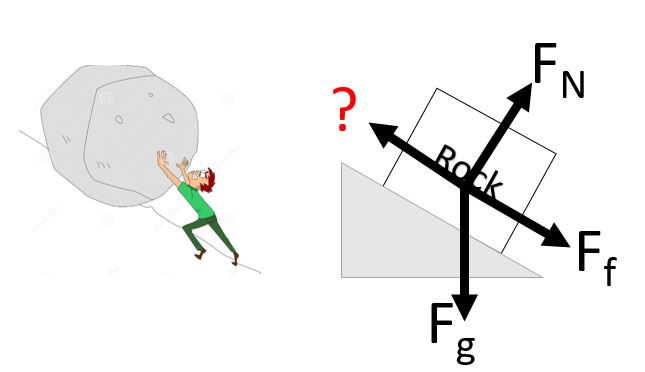
Name the missing force...
a)
applied force
b)
weight force
c)
lift
d)
normal force
26.
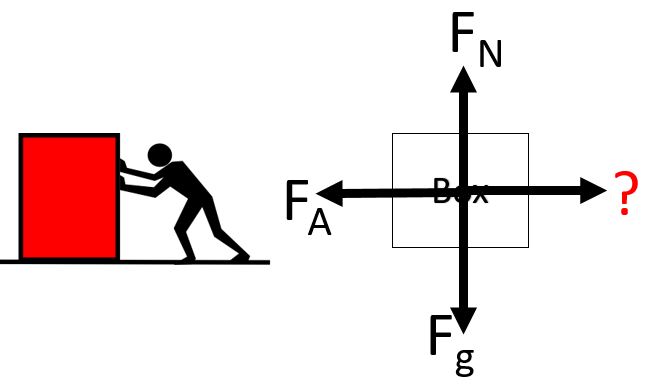
Name the missing force...
a)
frictional force
b)
weight force
c)
thrust
d)
buoyant force
27.

Name the missing force...

a)

gravity force

b)

normal force

c)

buoyant force

d)

applied force

28.
Name the missing force...
a)
normal force
b)
applied force
c)
frictional force
d)
tension force
29.
What is the equation for Newton's 2nd law?
a)
a = bc
b)
F = m/a
c)
F = ma
d)
a = b/c
30.

What are the units of force?

a)

kg

b)

N

c)

m/s

d)

m/s2

31.
When mass is 10 kg, acceleration is 2 m/s/s, what is force?
F = ma
a)
5 N
b)
20 N
c)
8 N
d)
12 N
32.
The larger the mass you have the _____ force you need to change its motion.
a)
more
b)
less
33.
As force applied to a textbook increases, what happens to its acceleration?
a)
Stays the same
b)
Increases
c)
Decreases
d)
Opens
34.

True or False. An increase in mass will result in an increase in the acceleration?

a)

True

b)

False

35.
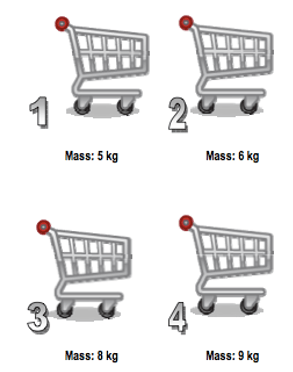
A force of 90N is applied to each cart below, which one will accelerate the fastest?
a)
Cart 1
b)
Cart 2
c)
Cart 3 
d)
Cart 4
36.
Two students are in a baseball game. The first student hits a ball very hard and it has a greater acceleration than the second student who bunts the ball lightly.
a)
Newton's 1st Law
b)
Newton's 2nd Law
c)
Newton's 3rd Law
37.
What two quantities must I know to calculate something's speed?
a)
time and weight
b)
position and distance
c)
distance and time
d)
distance and speed
38.
A force of 250 N is applied to an object that accelerates at a rate of 5 m/sec2.  What is the mass of the object?
a)
100kg 
b)
1,250kg
c)
50kg
d)
5kg
39.
Something with a greater mass requires a(n) _____ force to move it. 
a)
greater
b)
lesser
c)
equal
d)
opposite
40.

If the net force is equal to zero, the forces acting on the object are

a)

balanced

b)

unbalanced

41.

An evil ewok threw a rock with a force of 24.6N and an acceleration of 6m/s2 at an innocent stormtrooper. What was the rocks mass?

a)

4Kg

b)

41kg

c)

4.1kg

d)

46kg

42.

What is the net force?

a)

40 N left

b)

400 N right

c)

0 N Balanced

d)

40 N right

43.

What is force?

a)

A push exerted on an object

b)

A push or pull exerted on an object

c)

A pull exerted on an object

d)

Nothing

44.
Acceleration is a change in...
a)
Inertia
b)
Gravity
c)
Velocity
d)
Distance
45.
What is a Balanced Force?  Two objects where...
a)
They both have equal force 
b)
One has more force than the other
c)
Both have no force
d)
One has more gravity than the other
46.
Waves move ___ through vibrations
a)
Energy
b)
Matter
c)
Mass
d)
Weight
47.
What is the wavelength?
a)
Length
b)
Height
c)
# of waves
48.
What is the amplitude?
a)
length
b)
height
c)
# of waves
49.
Which is the wavelength?
a)
1
b)
2
c)
3
d)
4
50.
If the frequency gets higher, the wavelength gets 
a)
longer
b)
shorter
51.
If the wavelength gets longer, the frequency gets 
a)
higher
b)
lower
52.
The loudness of the sound depends on
a)
wavelength
b)
amplitude
c)
frequency
53.
The pitch of the sound depends on
a)
frequency
b)
amplitude
c)
wavelength
54.
Which electromagnetic wave is responsible for cell phones?
a)
gamma
b)
xray
c)
microwaves
d)
radio
55.
Which EM wave has the lowest frequency?
a)
radio
b)
xray
c)
gamma
d)
infrared
56.
Which EM wave has the longest wavelength?
a)
light
b)
radio
c)
ultraviolet
d)
red
57.
Is refracting light bending or bouncing?
a)
bending
b)
bouncing
58.

You can't hear sounds in outer space because there is no

a)

medium

b)

light

c)

energy

d)

heat

59.
What does a wave carry?
a)
boats
b)
matter
c)
energy
d)
water
60.
What is the speed of a wave that has a wavelength of 2 and a frequency of 2.5?
a)
2.5 m/s
b)
5 m/s
c)
4.5 m/s
d)
6 m/s
61.
Which wave has the most energy?
a)
top wave
b)
bottom wave
62.

What is the amplitude of this wave?

a)

4

b)

8

c)

2

d)

6.3

63.

What is the wavelength of this wave?

a)

4

b)

8

c)

3.3

d)

6.3

64.
Which is the correct equation for calculating the speed of a wave?
a)
T = 1/f
b)
Speed= Wavelength x Period
c)
Speed = Wavelength/Frequency
d)
Speed= Wavelength x Frequency
65.
What type of wave is this?
a)
Transverse
b)
Longitudinal
66.
What kind of wave is pictured?
a)
Transverse
b)
Longitudinal
c)
surface
d)
none of the above
67.

Mechanical waves usually travel fastest through:

a)

solids

b)

liquids

c)

gases

68.

Mechanical waves usually travels fastest as the temperature of the medium:

a)

increases

b)

decreases

c)

stays the same

69.
Sound is an example of which type of wave?
a)
Transverse
b)
Longitudinal
c)
Both
d)
Neither
70.
The lowest point on a wave is the:
a)
Amplitude
b)
Crest
c)
Trough
d)
Wavelength
71.
A tuning fork starts to vibrate when a certain note is played on the piano, This is an example of _______.
a)
resonance
b)
refraction
c)
diffraction
d)
reflection
72.
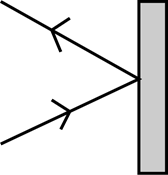
The illustration shows a light ray striking an object.
In the illustration, the light ray striking the object is-
a)
absorbed
b)
stopped
c)
reflected
d)
refracted
73.
Which is an example of an analog signal?
a)
Record Player
b)
CD Player
74.
What is true about a digital signal?
a)
They are easily distorted or affected by interference
b)
They take up more space
c)
They require more information
d)
They are generally considered more reliable
75.

Choose the correct equation for Kinetic Energy

a)

KE = 0.5 x mass x velocity2

b)

KE = speed x velocty2 x mass

c)

KE = speed x mass / time

d)

KE = 0.5 x mass / velocity

76.

Choose the correct equation for Gravitational Potential Energy

a)

GPE = msh

b)

GPE = mass x speed x height

c)

GPE = mgh

d)

GPE = mass / height

77.

The standard unit of energy is

a)

n

b)

kg

c)

J

d)

N

78.

The standard unit of mass is

a)

g

b)

kg

c)

J

d)

N

79.
The diagram shows the general structure of an amino acid. Which type of molecule is formed from amino acids?
a)
lipids
b)
proteins
c)
carbohydrates
d)
nucleic acids
80.
You are analyzing a compound in the laboratory. You find that it is made up of carbon, hydrogen, and oxygen in a ratio of two hydrogen atoms for each carbon atom. How will you classify the compound?
a)
lipid
b)
protein
c)
carbohydrate
d)
nucleic acid
81.
RNA and DNA are which type of macromolecules?
a)
carbohydrate
b)
lipid
c)
nucleic acid
d)
protein
82.
Fats, oils and cholesterol are all types of what?
a)
cell membranes
b)
hormones
hormones
c)
lipids
d)
fatty acids
83.
Many plants have waxy coatings on some surfaces. This coating reduces water loss because it is not water-permeable. This waxy coating is which of the following types of organic molecule?
a)
protein
b)
carbohydrate
c)
nucleic acid
d)
 lipid
84.
A sugar, a phosphate group, and a nitrogen base form the building blocks of which organic compound?
a)
carbohydrates
b)
lipids
c)
nucleic acids
d)
proteins
85.
The human body maintains a temperature of around 98.6 degrees at all times. Enzymes are involved in almost every chemical reaction in the body. Which of the following describes the connection between these two statements? 
a)
Enzymes function best at a specific temperature.
b)
The body needs to be warm to prevent hypothermia.
c)
The body is kept relatively warm to prevent too much enzyme action. 
d)
There is no connection between the two statements. 
86.
Like complex carbohydrates, proteins are macromolecules that serve many functions and can be chemically broken down and restructured. Both proteins and complex carbohydrates are which of the following?
a)
 polymers of smaller subunits
b)
sequence of sugars
c)
lipids of large molecules
d)
nucleotides of DNA
87.
 In living organisms, lipids function mainly as:
a)
Sources of stored energy and transmitters of genetic information
b)
Sources of stored energy and components of cellular membranes
c)
Transmitters of genetic information and catalysts of chemical reactions
d)
Catalysts of chemical reactions and components of cellular membranes
88.
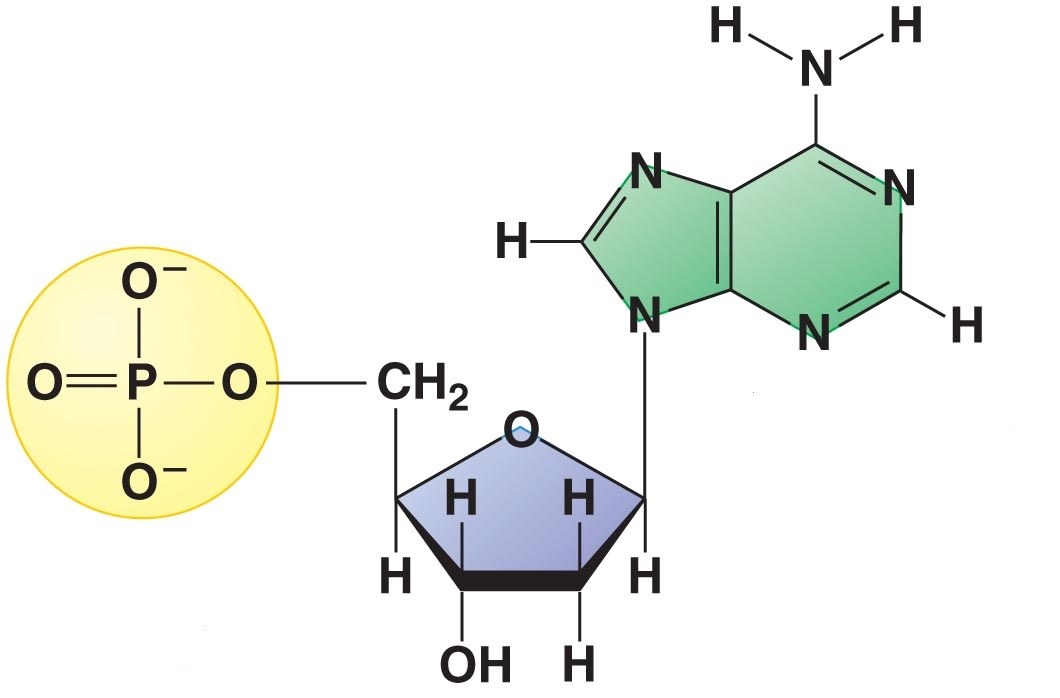
What is the function of macromolecule subunit below?
a)
energy
b)
catalyst
c)
stores genetic information
d)
composes the majority of the cell membrane
89.
Proteins are made of monomers called ___________
a)
Nucleotides
b)
Monosaccharides
c)
Amino Acids
d)
Glycerol and fatty acids
90.
Nucleotides are monomers of
a)
Carbohydrates
b)
Lipids
c)
Proteins
d)
Nucleic Acids
91.
Monosaccharides are monomers of
a)
Carbohydrates
b)
Lipids
c)
Proteins
d)
Nucleic Acids
92.
Which macromolecule is shown?
 View Figure 1 (if not visible)
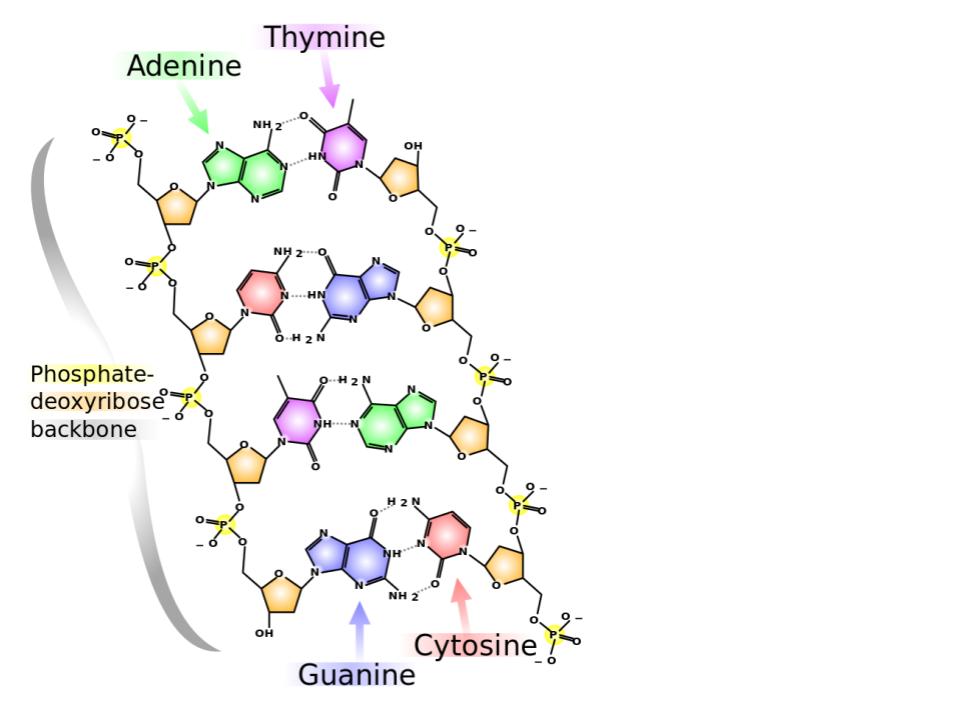
a)
lipid
b)
protein
c)
nucleic acid
d)
carbohydrate
93.
What is the function of nucleic acids?
a)
store genetic information
b)
store energy (long-term)
c)
store energy (short-term)
d)
build skin, hair, nails, muscles
94.
Which of the following organic compounds is the main source of energy for living things?
a)
carbohydrates
b)
lipids
c)
nucleic acids
d)
proteins
95.
Which macromolecule stores energy, insulates us, and makes up the cell membrane?
a)
lipids
b)
proteins
c)
carbohydrates
d)
nucleic acids
96.
Which group of biomolecules provide quick energy to organisms?
a)
proteins
b)
carbohydrates
c)
lipids
d)
nucleic acids
97.
Lipids can be digested into what smaller subunits?
a)
nucleic acids
b)
amino acids
c)
fatty acids
d)
glucose
98.
All organic compounds contain the element
a)
carbon
b)
nitrogen
c)
phosphorus
d)
sulfur
99.
Enzymes are..
a)
nucleic acids 
b)
carbohydrates 
c)
lipids 
d)
proteins 
100.
Enzymes will make a reaction go _______ and use ______ energy.
a)
faster, less
b)
faster, more
c)
slower, less
d)
slower, more
101.
Which of the following best describes a DNA molecule?
a)
double helix
b)
contains ribose
c)
made of amino acids
d)
contains Uracil
102.
Why is DNA important?
a)
it is very small and very complicated
b)
it's in everything
c)
it serves as the blueprint for traits of all living things
d)
because we eat it every day for energy
103.
Nitrogenous bases are joined by which type of bond?
a)
polar bonds
b)
ionic bonds
c)
covalent bonds
d)
hydrogen bonds
104.
Which 2 molecules forms the sides (backbone) of the DNA ladder?
a)
deoxyribose and adenine
b)
deoxyribose and a hydrogen bond
c)
sugar and the nucleus
d)
deoxyribose (sugar) and phosphate
105.
What are the three components of a nucleotide?
a)
sugar, hydrogen, nitrogen base
b)
sugar, oxygen, nitrogen base
c)
sugar, phosphate, nitrogen base
d)
sugar, phosphate, protein
106.
Cytosine always pairs with
a)
Adenine
b)
Thymine
c)
Uracil
d)
Guanine
107.
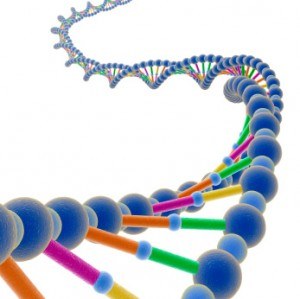
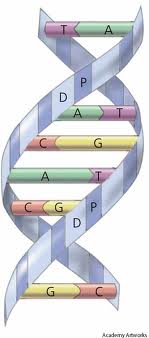
Name this structure
a)
double helix
b)
nucelotide
c)
twisted ladder
d)
hydrogen bond
108.
Which organelle is DNA usually found in?
a)
cell membrane
b)
vacuole
c)
ribosome
d)
nucleus
109.
Nucleotides are made up of a sugar, phosphate, and..?
a)
nitrogenous base
b)
nucleic acid
c)
cholesterol
d)
fatty acid
110.
Guanine bonds with ______________.
a)
Adenine
b)
Guanine
c)
Cytosine
d)
Thymine
111.
The two strands of DNA are held together by:
a)
Hydrogen Bonds
b)
Phosphodiester Bonds
c)
Glycolsyl Bonds
d)
Glycosidic Linkages
112.
What is the complement to the DNA strand below:
5'-ATGCCAT-3'
a)
5'-TACGGTA-3'
b)
3'-TACGGTA-5'
c)
3'-ATGGCAT-5'
d)
5'-ATGGCAT-3'
113.

Which of the following is a base pair?

a)

Adenine - Cytosine

b)

Cytosine - Thymine

c)

Deoxyribose - Cytosine

d)

Cytosine - Guanine

114.
Which of the following is not a component of DNA?
a)
5 Carbon Sugar
b)
Phosphate Group
c)
Carbon Base
d)
Nitrogen Base
115.
Which of the following is not a nitrogen base found in DNA?
a)
Thymine
b)
Uracil 
c)
Guanine
d)
Adenine
116.

According to Chargaff's rule, Cytosine always pair with

a)

Adenine

b)

Uracil

c)

Thymine

d)

Guanine

117.
What is the significance of the sequence (order) of the Nitrogen Bases in DNA?
a)
The order of the Nitrogen Bases determines the number of chromosomes present in an organism.
b)
The order of the Nitrogen Bases determines the traits that an organism will possess (have).
c)
The order of the Nitrogen Bases determines the gender of an organism.
d)
The order of the Nitrogen Bases determines whether an organism is abiotic biotic.
118.
Assume that you have straight hair and your sibling has curly hair. What accounts for this difference?
a)
You have DNA and your sibling does not.
b)
The your sequence of nitrogen bases is different than your sibling.
c)
Your sibling has a weave. 
d)
Your sibling has a genetic mutation. 
119.

How is the instructions for your traits carried on a DNA molecule?

a)

Sequence of the nitrogen bases

b)

In the Deoxyribose Sugar

c)

In the bond between the phosphate and the sugar

d)

In the phosphate group