wayground logo

Free Printable Worksheets

Font size

S
M
L
XL
Worksheets

AP Biology - Chemistry of Life

Total questions: 166

Worksheet time: 3hrs 30mins

Name
Class
Date
1.

Matter

a)

has mass.

b)

All of the choices are correct.

c)

occupies space.

d)

is what life is composed of

e)

is composed of elements.

2.

Which of the following elements is Not one of the six most common in living organisms?

a)

carbon

b)

oxygen

c)

iron

d)

nitrogen

e)

hydrogen

3.

In which of these are the electrons shared unequally?

a)

double covalent bond

b)

triple covalent bond

c)

hydrogen bond

d)

polar covalent bond

e)

ionic and covalent bonds

4.

What is the fundamental difference between covalent and ionic bonding?

a)

Covalent bonding involves only the outer electron shell; ionic bonding also involves the next inner electron shell.

b)

In a covalent bond, the partners have identical electronegativity; in an ionic bond, one of them is more electronegative.

c)

Covalent bonds form between atoms of the same element; ionic bonds, between atoms of different elements.

d)

In a covalent bond, the partners share a pair of electrons; in an ionic bond, one partner captures an electron from the other.

e)

In covalent bonding, both partners end up with filled outer electron shells; in ionic bonding, one partner does and the other does not.

5.
CO2 is an example of a(n) _____ bond.
a)
covalent
b)
adhesive
c)
ionic
d)
cohesive
6.

Which of the following is an example of homeostasis?

a)

A plant respires to thermoregulate

b)

A dog secretes insulin to decrease blood sugar levels

c)

A bacterial cell expels water to regulate ion concentrations

d)

All answers are correct

7.

What are the elements of life?

a)

CHNOPS

b)

C, H, and O

c)

C and H2O

d)

Fire, magic, thunder, and Kanye

8.

Which of the following is an example of trace element?

a)

I

b)

C

c)

P

d)

S

9.

All of the following are examples of intermolecular forces (IMFs) except

a)

Covalent bonds

b)

Ion-dipole

c)

Hydrogen bonding

d)

Van der Waals interactions

10.

Why are IMFs vitally important to the functioning of living things?

a)

They allow the molecules of living things to respond/interact/engage with one another

b)

They allow the molecules of living things to remain intact

11.

An ion dipole IMF is a _ interaction between an ion and a dipole (charged end) of a _molecule

a)

Weak, polar

b)

Weak, nonpolar

c)

Strong, polar

d)

Strong, nonpolar

12.

Which of the following statements explains the importance of a molecule's structure/shape (wrt to biology and living things)?

a)

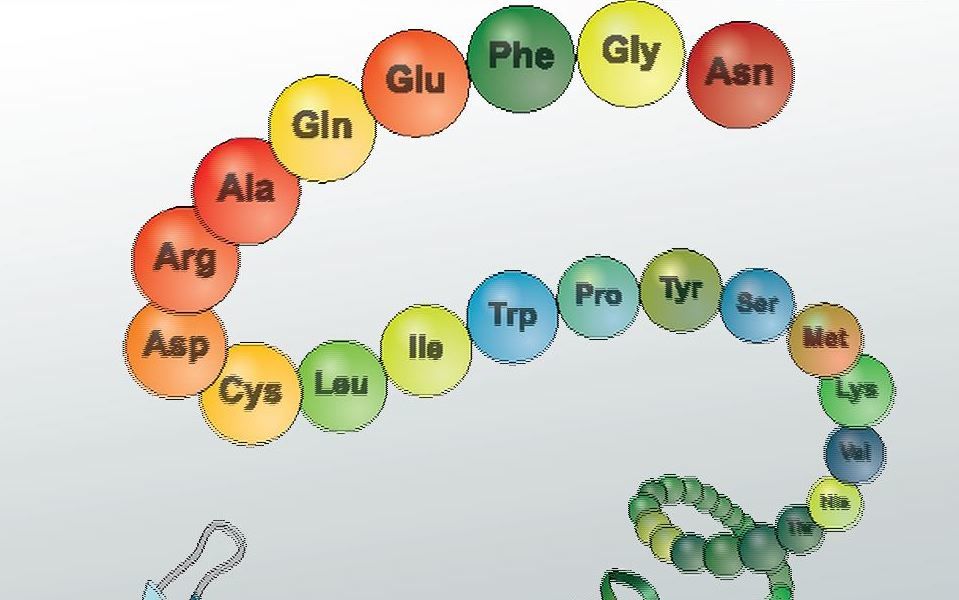
The structure determines the function of a biological molecule

b)

A molecule's specific role in maintaining metabolism & homeostasis is dependent on its structure/function

c)

—Molecular shape determines how biological molecules recognize and and respond to one another with specificity

d)

All answers are correct

e)

—Every single function of an organism (ex. reading these words) is the end result of thousands of biochemical reactions. These reactions are made possible by molecular structure

13.

The yellow and brown portion of this image is:

a)

protein

b)

phopholipid

c)

carbohydrate

d)

cholesterol

14.

The purple regions of the image represent:

a)

phospholipid

b)

cholesterol

c)

proteins

d)

carbohydrates

15.

Examples of particles that can diffuse across through the phospholipid bilayer include:

a)

oxygen and carbon dioxide

b)

sugar

c)

water

d)

calcium ions

16.
A phospholipid has 2 parts. What are they called? 
a)
Hydrophilic Head, Hydrophobic Tail 
b)
Hydrophobic Head, Hydrophilic Tail 
17.
"Water Loving"
a)
Hydrophobic
b)
Hydrophilic 
c)
Hydroelectric 
d)
Hydroloric
18.
Describes the arrangement of the cell membrane as bendable and made of many parts. 
a)
The Fluid Mosaic Model 
b)
The Major Mobility Model 
c)
The Crazy Cell Model
d)
The Maze Model
19.
Something is ___________ ____________
when some molecules can cross the membrane while others cannot. 
a)
Selectively (or Semi) Permeable 
b)
Totally Transparent
c)
Liquid Licorice 
d)
Heavily Patrolled 
20.
How does a cell maintain homeostasis?
a)
Regulates what enters and leaves the cell
b)
Flexibility
c)
Protective barrier
d)
Structure and support
21.
Controls the passage of materials inside and outside of the cell. 
a)
Cell Membrane
b)
Lipid Cleric Layer
c)
Membrane Gate
d)
Protein Receptors 
22.
The cell membrane is selectively permeable, which means...
a)
All materials can enter and leave the cell
b)
Certain things can enter while others cannot
c)
The cell manually sorts through all materials
d)
Only certain cells can interact with the cell.
23.
Which of the following is NOT part of the cell membrane?
a)
Lipids
b)
Carbs
c)
Proteins
d)
Nucleic Acids
24.
What is diffusion?
a)
when molecules move 
b)
when molecules move from a high concentration to a low.
c)
no movement 
d)
molecules move everywhere
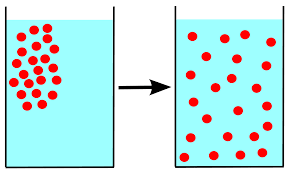
25.
The picture below is an example of _________________.
a)
osmosis
b)
isotonic
c)
diffusion
d)
active transport
26.
Osmosis is the movement of _____ across a membrane.
a)
food
b)
energy
c)
oxygen
d)
water
27.
During osmosis
a)
water moves from high to low concentration
b)
large or oddly shaped molecules move across a cell membrane
c)
water moves when energy is used
d)
proteins are built
28.
When both inside and outside of a cell have the same amount of water it is said that the cell has reached a state of
a)
Osmosis
b)
Diffusion
c)
Equilibrium
29.
A person should never drink salty water because their cells would
a)
shrink
b)
expand
30.
If there is 5 percent water inside a cell and 5 percent water outside a cell
a)
more water will move inside the cell
b)
more water will move outside the cell
c)
There will be no movement of water cells
31.
Passive transport requires no
a)
concentration gradients
b)
osmosis
c)
motion
d)
energy
32.
Lipid tails are...
a)
Hydrophobic
b)
Hydrophilic
33.
When looking at the cell membrane, where are the phosphate heads located?
a)
Floating between bilayer levels
b)
Outer part of the bilayer
c)
Inner part of the bilayer
d)
Located at different parts throughout the bilayer
34.
When looking at the cell membrane, where are the lipid tails located?
a)
Inner part of the bilayer
b)
Outer part of the bilayer
c)
At the end of the bilayer
d)
Goes through each end of the bilayer
35.
Which of the following is responsible for getting complex molecules across the cell membrane?
a)
Lipids
b)
Carbs
c)
Proteins
d)
Nucleic Acids
36.
The phosphate heads of the lipid bilayer are
a)
Hydrophilic
b)
Hydrophobic
c)
Amphipathic
37.
Cholesterol is an important component of the cell membrane because
a)
It makes the membrane more fluid and adds to its flexibility
b)
It aids in diffusion
c)
It aids in cell recognition
d)
It transports large, polar molecules
38.
This picture show the molecules getting help across the membrane.  The vocabulary word that best describes this is
a)
diffusion
b)
osmosis
c)
facilitated diffusion
d)
active transport
39.
This cell organelle helps organisms maintain homeostasis by controlling what substances may enter or leave cells.
a)
vacuole
b)
nucleus
c)
cell membrane
d)
cell wall
40.
How is diffusion (left) different from the process on the right?
a)
 Diffusion takes place due to osmotic pressure. 
b)
Diffusion requires cellular energy for the transfer of molecules.
c)
Diffusion requires protein channels as a passage-way for particles
d)
Diffusion transfers particles from an area of high to low concentration. 
41.

Energy-requiring process that moves material across a cell membrane against a concentration gradient.

a)

Active transport

b)

Passive transport

c)

Facilitated diffusion

d)

osmosis

42.

A cell in a hypotonic solution will...

a)

lose water and shrivel

b)

gain water and burst

c)

not change at all

d)

experience water movement in both directions

43.

A cell in a hypertonic solution will...

a)

lose water and shrivel

b)

gain water and burst

c)

not change at all

d)

experience water movement in both directions

44.

A cell in a isotonic solution will...

a)

lose water and shrivel

b)

gain water and burst

c)

not change at all

d)

experience water movement in both directions

45.

A difference in the concentration of a substance across a distance. High in one place, low in another place.

a)

Osmosis

b)

Diffusion

c)

Concentration Gradient

d)

Magic

46.

process by which a cell takes material into the cell by infolding of the cell membrane

a)

Endocytosis

b)

Exocytosis

c)

Passive transport

d)

Osmosis

47.

A cell that contains a nucleus and membrane bound organelles (animals, plants, fungi).

a)

Prokaryote

b)

Eukaryote

48.

Process by which a cell releases large amounts of material

a)

Exocytosis

b)

Endocytosis

c)

Passive Transport

d)

Facilitated diffusion

49.

Flaccid

a)

Growing plant cell

b)

firm, normal plant cell

c)

Plant cell in which the cell membrane presses against the cell wall

d)

Plant cell in which the cell membrane shrinks away from the cell wall

50.

Turgid

a)

Growing plant cell

b)

limp plant cell

c)

Plant cell in which the cell membrane presses against the cell wall

d)

Plant cell in which the cell membrane shrinks away from the cell wall

51.

Another word for cell bursting

a)

Lyse / lysis

b)

Flaccid / limp

c)

Turgid / full

52.

in most cells, in which the biochemical processes of respiration and energy (ATP) production occur.

a)

Nucleus

b)

Mitochondria

c)

Chloroplast

d)

Ribosome

53.

the movement of substances across a cell membrane without the use of energy by the cell

a)

Active transport

b)

Endocytosis

c)

Exocytosis

d)

Passive transport

54.

The cell on the left is in a(n) __________________ environment

a)

Hypertonic

b)

Hypotonic

c)

Isotonic

d)

Hippopotamus

55.

If the white circle is a cell, what will happen to the cell over time?

a)

It will grow and then pop

b)

Nothing

c)

It will lose water and shrink

56.

What term would describe the following scenario

a)

a cell in a hypotonic solution

b)

a cell in a hypertonic solution

c)

a cell in a isotonic solution

57.

In cell signaling, how is the flow of specific ions

regulated?

a)

Opening and closing of ligand-gated channels

b)

Transduction

c)

Cytoskeleton rearrangement

d)

Endocytosis

58.

Many signal transduction pathways use second messengers to:

a)

transport a signal through the lipid bilayer portion of the plasma membrane.

b)

relay a signal from the outside to the inside of the cell.

c)

relay the message from the inside of the membrane throughout the cytoplasm.

d)

amplify the message by phosphorylating proteins.

59.

Which of the following can activate a protein by transferring a phosphate group to it?

a)

cAMP

b)

G proteins

c)

phosphodiesterase

d)

protein kinase

60.

Of the following, a receptor protein in a membrane that recognizes a chemical signal is most similar to

a)

the active site of an enzyme in the cytoplasm that binds to a specific substrate.

b)

RNA specifying the amino acids in a polypeptide.

c)

genes making up a chromosome.

d)

an enzyme with an optimal pH and temperature for activity.

61.
A signal molecule that binds to a plasma-membrane protein is a
a)
ligand
b)
second messenger
c)
protein kinase
d)
receptor protein
62.
What is a G protein?
a)
specific type of membrane-receptor protein
b)
protein on the cytoplasmic side of a membrane
c)
membrane-bound enzyme
d)
relay protein
63.
What determines whether a cell is a target cell for a particular signal molecule?
a)
phosphorylation cascade
b)
cAMP
c)
signal receptors
d)
phosphatase
64.
Which of the following is a chemical message that usually travels through the bloodstream to target cells?
a)
hormone
b)
local regulator
c)
endocrine cell
65.
The 3 steps of signal transduction in order are
a)
reception, transduction, response
b)
response, transduction, reception
c)
reception, response, transduction
d)
transduction, reception, response
66.

What is being depicted in the image?

a)

Amplification of the signal molecule

b)

Enzymatic proteins inhibiting process of the signal transduction pathway

c)

Kinase groups adding dimer groups to other enzymes

d)

Diffusion of molecules within the cell due to the signaling molecule

67.

Which letter represents the cell membrane?

a)

A

b)

B

c)

C

d)

D

e)

E

68.

Which letter represents the cell surface receptor protein?

a)

A

b)

B

c)

C

d)

D

e)

E

69.

Which letter represents the ligand?

a)

A

b)

B

c)

C

d)

D

e)

E

70.
Signal amplification is most often achieved by
a)
an enzyme cascade
b)
binding of multiple signals
c)
branching pathways
d)
action of adenylyl cyclase
71.

In cell signaling, how is the flow of specific ions

regulated?

a)

Opening and closing of ligand-gated channels

b)

Transduction

c)

Cytoskeleton rearrangement

d)

Endocytosis

72.

Many signal transduction pathways use second messengers to:

a)

transport a signal through the lipid bilayer portion of the plasma membrane.

b)

relay a signal from the outside to the inside of the cell.

c)

relay the message from the inside of the membrane throughout the cytoplasm.

d)

amplify the message by phosphorylating proteins.

73.

Define Fight or Flight Response:

a)

a chemical/biological agent, environmental condition, external stimulus, or an event seen as causing stress to an organism (Ex: Environmental stressor-high/low temperatures, elevated sound levels, overcrowding, etc.).

b)

a sequence within the body that is triggered when the body prepares itself for defending/attacking (fight) or running away to safety (flight).

c)

completely insane without true cause

d)

the act of cooking food by applying dry heat; for example, a conventional oven.

74.

What hormone prolongs and intensifies the body's response during stress by increasing heart rate and raising blood glucose?

a)

Epinephrine

b)

Glucocorticoid

c)

Cortisol

d)

ADH

75.

What cell signaling compound is shown in the figure to provide short-distance communication, affecting nearby cells in the same tissue or area?

a)

autocrine

b)

paracrine

c)

apoptosis

d)

hormone

76.

What is a G protein?

a)

A protein on the cytoplasmic side of the a membrane that becomes activated by a receptor protein

b)

A specific type of membrane receptor protein

c)

A membrane bound enzyme that converts ATP to cAMP

d)

A tyrosine kinase relay protein

77.
control the cell's activities; contains the cell's DNA
a)
mitochondria
b)
cell membrane
c)
nucleus
d)
golgi body
78.
breaks down food to release energy
a)
nucleus
b)
lysosomes
c)
mitochondria
d)
vacuole
79.
mainly found in plant cells
a)
nucleus
b)
cell wall
c)
cell membrane
d)
lysosome
80.
What is the function of the cytoplasm?
a)
Stores water and mineral ions
b)
It holds all the organelles in place
c)
a.Controls what enters and leaves the cell
d)
Supports the cell
81.
What organelle is associated with the production of proteins?
a)
nucleus
b)
ribosome
c)
mitochondria
d)
cell membrane
82.

Which structures do plant cells have that animal cells do NOT have?

a)

cell wall

b)

large central vacuole

c)

chloroplasts

d)

all of these

83.
What is the structure labeled #1?
a)
Chloroplast
b)
Nucleus
c)
Cell Membrane
d)
Mitochondria
84.
What is the structure labeled #5?
a)
Vacuole
b)
Chloroplast
c)
Mitochondria
d)
Lysosome
85.
What is the structure labeled #3?
a)
Golgi body
b)
Endoplasmic reticulum
c)
Vacuole
d)
Mitochondria
86.
What is the structure labeled #9?
a)
Cell Wall
b)
Cytoplasm
c)
Chloroplast
d)
Mitochondria
87.
What is the structure labeled #6?
a)
Smooth ER
b)
Golgi Body
c)
Nucleus
d)
Rough ER
88.
What is the structure labeled #8?
a)
Vacuole
b)
Golgi body
c)
Nucleus
d)
Lysosome
89.
What is the structure labeled #4?
a)
Vacuole
b)
Cell wall
c)
Cytoplasm
d)
Cell membrane
90.
What is the structure labeled #7?
a)
Rough ER
b)
Smooth ER
c)
Golgi body
d)
Flagella
91.
What is the structure labeled #2?
a)
Lysosome
b)
Vesicle
c)
Ribosome
d)
Mitochondria
92.
What is the structure labeled #10?
a)
Cell membrane
b)
Cell wall
c)
Cytoplasm
d)
Centriole
93.
What is the structure labeled #13?
a)
Centrioles
b)
Cytoplasm
c)
Lysosome
d)
Mitochondria
94.
What is the function of the chloroplast?
a)
site of digestive enzymes
b)
site of ATP (energy) production
c)
site of photosynthesis
d)
site of protein production
95.
What is the function of the lysosome?
a)
site of digestive enzymes
b)
site of ATP (energy) production
c)
site of photosynthesis
d)
site of protein production
96.
What is the function of the mitochondria?
a)
site of digestive enzymes
b)
site of ATP (energy) production
c)
site of photosynthesis
d)
site of protein production
97.
What is the function of the ribosome?
a)
site of digestive enzymes
b)
site of ATP (energy) production
c)
site of photosynthesis
d)
site of protein production
98.
What is the function of the Golgi body?
a)
to control the activities within the cell
b)
to package and ship cellular materials
c)
to store water and nutrients 
d)
to control the materials that pass into and out of the cell
99.
What is the function of the vacuole?
a)
to control the activities within the cell
b)
to package and ship cellular materials
c)
to store water and nutrients 
d)
to control the materials that pass into and out of the cell
100.
What is the function of the nucleus?
a)
to control the activities within the cell
b)
to package and ship cellular materials
c)
to store water and nutrients 
d)
to control the materials that pass into and out of the cell
101.
What structure does this organism use for locomotion>
a)
1, nucleus
b)
2, chloroplast
c)
3, vacuole
d)
4, flagella
102.

Water is an excellent solvent. Select the property that justifies this statement.

a)

As a polar molecule, it can surround and dissolve ionic and polar molecules.

b)

It forms ionic bonds with ions, hydrogen bonds with polar molecules, and hydrophobic interactions with nonpolar molecules.

c)

It forms hydrogen bonds with itself so cohesion is possible.

d)

It is liquid and will adhere to many substances

103.

How many electron pairs does carbon share in order to complete its valence shell?

a)

2

b)

4

c)

6

d)

8

104.

A carbon atom is most likely to form what kind of bond(s) with other atoms?

a)

ionic

b)

hydrogen

c)

covalent

d)

covalent and hydrogen

e)

ionic, covalent, and hydrogen

105.

Why are hydrocarbons insoluble in water?

a)

The majority of their bonds are polar covalent carbon–to–hydrogen linkages.

b)

The majority of their bonds are nonpolar covalent carbon–to–hydrogen linkages.

c)

They are hydrophilic.

d)

They exhibit considerable molecular complexity and diversity.

e)

They are lighter than water.

106.

Which of the following best summarizes the relationship between dehydration reactions and hydrolysis?

a)

Dehydration reactions assemble polymers, and hydrolysis reactions break down polymers.

b)

Dehydration reactions eliminate water from lipid membranes, and hydrolysis makes lipid membranes water permeable

c)

Dehydration reactions can occur only after hydrolysis.

d)

Dehydration reactions ionize water molecules and add hydroxyl groups to polymers; hydrolysis reactions release hydroxyl groups from polymers

107.

Which of the following statements concerning saturated fats is not true?

a)

They are more common in animals than in plants.

b)

They have multiple double bonds in the carbon chains of their fatty acids.

c)

They generally solidify at room temperature.

d)

They contain more hydrogen than unsaturated fats having the same number of carbon atoms

e)

They are one of several factors that contribute to atherosclerosis.

108.

There are 20 different amino acids. What makes one amino acid different from another?

a)

different side chains (R groups) attached to a carboxyl carbon

b)

different side chains (R groups) attached to the amino groups

c)

different side chains (R groups) attached to an α carbon

d)

different structural and optical isomers

109.

The structural level of a protein least affected by a disruption in hydrogen bonding is the

a)

primary level

b)

secondary level

c)

tertiary level

d)

quaternary level

110.

Which of the following takes place as an ice cube cools a drink?

a)

Evaporation of the water in the drink increases.

b)

The specific heat of the water in the drink decreases.

c)

A calorie of heat energy is transferred from the ice to the water of the drink

d)

Kinetic energy in the drink decreases

e)

Molecular collisions in the drink increase

111.

You have two beakers. One contains pure water; the other contains pure methanol (wood alcohol). The covalent bonds of methanol molecules are nonpolar, so there are no hydrogen bonds among methanol molecules. You pour crystals of table salt (NaCl) into each beaker. Predict what will happen.

a)

Equal amounts of NaCl crystals will dissolve in both water and methanol

b)

NaCl crystals will dissolve readily in water but will not dissolve in methanol

c)

NaCl crystals will not dissolve in either water or methanol

d)

NaCl crystals will dissolve readily in methanol but will not dissolve in water

112.

Approximately 32 different monomeric carbohydrate subunits are found in various natural polysaccharides. Proteins are composed of 20 different amino acids. DNA and RNA are each synthesized from four nucleotides.


Which class of biological polymer has the greatest functional variety?

a)

polysaccharides

b)

DNA

c)

proteins

d)

RNA

113.

Which of the following molecules lacks amino acids?

a)

hemoglobin

b)

antibodies

c)

spider silk

d)

galactose

114.
Which major macromolecule is being represented in this image? 
a)
carbohydrate
b)
lipid
c)
protein
d)
nucleic acid
115.
Which of the following contains the genetic code for protein synthesis?
a)
carbohydrate
b)
lipid
c)
protein
d)
nucleic acid
116.
What type of macromolecule is being represented in this image? 
a)
carbohydrate
b)
lipid
c)
protein
d)
nucleic acid
117.
What are the building blocks of proteins?
a)
amino acid
b)
fatty acid
c)
nucleotide
d)
lipid
118.
What are the single sugars that are the building blocks of carbohydrates?
a)
monosaccharides
b)
disaccharides
c)
polysaccharides
d)
amino acid
119.
The element _______is found in all of the organic compounds.
a)
Iron
b)
Nitrogen
c)
Carbon
d)
Oxygen
120.
Proteins are made of monomers called ___________
a)
Nucleotides
b)
Monosaccharides
c)
Amino Acids
d)
Glycerol and fatty acids
121.
DNA and RNA are examples of 
a)
Carbohydrates
b)
Lipids
c)
Proteins
d)
Nucleic Acids
122.
Nucleotides are monomers of
a)
Carbohydrates
b)
Lipids
c)
Proteins
d)
Nucleic Acids
123.
Nucleotides are monomers of
a)
Carbohydrates
b)
Lipids
c)
Proteins
d)
Nucleic Acids
124.
Waxes, oils and fats are examples of
a)
Carbohydrates
b)
Lipids
c)
Proteins
d)
Nucleic Acids
125.
The organic compounds that have many structural purposes and are used in many processes within the
cell are called ____________________.
a)
Carbohydrates
b)
Lipids
c)
Proteins
d)
Nucleic Acids
126.

Which macromolecule is shown?

a)

lipid

b)

protein

c)

nucleic acid

d)

carbohydrate

127.
What type of macromolecule are enzymes?
a)
Protein
b)
Carbohydrate
c)
Lipid
d)
Nucleic Acid
128.
Which macromolecule stores energy, insulates us, and makes up the cell membrane?
a)
lipids
b)
proteins
c)
carbohydrates
d)
nucleic acids
129.
Where does the energy from our food originally come from?
a)
the Sun
b)
chemical reactions
c)
carbohydrates
d)
mitochondria
130.
What is the monomer of a protein?
a)
amino acid
b)
monosaccharide
c)
fatty acid
d)
nucleic acid
131.

Which of the following describes the secondary structure of proteins?

a)

The sequence of amino acids

b)

The α-helix and β-pleated sheet folding

c)

The folding of the polypeptide chain due to the 'R' groups

d)

The joining of different protein molecules to make one big molecule
132.
The name of the initial chain of monomers in a protein is called.....
a)
polypeptide
b)
polysaccharide
c)
polyester
d)
polynucleotide
133.

Why is folding so important in proteins?

a)

It gives them a unique, functional shape

b)

It makes them look tidier

c)

It makes every protein molecule different from the next even if they are the same type

d)

The folding is random so is not that important at all

134.

The main bonding in the secondary structure of a protein is due to.....

a)

covalent bonding

b)

ionic bonding

c)

hydrogen bonding

d)

polar bonding

135.

The tertiary structure folding in proteins is primary due to the interactions of....

a)

the 'R' groups

b)

the 'P' groups

c)

the 'A' groups

d)

the 'S'

136.

What gives a protein its unique shape?

a)

the unique sequence of amino acids in its polypeptide chain

b)

the unique folding due to the sequence of amnio acids in the polypeptide chain

c)

hydrogen bonding & unique interactions between the 'R' groups

d)

all of these

137.

which of the following terms refers to the order in which amino acids are linked together in a protein.

a)

Primary

b)

Secondary

c)

Tertiary

d)

Quaternary

138.

The chain of amino acids folds and coils on itself

a)

Primary

b)

Secondary

c)

Tertiary

d)

Quaternary

139.

The entire polypeptide forms a three-dimensional structure

a)

Primary

b)

Secondary

c)

Tertiary

d)

Quaternary

140.

Two or more polypeptides attached together and work as one unit

a)

Primary

b)

Secondary

c)

Tertiary

d)

Quaternary

141.
What is a peptide bond?
a)
Bond that holds two amino acids together.
b)
A bond that holds hydrogen and oxygen molecules together.
c)
A bond that holds the phosphate group of one nucleotide and a sugar of a neighboring nucleotide.
d)
A bond that is formed by the sharing of electrons.
142.
How many different amino acids are there?
a)
15
b)
20
c)
25
d)
30
143.

The diagram shows a bond forming between two amino acids. What is the name of this reaction?

a)

Condensation

b)

Hydrolysis

c)

Pepysis

d)

Oxidation

144.
The tertiary structure folding in proteins is primary due to the interactions of....
a)
the 'R' groups
b)
the 'P' groups
c)
the 'A' groups
d)
the 'S'
145.
What is the monomer of a lipid?
a)
monosaccharide
b)
nucleic acid
c)
fatty acid
d)
amino acid
146.
Steroids have what kind of structure?
a)
long chain of hydrogen/carbons with a glycerol group
b)
CHO in a hexagonal shape
c)
4 fused rings
d)
polar head and two fatty acid tails
147.
What type of fat is this?
a)
saturated fatty acid
b)
unsaturated fatty acid
c)
steroid
d)
wax
148.
What type of lipid is this?
a)
steroid
b)
cholesterol
c)
phospholipid
d)
triglyceride
149.
Lipids do not dissolve in water because they are _______________
a)
polar
b)
water soluble
c)
non-polar
150.
Saturated fats have _______________
a)
straight structure
b)
single bonds
c)
solidity at room temperature
d)
all of the above
151.
An example of an unsaturated fat would be ________
a)
butter
b)
meat fat
c)
vegetable oil
d)
scrapple
152.
A lipid is a polymer that is made of what kind of monomers?
a)
monosacchirides
b)
amino acids
c)
fatty acids and a glycerol
d)
nucleic acid
153.

Triglyceride is made up of _____________ backbone.

a)

Butanol

b)

Glyceroldyhyde

c)

Glycerol

154.

Which fatty acid has double bonds between two carbon atoms?

a)

saturated fatty acid

b)

unsaturated fatty acid

155.
What are the monomers of a polysaccharide?
a)
glycerol
b)
amino acid
c)
fatty acid
d)
glucose
156.
A monosaccharide is a
a)
carbohydrate
b)
lipid
c)
nucleic acid
d)
protein
157.
Plants store glucose in the form of
a)
starch
b)
glycogen
c)
cellulose
d)
chitin
158.
Which type of carbohydrate is this?
a)
monsaccharide
b)
disaccharide
c)
polysaccharide
d)
glyceride
159.
Which type of carbohydrate is this?
a)
monosaccharide
b)
disaccharide
c)
polysaccharide
d)
glyceride
160.
Which is not a chemical element needed to build sugars?
a)
Carbon
b)
Oxygen
c)
Nitrogen
d)
Hydrogen
161.
This polysaccharide is important to the structure of plant cell walls, 
a)
Starch
b)
Glycogen
c)
Cellulose
d)
Chitin
162.
What is the function of nucleic acids?
a)
Stores energy
b)
Stores genetic information
c)
Movement
d)
Physical structure
163.
What is the monomer of nucleic acids?
a)
Glycerol
b)
Monosaccharides
c)
Amino Acids
d)
Nucleotides
164.
What are the components of a nucleotide?
a)
nitrogen base, phosphate group, and pentose sugar
b)
pentose sugar, purine, and pyrimidine
c)
nitrogen base and a phosphate group
d)
DNA, phosphate group, monosaccharide
165.
What is the difference between DNA and RNA from the point of view of the nitrogenous bases that are present in their nucleotides?
a)
In DNA, nucleotides can be made up of A, T, C, G. In RNA, nucleotides can also contain A, C or G; however, instead of T, they contain U.
b)
Purine and Pyrimidine
c)
Pyrimidine: Thymine, Cytosine (Urical)
d)
DNA, RNA
166.
Which macromolecule is shown?
a)
lipid
b)
protein
c)
nucleic acid
d)
carbohydrate