wayground logo

Free Printable Worksheets

Font size

S
M
L
XL
Worksheets

Physical Science Sem 2 Final Review

Total questions: 94

Worksheet time: 3hrs 50mins

Name
Class
Date
1.
What are the three states of matter?
a)
solid, volume, mass
b)
density, volume, mass
c)
solid, liquid, gas
d)
density, gas, volume
2.
Something that takes up space and has mass.
a)
volume
b)
matter
c)
mass
d)
density
3.
The molecules in this picture are in what phase?
a)
solid
b)
liquid
c)
gas
d)
plasma
4.
What takes place when a liquid changes to a gas?
a)
condensation
b)
melting
c)
evaporation
d)
freezing
5.
What takes place when a gas changes to a liquid?
a)
melting
b)
freezing
c)
evaporation
d)
condensation
6.

What is potential energy?

a)

moving energy

b)

stored energy

c)

renewable energy

d)

non renewable energy

7.

What is kinetic energy?

a)

moving energy

b)

potential energy

c)

stored energy

d)

renewable energy

8.

What is NOT a renewable energy source?

a)

coal

b)

wind

c)

solar

d)

water

9.

Which is NOT a non-renewable energy source?

a)

coal

b)

oil

c)

wind

d)

gas

10.
Hot air ______ while cool air ____
a)
Sinks, Rises
b)
Rises, Rises
c)
Rises, Sinks
d)
Convection, Radiation 
11.

What is the earth's main source of heat?

a)

the moon

b)

the sun

c)

the ocean

d)

forests

12.
When things are hot molecules are moving...
a)
Fast
b)
Slow
c)
They are not moving
d)
They are moving by not fast or slow
13.
When things are cold molecules are moving...
a)
Fast
b)
Slow
c)
They are not moving
d)
They are moving by not fast or slow
14.
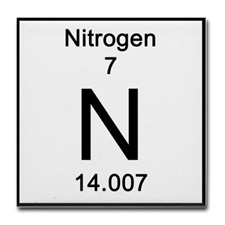
What is the number of protons that the element in this image contain?
a)
14
b)
7
c)
15
d)
18
15.

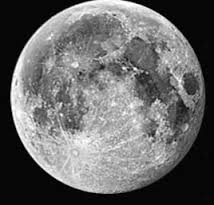
What moon phase is this image?

a)

Full

b)

New

16.

The different shapes that the moon seems to have.

a)

revolutions

b)

phases

c)

rotations

17.

As the moon's shape appears to get smaller, we say that the moon is _.

a)

waning

b)

waxing

18.

When the moon appears to be getting larger

a)

wax

b)

wane

c)

new

19.

The cycle of the moon lasts about a _.

a)

month

b)

year

c)

week

20.

True or False: The moon produces its own light.

a)

True

b)

False

21.

Which phase of the moon is shown in the picture?

a)

New

b)

Cresent

c)

Quarter

22.

Name the moon phase

a)

First Quarter

b)

Full Moon

c)

New Moon

23.
The definition of eclipse is:
a)
The planets line up
b)
The Sun, Earth and Mars line up
c)
The Sun, Earth and Moon line up
d)
The Earth, Moon and Venus line up 
24.
A lunar eclipse occurs when the line up is this:
a)
Sun -Earth-Moon
b)
Moon, Sun, Earth
c)
Earth-Sun-Moon
d)
Sun-Moon-Earth
25.
The line up for a solar eclipse is: 
a)
Sun-Earth-Moon
b)
Earth-Sun-Moon
c)
Sun-Moon-Earth
d)
Earth-Moon-Mars
26.
What causes day and night?
a)
Earth's orbit around the sun
b)
Earth's rotation on its axis
c)
the sun's rotation
d)
the moon's shadow
27.
How long does it take the Earth to orbit around the sun?
a)
325.0 days
b)
365.25 days
c)
1 month
d)
24 hours
28.
What does the earth's tilt cause?
a)
The seasons
b)
Day and Night
c)
Tsunamis
d)
Earthquakes
29.
What effect does the tilt of the earth have?
a)
It changes the angle that the sun strikes the earth in different land areas
b)
It causes the earth to be farther away from the sun at different times of the year
c)
When the earth is tilted away from the sun we have night
d)
When the earth is tilted away from the sun we have day
30.
Why does the area around the equator stay the same temperature all year?
a)
The equator rotates slower than the poles.
b)
The equator remains the same distance from the sun.
c)
The equator always receives direct sunlight.
d)
The equator has 18 hour days.
31.
One rotation of Earth is equal to
a)
a day.
b)
a year.
32.
The difference between a moon and a planet is...
a)
A moon is made of rock, a planet is made of gas
b)
Moons can only be seen with a telescope
c)
Moonss revolve around a planet, planets revolve around a sun
d)
That's no moon... ITS A SPACE STATION!
33.
Which planet is the largest?
a)
Jupiter
b)
Saturn
c)
Uranus
d)
Neptune
34.

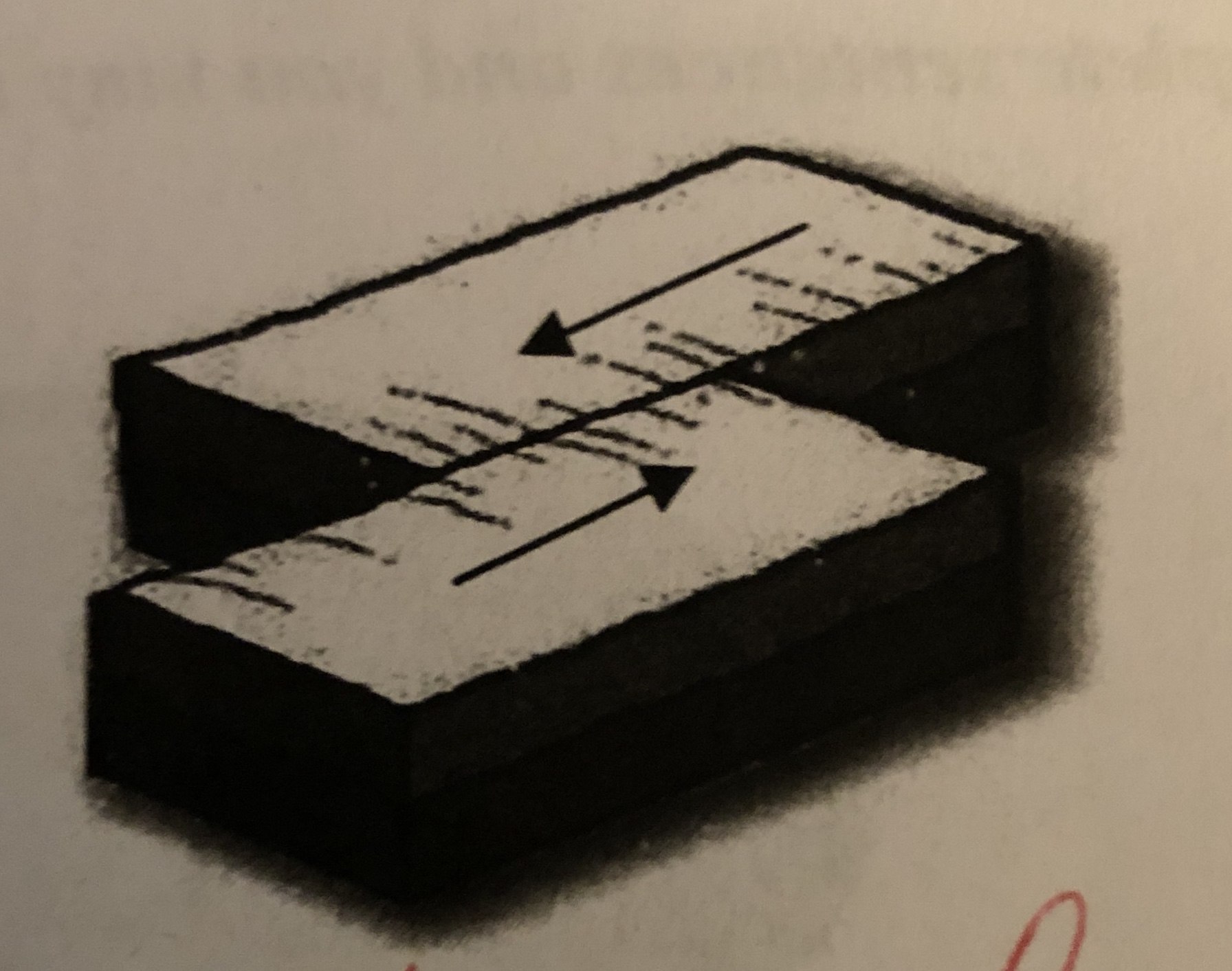
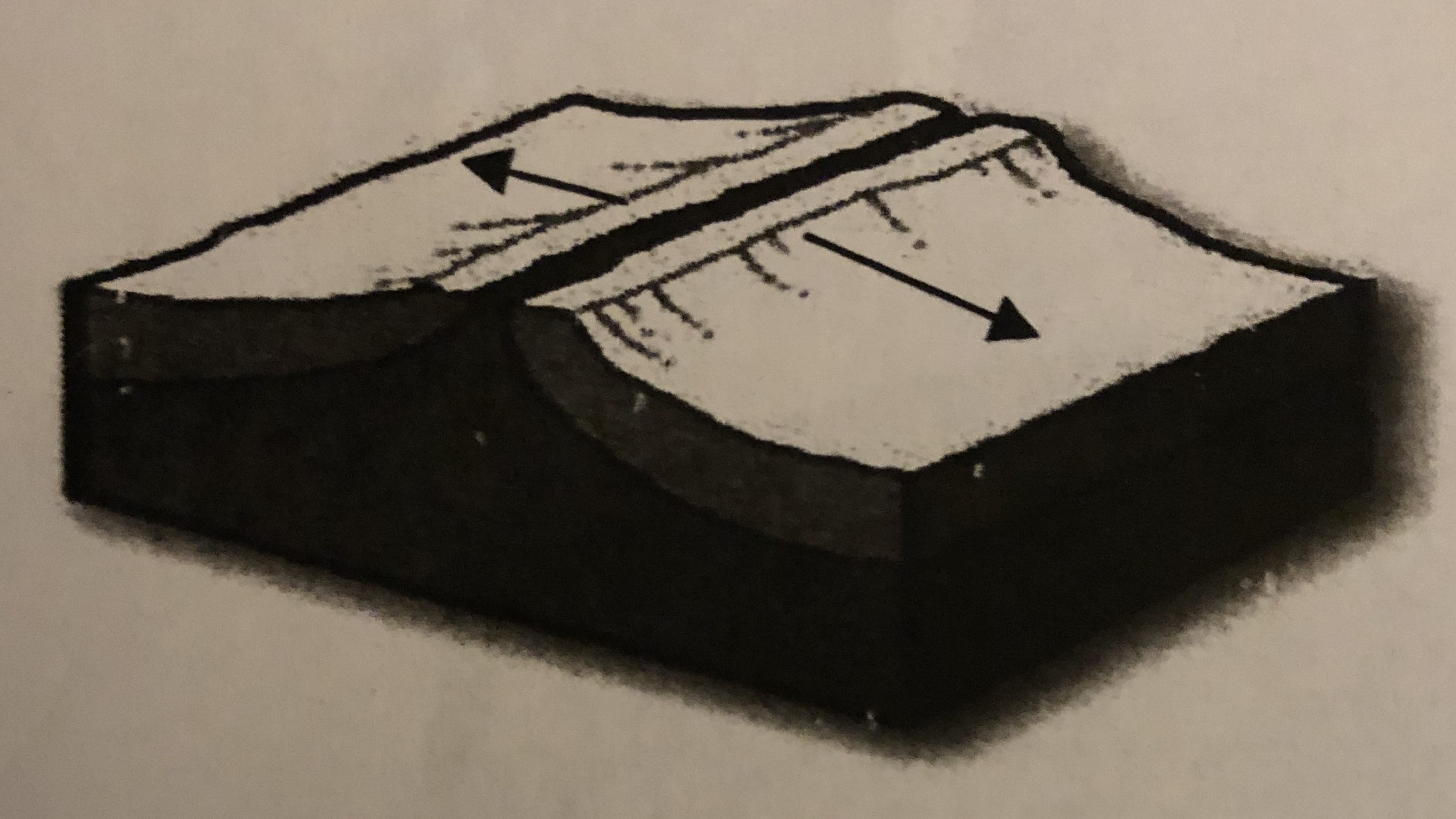
What type of boundary is this?

a)

convergent

b)

divergent

c)

transform

35.

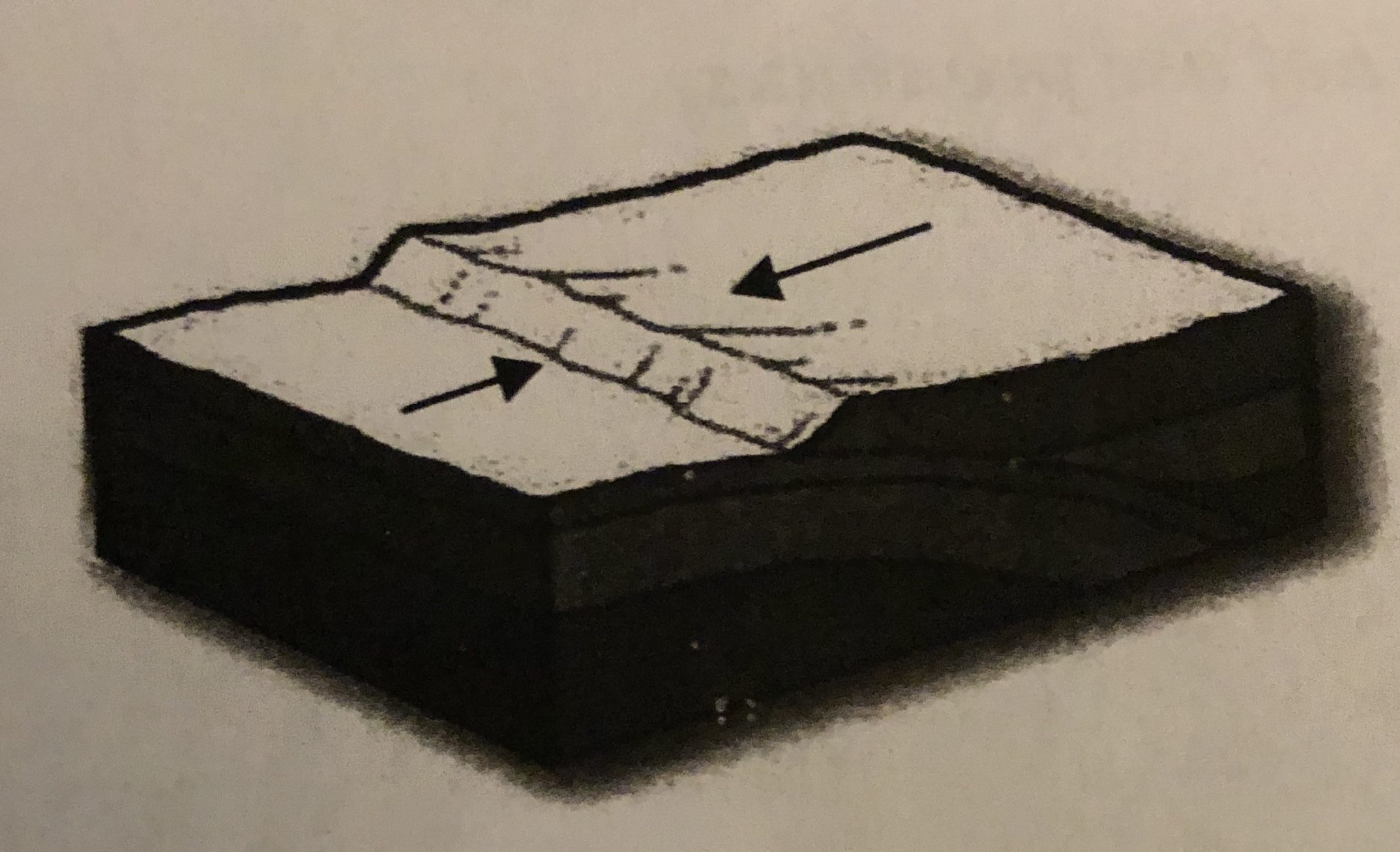
What type of boundary is this?

a)

convergent

b)

transform

c)

divergent

36.

What type of boundary is this?

a)

convergent

b)

divergent

c)

transform

37.

Any trace of an ancient organism that has been preserved in rock is called a

a)

landform

b)

continent

c)

fossil

d)

landmass

38.

What is Pangea?

a)

the name of a German scientist

b)

the name of a supercontinent that existed millions of years ago

c)

another name for continental drift

d)

the name of an ancient fossil

39.

Most geologists think that the movement of Earth's plates is caused by

a)

conduction

b)

earthquakes

c)

convection currents in the mantle

d)

Earth's magnetic field

40.
Which layer formed first?
a)
Rock Layer W
b)
Rock Layer X
c)
Rock Layer Y
d)
Rock Layer Z
41.
Fossils give us evidence about which of the following?
a)
plants and animals that lived long ago
b)
how weathering and erosion break down rocks
c)
the other planets in our solar system
d)
the transfer of energy from one form  to another
42.
Finding the fossils of trees in an area that is currently a desert without much life might tell us that the area, millions of years ago - 
a)
was heavily eroded by strong winds
b)
received enough rain to support a forest
c)
suffered very powerful earthquakes
d)
was destroyed by the impact of meteorites
43.
The breakdown of rock into smaller particles from the effects of wind, water and ice
a)
erosion
b)
cementation 
c)
pressure
d)
weathering
44.
Sediment that is left behind in rivers lakes and oceans
a)
weathering
b)
erosion
c)
cementation
d)
deposition
45.

Which rock layer most likely contains fossils of the most recently evolved organisms?

a)

1

b)

2

c)

3

d)

4

46.
The diagram shows fossils in different rock layers. Which of these statements about the age of these fossils is most likely correct?
a)
Fossil A and C are the same age
b)
Fossil B is older than fossil C
c)
Fossils A is older than fossil B
d)
Fossil D is older than fossil C
47.
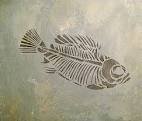
If scientists found this fossil, what could they infer?
a)
what fish are like today
b)
that this fish lacked oxygen
c)
what kind of animal ate this fish
d)
that water once covered the area
48.
Which layer is oldest?
a)
A
b)
W
c)
G
d)
Z
49.
What is the water cycle?
a)
the 3 forms of water
b)
the movement of water on, above, or below the surface of the Earth
c)
when water melts
d)
when clouds form
50.
What part of the water cycle does this picture show?
a)
condensation
b)
precipitation
c)
evaporation
51.
Which of these is an example of precipitation?
a)
snow
b)
air
c)
clouds
d)
vapor
52.
Which best explains why runoff is important?
a)
It returns water to other locations on Earth
b)
It increases the chance of flooding
c)
It makes evaporation occur faster
d)
It increases condensation
53.
What does groundwater do?
a)
It sends water to our buildings, houses, and water transplant places
b)
Goes to the sky
c)
Goes to the sun
d)
Provides rivers
54.
What is it called when plants give off water vapor as a waste product?
a)
condensation
b)
evaporation
c)
sublimation
d)
transpiration
55.
Is humidity the amount of water in the air?
a)
Yes
b)
No
56.
oxygen is a gas produced by _ and used by  _ 
a)
plants and animals 
b)
photosynthesis and carbon dioxide 
c)
animals and plants 
d)
carbon dioxide and photosynthesis
57.
All of the carbon in existence is continually recycled in the carbon cycle
a)
True
b)
False
58.
How is the burning of fossil fuels related to global warming?
a)
Magic
b)
Fuels are hot
c)
Greenhouse effect
d)
Photosynthesis
59.
Which of the following removes carbon from the atmosphere?
a)
Combustion
b)
Respiration
c)
Photosynthesis
d)
Death
60.
Which of the following is an example of a decomposer?
a)
Owl
b)
Fish
c)
Tree
d)
Mushroom
61.
Organisms that do not decompose can be buried and become what?
a)
water
b)
nutrients
c)
air
d)
fossil fuels
62.
If the plant population decreased, the amount of carbon would _________.
a)
Stay the same
b)
Increase
c)
Decrease
63.
carbon dioxide is a gas produced  by ________ and used by __________
a)
plants and animals 
b)
carbon and photosynthesis
c)
animals and plants 
d)
photosynthesis
64.

Plants use ____________ to make their own food

a)

Water

b)

Sunlight

c)

Carbon dioxide

d)

All of these

65.
What does every food chain start with? (Even if it's not drawn or written there!)
a)
producers
b)
sun
c)
consumer
d)
decomposers
66.
An organism that needs to eat other organisms to obtain energy is known as a:
a)
Autotroph
b)
Producer
c)
Consumer
d)
Mutualist
67.
All members of one species in a certain area.
a)
Population
b)
Limiting Factors
c)
Immigration
d)
Birth Rate
68.
What terms describes protists and fungi that gain their energy by feeding off dead and decaying organic matter?
a)
decomposers
b)
heterotrophs
c)
autotrophs
d)
symbiotic
69.

What organisms in the ocean absorb the most carbon dioxide?

a)

Phytoplankton

b)

Ocean mammals, like whales and dolphins

c)

Fish

d)

Coral

70.
According to the Law of Conservation of Energy, energy cannot be _________ or ____________. 
a)
destroyed, destroyed
b)
created, saved
c)
created, destroyed
d)
lost, found
71.

Geologists have classified rocks into three major groups of rocks which are:

a)

inorganic, organic and chemical rocks

b)

igneous, sedimentary and metamorphic rocks

c)

metamorphic, chemical and non chemical rocks

d)

sedimentary, inorganic and igneous rocks

72.

Any rock that forms from another rock as a result of changes in heat or pressure (or both) is a:

a)

chemical rock

b)

igneous rock

c)

sedimentary rock

d)

metamorphic rock

73.

A rock that forms from many small fragments of other rocks is a(n)

a)

igneous rock

b)

metamorphic rock

c)

sedimentary rock

d)

extrusive rock

74.

The process by which metamorphic rock changes to igneous rock begins with

a)

melting

b)

erosion

c)

deposition

d)

crystallization

75.

Which rock cycle process causes many sedimentary rocks to have visible layers?

a)

eruption

b)

intrusion

c)

crystallization

d)

deposition

76.
If heat and pressure inside the Earth cause a rock to melt, the material that formed would be
a)
Metamorphic
b)
Magma
c)
Sedimentary
d)
Igneous
77.
This rock started as molten magma. What type of rock is this?
a)
Sedimentary
b)
Igneous
c)
Metamorphic
78.

What causes global convection currents

a)

Forests

b)

greenhouse gases

c)

more land forms

d)

uneven heating of the Earth's surface

79.

Where do warm ocean currents come from

a)

the poles

b)

near the land

c)

the equator

d)

middle of the oceans

80.
What are the yearly conditions of temperature, precipitation and humidity?
a)
weather
b)
climate
81.
What instrument measure air pressure?
a)
barometer
b)
thermometer
82.

Global warming is known as the gradual increase in _________________ of the atmosphere.

a)

precipitation

b)

sun spots

c)

temperature

d)

ocean currents

83.

The most abundant greenhouse gas in the atmosphere is ___________________.

a)

oxygen

b)

nitrogen

c)

carbon dioxide

d)

argon

84.

Possible human solutions for limiting global warming and climate change are...

a)

being more energy-efficient

b)

using renewable sources of energy

c)

removing carbon from fossil fuel emissions

d)

all of the above

85.
The impact on the planet due to global warming is called...
a)
climate change
b)
the seasons
c)
the weather
d)
natural change
86.
Any amount of CO2 (Carbon Dioxide) in the atmosphere is bad for our planet.
a)
True
b)
False
87.
The conditions in an area over a long period of time?
a)
Climate
b)
Weather
88.
Changes from minute-to-minute, hour-to-hour, day-to-day
a)
Climate
b)
Weather
89.
Texas has long, hot summers.
a)
Climate
b)
Weather
90.
It snowed for three days last week.
a)
Climate
b)
Weather
91.
Increasing quantities of CO2 (Carbon Dioxide) in the atmosphere will cause air temperatures to be _____. 
a)
warmer
b)
cooler
92.
Which of the following is NOT evidence of global warming?
a)
Sea level rising
b)
Loss of Arctic Sea Ice
c)
Less Water Vapor in the Air
d)
More extreme weather events
93.
Which human activity contributes the MOST carbon dioxide to the atmosphere?
a)
Fishing
b)
Breathing
c)
Burning Fossil Fuels
d)
Farming
94.
Global Warming does not affect humans, only plants and animals
a)
True
b)
False