Worksheets
Class 9_Mid term_Science_paper 1
Total questions: 104
Worksheet time: 2hrs 57mins
Name the process which occurs when a drop of Dettol is added to water.
(a)
Where is apical meristem found?
(a)
Which law of motion gives the measure of force?
(a)
Give reasons why the smell of hot sizzling food reaches you several meters away, but to get the smell from cold food you have to go close.
(a)
Why the cell is called the structural and functional unit of life?
(a)
Gravitational force acts on all objects in proportion to their masses. Why then, a heavy object does not fall faster than a light object?
(a)
What are the characteristics of the particles of matter?
(a)
When heat is supplied by a burner to boiling water,
then the temperature of water during vaporisation
(0) rises slowly
@) rises rapidly
(c) first rises and then becomes constant
(d) does not rise at all
In which state does water exist at 10°C
(a)
Which of the two contains more heat energy : 1 kg of water at 100°C or 1 kg of steam at 100°C ?
(a)
Why does perspiration keep our body cool?
(a)
A rubber band can change its shape on stretching. Will you classify it as solid of not? Justify your answer.
(a)
State the basic difference between a gas and a vapour.
The vapour in its natural state is a solid or liquid at room temperature. However, a gas in its natural state at room temperature would still be a gas.
Vapour is a substance which has experienced a phase change. Gas is a substance which has not, and will not experience a phase change.
A gas is a substance above its critical temperature but below its critical pressure, while a vapour is a substance above its boiling point.
Gas is one of the 4 states of matter whereas vapour does not classify as such. It is just a substance in gaseous form.
Gas cannot be seen while vapours are visible.Vapours can turn back and form into solid and liquid states but a gas cannot.
What is the effect of temperature on the rate of diffusion?
Higher temperatures increase the energy and therefore the movement of the molecules, increasing the rate of diffusion
Lower temperatures decrease the energy of the molecules, thus decreasing the rate of diffusion.
Diffusion occurs only in air.
diffusion occurs only in liquids
What is the effect of density of liquid on the rate of diffusion?
As the density of the liquid increases rate of diffusion will be decreases
The greater the density, lower the rate of diffusion. This is because heavier particles find it much harder to move around as compared to lighter particles.
Density is defined as mass per unit volume
On suffering from fever which will lower down your body temperature, more ice or ice cold water and why?
Ice will lower the body temperature more than ice cold water because latent heat of fusion of ice is quite high (335kJkg-1)
Ice is therefore, expected to absorb more heat energy from the body and will lower the body temperature more than ice cold water.
When 334 J of energy are added to 1 g of ice at 0°C, these bonds are loosened, producing liquid water at 0°C.
specific heat capacity of water is 4.187 kJ/kgK,
Naphthalene balls disappear with time without leaving any solid.
(a)
A desert cooler cools better on a hot dry day
On a hot dry day, the amount of water vapour present in air is less. Thus, water present inside the desert cooler evaporates more, thereby cooling the surroundings more. That is why a desert cooler cools better on a hot dry day.
The water when evaporated from a desert cooler absorbs energy from the surrounding for compensating the loss of energy during evaporation making the surrounding cool. Evaporation is inversely proportional to humidity. So on a hot dry day, the evaporation is more so the surrounding is more cooled.
The cooling in a desert room cooler is caused by the evaporation of water. A desert cooler cools better on a hot and dry day because the higher temperature on a hot day increases the rate of evaporation of water, and the dryness of air (low humidity of air) also increases the rate of evaporation of water. And due to increased rate of evaporation of water, a desert room cooler cools better on a hot and dry day.
What is evaporation? In what way is it different from boiling ?
Evaporation is a normal process that occurs when the liquid form changes into the gaseous form; while causing an increase in the pressure or temperature.
Boiling is an unnatural process where the liquid gets heated up and vaporized due to continuous heating of the liquid.
Evaporation usually occurs on the surface of the liquid being heated up.
Boiling usually occurs on the entire mass of the liquid that gets heated up.
Bubbling effect is not visible in evaporation.
Bubbling effect is visible during the process of boiling.
The process of evaporation is usually slower and more carried out when compared to boiling.
The process of boiling is usually much quicker and the process happens quite rapidly as well.
Define latent heat of vaporisation.
Latent heat of vapourisation is a physical property of a substance. When a material in liquid state is given energy, it changes its phase from liquid to vapour without change in temperature, the energy absorbed in the process is called latent heat of vaporization. The latent heat of vaporization of water is about 2260kJ/Kg which is equal to 40.8kJ/mol.
The quantity of heat absorbed or released by a substance undergoing a change of state, such as ice changing to water or water to steam, at constant temperature and pressure. Also called heat of transformation.
The energy required in calories to completely convert one gram of water to steam without increasing the temperature is called the latent heat of vaporization. It is called latent heat because it does not increase the temperature.
The heat of vaporization of water is the highest known.
When a solid melts, its temperature remains constant. Why?
When a solid melts, its temperature remains the same because the heat energy supplied is utilised to break the bonds between the particles of matter. Therefore, the temperature of the solid does not change till all the solid melts.
When some solid melts, the temperature of the object remains the same. This is because the heat energy provided in its transformation of the state is latent heat. The latent heat provides the energy to the solid to change into a liquid, therefore, there is no overall change in the temperature of the solid
When a solid melts, its temperature remains the same because the heat energy supplied is utilised to break the bonds between the particles of matter. Therefore, the temperature of the solid does not change till all the solid melts.
Latent heat is associated with processes other than changes among the solid, liquid, and vapour phases of a single substance. Many solids exist in different crystalline modifications, and the transitions between these generally involve absorption or evolution of latent heat. The process of dissolving one substance in another often involves heat; if the solution process is a strictly physical change, the heat is a latent heat. Sometimes, however, the process is accompanied by a chemical change, and part of the heat is that associated with the chemical reaction.

Which one of the following is the correct set up for
determining melting point of ice ?
a
b
c
d
Which of the following will show “Tyndall effect”?
Salt solution
Sugar solution
Soap solution
Copper sulphate solution
What happens when a saturated solution is cooled?
It becomes unsaturated
It remains unaffected
It becomes supersaturated
It becomes transparent
Which of the following is a compound?
Air
Water
Soda Water
Pond Water
Which of the following is an element?
Oxygen gas
Carbon dioxide gas
Sulphur dioxide gas
Nitrogen dioxide gas
Which of the following is a homogeneous mixture?
Soda water
Copper sulphate solution
Starch solution
Sodium chloride solution
Which of the following materials fall in the category of a “pure substance”?
Ice, milk and iron
CaO, CO2 and NaCl
Brick, mercury and wood
Iron, CaO and air
Which of the following is an aqueous solution?
Sulphur in carbon disulphide
Iodine in carbon disulphide
Sodium chloride in water
Iodine in alcohol
The substances that sublime can be made to liquefy by:
Heating them under pressure
Heating them at low pressure
Cooling them under pressure
Cooling them at low pressure
Chromatography is the technique which is used for separation of those solutes that:
Dissolve in the same solvent
Get adsorbed to different extremes
Get absorbed at the same speed
Are soluble in aqueous medium
Which of the following statements are true for pure substances?
Pure substances contain only one kind of particles
Pure substances may be compounds or mixtures
Pure substances have the same composition throughout
Pure substances can be exemplified by all elements other than nickel
A mixture of sulphur and carbon disulphide is:
Heterogeneous and shows Tyndall effect
Homogeneous and shows Tyndall effect
Heterogeneous and does not show Tyndall effect
Homogeneous and does not show Tyndall effect
Tincture of iodine has antiseptic properties. This solution is made by dissolving:
Iodine in potassium iodine
Iodine in Vaseline
Iodine in water
Iodine in alcohol
Where are protein synthesised inside the cell?
Ribosomes
Endoplasmic reticulum is a network of branching tubules that extends from the cell membrane to the nuclear membrane of the cell. Attached to the surface of the rough endoplasmic reticulum are round particles called the ribosomes inside which proteins are synthesized
Proteins are produced in RER (Rough Endoplasmic Reticulum). Proteins are produced in the RER by the ribosomes attached to it. Ribosomes are produced in cytoplasm and mitochondria’s chloroplast. RNA present in ribosomes plays a significant role in the synthesis of proteins. This synthesis is called translation as the protein compound is formed from amino acid and the amino acid structure is decoded from genes.
Where do the lipids and proteins constituting the cell membrane get synthesized?
The lipids and proteins that constitute the cell membrane get synthesized in the Endoplasmic reticulum (ER) of the cell. This ER is divided into two types: i) Rough ER & ii) Smooth ER.
Attached to the surface of the Rough ER are round particles called the ribosomes inside which proteins are synthesized. The lipids are synthesized inside the Smooth ER.
Lipid synthesis takes place in the smooth endoplasmic reticulum and protein is synthesized by the ribosomes of rough endoplasmic reticulum. They are the types of the endoplasmic reticulum. The lipids and proteins synthesized by the smooth endoplasmic reticulum and ribosomes respectively help in the construction of plasma membrane by the process of membrane biogenesis.
What is protoplasm? Who coined this term and when?
The fluidic substance in the cell in which all the organelles of the cell reside and which is surrounded by the cell membrane is called as the protoplasm of the cell. The term ‘protoplasm’ was first coined by Purkinge in 1839.
Dujardin in 1835 discovered protoplasm but in 1839 it was J.E.Purkinje who coined the word protoplasm. Protoplasm is the colourless material comprising of all the living components of the cell.
Protoplasm is the living matter of a cell. The term protoplasm was coined by Purkinje in 1839.
What is the main function of vacuole in plants and animals?
The main function of vacuoles is the storage of many important molecules like amino acids, sugars, various organic acids, and some proteins. In plants, the vacuoles are very large in size and filled with cell sap that helps to maintain the turgidity and rigidity of the cell. In animals, the vacuoles are very small in size and also possess the function of storage
Vacuoles are storage bubbles found in cells. They are found in both animal and plant cells but are much larger in plant cells. Vacuoles might store food or any variety of nutrients a cell might need to survive. They can even store waste products so the rest of the cell is protected from contamination.
Vacuole, in biology, a space within a cell that is empty of cytoplasm, lined with a membrane, and filled with fluid. Especially in protozoa, vacuoles are cytoplasmic organs (organelles), performing functions such as storage, ingestion, digestion, excretion, and expulsion of excess water. The large central vacuoles often found in plant cells enable them to attain a large size without accumulating the bulk that would make metabolism difficult.
What name is given to the functional segments of DNA?
The functional segments of the DNA are known as genes. These functional segments or genes contain information for the synthesis of proteins in living cells
Deoxyribonucleic acid is a molecule composed of two polynucleotide chains that coil around each other to form a double helix carrying genetic instructions for the development, functioning, growth and reproduction of all known organisms and many viruses. DNA and ribonucleic acid are nucleic acids.
DNA is the chemical name for the molecule that carries genetic instructions in all living things.
The information in DNA is stored as a code made up of four chemical bases: adenine (A), guanine (G), cytosine (C), and thymine (T). Human DNA consists of about 3 billion bases, and more than 99 percent of those bases are the same in all people.
Why is the cell called the structural and functional unit of life?
The body or structure of any living organism is made up of cells. These cells are also responsible for carrying out all the metabolic and regulatory functions in an organism. Due to these attributes, the cell is called the structural and functional unit of life.
Cell is known as structural and functional unit of life because living organism is the formed of cell and all the physiological, biochemical, genetic and metabolic function take place inside the cell. It is the smallest functional unit which can exist independently.
It is the structural unit because it is most basic unit that forms our body. Every organs present in our body are all made of cells. Cells divide and multiply to form new organs and also the gametes.It is fundamental because no living organism in the world can live without cell. Cell performs various activity which is required by our body to survive. Different organelles present in the cell has different functions to make proteins, provide energy, etc.
Why is the plasma membrane called a selectively permeable membrane?
A selectively permeable membrane is the one which allows only certain molecules to pass through it. The plasma membrane of a cell is also a selectively permeable membrane as it permits some materials to pass through it and also prevents the movement of certain materials, in and out of the cell.
Plasma is the often forgotten part of blood. White blood cells, red blood cells, and platelets are important to body function. But plasma also plays a key role. This fluid carries the blood components throughout the body.
About 55% of our blood is plasma, and the remaining 45% are red blood cells, white blood cells and platelets that are suspended in the plasma.
Plasma is about 92% water. It also contains 7% vital proteins such as albumin, gamma globulin and anti-hemophilic factor, and 1% mineral salts, sugars, fats, hormones and vitamins.
Why are lysosomes known as suicide-bags?
Lysosomes are membrane bound cell organelles that keep the cell clean by digesting unwanted substances. Lysosomes are filled with digestive enzymes that break down the unwanted harmful substances and organisms like bacteria. Sometimes, when the cell is damaged, the lysosomes burst open and the digestive enzymes digest or destroys its own cell. This is why they known as suicide-bags.
Lysosomes are known as suicide bags of cell because it contains digestive enzymes. Lysosomes are organelles. Christian de Duve coined the term “suicidal bags of cell” to explain the Lysosomes. If something burst, the lysosomes release digestive enzymes with digests all the cells. This leads to the death of cells. Hence, Lysosomes are referred to as “suicide bags of cell”.
Lysosomes are very small cell organelles. They are found in the nucleus-bearing or eukaryotic cells. Furthermore, they are found in the cytosol of the cells. Ones that float freely inside the cells outside the nucleus. Lysosome function is of utmost importance for cells.
Lysosomes are organelles present inside the cell. They contain digestive hydrolytic enzymes that break down components of the cell such as cellular debris and foreign material. They also digest the cells in which they are present (autolysis) by their own enzymes. This results in cell death. Hence lysosomes are called as suicide bags of the cell.
Why mitochondria are known as powerhouse of the cell?
Mitochondria are double membrane bound organelles inside a cell. They produce the energy that the cell requires for its day to day cellular processes. This energy is produced in the inner membrane of the mitochondria in the form of ATP which acts as a currency of energy inside the cell. Due to this energy producing function of the mitochondria, it is called the power house of the cell.
Mitochondria are membrane-bound organelles found in the cytoplasm of all eukaryotic cells that generates the cell’s primary energy molecule ATP (adinosine triphosphate).
Mitochondria are known as the powerhouse of the cell because it is responsible for the extracting energy from food through cellular respiration. The energy is released in the form of adenosine triphosphate (ATP) it is an energy currency of the cell.
Mitochondria are cell organelles present in the eukaryotic cells. They are involved in the cellular respiration. They releases energy from food. They generate energy rich molecules, ATP from cellular respiration which is later used for other process. Hence, mitochondria are called as the powerhouses of the cell.
Why is it said that, “a cell without a nucleus is without any future”?
The genetic material or DNA is present inside the nucleus in the form of chromosomes. Only when this DNA replicates, does the cell divide to form new cells. The functional units of this DNA, also known as genes, are responsible for the synthesis of proteins. Thus, the nucleus is very important for cellular reproduction and all the other developmental processes of a cell, without which the cell cannot have a stable future. Due to this it said that, “a cell without a nucleus is without any future.”
It is said that a cell without a nucleus is without any future because nucleus of the cell controls all the functions of a cell . It determines the cell development and maturity by directing the chemical activities of the cell
The nucleus is an organelle found in most eukaryotic cells, the exception being red blood cells. In animal cells it is both the largest and stiffest organelle and is easily identifiable by light microscopy. The average mammalian nucleus has a diameter of ~6µm and occupies about 10% of the total cell volume.
What are the differences between prokaryotic and eukaryotic cell?
Eukaryotic cells have More than one chromosomes. Prokaryotic cells have One--but not true chromosome: Plasmids
True Membrane bound Nucleus are present in Eukaryotes, but they are Absent in prokaryotic cells
Mitochondria is Present in Eukaryotic cells and are Absent in prokaryotic
Ribosomes are llarger in Eukaryotic cells and are smaller in prokaryotic cells
What forms the basis of classiication of tissues present in plants and animals? There are certain levels which form the basis of classiication of tissues present in plants and animals:
On the basis of movement - Plants are stationary and they do not move while animals move from one place to another for various reasons. Therefore, the tissues required by plants are those which provide mechanical strength and mostly they are dead in nature whereas in animals the tissues are living as they need to move.
On the basis of the pattern of growth - The growth pattern of plants and animals also differs. Plants have certain regions which continue to divide throughout the life while the same thing does not happen in case of some other regions. There is more uniform cell growth in animals as compared to plants. So, tissues are classiied considering the pattern of growth.
On the basis of the structural organization - The structural organization of animals is far more complex as compared to plants. Therefore, there are differences in tissues which are responsible for the structural organization and form a basis of classiication.
Why the growth of plants occurs only in certain speciic regions?
The growth of plants occur in speciic regions due to the presence of meristematic tissue in those speciic regions because the meristematic tissue is the one which is responsible for the division in plants. The areas where this meristematic tissue is present like the tip of roots, stem, at the bases of leaves, internodes etc growth occur there only. In other regions the meristematic tissue is absent. So, Growth occurs only in certain speciic regions
This is a false presumption
Most plants continue to grow as long as they live. They grow through a combination of cell growth and cell division (mitosis). The key to plant growth is meristem, a type of plant tissue consisting of undifferentiated cells that can continue to divide and differentiate.
None of these
Cells are active with dense cytoplasm and prominent nuclei. The above statements refer to which type of tissue in plants
(a)
They lack vacuoles and intercellular spaces. The above statements refer to which type of tissue in plants.
(a)
Aquatic plants have the ability to float rather than being submerged in water. How?
The ability to loat rather than being submerged in water in aquatic plants comes due to the presence of a special tissue called aerenchyma which is a subtype of parenchymatous tissue. In this tissue large air cavities are present between parenchyma to give buoyancy to the plants which help them to loat rather than being submerged
They are plants that are meant to live underwater. Aquatic plants are very fascinating and have unique characteristics.
Producing oxygen and consuming CO2 during the day, which benefits fish, helps with filtration and stabilizes pH.
Aquatic plants preventing algae growth by removing nitrate and phosphate from the water.
Name the tissue which helps in easy bending of plants
(a)

Apical meristems can be found in
The leaves
The tips of the shoots and roots
The xylem cells
The epidermal cells
Which is NOT a type of connective tissue?
Dense connective tissue
Areolar tissue
Compact bone
Smooth muscle
Which of the following is a type of epithelial tissue?
smooth muscle
transitional
nervous
blood

Can a body have constant speed and still be accelerating?
Yes, a body can have a constant speed and still be accelerating. Acceleration can be either due to change in speed or due to direction of motion or both.
No, it cannot accelerate because its speed is constant

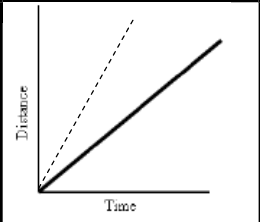
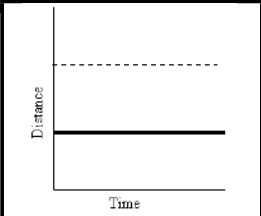
Which of the 3 cars is/are at rest?

The car is _____.


Can the speed of a body be negative?
Distance travelled and time taken by a body can be zero but not negative. Since distance and time are positive quantities and speed is obtained by the ratio of these two quantities, speed cannot be negative.
Speed is a scalar quantity given as: Speed = Distance Travelled /Time Taken. Distance travelled by a body is always positive. It may be zero, but is never negative. Time taken is also positive quantity. So, speed being the ratio of two positive quantities can never be negative
As neither time nor distance covered by a body can be negative, therefore, speed also cannot be negative. Speed cannot be negative
Speed can be both positive and negative and that is why we have deceleration
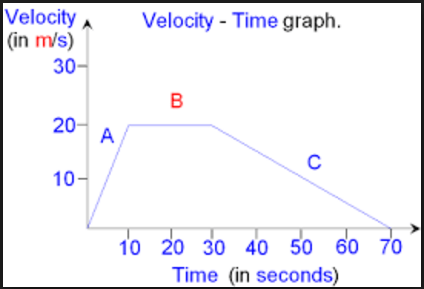
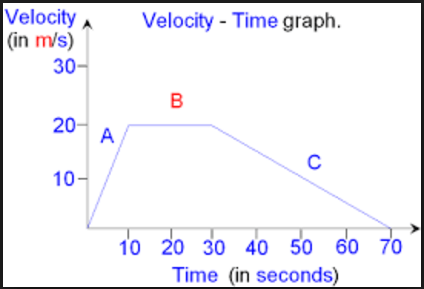
What does the slope of a velocity – time graph represent?
The slope of velocity – time graph represent acceleration.
The slope of a velocity graph represents the acceleration of the object. So, the value of the slope at a particular time represents the acceleration of the object at that instant.
Slope of velocity-time graph represents change in speed with change in time i.e. acceleration.
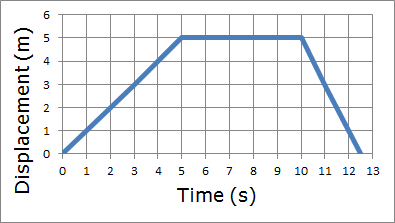
Can the distance travelled by a particle be zero when displacement is not zero?
Displacement can be zero even when distance is not zero. Consider two points A and B such that AB = 5 m. When a car travels from A to B and then back from B to A, distance = 5+5 = 10 m. Displacement = Minimum distance between final(B) and initial position(B) = 0.
It is not true. Displacement can be zero but distance cannot be zero because distance is the total path covered but displacement is the shortst distance between the initial and final position. It can be zero at the end of one round.
In a long-distance race, the athletes were expected to take four rounds of the track such that the line of finish was same as the line of start. The motion of the athlete is non-uniform. Why?
The athlete was expected to take four rounds such that: line of finish = line of start This means, we are saying that athlete comes back to its initial position. This is only possible if there is change in direction. Without the change in direction a person can never reach back the initial point. Now, we know that change in direction means acceleration, hence motion is non uniform.
The total distance covered by each athlete is 800 m
Displacement and distance moved are not equal.Distance = 4 x 200 = 800 mDisplacement = 0 m