wayground logo

Free Printable Worksheets

Font size

S
M
L
XL
Worksheets

Bones of the body quiz review!

Total questions: 128

Worksheet time: 2hrs 36mins

Name
Class
Date
1.
a)
ulna
b)
humerus
c)
radius
d)
vertebrae
2.
a)

Mandible

b)

Zygomatic

c)

Temporal

d)

Maxilla

3.
a)

Maxilla

b)

Frontal

c)

Mandible

d)

Zygomatic

4.
a)

Zygomatic

b)

Frontal

c)

Parietal

d)

Temporal

5.
a)

Zygomatic

b)

Temporal

c)

Parietal

d)

Maxilla

6.
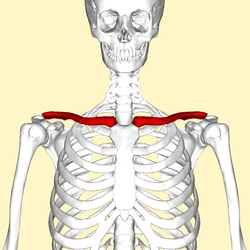
what bone is highlighted
a)
shoulder blade
b)
Clavicle
c)
shoulder
d)
Scapula
7.
what bone is highlighted?
a)
xiphoid process
b)
Clavicle
c)
Breast bone
d)
sternum
8.
What bone is highlighted
a)
ulna
b)
radius
c)
Humerus
d)
Scapula
9.
What bone is highlighted
a)
 ulna
b)
Scapula
c)
radius
d)
arm
10.
What bones are these
a)
Carpals
b)
Metacarpals
c)
Phalanges
d)
 hand
11.
What bone is highlighted
a)
femur
b)
thigh
c)
tibia
d)
Fibula
12.
what bone is highlighted
a)
Thigh bone
b)
Tibia
c)
Fibula
d)
shin bone
13.
what bone is highlighted
a)
Fibula
b)
Tibia
c)
Shin bone
d)
leg
14.
what bone is highlighted
a)
Patella
b)
Knee cap
c)
Femur
d)
Radius
15.
Name the bone that is highlighted
a)
Calcaneous
b)
Talus
c)
Phalanges
d)
Metatarsals
16.
What  bone is highlighted
a)
Metatarsals
b)
Phalanges
c)
feet 
d)
Tarsals
17.
What section of the spine is highlighted
a)
thoracic
b)
cervical
c)
lumbar
d)
sacrum
18.
What section of the spine is highlighted
a)
sacrum
b)
cervical
c)
thoracic
d)
lumbar
19.
What section of the spine is highlighted
a)
sacrum
b)
cervical
c)
thoracic
d)
lumbar
20.
What section of the spine is highlighted
a)
sacrum
b)
coccyx
c)
thoracic
d)
lumbar
21.
a)
clavicle
b)
ribs
c)
humerus
d)
ulna
22.

The scientific name for "top of the skull" is ____

a)

Cranium

b)

Radius

c)

Ulna

d)

Patella

23.

The scientific name for "lower jaw" is

a)

cranium

b)

mandible

c)

pelvis

d)

carpal

24.

The scientific name for "shoulder blade" is

a)

carpal

b)

scapula

c)

humerus

d)

tarsal

25.

The scientific name for "collarbone" is

a)

vertebra

b)

metacarpal

c)

clavicle

d)

tibia

26.

The scientific name for "breastbone" is

a)

sternum

b)

tarsal

c)

phalange

d)

femur

27.

The scientific name for "bone of the upper arm" is

a)

metatarsal

b)

tibia

c)

ulna

d)

humerus

28.

The scientific name for "rib" is

a)

rib

b)

floating rib

c)

metacarpal

d)

fibula

29.

The scientific name for "floating rib" is

a)

rib

b)

floating rib

c)

vertebra

d)

phalange

30.

The scientific name for "hip bone" is

a)

ulna

b)

pelvis

c)

carpal

d)

metacarpal

31.

The scientific name for "wrist bone" is

a)

carpal

b)

patella

c)

femur

d)

phalange

32.

The scientific name for "bone of the lower arm" is (choose 2)

a)

radius

b)

ulna

c)

pelvis

d)

fibula

33.

The scientific name for "hand bone" is

a)

femur

b)

phalange

c)

metacarpal

d)

carpal

34.

The scientific name for "finger bone" is

a)

carpal

b)

phalange

c)

patella

d)

tarsal

35.

The scientific name for "bone of the upper leg" is

a)

vertebra

b)

tibia

c)

fibula

d)

femur

36.

The scientific name for "kneecap" is

a)

femur

b)

scapula

c)

pelvis

d)

patella

37.

The scientific name for "ankle bone" is

a)

tarsal

b)

metatarsal

c)

femur

d)

ulna

38.

The scientific name for "bone of the lower leg" is (choose 2)

a)

femur

b)

tibia

c)

fibula

d)

sternum

39.

The scientific name for "toe bone" is

a)

phalange

b)

vertebra

c)

metaphalange

d)

ulna

40.

The scientific name for "backbone" is

a)

sternum

b)

femur

c)

tarsal

d)

vertebra

41.

What bone is this?

a)

Skull

b)

Femur

c)

Clavicle

42.

What bone is this?

a)

ribs

b)

pelvis

c)

spine

43.

What bone is this?

a)

clavicle

b)

humerus

c)

radius and ulna

44.

What bones are these?

a)

ulna and radius

b)

tibia and fibula

45.

What bones are these?

a)

ulna and radius

b)

tibia and fibula

46.

What bone is this?

a)

skull

b)

pelvis

c)

spine

47.

The blue bone(s) on the posterior end of the skull are called

a)

maxillary bones

b)

parietal bones

c)

nasal bones

d)

temporal bones

48.

The green bone(s) inferior to the parietal bones are called

a)

temporal bones

b)

frontal bones

c)

ethmoid bones

d)

sphenoid bones

49.

The large pink bone anterior to the parietal bones is called

a)

the nasal bone

b)

the temporal bone

c)

the vomer

d)

the frontal bone

50.

The orange bone on the anterior side of the skull is termed the

a)

vomer

b)

maxilla

c)

mandible

d)

sphenoid

51.

The paired blue bones are called

a)

the zygomatic bones

b)

the temporal bones

c)

the occipital bones

d)

the parietal bones

52.

Which bone is posterior and inferior on the skull? (hint: it is not pictured in this diagram)

a)

the ethmoid

b)

the sphenoid

c)

the lacrimal

d)

the occipital

53.

The bone indicated by #3 is the

a)

frontal bone

b)

nasal bone

c)

Parietal

d)

temporal bone

54.

The bone indicated by #2 is the

a)

parietal bone

b)

temporal bone

c)

frontal bone

d)

occipital bone

55.

The bone indicated by #1 is the

a)

parietal bone

b)

temporal bone

c)

frontal bone

d)

occipital bone

56.

The bone indicated by #4 is the

a)

frontal bone

b)

occipital bone

c)

parietal bone

d)

temporal bone

57.
a)

Occipital

b)

Parietal

c)

Temporal

d)

Zygomatic

58.
a)

Maxilla

b)

Frontal

c)

Mandible

d)

Zygomatic

59.
a)

Mandible

b)

Zygomatic

c)

Temporal

d)

Maxilla

60.
a)

Zygomatic

b)

Temporal

c)

Parietal

d)

Occipital

61.
a)
Zygomatic
b)
Temporal
c)
Parietal
d)
Occipital 
62.
a)

Zygomatic

b)

Frontal

c)

Parietal

d)

Temporal

63.
a)

Zygomatic

b)

Temporal

c)

Parietal

d)

Maxilla

64.

What bone is this?

a)

manndible

b)

maxible

c)

mandible

d)

mandable

65.
First cervical vertebra.
a)
Axis
b)
Body
c)
Vertebra prominens
d)
Atlas
66.
Second cervical vertebra.
a)
Axis
b)
Body
c)
Vertebra prominens
d)
Atlas
67.
How many cervical vertebrae exist in the spine? 
a)
7
b)
12
c)
5
d)
4
68.
There are __________ lumbar vertebrae. 
a)
12
b)
5
c)
7
d)
6
69.
How many thoracic vertebra exist in the spinal column? 
a)
15
b)
5
c)
12
d)
7
70.
What bone is #1 pointing to? 
a)
atlas 
b)
axis 
c)
thoracic
d)
lumbar
71.
What bone is #2 pointing to? 
a)
atlas
b)
axis
c)
lumbar
d)
thoracic 
72.
Which section of the vertebral column is #3?
a)
cervical
b)
thoracic
c)
lumbar
d)
coccyx
73.
Which section of the vertebral column is #5?
a)
cervical
b)
thoracic
c)
lumbar
d)
coccyx
74.
Which section of the vertebral column is #4?
a)
cervical
b)
thoracic
c)
lumbar
d)
coccyx
75.
What is # 6 pointing to? 
a)
cervical
b)
thoracic
c)
coccyx
d)
sacrum 
76.
What is # 7 pointing to? 
a)
cervical
b)
thoracic
c)
coccyx
d)
sacrum 
77.
How many cervical vertebrae do we have ? 
a)
12
b)
5
c)
7
d)
17
78.
How many thoracic vertebrae do we have ?
a)
11
b)
12
c)
5
d)
7
79.
How many lumbar vertebrae do we have ? 
a)
5
b)
4
c)
12
d)
7
80.
How many fused vertebrae make up the sacrum?
a)
3
b)
4
c)
5
d)
12
81.
How many fused vertebrae make up the coccyx?
a)
5
b)
4
c)
7
d)
2
82.
The vertebral column consists of _________ articulating vertebrae. 
a)
50
b)
24
c)
12
d)
9
83.
What is the name of the first Cervical Vertebrae?
a)
Compass
b)
Telamon
c)
Atlas
d)
Axis
84.
How many cervical vertebrae are there?
a)
4
b)
7
c)
9
d)
12
85.
How many thoracic vertebrae are there?
a)
14
b)
12
c)
10
d)
8
86.
How many lumbar vertebrae are there?
a)
3
b)
5
c)
7
d)
9
87.
How many pair of ribs do we have?
a)
4
b)
6
c)
8
d)
12
88.
What part of the spine is indicated in yellow?
a)
Cervical
b)
Thoracic
c)
Lumbar
d)
Coccyx
89.
What part of the spine is shown in orange?
a)
Cervical
b)
Thoracic
c)
Lumbar
d)
saccral
90.
The axial skeleton is made up of?
a)
Appendages (Arms and legs)
b)
Shoulder
c)
Cranium, Vertebrae, and rib cage
d)
Fingers and toes
91.
What is another name for the tailbone?
a)
Coccyx
b)
Saccrum
c)
We don't have a tailbone
d)
Intervertebral disc
92.
How many pairs of True ribs do we have?
a)
3
b)
7
c)
2
d)
12
93.
How many pairs of false ribs do we have
a)
2
b)
3
c)
7
d)
12
94.
How many pairs of floating ribs do we have?
a)
2
b)
3
c)
7
d)
12
95.
What are the first two cervical spine vertebrae called?
a)
atlas and axis
b)
Sacrum and coccyx
c)
Clavicle and humerus
d)
C3 and c4
96.
a)

occipital foramen

b)

vertebral foramen

c)

foramen magnum

d)

occipital arch

97.
What feature is this?
a)
Optic Canal
b)
Carotid Canal
c)
Foramen Magnum
d)
Jugular Foramen
98.
Label 2
a)
Occipital Condyle
b)
Foramen Magnum
c)
Transverse foramen
d)
Palatine bones
99.
What feature is this?
a)
Optic Canal
b)
Carotid Canal
c)
Foramen Magnum
d)
Jugular Foramen
100.

distal part of breastbone

a)

medial condyle

b)

lateral styloid

c)

xiphoid process

d)

AC joint

101.

proximal ulna, elbow

a)

AC joint

b)

zygomatic process

c)

olecranon process

d)

medial styloid process

102.
What is this?
a)
Olecranon Process
b)
Head of Radius
c)
Styloid Process of Ulna
d)
Trochlea
103.
What bones are these?
a)
Sternums
b)
Scapulae
c)
Clavicles
d)
Hyoids
104.
What portion of the sternum articulates with the clavicles
a)
Manubrium
b)
Body 
c)
Xiphoid process
105.

What is #1?

a)

olecranon process

b)

trochlear notch

c)

coronoid process

d)

head

e)

styloid process

106.

The red area at the end of the humerus and ulna articulation is

a)

acromion process

b)

olecranon process

c)

foramen magnum

d)

coracoid process

107.
What portion of the sternum articulates with the clavicles
a)
Manubrium
b)
Body 
c)
Xiphoid process
108.

The clavicle attaches to the ___ medially.

a)

tibia

b)

scapula

c)

sternum

d)

carpal

109.

What part of the Skeleton is highlighted?

a)

sternum

b)

sacrum

c)

rib cage

d)

cervical vertebrae

110.

Name this bone highlighted in green.

a)

xyphoid process

b)

coccyx

c)

sacrum

d)

suprasternal notch

111.

The sternal bone highlighted in green.

a)

body of sternum

b)

xiphoid process

c)

manubrium

d)

true ribs

112.

7

a)

coronoid process

b)

olecranon process

c)

styloid process

d)

radial tuberosity

113.
a)

Acetabulum

b)

Obturator foramen

c)

Pubic Symphysis

d)

Saccrum

114.

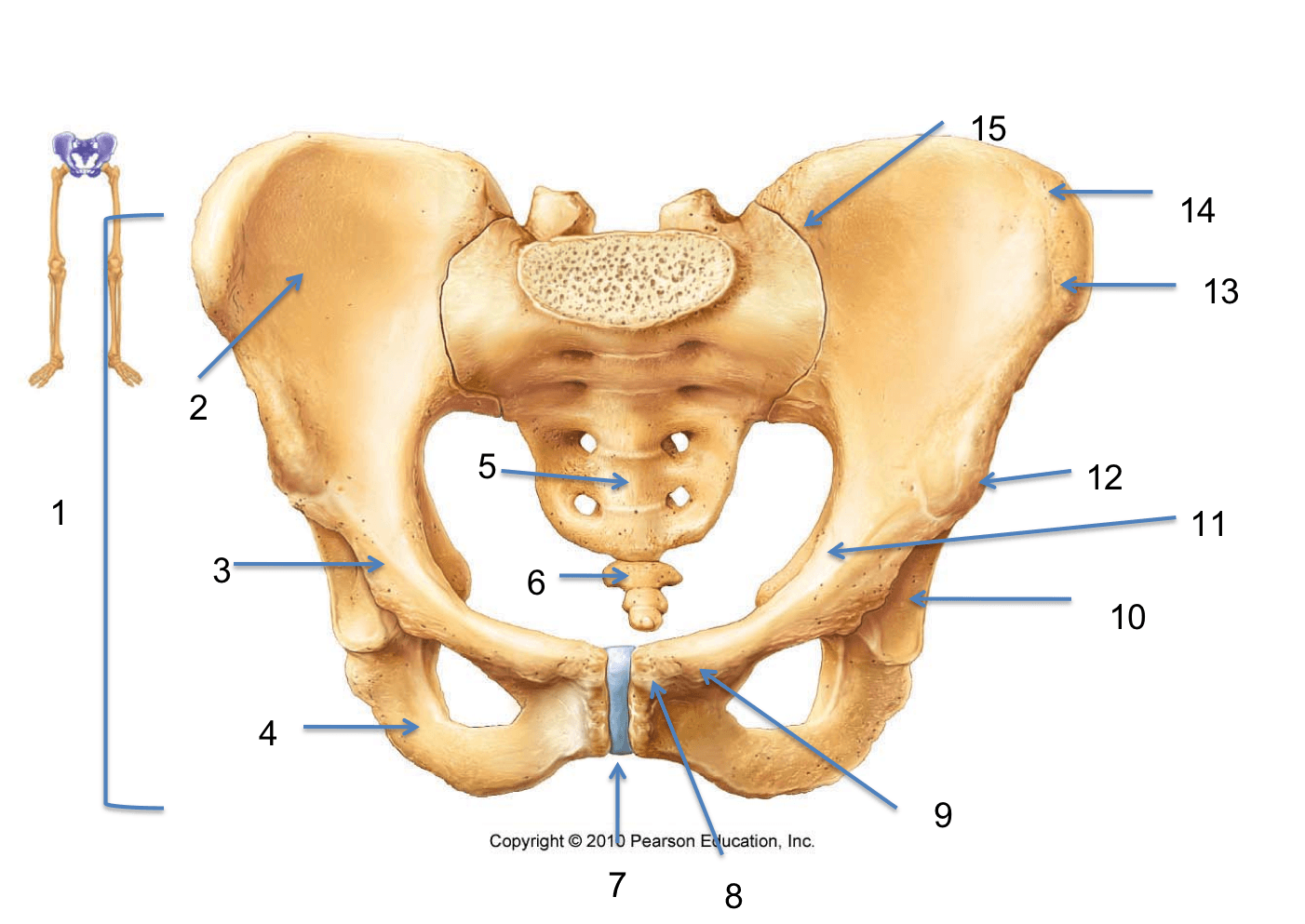
#11

a)

acetabulum

b)

obturator foramen

c)

Iliac fossa

d)

Ilium

115.

#1 (Big Toe Side / Medial Bone)

a)

Tibia

b)

Fibula

c)

Femur

d)

Talus

116.

#2 (Lateral Bone)

a)

Tibia

b)

Fibula

c)

Femur

d)

Talus

117.

#1 is pointing to the...

a)

Femur

b)

Patella

c)

Fibula

d)

Tibia

118.

#3 is pointing to the...

a)

Femur

b)

Patella

c)

Fibula

d)

Tibia

119.

#2 (Groove/Socket)

a)

Epicondyles

b)

Medial malleolus

c)

Glenoid fossa

d)

Acetabulum

120.

#3 (Ball-like end of the bone)

a)

Epicondyles

b)

Head of humerus

c)

Head of femur

d)

Acetabulum

121.

Identify #16? It is the deep socket of the hip bone. It receives the head of the femur to form the ball and socket joint.

a)

acetabulum

b)

obturator foramen

c)

iliac crest

d)

greater sciatic notch

e)

ischial spine

122.

What is #10?

a)

Pubic Symphisis

b)

Acetabulum

c)

Ischial Spine

d)

Obturator Foramen

123.

Identify the highlighted part of this bone

a)

Iliac crest

b)

Pubis

c)

Ilium

d)

ischium

124.

Identify the highlighted part of this bone

a)

Iliac crest

b)

Pubis

c)

Ilium

d)

Ischium

125.
The arrow is pointing to which part of the Pelvis?
a)
Pubis
b)
Ischium
c)
Ilium
d)
Sacrum
126.
The pelvis is made of which 3 bones?
a)
Pubis, Ischium, and Sacrum
b)
Sacrum, Lumbar, Pubis
c)
Ischium, Ilium, Sacrum
d)
Ilium, Pubis, Ischium
127.

What bone of the pelvic girdle is colored purple (#1)?

a)

ilium

b)

ischium

c)

pubis

d)

sacrum

e)

coccyx

128.

What bone of the pelvic girdle is colored pink (#3)?

a)

ilium

b)

ischium

c)

pubis

d)

sacrum

e)

coccyx