NEW
Font size
 Worksheets
Basic Chemistry and Properties of Water Review
Total questions: 57
Worksheet time: 29mins
Which subatomic part of an atom gives it a positive charge?
Neutron
Proton
Electron
Nucleus
Which region of an atom has a negative charge?
The nucleus
Both nucleus and electron cloud
The neutrons
The electron cloud
What is the smallest 'building block' of the elements that make up the universe?
An atom
An electron
A proton
A cell
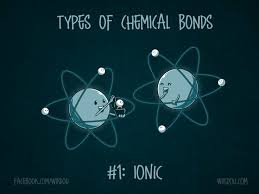
What type of bond is formed when atoms share electrons?
Covalent
Ionic
Hydrogen
Polyatomic
A substance with a pH of 8 is a
acid
base
neutral


Large bodies of water, such as lakes and oceans, do not quickly fluctuate in temperature. What is the reason for this phenomenon?
Water is an acid.
Water is a versatile solvent.
Water has a high heat capacity.
Why does ice stay at the top of oceans instead of sinking to the bottom?
Ice is colder than liquid water.
Ice is less dense than liquid water.
Ice is more dense than liquid water.
What two elements make up water?
Helium and oxygen
Hydrogen and oxygen
oxygen and carbon
Water is a universal solvent because it...
It can be found anywhere
It freezes when it gets cold
Dissolves most substances
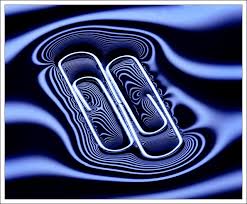
The tightness across the surface of water that enables paper clips to float is ____________.
adhesion
capillary action
surface tension
Which statement explains why water molecules stick together?
both sides are negative
one side has a positive charge and the other side has a negative charge
one side has a negative charge and the other side has a neutral charge
What is the chemical formula for water?
H20
H2O
H2O2
What is adhesion?
Water's ability to stick to itself
Water's ability to stick to other substances
The strength of the cohesion of all the water molecules combined
What is cohesion?
Water's ability to stick to itself
Water's ability to stick to other substances
The strength of the cohesion of all the water molecules combined

These particles orbit around the nucleus of an atom. What are they called?
electrons
protons
neutrons
Neutral solutions have a pH of:
0
1
7
14
Which is true?
pH of less than 7 is basic; pH of more than 7 is acidic
pH of less than 7 is acidic; pH of more than 7 is basic

Attractions between water molecules are called
Covalent bonds
Ionic bonds
Polar bonds
Hydrogen bonds
Why does ice float?
As water freezes, it expands and its density decreases.
As water freezes, it takes up more hydrogen from the atmosphere
As water freezes, air becomes trapped between the water molecules.
As water freezes, it takes up more oxygen from the atmosphere
Why can water striders walk across the surface of water without falling through?
They are light enough so they don't break the hydrogen bonds holding the water molecules together
The insects actually use their wings to hover slightly above the water’s surface
The insect’s feet are non-polar, so they are repelled by the polar water molecules and are pushed away from the water’s surface.
The insects are small enough to see the individual water molecules, so they are able to step carefully from one molecule to the next
Which end of the water molecule has a slightly positive charge?
the oxygen end
the hydrogen end
both ends are slightly positive
neither end is positive
Which term refers to water having a slightly positive and a slighty negative charge on its ends?
cohesion
surface tension
polar
adhesion
Which end of the water molecule has a slightly negative charge?
the oxygen end
the hydrogen end
both ends are slightly negative
neither end is negative
Why is water so good at dissolving so many substances?
it is polar
it is less dense as a solid
cohesion
adhesion
___ molecules are formed from the uneven sharing of electrons that results in a molecules with an area of slight positive charge and an area of slight negative charge.
Polar
Ionic
Covalent
Nonpolar
___ is the phenomenon where water is drawn up a thin tube.
capillary action
cohesion
adhesion
plant pulling
___ is a measure of the concentration of free hydrogen ions in a solution.
pH
polarity
nonpolarity
hydrogen bonding
Solutions with a LOW pH (below a 7) are ___.
acids
bases
neutrals
Solutions with a high pH (above a 7) are ___.
bases
acids
neutrals
Solutions that are neutral have a pH
equal to 7
above 7
below 7