wayground logo

Free Printable Worksheets

Font size

S
M
L
XL
Worksheets

More Practice Questions

Total questions: 84

Worksheet time: 56mins

Name
Class
Date
1.
These planets from the solar system are drawn to scale. Which planet could be Planet Z?
a)
Mars
b)
Venus
c)
Neptune
d)
Mercury
2.
Pluto is called a dwarf planet. It is smaller than the planets in the solar system. The size of each solar system planet is listed in the table below. Which planet is MOST likely closest to Pluto in size?  
 
a)
Mars
b)
Mercury
c)
Jupiter
d)
Neptune
3.
The picture shows the position of the Sun, Earth, and the Moon on one night.  What moon phase did people on Earth see on this night?
a)
New Moon
b)
First Quarter
c)
Full Moon
d)
Third Quarter
4.
Melinda learned that days in some seasons have more daylight hours than in other seasons. Which season receives the MOST hours of sunlight in the Northern Hemisphere?
a)
Fall
b)
Spring
c)
Summer
d)
Winter
5.
Jenny knows that when it is daytime on one part of Earth, it is nighttime on another. What makes daylight turn to darkness?
a)
the rotation of Earth
b)
the tilt of Earth on its axis
c)
Earth revolving around the Sun
d)
the Sun traveling away from Earth
6.
Sheryl and Raul were playing outside at sunset. They had to go inside their homes when it became dark. Which BEST explains why the day became night?
a)
Part of Earth faces away from the Sun at night.
b)
Earth moves far away from the Sun each night.
c)
The Moon blocks light from the Sun at night.
d)
The Sun stops producing light each night.
7.
Natalie observed the Moon over a couple of weeks.  Each night, the Moon appeared a little fuller.  Natalie wants to predict which phase of the moon she can expect to see in the next few days. Based on Natalie’s observations, which phase of the moon will appear next?
a)
1st Quarter
b)
Full Moon
c)
Waxing Crescent
d)
New Moon
8.
What is the approximate length of time it takes the Moon to complete one lunar cycle?
a)
14 Days
b)
29 Days
c)
180 Days
d)
365 Days
9.
Why does the Sun appear to be the largest star when there are stars that are much larger than the Sun?
a)
Stars have the same temperature as the Sun.
b)
Stars usually appear in groups called clusters.
c)
The Sun is closer to Earth than other stars.
d)
The Sun is younger than most other stars.
10.
If the Earth moved farther away from the Sun, what would probably happen?
a)
There would be colder weather
b)
There would be more seasons
c)
There would be no moon
d)
There would be no tides
11.
About how long does it take Earth to make one complete orbit (revolution) around the Sun?
a)
24 hours
b)
7 day
c)
1 month
d)
1 year
12.
During which two seasons is neither hemisphere of Earth tilted toward or away from the Sun?
a)
Summer and Winter
b)
Winter and Spring
c)
Fall and Winter
d)
Fall and Spring
13.
The central star in our solar system
a)
Earth
b)
Sun
c)
Northern Star
d)
Moon
14.
Spinning of Earth on its axis.
a)
Rotation
b)
Revolution
15.
Movement of Earth around the sun.
a)
Rotation
b)
Revolution
16.

Occurs when Earth is positioned between the moon and the sun and when Earth's shadow crosses the lighted half of the moon.

a)

Solar Eclipse

b)

Eclipse

c)

Lunar Eclipse

d)

Perigee

17.
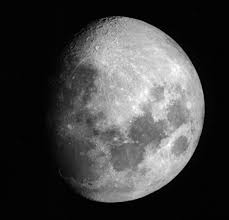
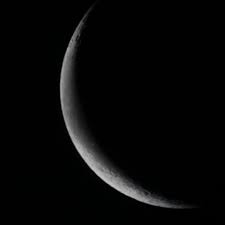
Name the moon phase
a)
waning crescent
b)
waxing crescent
c)
waning gibbous
d)
waxing gibbous
18.
Which moon phase is shown in this diagram?
a)
new moon
b)
first quarter
c)
full moon
d)
last quarter/3rd quarter
19.
Waxing means...
a)
Growing
b)
Dying
c)
Losing light
d)
Moving
20.
Name the phase of the moon for letter f
a)
Waning Gibbous
b)
Waxing Gibbous
c)
Waning Crescent
d)
Waxing Crescent
21.

Which model of the solar system has the sun in the center with all of the planets orbiting it?

a)

heliocentric

b)

geocentric

22.
Which of the following amounts of time has gone by when the Moon makes 1 revolution around the Earth?
a)
1 month on Earth
b)
1 year on Earth
c)
1 day on Earth
d)
1 week on Earth
23.
What type of orbit does the Earth have?  This was proven by astronomer Johannes Kepler.
a)
An elliptical orbit around the moon.
b)
An elliptical orbit around the Sun.
c)
A circular orbit around the moon.
d)
A circular orbit around the Sun.
24.
The astronomer ____________ theorized a _______________ that said everything revolved around the Earth.
a)
Galileo; heliocentric universe
b)
Ptolemy; geocentric universe
c)
Ptolemy; heliocentric universe
d)
Galileo; geocentric universe
25.
List the following items from smallest to largest.
a)
universe, solar system, galaxy
b)
galaxy, solar system, universe
c)
solar system, galaxy, universe
d)
solar system, universe, galaxy
26.
______________ improved on earlier models of the telescope to identify 4 moons of Jupiter, rings of Saturn, phases of Venus, and more to become known as the "Father of Modern Observational Astronomy."
a)
Copernicus
b)
Newton
c)
Galileo
d)
Ptolemy
27.

What is the center of the universe in the Geocentric model?

a)

Mars

b)

Neptune

c)

The Sun

d)

The Earth

28.

What is the center of the universe in the heliocentric theory?

a)

Neptune

b)

Mars

c)

The Sun

d)

The Earth

29.

What causes the seasons?

a)

Earth's Rotation

b)

Earth's Revolution

c)

Earth's tilt

d)

Earth doesn't have seasons

30.

What is the slight movement over a period of 26,000 years that changes where Earth's axis points?

a)

Nutation

b)

Precession

c)

Barycenter

d)

Rotation

31.

What is the shape of Earth's orbit?

a)

Circular

b)

Oval

c)

Ellipse

d)

Diamond

32.
A shift toward longer wavelengths of the spectral lines emitted by a celestial object that is caused by the object moving away from the earth.
a)
White Shift
b)
Black Shift
c)
Blue Shift
d)
Red Shift
33.

A solar eclipse might be observed from Earth when the Moon is at which position?

a)

1

b)

2

c)

3

d)

4

34.

What does a super massive star end up as at the end of its life?

a)

black hole

b)

red giant

c)

blue giant

d)

supernova

35.

Which statement best describes the geocentric model

of our solar system?

a)

The Earth is located at the center of the model

b)

The Sun is located at the center of the model.

c)

All planets revolve around the Sun.

d)

All planets except the Earth revolve around the Sun.

36.

Base your answer to the following question on the diagram below and on your knowledge of Earth

science. The diagram represents Earth in its orbit around the Sun. Locations A through D represent four

positions of Earth in its orbit. Earth is closest to the Sun (perihelion) at position A, and farthest from

the Sun (aphelion) at position C.


At all four positions, the northern end of Earth's axis points toward

a)

Betelgeuse

b)

the Sun

c)

the Moon

d)

Polaris

37.

The model below shows the apparent path of the Sun

as seen by an observer in New York State on the first

day of one of the four seasons.


This apparent path of the Sun was observed on the first day of

a)

fall

b)

winter

c)

summer

d)

spring

38.
The color of the star tells us its 
a)
composition
b)
Temperature
c)
Luminosity 
d)
Mass
39.
True or False:
Star patterns are called constellations.
a)
T
b)
F
40.
A light year is...
a)
The speed light travels
b)
How long it takes light to get to you from the sun
c)
The distance light can travel in a year
d)
How many years it takes light to be emitted
41.
An apparent shift in the position of an object when viewed from different locations. 
a)
Parallax
b)
Perihelion
c)
Solar Nebula
d)
Prominence
42.

Which statement best describes "stellar parallax" when measuring star distance?

a)

as a term used for "parsec"

b)

the geometric term for stellar angles

c)

as another term used for "light year"

d)

the apparent shifting of a star's position over a year

43.

With greater distance, the parallax angle

a)

increases

b)

decreases

c)

stays the same

44.

Which of the following is true regarding constellations?

a)

Have only been known to exist the last 100 years

b)

Most of the stars in a constellation are separated by huge distances

c)

Are named after Roman gods only

d)

Every visible dot of light is a star

e)

They are stationary and will always appear the way they do today

45.

Which of the following describes parallax?

a)

It is best measured over exactly one year intervals.

b)

It is inversely proportional to the distance to the star.

c)

It was first observed by Galileo with his new telescope.

d)

It is only applicable to objects within the solar system.

e)

It is more accurate as the distances to objects become greater.

46.

A star with a large parallax:

a)

is at a short distance from Earth.

b)

is moving at a great speed with respect to Earth.

c)

is at a great distance from Earth.

d)

is moving at a slow speed with respect to Earth.

e)

is not moving with respect to Earth.

47.

The distance between the earth and the sun is referred to as-

a)

a LY

b)

an AU

c)

a km

d)

a parsec

e)

a kiloparsec

48.

How many miles are in one Astronomical Unit?

a)

100,000,000 million miles

b)

93,000,000 million miles

c)

80,000,000 million miles

d)

47,000,000 million miles

e)

1,000,000 million miles

49.

In a diagram depicting the solar system as heliocentric, what is located at the center?

a)

Earth

b)

the sun

c)

the moon

d)

Mars

50.

The orbit of a planet around the sun is a(an)

a)

ellipse.

b)

straight line.

c)

circle.

d)

parabola.

51.

Study Figure 25-1. Suppose you are an astronaut on the side of the moon facing Earth during a total lunar eclipse. Which would you see as you look toward Earth?

a)

Earth illuminated by reflected moonlight.

b)

The normal view; there is always reflected light from the moon’s surface.

c)

You could not see the sun because Earth blocks its light.

d)

The light from the sun behind Earth would be blinding.

52.

The apparent brightness of a star

a)

varies with the position from which it is viewed.

b)

can be calculated from its absolute brightness and mass.

c)

is greater as distance from the sun increases.

d)

is a measure of its light viewed from any position.

53.
As the moon's shape appears to get smaller, we say that the moon is _.
a)
swelling
b)
waxing
c)
waning
d)
disappearing
54.
Name the moon phase
a)
waning crescent
b)
waxing crescent
c)
waning gibbous
d)
waxing gibbous
55.
Name the moon phase
a)
waning crescent
b)
waxing crescent
c)
waning gibbous
d)
waxing gibbous
56.
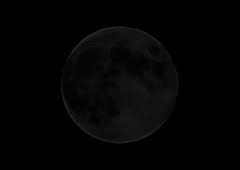
Name the moon phase
a)
First Quarter
b)
Last Quarter
c)
New Moon
d)
Full Moon
57.
Name the moon phase
a)
First Quarter
b)
Last Quarter
c)
New Moon
d)
Full Moon
58.
People in the Northern Hemisphere do see the same constellations as the people in the Southern Hemisphere.
a)
True
b)
False
59.
Which constellation is best known because it contains the “big dipper,” which looks like a ladle.
a)
Ursa Major
b)
Ursa Minor
c)
Orion
d)
Polaris
60.

Why does Polaris not seem to move during the night?

a)

Because it is located directly above the North Pole

b)

Because it is fixed in the sky

c)

Because Ursa Minor does not move

d)

Because it revolves around the Sun with Earth

61.
What constellation is this?
a)
Pegasus
b)
Andromeda
c)
Hercules
d)
Cassiopeia
62.
What constellation is this?
a)
Orion
b)
Taurus
c)
Canis Major
d)
Gemini
63.
The sky is divided into ____ constellations.
a)
11
b)
22
c)
44
d)
88
64.
What the celestial equivalent of "longitude?" 
a)
Inclination
b)
Left Ascension
c)
Right Ascension
d)
Declination
65.
What the celestial equivalent of "latitude?" 
a)
Inclination
b)
Left Ascension
c)
Right Ascension
d)
Declination
66.

The brightness of a star as seen from earth

a)

Apparent magnitude

b)

Awesome magnitude

c)

Absolute magnitude

d)

Amazing magnitude

67.

Brightness determined by DISTANCE from the earth

a)

Amazing magnitude

b)

Absolute magnitude

c)

Apparent magnitude

d)

Awesome magnitude

68.
The brightness of a star as seen from Earth is its 
a)
apparent brightness.
b)
absolute brightness.
c)
parallax.
d)
reflective brightness.
69.
A very bright star can seem to be dimmer because it is 
a)
further away
b)
cooler in temperature
c)
very close
d)
batteries are dying
70.
Which of the following would be the dimmest star? 
a)
-15
b)
-5
c)
0
d)
25
71.
Which of the following stars would be seen as the brightest star?
a)
Alpheratz, which has an apparent magnitude of 2
b)
Alcyone, which has an apparent magnitude of 3
c)
Deneb, which has an apparent magnitude of 1
d)
Sirius, which has an apparent magnitude of -1
72.
What is located at 23.5° S in latitude?
a)
Tropic of Cancer
b)
Tropic of Capricron
c)
Arctic Circle
d)
Equator
73.
Which location experiences 12 hours of daylight throughout the entire year?
a)
Equator
b)
North Pole
c)
South Pole
d)
Tropic of Capricorn
74.

Right ascension is a projection of ______ into space; declination is a projection of ______.

a)

the north pole, the south pole

b)

coordinates, azimuth

c)

latitude, longitude

d)

longitude, latitude

75.

What is the difference between the angle of measurement terms azimuth & altitude?

a)

altitude is only used to describe elevation

b)

azimuth is a "side to side" circle; altitude is "up & down"

c)

azimuth is a "up & down" circle; altitude is "side to side"

d)

both are projections of latitude & longitude

76.

The solar day is measured from sunrise to sunrise - while the sidereal day is measured from

a)

star rise to star rise.

b)

day to night & then back again.

c)

sunrise to sunset.

d)

star rise to sunset.

77.

Solstices occur when the Sun reaches the highest & lowest position in the sky. This occurs

a)

about once a year.

b)

around March 21st & Sept. 21st.

c)

very rarely.

d)

around June 21st & Dec. 21st.

78.

Solstices occur when the Sun reaches the highest & lowest position in the sky. This occurs

a)

about once a year.

b)

around March 21st & Sept. 21st.

c)

very rarely.

d)

around June 21st & Dec. 21st.

79.

Equinoxes occur (around March 21st & Sept. 21st) when the Sun appears to be directly

a)

over the Tropic of Capricorn.

b)

over the Tropic of Cancer.

c)

over the Equator.

d)

between the Earth & Moon.

80.

Earth's seasons are caused by

a)

the precession of Earth's axis.

b)

its distance from the Sun.

c)

wobbles in its orbit and axis of rotation.

d)

its tilt; revolution around the Sun, and spherical shape.

81.

The horizontal coordinate system uses which two coordinates?

a)

altitude and azimuth

b)

latitude and longitude

c)

right ascension and declination

82.

The equatorial coordinate system uses which two coordinates?

a)

altitude and azimuth

b)

latitude and longitude

c)

right ascension and declination

83.

The celestial equivalent of longitude is

a)

Right ascension

b)

Declination

c)

Altitude

d)

Azimuth

84.

The angle of Polaris above your horizon is the same as your in degrees.

a)

longitude

b)

latitude

c)

right ascension

d)

declination