wayground logo

Free Printable Worksheets

Font size

S
M
L
XL
Worksheets

Benchmark Review

Total questions: 100

Worksheet time: 1hrs 10mins

Name
Class
Date
1.
Photosynthesis is important because....
a)
plants need air to breathe
b)
it makes the plants green
c)
it is the process by which plants make their own food
d)
without it the Earth would all be a desert
2.
The process by which cells use oxygen to produce energy from food is called?
a)
photosynthesis
b)
transpiration
c)
cellular respiration
d)
germination
3.
Which of the following is a product of photosynthesis?
a)
Water
b)
Sunlight
c)
Glucose
d)
Carbon dioxide
4.
Which of the following organisms use cellular respiration for life and growth?
a)
Plants only
b)
Animals only
c)
Plant and animals
d)
Glucose
5.
How do plants obtain energy for photosynthesis?
a)
Water is absorbed through the flower
b)
Soil is absorbed by the roots
c)
Oxygen is absorbed though the stem
d)
Sunlight is absorbed by the leaves
6.
Which of the following are needed for cellular respiration?
a)
Chlorophyll and sunlight
b)
Water and carbon dioxide
c)
Oxygen and Glucose
d)
Money and a ride to Walmart
7.
What is glucose?
a)
A form of stored energy
b)
A type of sugar
c)
A necessary ingredient for life
d)
All of the above
8.
What is inside the cells of this leaf that performs photosynthesis?
a)
Oxygen
b)
Chlorophyll
c)
Little men who work hard
d)
Glucose
9.

Which process is considered to be a part of the carbon cycle?

a)

precipitation

b)

metamorphosis

c)

condensation

d)

photosynthesis

10.

Which of the following represents the process of photosynthesis?

a)

C6H12O6+6O2→6CO2+6H2O

b)

6CO2+6H2O→C6H12O6+6O2

c)

2H2O→2H2+O2

d)

2H2+O2→2H2O

11.

Which of the following statements is true

a)

The products of photosynthesis are the reactants of cellular respiration.

b)

The products of photosynthesis are not necessary for respiration to occur.

c)

The reactants of photosynthesis are also the reactants of cellular respiration.

d)

The products of photosynthesis are also the products of cellular respiration.

12.
The splitting of the glucose molecule is called?
a)
synthesis
b)
denaturalization
c)
glycolysis
d)
dissolving
13.
The two type of fermentation are alcohol and _____________ acid fermentation. 
a)
lactic
b)
sulfuric
c)
hydrochloric
d)
acetic 
14.
The energy in ATP is stored 
a)
in the bond between the second and third phosphate
b)
in the bond between the first and second phosphate
c)
in the bond between the adenosine and the first phosphate
d)
I like turtles
15.

A decrease in the amount of oxygen available will....

a)

not have an effect on the amount of energy produced during cellular respiration

b)

decrease the amount of glucose produced during cellular respiration

c)

cause the amount of water produced during cellular respiration to increase

d)

decrease the amount of energy produced during cellular respiration

16.
Which of the following would most likely qualify as a macromolecule?
a)
Protein
b)
RNA
c)
Cellulose
d)
All of these are macromolecules
17.
What is the point of enzymes?
a)
Enzymes raise activation energy
b)
Enzymes lower activation energy
c)
Enzymes give long term energy
d)
Enzymes give quick energy
18.
What does letter b stand for?
a)
Enzyme
b)
Substrate
c)
Active Site
d)
Products
19.

Biomolecules contain the elements carbon (C), hydrogen (H), and oxygen (O) in a 1:2:1 ratio.

a)

True

b)

False

20.

A carbohydrate, lipid, protein, and nucleic acid were all looking for jobs at the nearest cell. The following description is posted on the job board. Which biomolecule is best qualified for the jobs listed?

a)

Carbohydrate

b)

Protein

c)

Lipid

d)

Nucleic Acid

21.

Compare the biomolecules listed on the soup labels below. Which soup will provide the most energy per serving?

a)

Regular Soup

b)

Healthy Soup

22.

What biomolecule is known for energy storage and is a component of cell membranes?

a)

Carbohydrate

b)

Lipid

c)

Nucleic Acid

d)

Protein

23.

Sugar and starch are examples of what biomolecule?

a)

Carbohydrate

b)

Lipid

c)

Nucleic Acid

d)

Protein

24.

DNA and RNA are examples of what biomolecule?

a)

Carbohydrate

b)

Lipid

c)

Nucleic Acid

d)

Protein

25.

Monosaccharides are monomers of...

a)

Carbohydrates

b)

Lipids

c)

Nucleic Acids

d)

Proteins

26.

Nucleotides are monomers of...

a)

Carbohydrates

b)

Lipids

c)

Nucleic Acids

d)

Proteins

27.

A protein's shape determines its function.

a)

True

b)

False

28.

What is the purpose of an enzyme?

a)

give permission for the reaction

b)

raise the activation energy

c)

speed up reactions

d)

control how many reactions occur

29.

Ionic Bonds form between two ions (atoms) that have

a)

ionic compounds

b)

negative charges

c)

positive charges

d)

opposite charges

30.
How do covalent bonds form?
a)
Donating & receiving valence e- between atoms.
b)
Opposite slight charges attract each other between compounds.
c)
Scientists are still not sure how they form.
d)
Sharing valence e- between atoms.
31.

What is the total magnification of a microscope with the ocular lens having a magnification 10x, and the objective lens has a magnification of 30x?

a)

15x

b)

30x

c)

40x

d)

300x

32.
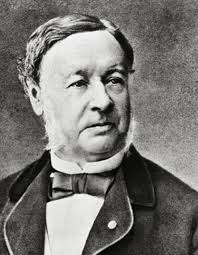
Which of the following scientists concluded that all animals are made of cells?
a)
Rudolf Virchow
b)
Matthais Schleiden
c)
Robert Hooke
d)
Theodor Schwann
33.
Which of the following statements is not part of the cell theory?
a)
Cells are the basic unit of structure and function in all living things.
b)
All cells are produced from other cells.
c)
Only animal cells are composed of cells.
d)
All living things are composed of cells.
34.
All plants are made of cells.  This was discovered by....
a)
Matthias Schleiden
b)
Rudolf Virchow
c)
Robert Hooke
d)
Aristotle
35.
This organelle takes food and turns it into ENERGY for plant and animal cells.
a)
Chloroplast
b)
Mitochondria
c)
Lysosome
d)
Ribosome
36.
jello-like material, fills the space between cell organelles, is where many chemical reactions occur
a)
cytoplasm
b)
chromatin
c)
chloroplast
d)
cell membrane
37.

packages and distributes proteins

proteins may be modified here

a)

golgi body

b)

chloroplast

c)

ribosomes

d)

lysosome

38.
If an organism had the following organelles: mitochondria, chloroplast, ribosome, nucleus, cell wall, and cell membrane, what type of organism is the cell found in? 
a)
Only plants
b)
Only animals
c)
Plants and Animals
d)
Animals & Fungi
39.
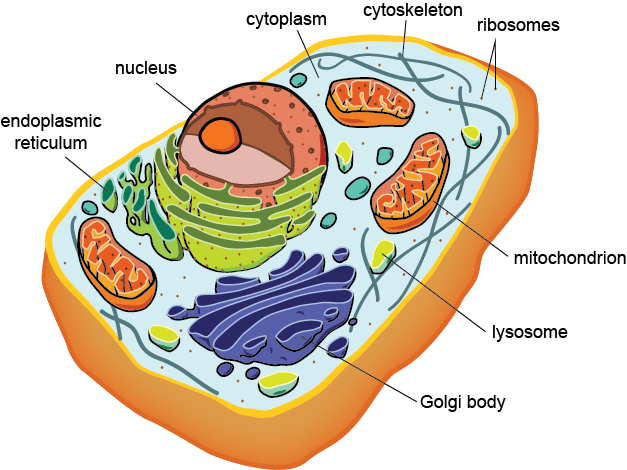
Letter L represents what cell part?
a)
nucleus
b)
nucleolus
c)
nuclear membrane
d)
cytoplasm
40.

What is this?

a)

mitochondria

b)

smooth endoplasmic reticulum

c)

chloroplast

d)

rough endoplasmic reticulum

41.
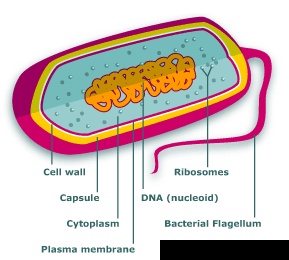
Which type of cell?
a)
Prokaryote
b)
Eukaryote
42.
A single-celled organism that lacks a membrane-bound nucleus, mitochondria, or any other membrane -bound organelle .
a)
Prokaryote
b)
Eukaryote
c)
Nucleus
d)
Single-celled organism
43.

Which of the following scientists was the first to observe animacules?

a)

Anton van Leuwenhoek

b)

Matthais Schleiden

c)

Robert Hooke

d)

Theodor Schwann

44.

Who first used the word cell and is credited with the discovery of the cell?

a)

Robert Hooke

b)

Van Leeuwenhoek

c)

Robert Brown

d)

Francesco Redi

45.
Controls the cell and contains DNA
a)
Nucleus
b)
Mitochondria
c)
Chloroplast
d)
Cell Wall
46.

What is the term for a feature that allows an organism to survive better in its environemtn?

a)

variation

b)

adaptation

c)

homologous structure

d)

vestigial structure

47.
Charles Darwin came up with this theory 
a)
Natural Selection
b)
Mutation
48.
To adjust to a changing environment
a)
Mutation
b)
Adapt
49.
The gradual change in species over time is...
a)
Evolution
b)
Nucleotide 
c)
Adaptation
d)
Natural Selection
50.
What is the study of organisms at the early stages of development?
a)
DNA studies
b)
embryology 
c)
extinction
d)
fossil record
51.
European rabbits were introduced to Australia in 1859. The rabbits reproduced rapidly in their new habitat, displaced other animals, and overgrazed vegetation. In an attempt to reduce the rabbit population, a virus was introduced in 1951. This virus is usually deadly to European rabbits. When the virus was first introduced, the rabbits died in large numbers, but the death rate decreased over time. Which of the following best explains the decrease in the rabbit death rate? 
a)
Young rabbits learned to avoid being infected with the virus.
b)
The lifespan of the virus was too short to affect rabbits over a long period of time.
c)
Natural selection favored rabbits that were resistant to the virus. 
d)
No correct choices.
52.
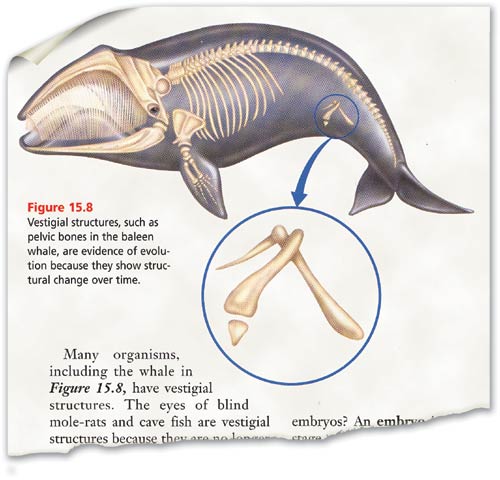
If an organism has a vestigial structure, that structure likely once had a function in a(n)
a)
close relative
b)
early ancestor
c)
unrelated organism
d)
embryological stage
53.
Inherited trait that helps an organism survive is a(n) __________.
a)
Fossil
b)
Adaptation
c)
Ancestor
d)
Natural selection
54.
Which of the following is an example of a vestigial structure?
a)
the wings of a red-tailed hawk
b)
the hind limbs of a house cat
c)
the fins of sharks
d)
the tailbone of a human
55.
Why are advantageous traits more likely to be passed onto offspring?
a)
Because they are more likely to survive and reproduce.
b)
Because they come from dominant alleles.
c)
Because they come from recessive alleles.
d)
Because the trait is an acquired phenotype.
56.

Populations are controlled by war, disease & famine.

a)

Malthus

b)

Hutton

c)

Lyell

d)

Lamarck

e)

Wallace

57.

Example of Evolution

a)

Biochemical Analysis

b)

Fossils

c)

Vestigial Organ

d)

Homologous Structure

58.

Evidence of Evolution

a)

Fossils

b)

Embryological Comparison

c)

Vestigial Organs

d)

Homologous Structures

59.
The remnant of an organ that had a function in an early ancestor is known as a(n)
a)
vestigial structure
b)
analogous structure
c)
homologous structure
d)
fossil structure
60.
Variations of traits that happen WITH humans deciding what is useful: 
a)
Artificial Selection
b)
Natural Selection
c)
Variations
d)
Evolution
61.

The first step of the scientific process is...

a)

Experiment

b)

Data analysis

c)

Observation

d)

Conclusion

62.

Biology is the study of...

a)

Life

b)

Living organisms

c)

The natural world

d)

Nature

63.

A hypothesis is...

a)

A type of experiment

b)

A type of question

c)

A conclusion

d)

A possible answer for our question

64.

Jennifer wanted to study the effect of sunlight on plant growth. So she decided to expose 10 identical plants to various amounts of sunlight each day (2 hours, 3 hours, 4 hours, 5 hours, and 6 hours). After one month, she measured the weight of the plants. What was the control?

a)

Hours of sunlight

b)

Plant weight

c)

Type of plant

65.

The theory of evolution is considered a scientific theory because...

a)

scientists aren't really sure if evolution really occurs in nature.

b)

it is the best explanation about the origin of species based on all of the available data.

c)

it describes the law of life.

66.
An organized way of gathering and analyzing evidence about the natural world. 
a)
biology
b)
science
c)
theory 
d)
law
67.
process that test a hypothesis by collecting information under controlled conditions. 
a)
experiment
b)
examine
c)
justify
d)
observation
68.
independent variable 
a)
condition or factor that is manipulated by a scientist during an experiment. 
b)
experimental data collected through observation and measurement. 
c)
condition that is controlled so that it does not change during an experiment. 
d)
proposed explanation or answer to a scientific question. 
69.
law
a)
a well tested explanation for a wide variety of observations and experimental results. 
b)
is a statement about an observed phenomenon or a unifying concept
c)
proposed explanation or answer to a scientific question.
d)
condition that is controlled so that it does not change during an experiment.
70.
dependent variable 
a)
a well tested explanation for a wide variety of observations and experimental results. 
b)
condition that is controlled so that it does not change during an experiment.
c)
variable that is observed and changes in response to the variable manipulated by a scientist, variable that is measured.
d)
is a statement about an observed phenomenon or a unifying conceptproposed explanation or answer to a scientific question.condition that is 
71.
observations and measurements recorded during an experiment. 
a)
results
b)
data
c)
procedures
d)
materials
72.
An organism made of one cell is called
a)
unicellular
b)
multicellular
73.
Living things respond to heat, light, and sound.  This means they respond to:
a)
stimuli/ environment
b)
suction
c)
Dr. Suess
d)
digestion
74.
During ___________ conditions inside our body are kept stable (the same)
a)
homeopathic
b)
Homo sapian
c)
homeostasis
d)
homologous
75.
All of the following are characteristics of all living things EXCEPT
a)
Respond to stimulus
b)
Grow and develop
c)
maintain homeostasis
d)
Movement
76.
Living things need energy to survive?
a)
True
b)
False
77.
A _____ is something in the environment that causes an organism to respond.
a)
stimulus
b)
response
c)
cause
d)
effect
78.
Most single-celled organisms...
a)
reproduce asexually
b)
reproduce sexually
c)
have complex tissues
d)
can be seen without a microscope
79.
Your body shivers when you are cold. This is because of the concept of...
a)
homeostasis
b)
heredity
c)
energy metabolism
d)
cellular organization
80.

Reproduction that involves two cells from different parents unite to produce the first cell of a new organism.

a)

Asexual

b)

Sexual

c)

Budding

d)

Division

81.
Darwin wrote that organisms with traits that are best suited to the environment will ________________
a)
increase in number
b)
become extinct
82.
Which of the following is NOT an example of natural selection? 
a)
People selectively breeding hamsters.
b)
Insect populations developing resistance to certain pesticides.
c)
Bacteria becoming resistant to antibiotics.
d)
Male birds of certain species developing colorful feathers to attract female mates.
83.
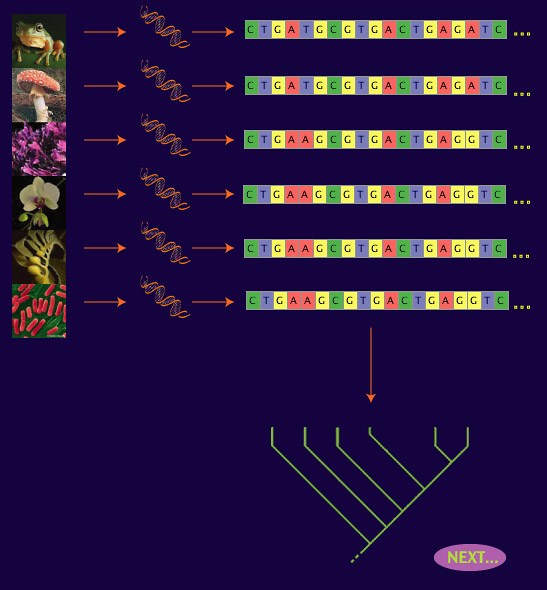
Two organisms that are closely related would have
a)
very similar DNA sequence
b)
exactly the same DNA sequences
c)
no proteins in common
d)
completely different DNA sequence
84.
According to fossil records, the horses that lived 50 million years ago were much smaller, weaker and slower than modern horses. Which process is most likely responsible for the changes that have led to the increased size, strength, and speed in horses?
a)
commensalism
b)
inbreeding
c)
migration
d)
evolution by natural selection
85.
The diagram illustrates an embryonic stage of two organisms.Which of the following can be determined by observing the embryos shown in the diagram? 
a)
The organisms share a common ancestry.
b)
The organisms belong to the same genus.
c)
The organisms are native to the same geographic areas.
d)
The organisms will grow into anatomically similar adults.
86.
What gas goes into the plant before photosynthesis?
a)
Carbon Dioxide
b)
Carbon Monoxide
c)
Oxygen
d)
Nitrogen
87.
What two products does a plant make during photosynthesis?
a)
Water and Glucose
b)
Oxygen and Glucose
c)
Oxygen and Water
d)
CO2 and Glucose
88.
What does metabolism mean?
a)
Converting energy into food
b)
Making light reactions happen
c)
Converting food into energy
89.
Fermentation enables glycolysis to continue under 
a)
anaerobic conditions
b)
aerobic conditions
c)
photosynthetic conditions
d)
hydrophobic conditions
90.
Which type of respiration is most efficient?
a)
Aerobic
b)
Anaerobic
91.
What is it called when a cell is placed in a solution that has a greater concentration on the outside of the cell than inside?
a)
Hypotonic
b)
Hypertonic
c)
Isotonic
d)
Osmosis
92.
What does it mean if molecules are moving down the concentration gradient?
a)
They are moving from an area of high concentration to an area of low concentration.
b)
They are moving from an area of low concentration to an area of high concentration.
93.
When there is the same concentration of solute molecules outside the cell as inside.
a)
Hypotonic
b)
Hypertonic
c)
Isotonic
d)
Homeostasis
94.
Osmosis, facilitated diffusion, and diffusion are all types of passive transport.
a)
TRUE
b)
FALSE
95.
What is the diffusion of water through a selectively permeable membrane?
a)
active transport
b)
osmotic pressure
c)
facilitated diffusion
d)
osmosis
96.
Attractions between water molecules are called
a)
Covalent bonds
b)
Ionic bonds
c)
Polar bonds
d)
Hydrogen bonds
97.
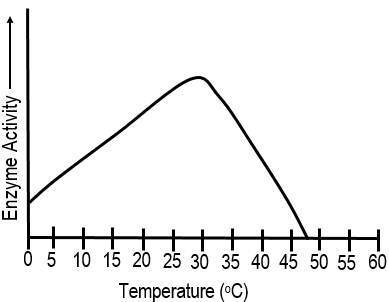
Based on the graph, what temperature does this enzyme work best? 
a)
15 C
b)
40 C
c)
30 C
98.
Which of the following binds to the active site of an enzyme? 
a)
substrate
b)
product
c)
codon
d)
none of the above
99.
Which of the following is NOT a biomolecule?
a)
Water
b)
Nucleic Acid
c)
Protein
d)
Lipid
100.
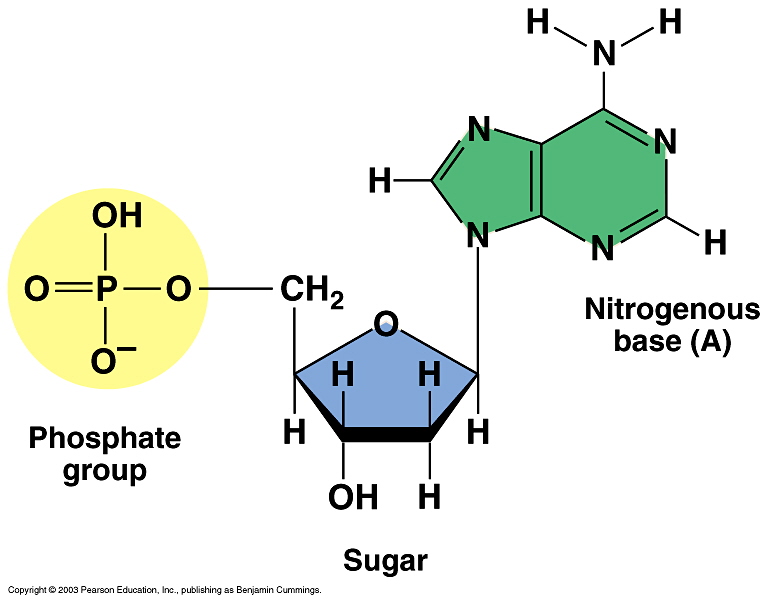
Identify the biomolecule
a)
Lipid
b)
Protein
c)
Carbohydrate
d)
Nucleic Acid