wayground logo

Free Printable Worksheets

Font size

S
M
L
XL
Worksheets

Biology Fall Semester Exam 2021

Total questions: 150

Worksheet time: 3hrs 30mins

Name
Class
Date
1.
Flammable materials, like alcohol, should never be dispensed or used near
a)
an open door
b)
an open flame
c)
another student
d)
 a sink
2.
If a laboratory fire erupts, immediately
a)
notify your instructor
b)
 run for the fire extinguisher
c)
throw water on the fire
d)
 open the windows
3.
 If you do not understand a direction or part of a lab procedure, you should 
a)
skip it and go on to the next part.
b)
ask the instructor before proceeding
c)
try several methods until something works
d)
figure it out as you do the lab
4.
 After completing an experiment, all chemical wastes should be
a)
taken home
b)
dumped in the sink
c)
disposed of according to your instructor’s directions
d)
left at your lab station for the next class
5.
You are heating a substance in a test tube. Always point the open end of the tube 
a)
away from all people
b)
toward another classmate
c)
toward your lab partner
d)
toward yourself
6.
You have been injured in the laboratory (cut, burn, etc.). First you should
a)
apply first aid yourself
b)
tell the science instructor at once
c)
see a doctor after school
d)
visit the school nurse after class
7.
Long hair in the laboratory must be 
a)
tied back or kept entirely out of the way with a hair band, hairpins, or other confining device
b)
always neatly groomed
c)
held away from the experiment with one hand
d)
cut short
8.
In a laboratory, the following should not be worn. 
a)
all of the answers
b)
dangling jewelry
c)
sandals
d)
loose clothing
9.
 The following footwear is best in the laboratory. 
a)
shoes appropriate for the weather
b)
open-toed shoes
c)
closed-toed shoes
d)
sandals
10.
When you finish working with chemicals, biological specimens, and other lab substances, always 
a)
wipe your hands on your clothes
b)
wipe your hands on a towel
c)
wash your hands thoroughly with soap and water
d)
treat your hands with skin lotion
11.
Hot glass looks the same as cold glass.
a)
True
b)
False
12.
All chemicals in the lab are to be considered dangerous
a)
True
b)
False
13.
It’s okay to pick up broken glass with your bare hands as long as the glass is placed in the trash.
a)
True
b)
False
14.
Read all procedures thoroughly before entering the laboratory
a)
True
b)
False
15.

Who was the scientist that looked at cork under a microscope?

a)

Alfred Wegner

b)

Howard Hess

c)

Robert Hooke

d)

Mattias Schleiden

16.

Robert Hooke named the small compartments that made up the cork __________after the rooms monks lived in.

a)

organelles

b)

membranes

c)

mocroscopes

d)

cells

17.
Which of the following statements is not part of the cell theory?
a)
Cells are the basic unit of structure and function in all living things.
b)
All cells are produced from other cells.
c)
Only animal cells are composed of cells.
d)
All living things are composed of cells.
18.
When cells are damaged, new cells are created by cell division. How does the cell theory support this fact?
a)
It states that all cells have a nucleus which divides.
b)
It states that all living things are made up of one or more cells.
c)
It states that cells come from previously existing cells.
d)
 It states that the basic units of structure and function are cells.
19.
Robert Hooke, Anton van Leeuwenhoek, Theodor Schwann, Rudolf Virchow, and Matthias Schliden were all responsible for what theory?
a)
The Theory of Gravity
b)
The Theory of Relativity
c)
The Cell Theory
d)
The Theory of Continental Drift
20.
What tool do you use to view the cells?
a)
metric ruler
b)
centrifuge
c)
microscope
d)
pipette
21.
Which scientist did NOT contribute to the cell theory?
a)
Anton Van Leeuwenhoek
b)

Robert Hooke
c)
Albert Einstein 
d)

Matthias Schleiden
22.
Who was the "scientist" who observed pond water and teeth scrapings in his microscope?
a)
Hooke
b)
Leeuwenhoek
c)
Schleidian
d)
Virchow
23.
All plants are made of cells.  This was discovered by....
a)
Matthias Schleiden
b)
Rudolf Virchow
c)
Robert Hooke
d)
Aristotle
24.
"All animals are made of cells". This fact was discovered by...
a)
Matthias Schleiden
b)
Theodor Schwann
c)
Robert Hooke
d)
Rudolf Virchow
25.
Who are the three scientists credited with creating the Cell Theory?
a)
Schlieden, Schwann, Virchow
b)
Schindler, Schmeil, Vanderhoot
c)
Schwimmer, Shanazzek, Van Halen
26.
Proteins are made of monomers called ___________
a)
Nucleotides
b)
Monosaccharides
c)
Amino Acids
d)
Glycerol and fatty acids
27.
The element _______is found in all of the organic compounds.
a)
Iron
b)
Nitrogen
c)
Carbon
d)
Oxygen
28.
DNA and RNA are examples of 
a)
Carbohydrates
b)
Lipids
c)
Proteins
d)
Nucleic Acids
29.
Nucleotides are monomers of
a)
Carbohydrates
b)
Lipids
c)
Proteins
d)
Nucleic Acids
30.
Waxes, oils and fats are examples of
a)
Carbohydrates
b)
Lipids
c)
Proteins
d)
Nucleic Acids
31.
Glycerol and fatty acids are the monomers of
a)
Carbohydrates
b)
Lipids
c)
Proteins
d)
Nucleic Acids
32.
Which of the following organic compounds is the main source of energy for living things?
a)
carbohydrates
b)
lipids
c)
nucleic acids
d)
proteins
33.
What type of macromolecule are enzymes?
a)
Protein
b)
Carbohydrate
c)
Lipid
d)
Nucleic Acid
34.
Which macromolecule stores energy, insulates us, and makes up the cell membrane?
a)
lipids
b)
proteins
c)
carbohydrates
d)
nucleic acids
35.
What are the four macromolecules?
a)
proteins, nucleic acids, carbohydrates, and lipids
b)
monosaccharides, lipids, polysaccaharides, and proteins
c)
RNA, DNA, proteins, and carbohydrates
d)
proteins, DNA, RNA, and steroids
36.
What are the single sugars that are the building blocks of carbohydrates?
a)
monosaccharides
b)
disaccharides
c)
polysaccharides
d)
amino acid
37.
What is the primary function of carbohydrates in your body?
a)
Speed up chemical reactions.
b)
Give immediate energy.
c)
Help to store energy.
d)
Build cell walls in plants.
38.
Which of the following decreases the activation energy necessary to initiate the chemical change within the body?
a)
nucleotides
b)
enzymes
c)
amino acids
d)
fatty acids
39.
Glucose is a _____.
a)
carbohydrate
b)
lipid
c)
protein 
d)
nucleic acid
40.
Proteins are composed of what smaller building blocks?
a)
amino acids
b)
nucleic acids
c)
fatty acids
d)
nucleotides
41.
Also known as simple sugars, these are the monomers of carbohydrates.
a)
lipids
b)
nucleotide
c)
monosaccharide
d)
monomer
42.
Building blocks of polymers.
a)
monomer
b)
polypeptide
c)
monosaccharide
d)
glycerol
43.
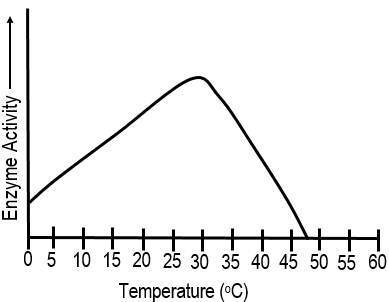
Based on the graph, what temperature does this enzyme work best? 
a)
15 C
b)
40 C
c)
30 C
44.
Which of the following binds to the active site of an enzyme? 
a)
substrate
b)
product
c)
codon
d)
none of the above
45.
Letter C...
a)
active site
b)
enzymes
c)
substrate
d)
products
46.
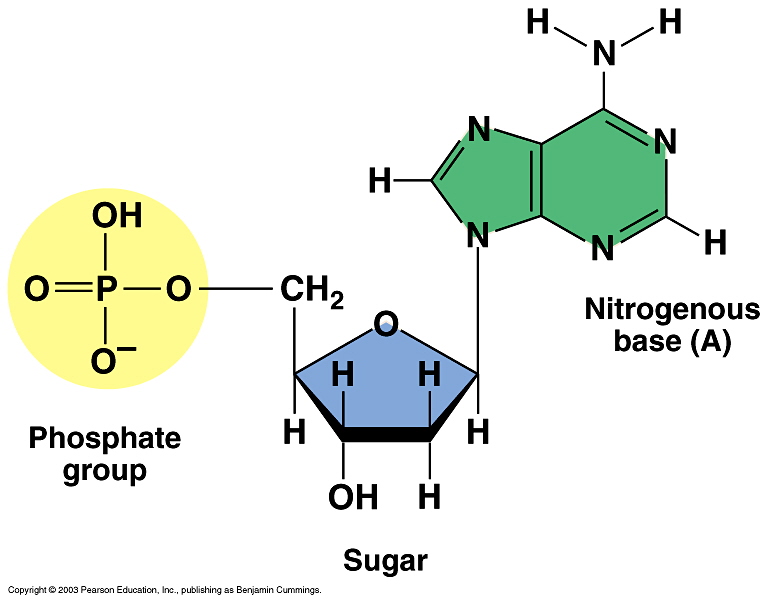
Identify the biomolecule
a)
Lipid
b)
Protein
c)
Carbohydrate
d)
Nucleic Acid
47.
Enzymes are _________ that __________ chemical reactions.
a)
proteins, slow down
b)
proteins, speed up
c)
lipids, slow down
d)
lipids, speed up
48.
The property where water molecules are attracted to other water molecules.
a)
adhesion
b)
capillary action
c)
cohesion
d)
universal solvent
49.
Which letter represents the positive end?
a)
A
b)
B
c)
C
d)
D
50.
Which letter represents the negative end?
a)
A
b)
B
c)
C
d)
D
51.
What type of cell has a nucleus? 
a)
eukaryotic
b)
prokaryotic 
52.

Plant and animal cells are examples of

a)

prokaryotic cells

b)

eukaryotic cells

53.

Which type of cell is this?

a)

Prokaryote

b)

Eukaryote

54.

Which type of cells has a chloroplast?

a)

Prokaryote

b)

Plant Cell

c)

Animal Cell

55.

Prokaryotic cells do not have…….

a)

membrane bound organelles

b)

cell membrane

c)

DNA or RNA

d)

life

56.
This is a picture of:
a)
Prokaryote
b)
Eukaryote
57.

Which type of cell developed first?

a)

Prokaryotic Cells

b)

Eukaryotic Cells

58.

Which type of plant cell would have more chloroplasts than others?

a)

Leaf cell

b)

Root cell

c)

Stem cell

d)

Root epidermal cell

59.
Where is the DNA found in a prokaryotic cell? 
a)
floating around in the cytoplasm 
b)
in the nucleus 
c)
in the ribosomes
d)
attached to the cell membrane
60.
Where is the DNA found in a eukaryotic cell? 
a)
floating around in the cytoplasm 
b)
in the nucleus 
61.

Which of the following has DNA?

a)

prokaryotes

b)

eukaryotes

c)

prokaryotes and eukaryotes

62.

the short hair like structures

a)

flagella

b)

cilia

c)

lysosome

d)

ribosome

63.

this organelle makes ATP.

a)

chloroplast

b)

mitochondria

c)

ribosome

d)

nucleolus

64.

long whip like structures used for movement

a)

hair

b)

cilia

c)

flagella

d)

cytoskeleton

65.
Breaks down food  to release energy. Known as the power plant of the cell.
a)
Endoplasmic Reticulum
b)
Mitochondria
c)
Ribosomes
d)
Cell Wall
66.

Identify the microscope part that the arrow is pointing at.

a)

Base

b)

Arm

c)

Body Tube

d)

Lamp

67.

Identify the microscope part that the arrow is pointing at.

a)

Base

b)

Arm

c)

Body Tube

d)

Lamp

68.

Identify the microscope part that the arrow is pointing at.

a)

Diaphragm

b)

Stage

c)

Stage clips

d)

Objective lenses

69.

Identify the microscope part that the arrow is pointing at.

a)

Diaphragm

b)

Stage

c)

Stage clips

d)

Objective lenses

70.

Identify the microscope part that the arrow is pointing at.

a)

Nosepiece

b)

Coarse adjustment knob

c)

Fine adjustment knob

d)

Eyepiece

71.

Identify the microscope part that the arrow is pointing at.

a)

Nosepiece

b)

Coarse adjustment knob

c)

Fine adjustment knob

d)

Eyepiece

72.

Identify the microscope part that the arrow is pointing at.

a)

Nosepiece

b)

Coarse adjustment knob

c)

Fine adjustment knob

d)

Eyepiece

73.

A "4" on the objective lens actually means the magnification is at___________

a)

40

b)

100

c)

400

d)

4

74.

When carrying a microscope, you should hold onto which two parts of the microscope?

a)

eyepiece and nosepiece

b)

objective lenses and eyepiece

c)

arm and stage

d)

base and arm

75.

What is the scientific term for "making an image larger"?

a)

resolution

b)

rotation

c)

magnification

d)

magnetize

76.

A "10" on an objective lens actually means the magnification is at _________x power.

a)

40

b)

100

c)

400

d)

4

77.

what part of the microscope changes the objective lens?

a)

coarse adjustment knob

b)

fine adjustment knob

c)

diaphragm

d)

rotating nose piece

78.

what is the total magnification if the ocular lens is 10x and the objective lens is 4x?

a)

40x

b)

400x

c)

4x

d)

4000x

79.
What are the reactants of cellular respiration?
a)
glucose & carbon dioxide
b)
glucose & oxygen
c)
water & oxygen
d)
water & carbon dioxide
80.
The purpose of cellular respiration is to 
a)
make water
b)
make ATP
c)
make glucose
d)
make  oxygen
81.
What is the correct equation for cellular respiration?
a)
6O2 + C6H12O6 -> 6CO2 + 6H2O + Energy
b)
6O2 + C6H12O6 + Energy -> 6CO2 + 6H2O
c)
6CO2 + 6H2O -> 6O2 + C6H12O6 + Energy
d)
6CO2 + 6H2O + Energy -> 6O2 + C6H12O6
82.
If oxygen is not present what process will occur in yeast cells?
a)
Alcoholic fermentation
b)
Respiration
c)
Photosynthesis
d)
Lactic acid fermentation
83.

Which of these is a product of cellular respiration?

a)

ATP

b)

Carbon dioxide

c)

Water

d)

All of these are a product of cellular respiration

84.
Yeast is a(n)
a)
animal
b)
plant
c)
fungus
d)
bacteria
85.
In cellular respiration, the electron transport chain takes place in
a)
the membrane of the mitochondrion
b)
the folds of the mitochondrion
c)
the cytoplasm
d)
the cell nucleus
86.
When a phosphate group is removed from an ATP molecule, 
a)
a substantial amount of energy is released
b)
an enzyme is formed
c)
energy is stored
d)
activation energy is increased
87.
When glycolysis occurs,
a)
a molecule of glucose is split
b)
two pyruvate are made
c)
some ATP is produced
d)
all of these
88.
Cells produce ATP most efficiently in the presence of
a)
water
b)
carbon dioxide
c)
oxygen
d)
radiant energy
89.
Which of the following processes creates the most ATP during aerobic cellular respiration?
a)
glycolysis
b)
fermentation
c)
electron transport chain
d)
Kreb's cycle
90.
Fermentation enables glycolysis to continue under 
a)
anaerobic conditions
b)
aerobic conditions
c)
photosynthetic conditions
d)
hydrophobic conditions
91.
After intense activity, your muscles feel sore because of 
a)
the accumulation of NAD+
b)
the accumulation of lactic acid 
c)
the accumulation of ATP
d)
the accumulation of carbon dioxide
92.

Atom → molecule → organelle → cell→ tissue → organ

→ system → organism

→ population → community

→ ecosystem → biosphere.

a)

Taxonomic System

b)

Classification system

c)

Levels of Organization

d)

Periodic Table

93.

The smallest unit that makes up the known elements.

a)

Molecule

b)

Organelle

c)

Cell

d)

Atom

94.

Group of tissues with similar functions.

a)

Organelles

b)

Cells

c)

Tissues

d)

Organs

95.

Groups of cells with similar functions.

a)

Organs

b)

Molecules

c)

Tissues

d)

Organelles

96.

Organisms who are members of the same species in an ecosystem.

a)

Organism

b)

Population

c)

Organ

d)

Community

97.

Group of populations in an area.

a)

Organism

b)

Ecosystem

c)

Community

d)

Biosphere

98.

A biological community that includes various species and their physical environment (Biotic and Abiotic Factors).

a)

Organism

b)

Community

c)

Biosphere

d)

Ecosystem

99.

Where life is found on earth.

a)

Community

b)

Habitat

c)

Ecosystem

d)

Biosphere

100.
What is the most basic unit of life?
a)
cell
b)
tissue
c)
organ
d)
organ system
101.
A _____ is something in the environment that causes an organism to respond.
a)
stimulus
b)
response
c)
cause
d)
effect
102.

Reproduction that only involves one parent and all offspring are identical; for example, binary fission of bacteria or amoebas.

a)

Asexual

b)

Sexual

c)

Division

d)

Addition

103.

Reproduction that involves two cells from different parents unite to produce the first cell of a new organism.

a)

Asexual

b)

Sexual

c)

Budding

d)

Division

104.

Living things are based on a universal genetic

code. What molecule is responsible for that code?

a)

RNA

b)

Lipid

c)

Protein

d)

DNA

105.

Maintaining a stable internal

environment is called

a)

homeostasis

b)

equilibrium

c)

balance

d)

evenness

106.
The dismissal bell rings and you pack up your belongings. In this scenario, what is the stimulus?
a)
The bell ringing
b)
You packing up your belongings
c)
More information is needed
107.
Multicellular means
a)
made of many cells
b)
made of one kind of cell
c)
made of only one cell
108.
Organisms, such as bacteria, are ______________ which means they consist of only a single cell.
a)
unicellular
b)
multicellular
c)
autotrophic
d)
heterotrophic
109.

In what organelle is the genetic material found inside?

a)

Endoplasmic Reticulum

b)

Golgi Complex

c)

Nucleolus

d)

Nucleus

110.

What organelle is called the "powerhouse" of a cell?

a)

Endoplasmic Reticulum

b)

Nucleus

c)

Mitochondria

d)

Nucleolus

111.
Using this image, what organelle is C?
a)
Cell Wall
b)
Mitochondria
c)
Large Cell Vacuole
d)
Chloroplast
112.
What is the function of the vacuole?
a)
Sac that stores water, nutrients, and waste products
b)
Sac filled with digestive chemicals
c)
Jelly-like substance within the plasma membrane
d)
stack of membranes that packages chemicals
113.

What is the function of the mitochondria?

a)

Structure that manufactures ribosomes

b)

Structures that converts nutrients to energy

c)

Stack of membranes that packages chemicals

d)

Structure that contains DNA and directs the cell

114.

Where does photosynthesis occur?

a)

mitochondria

b)

stomata

c)

xylem

d)

chloroplast

115.

I make proteins for the cell. What am I?

a)

ribosome

b)

mitochondria

c)

chloroplast

d)

lysosome

116.
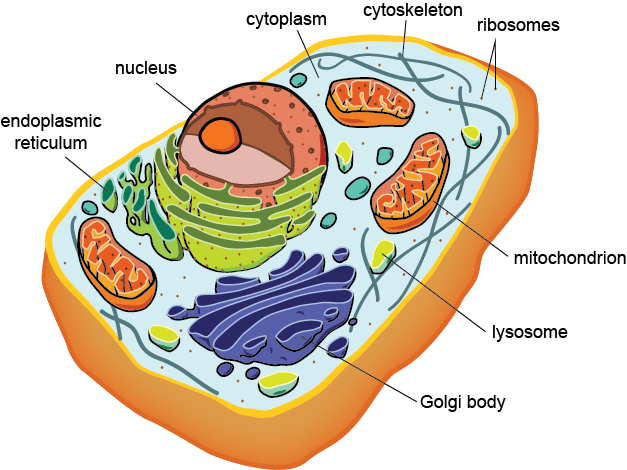
What can only be found in plant cells?
a)
Cell membrane
b)
Vacuole
c)
Chloroplast
d)
Mitochondrion
117.
Which part of the cell is often called "the brain of the cell"?
a)
nuclear membrane
b)
endoplasmic reticulum
c)
nucleus
d)
mitochondria
118.
A rigid layer that lies outside the cell's  membrane is...
a)
Cytoskeleton
b)
Cilia
c)
Cell Wall
d)
Flagella
119.
What does this organism use for movement?
a)
Pseudopod
b)
Cilia
c)
Flagella
d)
legs
120.

I am fluid filled within the cell

a)

Mitochondrion

b)

Vacuole

c)

cytoplasm

d)

Cell membrane

121.

Cell membranes are found in

a)

Only animal cells

b)

Only Prokaryotic cells

c)

Only Eukaryotic cells

d)

All Eukaryotic and Prokaryotic cells

122.

Structures that transport and ship proteins like UPS,

a)

Ribosomes

b)

Lysosomes

c)

Organelles

d)

Golgi Bodies

123.

How does a cell membrane keep harmful stuff out of the cell?

a)

Regulates what enters and leaves the cell

b)

Flexibility

c)

Protective barrier

d)

Structure and support

124.

protects and supports plant cells

a)

cell wall

b)

cell membrane

c)

mitochrondria

d)

cytoplasm

125.

Convert's the sun's energy to food for the cell

a)

chloroplast

b)

nucleus

c)

endoplasmic reticulum

d)

lysosome

126.

Which organelle is colored in this picture?

a)

Cell membrane

b)

Cytoplasm

c)

Vacuole

d)

Nucleus

127.

Which organelle is colored in this picture?

a)

Cytoplasm

b)

Chloroplast

c)

Ribosomes

d)

Nucleus

128.

Which organelle is circled in the diagram?

a)

Nucleus

b)

Mitochondria

c)

Vacuole

d)

Ribosomes

129.

fluid that fills the cell

a)

cytoplasm

b)

vacuole

c)

chloroplast

d)

golgi body

130.

breaks down food and worn out parts

mostly in animal cells

a)

lysosome

b)

vacuole

c)

cell wall

d)

golgi body

131.
Where do the light-dependent reactions occur? 
a)
thylakoid membrane
b)
stroma
c)
mesophyll
d)
mitochondria
132.
Where does the Calvin Cycle occur?
a)
thylakoid
b)
stroma
c)
lumen
d)
mitochondria
133.
What are the reactants (what's needed) for photosynthesis?
a)
glucose and oxygen
b)
light, water, and carbon dioxide
134.
What gas is released by plants during photosynthesis?
a)
sulfur
b)
carbon dioxide
c)
oxygen
d)
hydrogen
135.
What pigment absorbs sunlight for photosynthesis?
a)
chloroplast
b)
thylakoid
c)
grana
d)
chlorophyll
136.
What is another name for glucose?
a)
Chlorophyll
b)
Chloroplasts
c)
Stomata
d)
Sugar
137.
Which organelle does photosynthesis take place in?
a)
Mitochondrion
b)
Chlorplast
c)
Cytoplasm
d)
Nucleus
138.
This image shows the process of _____.
a)
Respiration
b)
Photosystem I
c)
Dark Reactions
d)
Photosynthesis
139.
What are the products of photosynthesis?
a)
water and carbon dioxide
b)
oxygen and glucose
c)
oxygen and carbon dioxide
d)
oxygen and water
140.
What is the source of energy for photosynthesis?
a)
carbohydrates-chemical
b)
sunlight-radiant
c)
heat-thermal
d)
television-electrical
141.
a)
Stroma
b)
Thylakoid
c)
Skittle
d)
Grana
142.
a)
Flapjack Stack
b)
Grana
c)
Thylakoid
d)
Stroma
143.
a)
Grana
b)
Thylakoid
c)
Stroma
d)
Jelly Filling
144.
Which of the following is the correct equation for PHOTOSYNTHESIS?
a)
CO+ light + H2O --> O+ Sugar
b)
CO+ sugar + H2O --> O+ light
c)
O2 + light + H2O --> CO+ Sugar
d)
CO+ O2 + H2O --> Light+ Sugar
145.

What is the name of the dragon in Mulan?

a)

Mushu

b)

Harry

c)

Larry

d)

Moe

146.

What are the names of the Seven Dwarfs?

a)

Sleepy, Sneezy, Happy, Sad, Funny, Clumsy, Lazy

b)

Doc, Silly, Meanie, Duff, Jim, Dopey, Carl

c)

Doc, Sleepy, Bashful, Sneezy, Dopey, Grumpy, Happy

d)

Grumpy, Sam, Daisy, Donald, Mickey, Minnie, Pluto

147.

What type of fish is Nemo?

a)

Swordfish

b)

Clownfish

c)

Goldfish

d)

Tuna

148.

What is the name of the snowman in Frozen?

a)

Olaf

b)

Sven

c)

Samantha

d)

Kristoff

149.

How do you spell Coach's last name?

a)

Hiyahski

b)

Hajovsky

c)

Hyjawski

d)

Hajovski

150.

Where did Coach go to high school?

a)

Austin

b)

Seattle

c)

Cameron

d)

Pandora