
 Worksheets
Classification and Diversity Review Two
Total questions: 85
Worksheet time: 1hrs 16mins
The alternation of generations in plants goes between the diploid __________________ and haploid __________________
sporophyte, gametophyte
gametophyte, sporophyte
Which is NOT a category of plants
Ferns
Angiosperms
Mosses
Bryosperms
Gymnosperms
Four important steps plants went through were: (IN ORDER)
seeds, vascular tissues, flowers, movement to land
movement to land, vascular tissues, seeds, flowers
flowers, movement to land, vascular tissues, seeds
vascular tissues, seeds, movement to land, flowers
Plant cell walls are made of
petidoglycan
cellulose
chitin
pollen
Plants are both _____________ & _______________.
multicellular & eukaryotic
unicellular & eukaryotic
multicellular & prokaryotic
unicellular & prokaryotic
What chemical is located in the chloroplast of plants that gives them the green pigment?
angiosperm
chlorophyll
mesophyll
pharnyx
Which types of plants produce asexually with spores?
mosses & gymnosperms
mosses & angiosperms
angiosperms & gymnosperms
mosses & ferns
The waxy waterproof layer on the leaves and some stems of plants is called the _________________.
root
stomata
petal
cuticle
The cells on each end of the stomata that control the opening and closing are called ____________________.
guard cell
stomata
petal
cuticle
Growth of plant in response to touch
gravitropism
phototropism
thigmotropism
Growth of plant towards or away from gravity
gravitropism
phototropism
thigmotropism
The vascular tissues of the plant are the ____________ which brings water up to from the roots of the plant and the _______________ which brings nutrients from the leaves to other parts of the plant
xylem, phloem
phloem, xylem
stomata, guard cell
guard cell, stomata

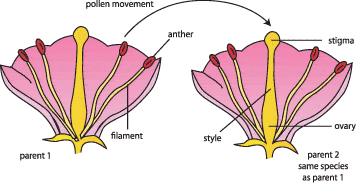
The diagram show the reproductive system of a plant. Which of the following best describes the interaction that occurs between a plants reproductive arts during fertilization?
Pollen is released from the anther and is transferred to the stigma. A pollen tube forms and grows through the style. The pollen tube reaches the filament, where the sperm fertilizes the egg.
Pollen moves from the ovule up through the stule and is released from the stigma. The pollen is transferred to the anther, where the sperm fertilizes the egg.
Pollen is released from the anther and is transferred to the stigma. A pollen tube forms and grows through the style. The pollen tube reaches an ovule within the ovary, where the sperm fertilizes the egg.
Pollen is released from the anther and is transferred to the stigma. A pollen tube forms and grows through the style. The pollen tube reaches an ovule within the filament, where the sperm fertilizes the egg.
The internal transport of water and minerals in plants requires that two systems work together. Which correctly describes how the two systems accomplish this task?
absorption through the root system, then transport through the shoot system by vascular tissue and stomata in leaf tissue
exchange of minerals for water in the root system, then transport of minerals through phloem to leaves in the stem system
transpiration by the guard-cell and leaf systems, then sweating into the soil by the root system
absorption of water by the leaf system, then transport through the meristematic system

Structures represented in the illustration below are found in the lower epidermis of a plant leaf. The illustration at right shows the response to a certain environmental condition. The response represented in the illustration would most likely be caused by --
a reduced supply of oxygen
long periods of rainfall
high concentrations of glucose
little available water

Several structures work together to allow flowering plants to reproduce. The diagram shows a typical flower. Which table correctly identifies the function of each structure or group of structures in the reproduction of a plant?
X-pollen production, Y-pollen transfer, Z-production of eggs
X-attraction of pollinators, Y-production of male sex cells, Z-egg production and embryo development
X-protection for embryo, Y-supply nourishment to embryo, Z-place of embryonic development
X-photosynthesis, Y-production of cells that protect internal organs, Z-production of egg and sperm
Cytokinins are a class of plant hormones that help regulate growth by promoting cell division. Cytokinins are produced mainly in meristematic tissue, where most plant growth occurs. Which system carries cytokinins produced in the roots to the rest of the plant?
vascular system
dermal system
reproductive system
none of these

A student conducted an investigation to study the phototropism in grasses. The only difference between the control group and the experimental group was light conditions. The control group was provided full light, while the experimental group was shaded on one side. The diagrams show the average heights and positions of blades of grass in the investigation. Which statement best explains why the grass tips of the experimental group bent toward the light?
Water evaporated faster on the side of the plant having full light
light sensors in the grass tips stimulated a hormone in the shoot system
the xylem in the root system absorbed more nutrients from the shaded side
the side facing the light has a greater chance of absorbing carbon dioxide from the atmosphere
Auxins are plant hormones that help regulate growth. Sunlight stimulates auxins on the shaded side of the stem causing the plant to grow faster on that side. This pushes the stem towards sunlight. This response is known as:
geotropism
transpiration
phototropism
thigmotropism
Which of the following is true of plant transport?
Xylem moves glucose from the roots to the leaves
Xylem moves water from the leaves to the roots
Phloem moves water from the roots to the leaves
Phloem moves glucose from the leaves to the rest of the plant
What is the female reproductive structure of a flower?
Pistil
Anther
Filament
Stamen
The transfer of pollen, containing the sperm cells, to the female part of the flower is called_____; while ________occurs after a tube grows down from the pollen grain through the style to the ovary.
Seed dispersal, pollination
Germination, fertilization
Fertilization, pollination
Pollination, fertilization
In living organisms, cells can be organized into tissues, tissues into organs, organs into systems, and systems work together to keep the organism alive. The 3 principal organs of seed plants, like conifers and flowering plants, are —
roots, leaves, and flowers
stems, fruits, and flowers
stems, roots, and leaves
stems, roots, and fruits
Leaves are part of a plant’s shoot system. The xylem tissues in leaves transports—
The bacteria needed for nitrogen fixation in root nodules
The water and minerals that are absorbed by the roots
The wax required to coat the surface of actively growing tissue
The oxygen that regulates the rate of carbohydrate production
The loss of water through stomata is called:
Translocation
Pressure Flow
Cohesion
Transpiration
When an upright plant is placed on its side, the:
plant dies
stem bends and grows downward
stem bends and grows upward
stem continues to develop horizontally
What is the male reproductive structure of a flower?
Stamen
Stigma
Ovary
Pistil

Several structures work together to allow flowering plants to reproduce. The diagram shows a typical flower.
Which table correctly identifies the function of each structure or group of structures in the reproduction of the plant?
A
B
C
D

Plants called sundews have rounded green leaves with many hair-like structures. The ends of these structures contain enzymes in a sticky liquid that looks like nectar or moisture, as shown in the picture. The hairs do not react to dust or nonliving material but will bend inward when insects get caught in the sticky liquid. Sundews digest trapped insects over a period of a few days.
Based on this information, what functions do the specialized leaves of sundews perform?
Provide water to the plant and perform photosynthesis
Provide nutrients to the plant and respond to stimuli
Respond to stimuli and anchor the plant
Release pollen to insects and perform photosynthesis
Pollen grains are produced by ?
the anther
the stigma
the flowers
the leaves
Which group is by far the largest?
conifers
ferns
flowering plants
mosses

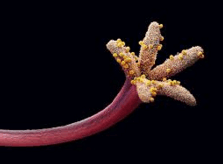


Has fibrous roots
Monocot
Dicot
Auxins are responsible for _____________ of a plant
Colour change
Watering
Phototropism
Growth
What happens when you place an over ripe banana in a fruit bowl with other fruit?
Nothing will happen
The other fruit will grow in size
Ethylene gas will cause the fruit to grow mold
Ethylene gas will cause the other fruit to ripen
In the story 'Jack and the beanstalk', Jack grew a beanstalk that grew way into the clouds. If I wanted to try and grow one myself, which plant hormone would I give my beanstalk?
Cytokinesis
Ethylene
Auxins
Gibberellins
Plants with seeds in cones are called ___________.
angiosperms
gymnosperms
flowers
mosses
A flower producing vascular plant in which the seed is enclosed in a fruit.
Conifer
Gymnosperm
Angiosperm
Fern

Select the organism with the heart as shown in the diagram.
Insect
Fish
Frog
Human


A star fish is symmetrical along 5 different lines this is called
star design
bilateral symmetry
radial symmetry
circle symmetry
An example of a Platyhelminthes is a
round worm
segmented worm
flat worm
Nematoda
A scientist discovers a new organism. It has scales and uses lungs to breathe air. How will they classify this organism?
As an invertebrate
As a reptile
As an amphibian
As a fish

The term "ectothermic" means amphibians, fish and reptiles are all ___.
warm blooded.
cold blooded.
filled with ectoplasma.

Amphibian eggs, like fish eggs are ______..
amniotic
laid in water to avoid drying out
land on land to absorb moisture from air
hatched inside the body and live young are born

How many chambers in an amphibian heart?
2
3
4
1
Why do amphibians need to live near water even though they have lungs to live on land?
they need to get food and oxygen
they need water to reproduce
the need water to excrete waste
none of these
Platyhelminthes have no true body cavity. This means they are ____________________.
Symmetrical
Sessile
Coelomates
Acoelomates

The types of animals where the mouth forms first from the blastopore is the:
Deuterosomes
Protosomes
Cnidarians
Invertebrates
What group of vertebrates can have a skeleton made of bone or cartilage?
Amphibians
Reptiles
Birds
Fish
What year was a living coelacanth discovered?
2001
1984
1949
1938
How many sections does an amphibian ear have?
1
2
3
4
Reptiles are oviparous, this means:
They are predatory
They lay eggs
They are ectothermic
They have a three-chambered heart
Which two vertebrate groups are bipedal?
Reptiles and Mammals
Amphibians and Reptiles
Mammals and Birds
Birds and Fish
Current studies suggest that the common ancestor of animals was probably:
A hairless mammal
A flagellated protist
A heterotrophic fungi
A multicellular bacteria
What do birds lack that causes them to swallow stones?
Hands
Ears
Teeth
Digestive Organs
Why do birds have differently shaped beaks?
To make them more aerodynamic
Because they live in different environments
Because they eat different foods
Because they need different levels of moisture in their diets
How many ear bones do mammals have?
1
3
5
10
Which of the following is correct?
Fish have a two-chambered heart, but reptiles have a four-chambered heart
Replies and amphibians both have three-chambered hearts
Mammals have a four-chambered heart, but birds have a two-chambered heart
Fish and birds both have two-chambered hearts
Animal cells are supported by what?
Chitn
Collegen
Fatty-Acids
Glucose
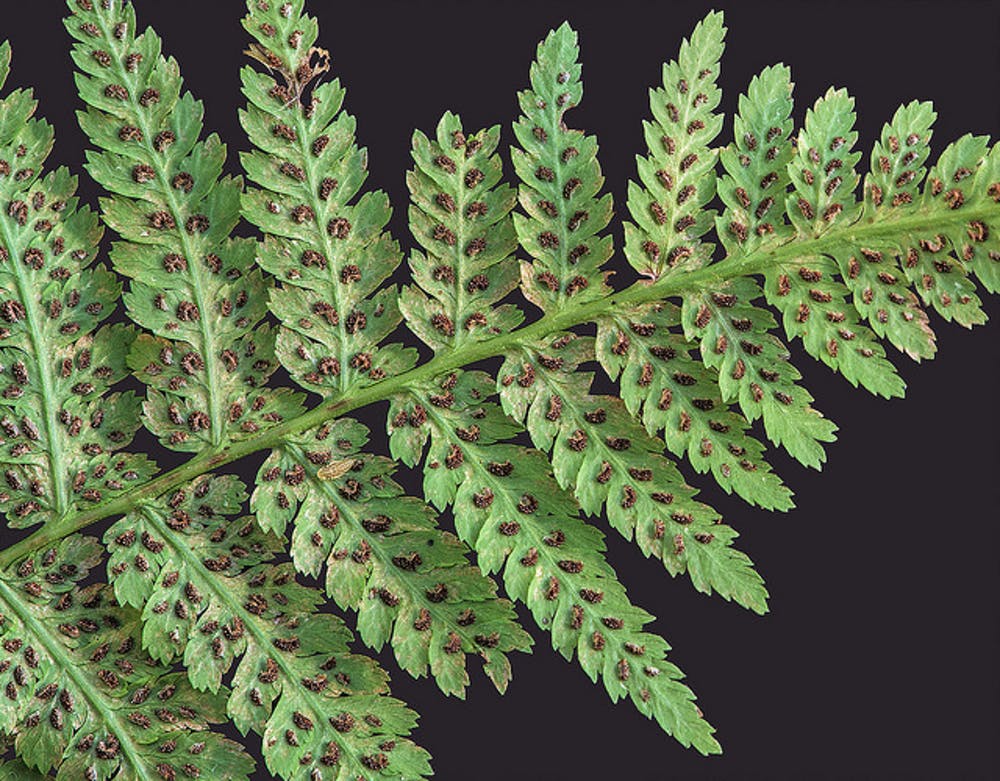
How do we call the brown spots you can see on the fern plant?
Spore seeds
Spore cases
Seed cases
Pollen cases
What is gametophyte?
The stage that produces sperm cells and egg cells.
The stage that produces spores.
The stage that produces rhizomes.

