
 Worksheets
Review: DNA & Protein Synthesis, Mitosis, & Meiosis
Total questions: 110
Worksheet time: 2hrs 4mins
Which sequence of complementary DNA bases would pair with this partial strand...
3' ATG TGA CAG 5'
5' UAC ACU GUC 3'
5' TAC ACT GTC 3'
3' UAC ACU GUC 5'
3' TAC ACT GTC 5'

What happens in RNA processing and where does it occur?
5' cap and 3' poly A tail added, introns spliced out; in nucleus
3' cap and 5' poly A tail added, in cytoplasm
Exons cut out and introns reattached, cytoplasm

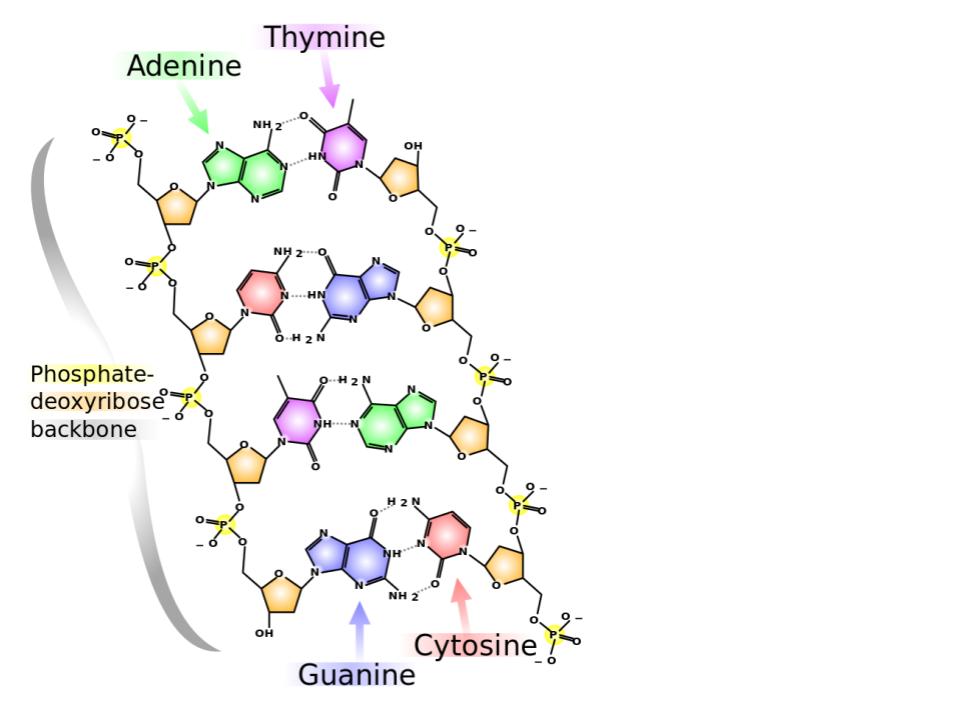
The two strands of a DNA molecule are held together by
hydrogen bonds
phosphodiester bonds
glycolsyl bonds
glycosidic linkages

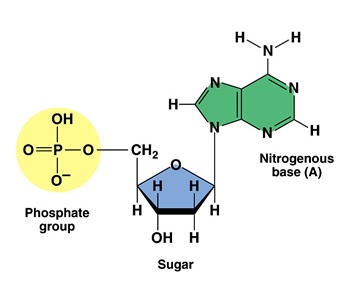
DNA is a polymer made of monomers called
nucleotides
ribosomes
purines
pyrimidines

The term used to describe DNA replication is
semi-conservative
conservative
antiparallel
dispersive
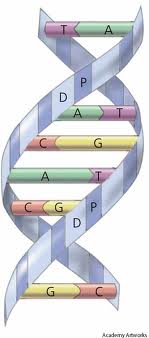
Which two molecules form the sides (backbone) of the DNA ladder?
deoxyribose sugar and adenine
ribose sugar and a phosphate
ribose sugar and a nitrogenous base
deoxyribose sugar and phosphate
At a specific area of a chromosome, the following sequence of nucleotides is present where the chain opens to form a replication fork: 3' C C T A G G C T G C A A T C C 5'
An RNA primer is formed starting at the underlined T (T) of the template. Which of the following represents the primer sequence?
5' G C C U A G G 3'
5' G C C T A G G 3'
5' A C G U U A G G 3'
5' A C G T T A G G 3'
At a specific area of a chromosome, the following sequence of nucleotides is present where the chain opens to form a replication fork: 3' C C T A G G C T G C A A T C C 5'
An RNA primer is formed starting at the underlined T (T) of the template. Which of the following represents the primer sequence?
5' G C C U A G G 3'
5' G C C T A G G 3'
5' A C G U U A G G 3'
5' A C G T T A G G 3'

Erwin Chargaff investigated the nucleotide composition of DNA. He analyzed DNA from various organisms and measured the relative amounts of adenine (A), guanine (G), cytosine (C), and thymine (T) present in the DNA of each organism. Table 1 contains a selected data set of his results.
Which of the following statements best explains the data set?
Since the %A and the %G add up to approximately 50 percent in each sample, adenine and guanine molecules must pair up in a double-stranded DNA molecule.
Since the %A and the %T are approximately the same in each sample, adenine and thymine molecules must pair up in a double-stranded DNA molecule.
Since the %(A+T) is greater than the %(G+C) in each sample, DNA molecules must have a poly-A tail at one end.
Since the %C and the %T add up to approximately 50 percent in each sample, cytosine and thymine molecules must both contain a single ring.
Which of the following best describes a characteristic of DNA that makes it useful as hereditary material?
Nucleotide bases in one strand can only be paired with specific bases in the other strand.
Nucleotide bases can be randomly replaced with different nucleotide bases to increase variation.
The nucleotide bases can also be used to provide the energy needed for reproduction.
There are many different types of nucleotide bases that can be incorporated into DNA.

A model of a process involving nucleic acids is shown in Figure 1.
Which of the following best explains what process is represented in Figure 1?
New DNA strands are being synthesized in the 3' to 5' direction from their DNA templates.
New DNA strands are being synthesized in the 5' to 3' direction from their DNA templates.
A new RNA strand is being synthesized in the 3' to 5' end from its DNA template.
Two new RNA strands are being synthesized in both directions from their DNA templates.
When DNA replicates, each strand of the original DNA molecule is used as a template for the synthesis of a second, complementary strand. Which of the following figures most accurately illustrates the enzyme-mediated synthesis of new DNA at a replication fork?


Enzyme used during replication to attach Okazaki fragments to each other
DNA Ligase
DNA Polymerase III
Topoisomerase
Helicase
Primase

Figure 1 illustrates a model of the molecules involved in DNA replication and their placement relative to each other.
Which of the following correctly explains where DNA replication will begin on the strand oriented 5'→3', reading from left to right?
DNA replication will be randomly initiated along the unwound portion of the DNA strand since base pairing will occur.
DNA replication cannot occur since there is already an RNA base pairing with the template strand.
DNA replication will be initiated immediately to the left of the RNA since DNA polymerase requires an RNA primer.
DNA replication will be initiated at the site of the topoisomerase since that is where DNA begins to uncoil.
Which of the following best explains why ligase is required for DNA replication?
The lagging strand cannot be replicated continuously, and ligase is needed to join the Okazaki fragments.
Ligase forms the hydrogen bonds between complementary bases in the two strands of DNA.
Ligase facilitates the binding of RNA polymerase to the promoter region.
Ligase enables the newly synthesized DNA to twist into a double helix.

A scientist adds a chemical to a culture of dividing cells in order to disrupt DNA replication. The replicated DNA produced by the cells is double-stranded, but sections of it lack covalent bonds between adjacent nucleotides (Figure 1).
Which of the following claims is best supported by the data?
The chemical prevents the formation of RNA primers.
The chemical inhibits DNA ligase.
The chemical blocks DNA polymerase.
The chemical disrupts hydrogen bonding.

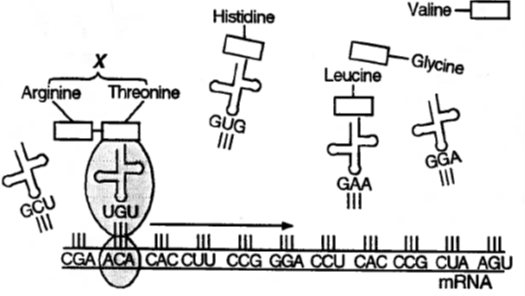
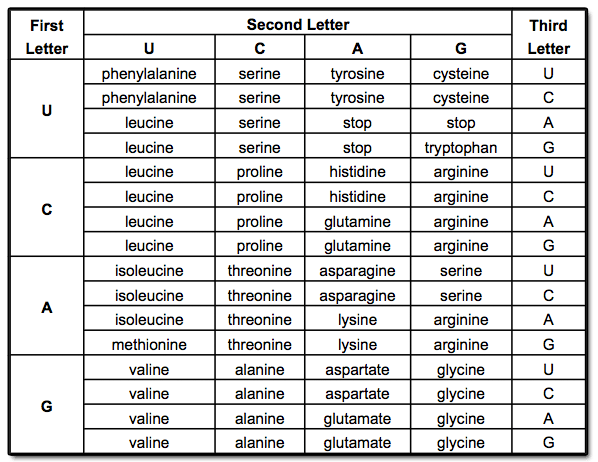
How many amino acids are coded for by this sequence of nucleotides:
ATGGGAACTCCAAATTCG
(a)
Which amino acid is coded from the mRNA codon:
AGU
(a)
What amino acid is represented by the anticodon GUC?
(a)
If you take this codon of DNA (a) ATA. What will the amino acid be?
If you take this piece of tRNA [ ACU ] what will the Amino Acid be?
(a)
What would be the tRNA sequence for the DNA codon GTC?
(a)
What would be the tRNA sequence for the mRNA codon GUC?
(a)
What is the name for the physical characteristic expressed by a gene?
(a)
What amino acid is represented by the anticodon CUG?
(a)
What amino acid is represented by the sequence of DNA AAG?
(a)
DNA will condense into...
(a)

What phase of mitosis is pictured?
(a)

Structure A refers to the _____.
sister chromatid
homologous chromosome
centromere
chromosome

Name the phase:
Prophase
Metaphase
Anaphase
Telophase
Interphase
If a cell has 20 chromosomes & undergoes mitosis twelve times, how many chromosomes will each daughter cell have?
(a)

Name this phase of the cell cycle...
prophase
anaphase
metaphase
telophase
interphase

Name this phase of the cell cycle...
prophase
anaphase
metaphase
telophase
interphase

Name this phase of the cell cycle...
prophase
anaphase
metaphase
telophase
interphase

Which of these is a tumor that is noncancerous and does not spread?
Malignant
Benign
What is Apoptosis?
A tumor
A protein
Programmed cell death
Cell cycle checkpoints

The graph represents the amount of DNA in the nucleus of each cell during the cell cycle.
Which region represents the G2 phase?
I
II
III
IV
V

If a stem cell has 24 chromosomes, how many chromosomes will be in each cell after meiosis II?
(a)
When does crossing over occur?
Interphase
Prophase 1
Prophase 2
Prophase
During meiosis I, what happens?
Sister chromatids are split
Homologous chromosomes/tetrads are split
Four cells are created
None of the other choices are correct
A male shark has 40 chromosomes in each of its sex cells. How many would be present in its body cells?
(a)

Identify the phase.
Metaphase I
Metaphase II
Cytokinesis
Anaphase II
Anaphase I

What is the object labeled A?
Nucleolus
Nuclear Membrane
Centrioles
Spindle Fiber
Chromosomes

What is the object labeled B?
Nucleolus
Nuclear Membrane
Centrioles
Spindle Fiber
Chromosomes

What is the object labeled D?
Nucleolus
Nuclear Membrane
Centrioles
Spindle Fiber
Chromosomes

What is the object labeled G?
Chromatids
Centrioles
Spindle Fiber
Fishing Line
What is the object labeled G?
Chromatids
Centrioles
Spindle Fiber
Fishing Line


Which of the following best describes the cells that result from the process of meiosis in mammals?
They are diploid.
They can be used to repair injuries.
They are genetically different from the parent cell.
They are genetically identical to all the other cells in the body.
They are identical to each other.
Within a forest ecosystem, there is a large amount of diversity among members of a warbler species. Of the following stages of meiosis illustrated for a typical cell, which contributes most to diversity among the warblers?


The diploid number of chromosomes in the cell of a domesticated dog is 78
. Which of the following options includes the correct number of chromosomes in a cell after each cellular process (G2 checkpoint, meiosis, and fertilization, respectively)?


The events listed below generally take place during meiosis.
I. Synapsis occurs.
II. Crossing-over is completed.
III. Condensation of chromosomes begins.
IV. Separation of homologous chromosomes begins.
Which of the following is the correct sequence of these events?
I, II, III, IV
II, I, III, IV
III, I, II, IV
III, IV, II, I
IV, II, III, I

The relative amount of DNA in a cell at various stages of the cell cycle is shown in Figure 1. Which of the following best describes how the amount of DNA in the cell changes during M?
phase?
The amount of DNA doubles as the DNA is replicated.
The amount of DNA slightly increases as a result of new organelle synthesis.
The amount of DNA does not change while the cell grows.
The amount of DNA is halved as the cell divides into two daughter cells.
Cancer can result from a variety of different mutational events. Which of the following is LEAST likely to result in the initiation of a cancerous tumor?
A mutation results in activation of a cell-division pathway in the absence of the appropriate checkpoints in G1 & G2 phases
A mutation results in the loss of the ability to produce a tumor-suppressor protein
A defect in a cell-cycle checkpoint prevents a cell from entering the S phase
At the anaphase checkpoint, separation of chromatids occurs without all centromeres being attached to kinetochore microtubules from both poles

Researchers performed an experiment to determine the effect of certain genetic mutations on mitosis in tropical fruit fly embryos. They determined the percentage of cells in each of four phases of mitosis as shown in Figure 1. [Wild type = normal]
Which of the following patterns is shown by the data?
Mutant 1 cells are more similar to mutant 3 cells than to wild-type cells
In wild/normal-type cells, the percent of cells in anaphase is twice the amount of those in telophase
In mutant 3 cells, more time is spent in prophase/prometaphase than in the later stages of mitosis
The percent of mutant 2 cells in anaphase is higher than that of mutant 1 cells

Researchers have identified a molecule produced by Ecteinascidia turbinata, a marine invertebrate, from which the drug trabectedin is produced. Soft-tissue tumors treated with trabectedin rapidly decrease in size. In a preliminary study, healthy cells and tumor cells sampled from skin cancer patients treated with trabectedin were collected, and several characteristics of the cells were observed. The observed results of the study are shown in the table.
Which of the following best explains the most likely method by which this antitumor drug works?
Trabectedin increases the production of cyclin proteins that signal the cancer cells to enter prophase.
Trabectedin interferes with the plasma membrane, causing it to break down and expose the DNA to damage.
Trabectedin interferes with the duplication of DNA during interphase and thus prevents cancer cells from passing the G2 checkpoint.
Trabectedin interferes with the regulations of cyclin proteins, causing their levels to increase and creating errors in DNA.
Which of the following best describes the role of mitosis in the cell cycle?
Distributing replicated chromosomes to daughter nuclei
Dividing the cytoplasm to form four gametes
Producing organelles and replicating chromosomes
Exchanging genetic material between homologous chromosomes

Based on the model of eukaryotic cell cycle regulation shown in the figure, which of the following best describes the effect of a drug that blocks the production of the mitotic cyclin?
The cell cycle would proceed uncontrollably, and the cell would become cancerous.
The G1 cyclin would functionally replace mitotic cyclin, and the cell would continue dividing normally.
DNA synthesis would be prevented, and the cell would stop dividing.
The cell would be prevented from entering mitosis, and the cell would stop dividing.

Which of the following describes a mutation that would lead to an increase in the frequency of nondisjunction?
[Nondisjuction: failure of the chromosomes to separate, which produces daughter cells with abnormal numbers of chromosomes]
A mutation affecting checkpoint 1 proteins that force cells to enter G0
A mutation affecting checkpoint 2 proteins that allow cells to divide with DNA damage
A mutation affecting checkpoint 3 proteins that prevent attachment of spindle fibers
A mutation affecting checkpoint 2 proteins that prevent duplication of the chromosomes
A researcher examining a root tip observes a plant cell with condensed sister chromatids, kinetochores with attached microtubules, and individual chromosomes that are aligned at the equatorial plate of the cell. Which of the following best describes what the next process will be in the cell?
Homologous chromosomes (each with two sister chromatids) will move toward opposite poles of the cell.
Paired chromatids will separate, and the new daughter chromosomes will move toward opposite poles of the cell.
The nuclear envelope will break down, and the spindle will begin to form.
The chromatin will decondense, and the daughter cell will enter the interphase.

Researchers determined the average amount of time that a particular type of eukaryotic cell spends in each phase of the cell cycle. The data collected by the researchers are represented in Figure 1.
Based on Figure 1, what percent of the time required to complete a full cycle do the cells typically spend in interphase?
5%
35%
50%
95%

