wayground logo

Free Printable Worksheets

Font size

S
M
L
XL
Worksheets

Biology Final Exam Review

Total questions: 144

Worksheet time: 3hrs 59mins

Name
Class
Date
1.

Which statement BEST describes an effect of the low density of frozen water in a lake?

a)

When water freezes, it contracts, decreasing the water level in a lake.

b)

Water in a lake freezes from the bottom up, killing most aquatic organisms.

c)

When water in a lake freezes, it floats, providing insulation for organisms below.

d)

Water removes thermal energy from land around the lake, causing the lake to freeze.

2.

Carbohydrates and proteins are two types of macromolecules. Which functional characteristic of proteins distinguishes them from carbohydrates?

a)

Large amount of stored information

b)

Ability to catalyze biochemical reactions

c)

Efficient storage of usable chemical energy

d)

Tendency to make cell membranes hydrophobic

3.

A protein in a cell membrane changed its shape to move sodium and potassium ions against their concentration gradients. Which molecule was MOST LIKELY used by the protein as an energy source?

a)

ATP

b)

ADP

c)

Catalase

d)

Amylase

4.

Carbon dioxide and oxygen are molecules that can move freely across a plasma membrane. What determines the direction that carbon dioxide and oxygen molecules move?

a)

Orientation of cholesterol in the plasma membrane.

b)

Concentration gradient across the plasma membrane.

c)

Configuration of phospholipids in the plasma membrane.

d)

Location of receptors on the surface of the plasma membrane.

5.

Which example is an activity that a fish MOST LIKELY uses to maintain homeostasis within it body?

a)

Using camouflage to avoid predators.

b)

Feeding at night to regulate body temperature.

c)

Moving to deeper water to regulate metabolic wastes.

d)

Exchanging gases through its gills to regulate oxygen levels.

6.

Mitosis and meiosis are processes by which animal and plant cells divide. Which statement best describes a difference between mitosis and meiosis?

a)

Meiosis is a multi-step process.

b)

Mitosis occurs only in eukaryotic cells.

c)

Meiosis is used in the repair of an organism.

d)

Mitosis produces genetically identical daughter cells.

7.

Which event most likely occurs next in mitosis?

a)

The chromatin condenses.

b)

The nuclear envelope dissolves.

c)

The chromosomes double in number.

d)

The cell membrane pinches inward to divide the cytoplasm.

8.

A scientist observes that a certain trait is determined by a single allele. An organism inherited one version of the trait from one parent and another version from the other parent. Both versions of the trait are expressed in the phenotype of the offspring. Which pattern of inheritance best classifies the observed trait?

a)

dominance

b)

sex-linkage

c)

co-dominance

d)

incomplete dominance

9.
Which of the following conclusions can be drawn from this graph?
a)
The optimum pH of the enzyme is 6.6.
b)
The optimum pH of the enzyme is 5.8
c)
The enzyme’s activity increases as pH increases 5.0 to 9.0
d)
The enzyme’s activity is greater around pH of 8.0 .
10.
What type of macromolecule are enzymes?
a)
Protein
b)
Carbohydrate
c)
Lipid
d)
Nucleic Acid
11.
Enzymes need certain environmental conditions in order to function properly.  What happens when enzymes are heated to a high temperature?
a)
they die
b)
they denature
c)
they change their amino acid sequence
d)
they work better
12.
The part of the enzyme that the substrate bonds to is called the _____.
a)
active site
b)
activation energy
c)
bond site
d)
peptide bond
13.
What is a phenotype?
a)
The expression of a trait; physical appearance.
b)
refers to the genetic makeup of an individual
c)
An organism that has the same genes for a trait (ex. TT or tt)
d)
the passing of traits from parent to offspring
14.
What does heterozygous mean?
a)
An organism that has the same genes for a trait (TT or tt)
b)
An organism that has different genes for a trait (Tt)
c)
When neither gene is fully dominant; offspring is a mixture of both
d)
the different forms of a trait (hair color--> brown, blonde, red
15.
A human usually has _____ total chromosomes.
a)
6
b)
22
c)
4
d)
46
16.
R=round seed
r=wrinkled seed.
Cross a homozygous round with a wrinkled. Which statement predicts the results?
a)
offspring will be Rr
b)
offspring will be RR
c)
round seeds will be recessive to wrinkled
d)
Wrinkled will be observed in half of offspring
17.
This type of inheritance pattern is a MIXTURE of both traits.
a)
incomplete dominance
b)
co-dominance
c)
complete dominance
d)
recessive pattern
18.
Which of the characteristics is a lion least likely to pass on to its offspring?
a)
fur color
b)
length of tail
c)
scars on leg
d)
body size
19.
Releases oxygen
a)
photosynthesis
b)
cellular respiration
c)
both
20.
releases carbon dioxide
a)
phtosynthesis
b)
cellular respiration
c)
both
21.
produces sugar
a)
cellular respiration
b)
photosynthesis
c)
both
22.
uses sugar
a)
cellular respiration
b)
photosynthesis
c)
both
23.
tendency of molecules of the same kind to stick to one another
a)
cohesion
b)
adhesion
c)
solution
d)
polar molecule
24.
What property of water helps to moderate earth's temperature?
a)
adhesion
b)
cohesion
c)
Specific heat capacity
d)
density of ice
25.
The cell membrane is made mostly of
a)
phospholipid monolayer and proteins
b)
phospholipid bilayer and proteins
c)
proteins and carbohydrates bilayer
d)
triglycerides and carbohydrates
26.
Which of the following is the correct equation for PHOTOSYNTHESIS?
a)
carbon dioxide + water --> oxygen + glucose
b)
carbon dioxide + glucose + water --> oxygen 
c)
oxygen + water --> carbon dioxide + glucose
d)
glucose+ oxygen ---> water + carbon dioxide 
27.
Which structure correctly pairs the organelle with its function?
a)
Vacuole: Stores genetic info
b)
Chloroplast: synthesizes protein
c)
Membrane: controls the flow of materials in and out of the cell
d)
Nucleus: absorbs sun's energy
28.
During ___________ conditions inside our body are kept stable (the same)
a)
homeopathic
b)
Homo sapian
c)
homeostasis
d)
homologous
29.
What is the correct order organization of living things? (smallest to largest)
a)
Atom-molecule-Cells-Tissues-Organs- Organ Systems - Organism
b)
Organs - Tissues - Cells - Organ Systems - Organism
c)
Atom-Cells-Organs-Tissues -Organism - Organ Systems-molecule
d)
Atom-molecule-Cells-Organism-Tissues- Organ Systems - Organs
30.
Large bodies of water do not quickly fluctuate in temperature. Why?
a)
Water is a solvent.
b)
Water has a high heat capacity.
c)
Water acts as a buffer.
d)
Water is non-polar.
31.
Why does water move from the roots to the leaves of plants?
a)
Water is pushed by solutes
b)
Capillary action pulls the water molecules like a chain
c)
Water is pulled by gravity
d)
Water’s cohesion causes it to “pull” towards the leaves
32.
What molecule is this?
a)
monosaccharide
b)
nucleic acid
c)
amino acid
d)
fatty acid
33.
What is a peptide bond?
a)
Bond that holds two amino acids together.
b)
A bond that holds hydrogen and oxygen molecules together.
c)
A bond that holds the phosphate group of one nucleotide and a sugar of a neighboring nucleotide.
d)
A bond that is formed by the sharing of electrons.
34.
Which subunits make up the structure of all proteins?
a)
glucose
b)
amino acids
c)
carbohydrates
d)
fatty acids
35.
Glycerol and fatty acids combine to form...?
a)
Carbohydrates
b)
Lipids
c)
Proteins
d)
Nucleic Acids
36.
Given the graph below, which statement best describes the role of enzymes?
a)
More energy is released without the presence of enzymes
b)
Less energy is needed to start a reaction when enzymes are present.
c)
A reaction is catalyzed by the lack of enzymes
d)
The presence of enzymes causes reactions to occur at a slower rate.
37.

The scientific study of life

a)

chemistry

b)

biology

c)

biotechnology

d)

ecology

38.

What kind of molecule is water?

a)

Ionic

b)

Polar Covalent

c)

Nonpolar Covalent

d)

Metallic

39.

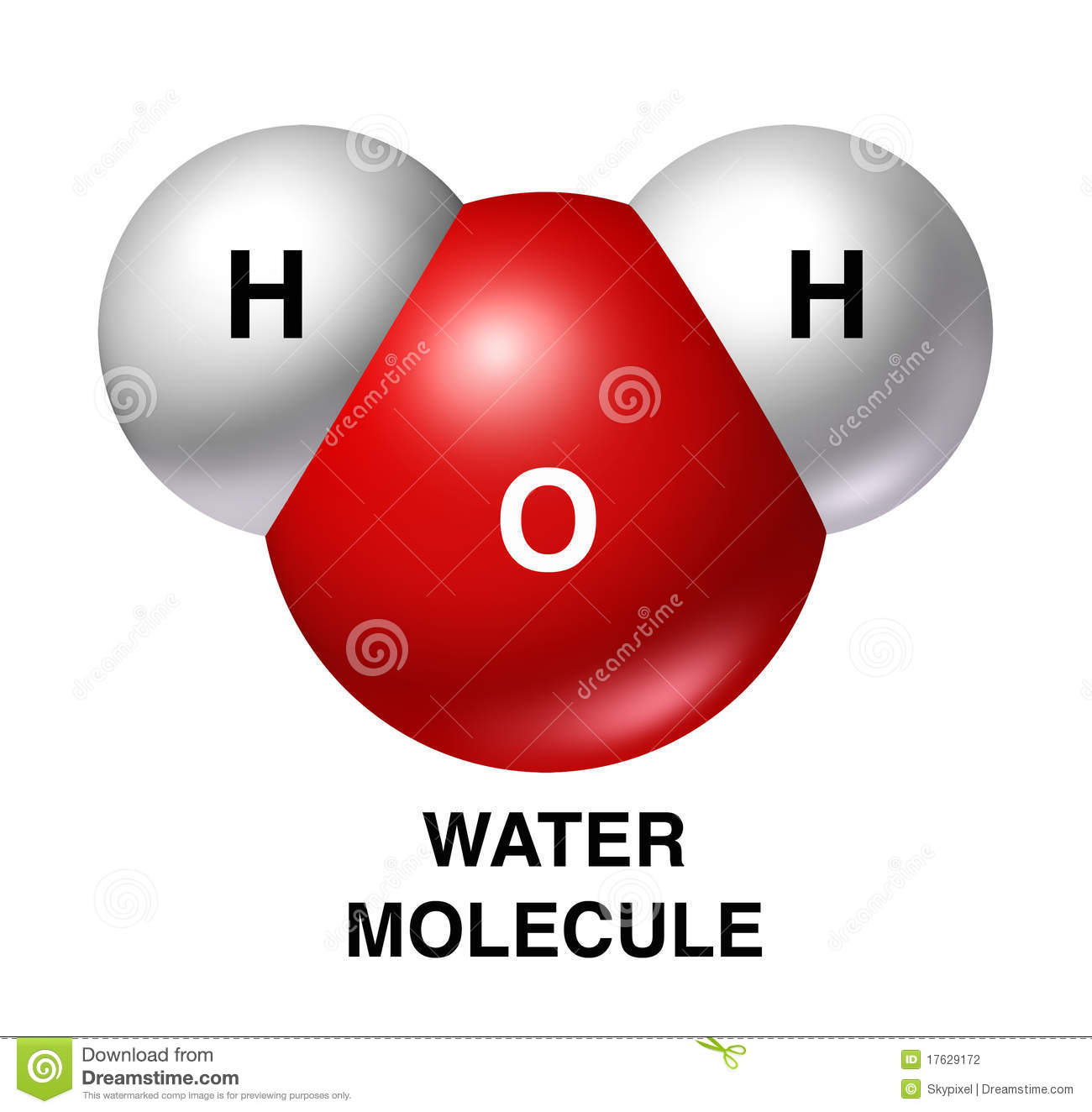
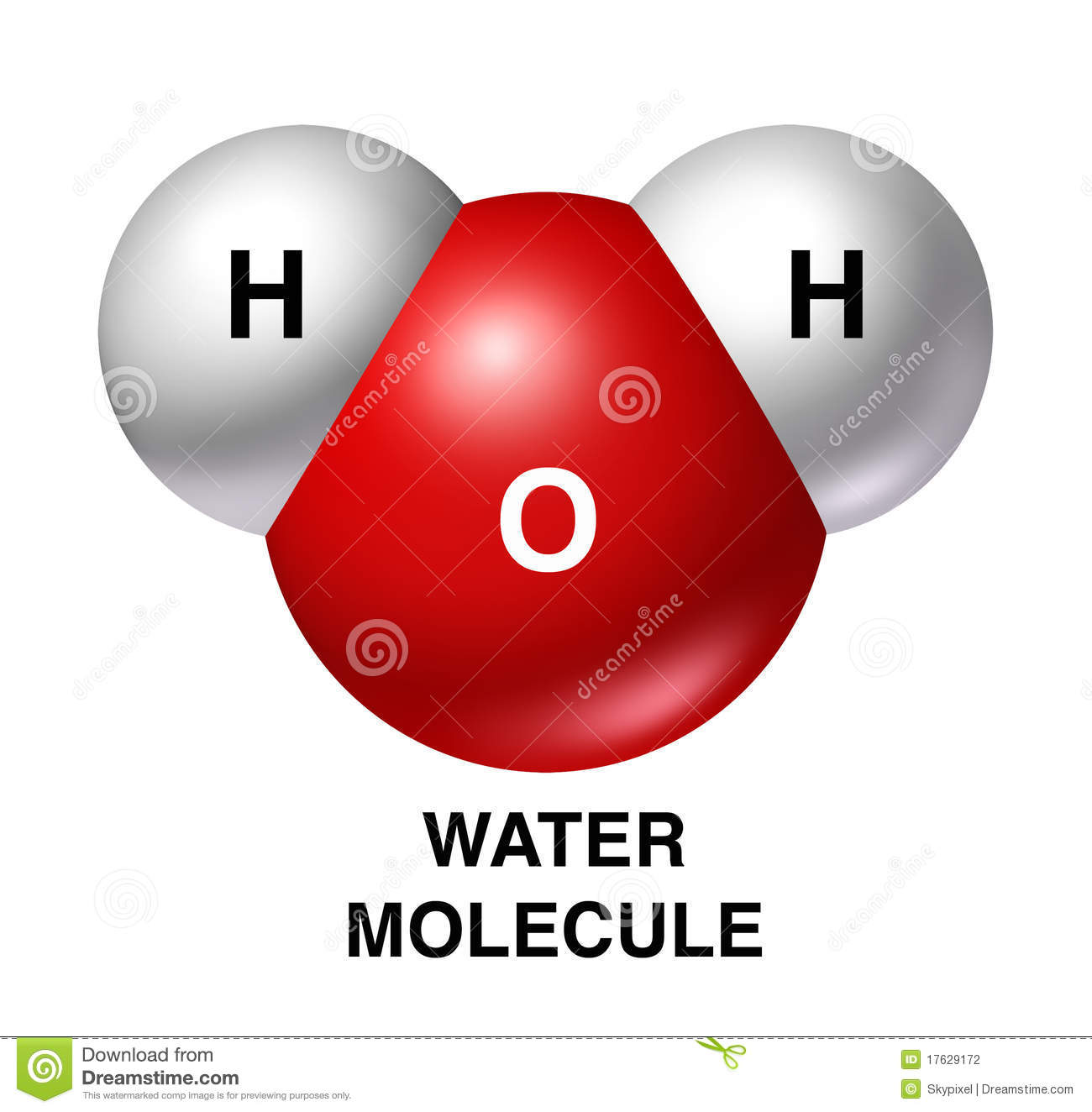
Which part of a water molecule has a Positive Charge?

a)

The Hydrogen

b)

The Oxygen

c)

The Top

d)

The Bottom

40.

Which part of a water molecule has a Negative Charge?

a)

The Hydrogen

b)

The Oxygen

c)

The Left

d)

The Right

41.

Which of the following can water NOT dissolve?

a)

Salt

b)

Sugar

c)

Oil

d)

Baking Soda

42.

Which of the following can water NOT dissolve?

a)

Ionic Compounds

b)

Polar Compounds

c)

Nonpolar Compounds

43.

What is the correct chemical formula for water?

a)

H2O

b)

HO2

c)

H2O2

d)

2H1O

44.

Which of the following is an example of COHESION?

a)

water sticking to water

b)

water sticking to glass

c)

oil sticking to plastic

d)

hydrogen sticking to oxygen

45.

You body sweats to help prevent you from overheating. How does water regulate temperature?

a)

it lets heat pass through it

b)

it absorbs a lot of heat, then decreases in temperature

c)

it absorbs a lot of heat, but only increases a little in temperature

d)

heat is afraid of water and avoids it

46.

Water is polar. What does that mean?

a)

it is a molecule with opposite charges on opposite ends

b)

it is a molecule with no charge

c)

it is a molecule with identical charges on opposite ends

d)

it is a molecule with too many protons

47.

Water sticks well to many materials. What term relates to this property of water?

a)

cohesion

b)

adhesion

c)

density

d)

surface tension

48.

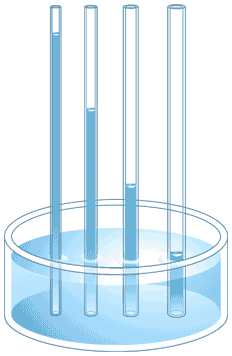
What is the term for water's ability to defy gravity and climb up a tube?

a)

Capillary Action

b)

Specific Heat

c)

Universal Solvent

d)

Magic

49.

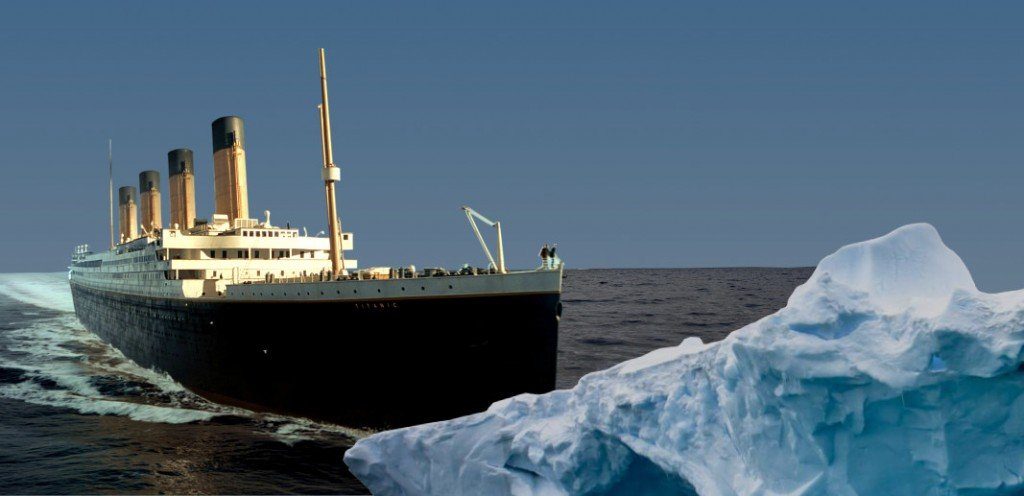
Why does ice float?

a)

water expands when it freezes, making ice less dense than water

b)

water compacts when it freezes, making ice more dense than water

c)

hydrogen bonds in water push the ice to the surface

d)

ice is afraid of water, and avoids it

50.

At what temperature does water Freeze?

a)

0o C

b)

100o C

c)

32o C

d)

-273o C

51.
Which major macromolecule is being represented in this image? 
a)
carbohydrate
b)
lipid
c)
protein
d)
nucleic acid
52.
Which of the following contains the genetic code for protein synthesis?
a)
carbohydrate
b)
lipid
c)
protein
d)
nucleic acid
53.
What are the building blocks of proteins?
a)
amino acid
b)
fatty acid
c)
nucleotide
d)
lipid
54.
The element _______is found in all of the organic compounds.
a)
Iron
b)
Nitrogen
c)
Carbon
d)
Oxygen
55.
DNA and RNA are examples of 
a)
Carbohydrates
b)
Lipids
c)
Proteins
d)
Nucleic Acids
56.
Nucleotides are monomers of
a)
Carbohydrates
b)
Lipids
c)
Proteins
d)
Nucleic Acids
57.

Waxes, oils, fats, and steroids are examples of

a)

Carbohydrates

b)

Lipids

c)

Proteins

d)

Nucleic Acids

58.
Which macromolecule stores energy, insulates us, and makes up the cell membrane?
a)
lipids
b)
proteins
c)
carbohydrates
d)
nucleic acids
59.
Proteins are made of... 
a)
C H O
b)
C H O N
c)
C H O N P
d)
C H O N S
60.
What is the primary function of carbohydrates in your body?
a)
Speed up chemical reactions.
b)
Give immediate energy.
c)
Help to store energy.
d)
Build cell walls in plants.
61.
Where does the energy from our food originally come from?
a)
the Sun
b)
chemical reactions
c)
carbohydrates
d)
mitochondria
62.
This organelle is a rigid outer layer that protects plant cells.
a)
Cell Membrane
b)
Cell Wall
c)
Nucleus
d)
Chloroplast 
63.

This organelle controls what goes in and out of plant and animal cells.

a)

Cell Wall

b)

Cell Membrane

c)

Chloroplasts

d)

Cytoplasm

64.

The _____________ stores food, water, wastes, and other materials in both plant and animal cells.

a)

Vacuole

b)

Mitochondria

c)

Cytoplasm

d)

Nucleus

65.
An organelle that captures energy from the sunlight in order to use it to produce food in plant cells is ______________.
a)
Chromatin
b)
Chloroplast
c)
Cytoplasm
d)
Cell Membrane
66.

The _____________ holds the DNA, and controls the functions of eukaryotic cells.

a)

Nucleus

b)

Nuclear Membrane

c)

Mitochondria

d)

Chloroplast

67.

The _____________ is a gel-like fluid that fills plant and animal cells. It holds the organelles in place and gives each cell its shape.

a)

Cytoplasm

b)

Cell Membrane

c)

Cell Wall

d)

Chloroplast

68.

What can only be found in plant cells?

a)

Cell membrane

b)

Vacuole

c)

Chloroplast

d)

Mitochondria

69.
Cell membranes are found in
a)
Only animal cells
b)
Only plant cells
c)
Some plant and animal cells
d)
All plant and animal cells
70.

Cell organelles work together to maintain

a)

homeostasis

b)

eukarya

c)

prokarya

d)

organisms

71.
What organelle helps with cell digestion?
a)
Lysosomes
b)
Ribosomes
c)
Golgi Complex
d)
ER
72.
What organelle is called the "powerhouse" of a cell?

a)
Endoplasmic Reticulum
b)
Nucleus
c)
Mitochondria
d)
Nucleolus
73.
What organelle stores waste and water in both plant and animal cells?
a)
Lysosomes
b)
Golgi Complex
c)
Vacuoles
d)
Endoplasmic Reticulum
74.
Using this image, what organelle is D?
a)
Endoplasmic Reticulum
b)
Flagella
c)
Rough ER
d)
Smooth ER
75.
Using this image, what organelle is N?
a)
Centrioles
b)
Cell Membrane
c)
Golgi Apparatus
d)
Ribosome
76.
Using this image, what organelle is C?
a)
Cell Wall
b)
Mitochondria
c)
Large Cell Vacuole
d)
Chloroplast
77.
Using this image, what organelle is A?
a)
Cell Wall
b)
Large Central Vacuole
c)
Mitochondria
d)
Chloroplast
78.
What cell part is NOT found in all cells?
a)
Cell Wall
b)
Cell Membrane
c)
Cytoplasm
d)
Genetic Material
79.
What is the difference between rough and smooth ER?
a)
There is no difference.
b)
Plants have rough ER, animals have smooth ER.
c)
What type of injuries the Doctors treat.
d)
Rough has ribosomes, smooth does not.
80.
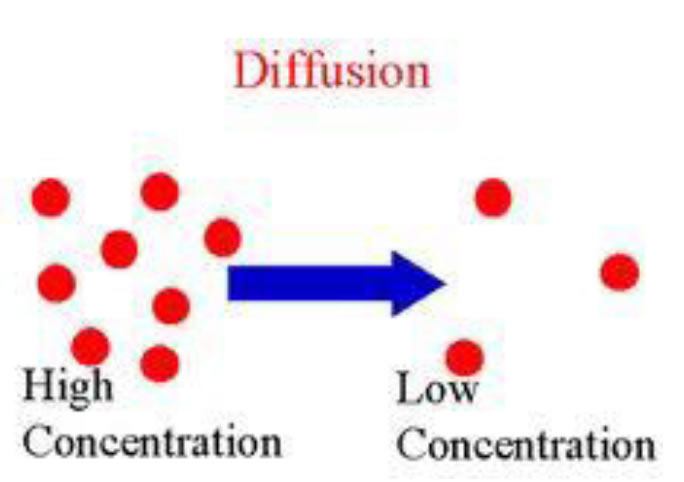
Movement of particles from high to low concentration. 
a)
Passive Transport
b)
Active Transport
81.
Osmosis is a form of ______________. 
a)
Passive Transport
b)
Active Transport
82.
a)
Passive Transport
b)
Active Transport
83.
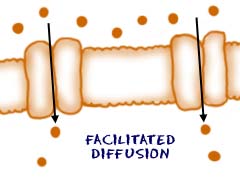
What is it called when molecules move across the cell membrane from an area of high concentration to an area of low concentration through a carrier protein?
a)
Diffusion
b)
Osmosis
c)
Active Transport
d)
Facilitated Diffusion
84.
This picture represents what type of cell transport?
a)
endocytosis
b)
exocytosis
c)
osmosis
d)
passive transport
85.
Osmosis is the movement of _____ across a membrane.
a)
food
b)
energy
c)
oxygen
d)
water
86.
Which is true about active transport?
a)
It requires energy
b)
it does not require energy
c)
It moves substances down the concentration gradient
d)
it moves material from high to low concentration
87.
This cell organelle helps organisms maintain homeostasis by controlling what substances may enter or leave cells.
a)
vacuole
b)
nucleus
c)
cell membrane
d)
cell wall
88.
The cell below is in a _________ solution.
a)
Hypotonic
b)
Hypertonic
c)
Isotonic
89.
The cell below is in a _____________ solution.
a)
Hypertonic
b)
Hypotonic
c)
Isotonic
90.
A cell in an isotonic solution will
a)
swell
b)
shrink
c)
stay the same size
d)
impossible to tell
91.
When a cell is placed in a hypertonic solution water
a)
moves from the inside of the cell to the solution
b)
moves from the solution to the inside of the cell
c)
moves equally in and out of the cell
d)
none of these
92.
A cell will __________________ in a hypotonic solution.
a)
swell and perhaps burst (lyse)
b)
shrink
c)
the size of the cell will not change
d)
the size of the cell will change from large to small and from small to large
93.
Active transport requires _____ to move materials across the cell membrane.
a)
proteins
b)
sunlight
c)
oxygen
d)
energy
94.
When the concentration of particles inside of a cell is the same as the concentration of particles outside of the cell. 
a)
active transport
b)
concentration
c)
diffusion
d)
equilibrium
95.
Particles are removed from a cell (pushed out).
a)
Endocytosis
b)
Exocytosis
c)
Permeable
d)
In high concentration
96.
Something is ___________ ____________
when some molecules can cross the membrane while others cannot. 
a)
Selectively (or Semi) Permeable 
b)
Totally Transparent
c)
Liquid Licorice 
d)
Heavily Patrolled 
97.

what is this phase

a)

prophase

b)

metaphase

c)

anaphase

d)

teloophase

98.
When a cell is not actively dividing, it is in what phase?
a)
interphase
b)
anaphase
c)
prophase
d)
telophase
99.
What portion of the cell cycle involves the actual dividing?
a)
interphase
b)
mitosis
c)
Gap 1
d)
Gap 2
100.
When a cell divides, what do we call the 2 new cells?
a)
mother cells
b)
father cells
c)
daughter cells
d)
son cells
101.
Before a cell can divide, what must happen?
a)
Nothing, it is always ready to divide
b)
The number of chromosomes must be cut in half
c)
The number of chromosomes must double
d)
The number of chromosomes must triple.
102.

In which type of cells will mitosis occur?

a)

egg cells

b)

sperm cells

c)

jail cells

d)

somatic cells

103.
What is the name of the process in which DNA (genetic information) is exchanged during meiosis?
a)
crossing under
b)
crossing over
c)
melding
d)
blending
104.
In meiosis, the haploid number of chromosomes in a human sex cell is:
a)
46
b)
92
c)
22
d)
23
105.
What is the diploid number of cells found in a human body cell?
a)
23
b)
46
c)
92
d)
47
106.
When you start with 1 cell, at the end of mitosis, how many identical cells will you have?
a)
1
b)
2
c)
3
d)
4
107.

After meiosis is complete how many identical cells will there be?

a)

0

b)

2

c)

3

d)

4

108.
After meiosis is complete how many cells will there be?
a)
1
b)
2
c)
3
d)
4
109.
Chromosomes that have corresponding traits from the opposite sex parent are called:
a)
Heterogeneous chromosomes
b)
homologous chromosomes
c)
Mother and Father chromosomes
d)
Grandmother and grandfather chromosomes
110.
Another name for a sex cell is a:
a)
gamete
b)
embryo
c)
bone cell
d)
muscle cell
111.
After meiosis is complete, the new cells:
a)
are all identical
b)
are all different
c)
are half identical and half different
d)
are all stretched out
112.
Why is sexual reproduction better than asexual reproduction?
a)
It gives an advantage to organisms to be different than the rest, if the environment changes.
b)
It is better for all organisms to be the same.
c)
It happens faster.
d)
It helps skin cells divide faster to heal wounds.
113.
A is:
B is:
C is:
a)
A: chromatid
B: centromere
C: chromosome
b)
A: chromosome
B: chromatid
C: centromere
c)
A: chromosome
B: centromere
C: chromatid
d)
A: centromere
B: chromosome
C: chromatid
114.
The process on the left is:
The process on the right is:
a)
Left: meiosis
Right: meiosis
b)
Left: meiosis
Right: cloning
c)
Left: mitosis
Right: meiosis
d)
Left: mitosis
Right: mitosis
115.
What scientific process is being shown?
a)
Mixing
b)
Crossing under
c)
Crossing over
d)
square dancing
116.
Place these cells in order of mitosis.
a)
A, B, C, D, E
b)
B, E, D, A, C
c)
C, E, A, D, B
d)
B, D, A, E, C
117.
Most of the cells in the human body are produced by
a)
mitosis
b)
meiosis
118.
In which part of the cell does photosynthesis take place?
a)
vacuole
b)
mitochondria
c)
cell wall
d)
chloroplast
119.
What gas do producers need in order to perform photosynthesis?
a)
oxygen
b)
carbon dioxide
c)
hydrogen
d)
nitrogen
120.
What gas do producers give off as a result of photosynthesis?
a)
oxygen
b)
carbon dioxide
c)
hydrogen
d)
nitrogen
121.
In which organism(s) does respiration occur?
a)
plants
b)
animals
c)
fungus
d)
all of these
122.
In which part of the cell does respiration occur?
a)
vacuole
b)
mitochondria
c)
cell wall
d)
chloroplast
123.
What gas is given off as a result of respiration?
a)
oxygen
b)
carbon dioxide
c)
hydrogen
d)
nitrogen
124.
What is the chemical equation for cellular respiration?
a)
Glucose + Oxygen -> Carbon dioxide + Water + Energy
b)
Oxygen + Carbon dioxide + Energy  -> Glucose + Water
c)
Carbon dioxide + Glucose -> Oxygen + Water + Energy
d)
Water + Carbon dioxide + Energy -> Oxygen + Glucose
125.
What is the equation for photosynthesis
a)
Water + Carbon dioxide + Energy -> Oxygen + Glucose
b)
Carbon dioxide + Glucose -> Oxygen + Water + Energy
c)
Oxygen + Carbon dioxide + Energy  -> Glucose + Water
d)
Glucose + Oxygen -> Carbon dioxide + Water + Energy
126.
When an organism breaks down food, the atoms get rearranged into different molecules. When the atoms get rearranged, what is released?  
a)
Energy
b)
Water
c)
Glucose
d)
Oxygen 
127.
Cellular respiration is similar in both plants and animals in what way?
a)
Energy is required and oxygen is released.
b)
Nitrogen is required and energy is released.
c)
Oxygen is required and energy is released.
d)
Oxygen is required and carbon is released.
128.
Where does cellular respiration take place?
a)
Mitochondria
b)
Chloroplast
c)
Stomata
d)
Leaf
129.
Glucose is a form of ______ Energy. 
a)
Radiant
b)
Chemical
130.
What pigment in the leaf captures energy from the sun?
a)
carbon
b)
chlorophyll
c)
air
d)
chloroplast
131.
Carbon dioxide enters the leave through what opening?
a)
root
b)
stem
c)
stomata
d)
stomach
132.
What is absorbed by the tree roots and transported to the leaves?
a)
air
b)
water
c)
carbon
d)
glucose
133.
What are the products of photosynthesis?
a)
water and carbon dioxide
b)
oxygen and glucose
c)
oxygen and carbon dioxide
d)
oxygen and water
134.
Which of the following go through the process of photosynthesis?
a)
bees
b)
algae
c)
humans
d)
mushrooms
135.
Which of the following is not needed for photosynthesis to occur?
a)
sunlight
b)
carbon dioxide
c)
water
d)
oxygen
136.
Why do we eat food?
a)
to provide energy/fuel
b)
to eliminate waste products
c)
to prevent diseases
d)
to kill pathogens
137.
A homozygous dominant dog with brown fur is crossed with a heterozygous dog with brown fur. What are the percentages of the possible genotypes?
a)
100% BB
b)
75% BB and 25%Bb
c)
50 % BB and 50% Bb
d)
50% Bb and 50% bb
138.
The man who studied genetics and came up with genetics is
a)
Watson
b)
Crick
c)
Mendel
d)
Darwin
139.
What law states that in Tt the person will only show the dominant allele
a)
law of segregation
b)
law of independent assortment
c)
law of dominance
d)
law of punnett squares
140.
Genotype refers to the ...
a)
physical expression of the genes
b)
the possible combination of alleles in a gene
c)
whether an allele is dominant or recessive
d)
how an organism will appear
141.

Squidward has light blue skin, and his genotype for this trait is Bb. Which of the following would describe Squidward?

a)

Purebred

b)

Hybrid

c)

Homozygous

d)

Sex-linked

142.
An offspring will receive how many alleles from each parent to determine a specific trait?
a)
one
b)
two
c)
three
d)
five
143.
What is a phenotype
a)
The genetic make up (code)
b)
The physical trait
144.
the passing of genetic traits from parent to offspring.
a)
heredity
b)
trait
c)
gene
d)
allele