wayground logo

Free Printable Worksheets

Font size

S
M
L
XL
Worksheets

Chemistry Final

Total questions: 149

Worksheet time: 4hrs 49mins

Name
Class
Date
1.
The classification of matter as a solid, liquid, or a gas is called what?
a)
Matter
b)
Mass
c)
Conductor
d)
Physical State
2.
Appearances of an object: mass, magnetism, physical state, relative density, solubility, and the ability to insulate or conduct heat or electricity is called: 
a)
Physical Properties
b)
Physical State
c)
Matter
d)
Mass
3.
When the temperature of matter increases the particles...
a)
speed up and move closer
b)
speed up and move farther apart
c)
slow down and move closer together
d)
slow down and move farther apart
4.
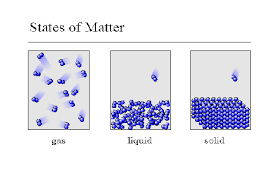
If the tops were removed from the cylinders, the following would happen:
a)
The solid would fly out of the container
b)
The liquid would fly out of the container.
c)
The gas would fly out of the container.
d)
They ALL would fly out of the container.
5.
The molecules in the picture are tightly held together with little movement. They have shape and energy.  Therefore, the picture represents _________.
a)
solid
b)
liquid
c)
gas
d)
plasma
6.
What happens to the particles when I add heat?
a)
The particles get bigger
b)
The particles get smaller
c)
The particles get slower
d)
The particles get faster
7.
Which state of matter has the highest kinetic energy? 
a)
solid
b)
liquid 
c)
gas
d)
matter
8.
All changes in the state of matter of a substance requires
a)
vibration
b)
water
c)
permission
d)
energy
9.
At higher temperatures
a)
particles in an object have less energy
b)
particles in an object move faster
c)
a gas contracts
10.
Particles move quickest
a)
solid
b)
liquid
c)
gas
d)
solid, liquid and gas
11.
No definite shape or volume
a)
solid
b)
liquid
c)
gas
d)
solid, liquid and gas
12.
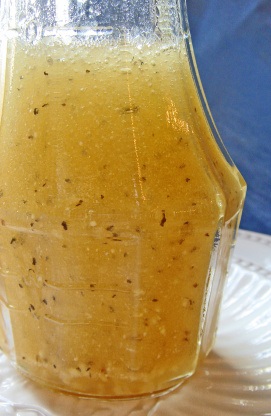
Italian Salad Dressing is a . . .
a)
heterogeneous mixture
b)
homogeneous mixture
c)
Pure Substance
d)
Compound
13.
A combination that can be separated by physical processes is a .....
a)
Pure Substance
b)
Glucose
c)
Element
d)
Mixture
14.
A mixture that is NOT evenly distributed is called ....
a)
Compounded
b)
Homogenous
c)
Heterogenous
d)
Salty
15.
Substance with atoms that are all alike.
a)
element
b)
compound
c)
homogeneous mixture
d)
heterogeneous mixture
16.
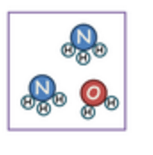
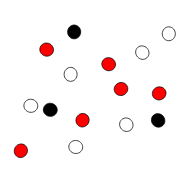
This picture represents: 
a)
Element
b)
Compound
c)
Mixture of Elements
d)
Mixture of Compounds
17.
This picture represents: 
a)
Element
b)
Compound
c)
Mixture of Elements
d)
Mixture of Compounds
18.
This picture represents: 
a)
Element
b)
Compound
c)
Mixture of Elements
d)
Mixture of Compounds
19.
All matter is made up of .....
a)
Compounds
b)
Atoms
c)
Molecules
d)
Sunshine
20.
Are made from a combination of 2 or more elements in a constant ratio...
a)
Atome
b)
Mixture
c)
Compounds
d)
Elements
21.
NaCl
a)
Element
b)
Compound
c)
Homogeneous Mixture
d)
Heterogeneous Mixture
22.
What does it mean to be "Soluble" ?
a)
Capable of being a solid.
b)
To have soul.
c)
Capable of being dissolved.
d)
To sink.
23.
Which of the following is not a chemical property? 
a)
rusting 
b)
boiling 
c)
rotting 
d)
burning 
24.
What is the measure of how much space an object takes up?
a)
matter
b)
volume
c)
substance
d)
properties
25.
Which is an example of a physical property?
a)
ability to react with acid
b)
 state of matter
c)
flammability
d)
ability to react with oxygen
26.
What kind of properties can only be observed when a substance changes into a different substance?
a)
physical properties
b)
chemical properties
c)
liquid properties
d)
real properties
27.

Reactivity (bubbling, fizzing) is a --- property.

a)

Chemical

b)

Physical

28.

Ductility, the ability to be stretched into thin wires, is a --- property.

a)

Chemical

b)

Physical

29.

Combustion or exploding, is a --- property.

a)

Chemical

b)

Physical

30.

The vertical (up and down) columns in the Periodic Table are called

a)

groups

b)

towers

c)

periods

d)

atomic numbers

31.
The Modern Periodic Table of Elements is arranged by
a)
atomic mass
b)
atomic number
c)
valence electrons
d)
number of isotopes
32.

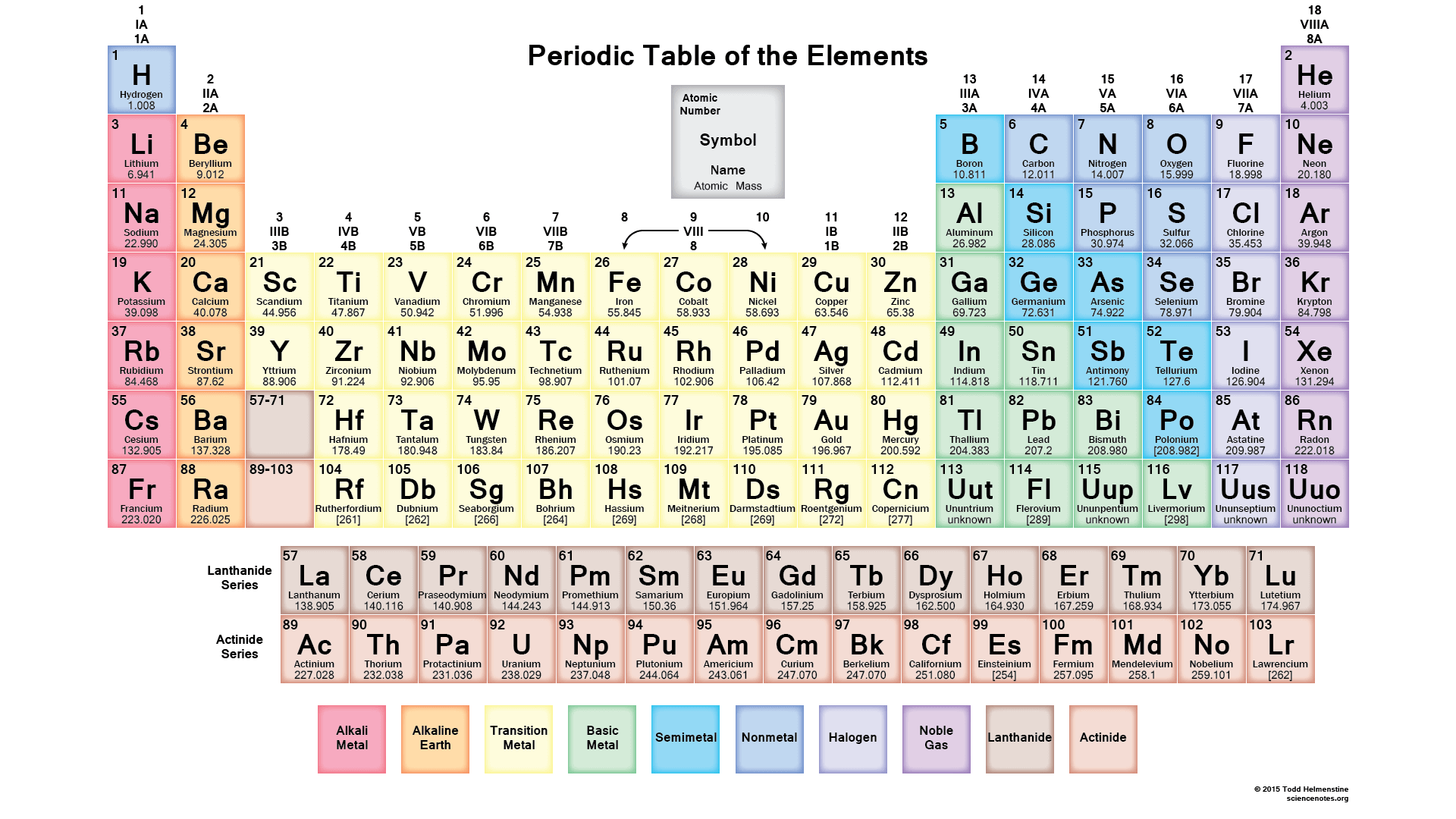
Strontium (Sr) is found in period

a)

4

b)

2

c)

5

d)

1

33.

Magnesium (Mg) is found in group

a)

1

b)

2

c)

3

d)

4

34.
What does the atomic mass tell you? 
a)
Basically,the number of electrons and protons
b)
The number of neutrons
c)
Basically, the number of protons and neutrons
d)
The number of protons.
35.
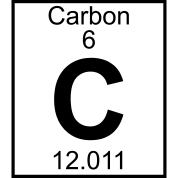
What does the 6 represent?
a)
atomic mass
b)
atomic number
c)
element name
d)
chemical symbol 
36.
What does 12.011 represent?
a)
atomic mass
b)
atomic number
c)
element name
d)
chemical symbol 
37.

Which subatomic particle has a positive charge?

a)

proton

b)

nuetron

c)

electron

d)

atom

38.

Which subatomic particle has a negative charge?

a)

proton

b)

neutron

c)

electron

d)

atom

39.

Why is the overall charge of an atom neutral (0)?

a)

They have the same number of protons and neutrons.

b)

They have the same number of protons and electrons.

c)

They have the same number of electrons and neutrons.

40.

Which TWO of the following subatomic particles are inside the nucleus?

a)

protons

b)

electrons

c)

neutrons

d)

There are no subatomic particles in the nucleus of an atom.

41.

Choose the correct number of valence electrons for Iodine

a)

1

b)

7

c)

6

d)

4

42.

How many valence electrons does Neon have?

a)

18

b)

8

c)

10

d)

2

43.
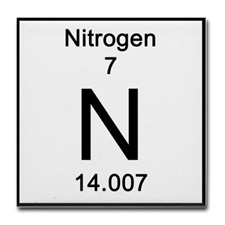
What is the number of protons that the element in this image contain?
a)
14
b)
7
c)
15
d)
18
44.
The first energy level can hold up to how many electrons?
a)
8
b)
4
c)
2
d)
5
45.
What's a valence electron?
a)
electrons in the second energy level
b)
electrons in the outermost energy level
c)
the atomic number
d)
electrons in the first level
46.
If an atom has 24 protons and 24 electrons, what is the atomic number of this element?
a)
24
b)
48
c)
0
d)
42
47.
How many protons are in this element?
a)
79
b)
196
c)
117
d)
Cannot be determined
48.
This subatomic particle always identifies the identity (name) of the element
a)
Neutron
b)
Electron
c)
Proton
d)
amu
49.
A neutral atom of Carbon-13 has ________ electrons and _________ neutrons
a)
13, 13
b)
6, 7
c)
7, 7
d)
6, 6
50.
Isotopes are atoms of the same element that have the same number of __________ but different number of __________ . Therefore, isotopes of the same element have different masses. 
a)
protons, neutrons
b)
protons, electrons
c)
neutrons, protons
d)
electrons, protons
51.

How many neutrons does this isotope of lithium have?

a)

8

b)

3

c)

4

d)

5

52.

What is the name of the family that is highlighted?

a)

Alkali Metal Family

b)

Halogen Family

c)

Noble Gas Family

d)

Transition Metal Family

53.

Which element has 3 valence electrons?

a)

A

b)

B

c)

E

d)

C

54.
Which elements have the same number of valence electrons?
a)
A & C
b)
E & C
c)
F & A
d)
F & B
55.
Is this a metal, nonmetal or metalloid?
a)
Metal
b)
Nonmetal
c)
Metalloid
56.

To which group does this atom belong?

a)

Alkali metal

b)

Alkali earth metal

c)

Halogen

d)

Transitional metal

57.
How many energy levels does an atom of Chlorine have?
a)
2
b)
3
c)
4
d)
7
58.
Electronegativity is...
a)
how good an atom is at attracting electrons
b)
the ability of an atom to lose electrons
c)
the energy required to remove an electron from a specific atom
d)
how easy it is to make friends. 
59.

How many electrons can go in the Second energy level?

a)

2

b)

8

c)

18

d)

32

60.

What is the chart called where all the elements are organized?

a)

Periodic Table

b)

Valence Chart

c)

Bohr Chart

d)

Lewis Chart

61.

Which element is this?

a)

Calcium

b)

Chlorine

c)

Silicon

d)

Potassium

62.

What element is this?

a)

Nitrogen

b)

Chlorine

c)

Argon

d)

Phosphorous

63.

Which Bohr model represents Neon?

a)
b)
c)
d)
64.

Which Bohr model represents Be?

a)
b)
c)
d)
65.

How would you draw a Lewis dot diagram for Magnesium?

a)
b)
c)
d)
66.

Which of the following shows a correct Lewis dot structure?

a)
b)
c)
d)
67.
What atom matches this electron configuration?
1s22s22p63s23p64s23d10
a)
Zinc
b)
Copper
c)
Nickel
d)
Germanium
68.

What is the electron configuration of Sulfur using the abbreviated noble gas method

a)

[Ne]3s1

b)

[Ne]3s23p3

c)

[Ne]3s23p4

69.
The electron configuration of an atom is 1s22s22p6.  The number of electrons in the atom is 
a)
3
b)
6
c)
8
d)
10
70.
Which element is pictured?
a)
neon
b)
fluorine
c)
magnesium
d)
argon
71.
How many atomic orbitals are there in the p sublevel?
a)
2
b)
3
c)
4
d)
5
72.
How many electrons can the d sublevel hold?
a)
8
b)
10
c)
2
d)
4
73.
What is the charge of an atom that has lost one electron?
a)
-1
b)
-2
c)
+1
d)
+2
74.
Anions are _______ that form ____________ ions and __________ electrons.
a)
nonmetals, positive, lose
b)
nonmetals, negative, gain
c)
metals, positive, gain
d)
metals, positive, lose
75.
How many electron can be found in a s orbital?
a)
2
b)
3
c)
4
d)
1
76.

Identify the Electron Configuration for Aluminum (Al)

a)

1s2 2s2 2p6 3s2 3p1

b)

1s2 2s2 2p6 3s2 3p3

c)

1s2 2s2 2p6 3s2 4p1

77.

An ion with a positive charge is a(n) __________________.

a)

Anion

b)

Cation

78.

How many electrons are found in the following ion?

a)

3

b)

7

c)

10

d)

14

79.

What is an ion?

a)

An atom with a charge

b)

An atom that has equal amounts of electrons and protons

c)

An atom with a different number of protons and neutrons

d)

an unstable atom

80.
An atom becomes _________ when it gains electrons.
a)
Positive
b)
Negative
c)
Neutral
d)
Invinsible
81.

What is the ionic symbol for a Nitrogen atom?

a)

N3-

b)

N3+

c)

N2-

d)

N2+

82.
Cations are _______ that form ____________ ions and __________ electrons.
a)
nonmetals, positive, lose
b)
nonmetals, negative, gain
c)
metals, positive, gain
d)
metals, positive, lose
83.
Metals tend to 
a)
gain electrons
b)
lose electrons
84.
Nonmetals tend to 
a)
gain electrons
b)
lose electrons
85.
If an atom loses two electrons what charge will it have?
a)
+ 2
b)
 - 2
c)
+1
d)
-1
86.
A Radium atom wants...
a)
One more electron
b)
One less electron
c)
Two more electrons
d)
Two less electrons
87.
What is a Rubidium ion's symbol?
a)
Rb-
b)
Rb+
c)
Rb-2
d)
Rb+2
88.

The first step in naming an ionic compound is always...

a)

Naming the anion (non-metal)

b)

Changing the ending to -ide

c)

Naming the cation (metal)

d)

Writing the cation charge

89.
Name the following ionic compound: BeCl2
a)
beryllium chlorine
b)
beryllium II chloride
c)
beryllium chloride
d)
beryllium dichloride
90.

Which of these combinations is an ionic compound made of?

a)

Metal and Metal

b)

Nonmetal and Nonmetal

c)

Metal and Nonmetal

d)

Cation and Cation

91.

How do the following two elements bond together?

Al, and O

a)

AlO

b)

Al2O3

c)

Al3O6

d)

Al3O2

92.

Name the following ionic compound: MgSO4

a)

magnesium (II) sulfide

b)

magnesium sulfide

c)

magnesium sulfate

d)

magnesium (II) sulfate

93.

Name the following compound: FeCl3

a)

iron chloride

b)

iron III chloride

c)

iron II chloride

d)

iron III chlorate

94.
When naming ionic compounds with transition metals you need to include roman numerals to show the _____ of the metal..
a)
atomic number
b)
mass number
c)
charge
d)
ionization energy
95.

What is the name of Ca(NO3)2

a)

calcium nitrite

b)

calcium II nitrate

c)

calcium nitrate

d)

calcium nitride

96.

Name the following ionic compound: Cr(NO3)3

a)

chromium III nitride

b)

chromium II nitride

c)

chromium II nitrate

d)

chromium III nitrate

97.

The formula of calciumphosphate is

a)

CaPO4

b)

Ca3P2

c)

Ca3PO4

d)

Ca3(PO4)2

98.

In the compound TiO2, Titanium has a charge of

a)

+4

b)

+3

c)

+2

d)

+1

99.

ammonium phosphate

a)

(NH4)3PO4

b)

NPO4

c)

NH4PO4

d)

NH4(PO4)3

100.

What is the formula for manganese(III) oxide?

a)

MnO

b)

MnO3

c)

Mn3O

d)

Mn2O3

101.

What is the correct chemical name for Cu2O ?

a)

Copper oxide

b)

Copper oxalate

c)

Copper (II) oxide

d)

Copper (I) oxide

102.
What is the name of NH4Cl?
a)
nitrogen tetrahydrogen chloride
b)
ammonium chlorine
c)
ammonium chloride
d)
ammonium chlorate
103.
What is the name of Al(NO3)3?
a)
Aluminum trinitrate
b)
Monoaluminum nitrate
c)
Aluminum (III) nitrate
d)
Aluminum Nitrate
104.
What is the formula for iron(II) carbonate?
a)
Fe2CO3
b)
FeCO3
c)
Fe2CO2
d)
FeCO4
105.

What type of bond occurs when two or more nonmetals share valence electrons?

a)

Covalent

b)

Ionic

c)

Metallic

d)

None of the above

106.

What is the name for the following compound: N2O5

a)

nitrogen oxide

b)

dinitrogen hexoxide

c)

dinitrogen pentoxide

d)

trinitrogen dioxide

107.

What is the formula for the following compound: iodine heptafluoride

a)

IF7

b)

IF5

c)

I2F7

d)

I7F

108.

What type of bond would form between a sodium atom and a chlorine atom?

a)

Ionic bonds

b)

Covalent bonds

c)

Metallic bonds

d)

None of the above

109.

(4B) The C-Cl bond in CCl4 is best described as

a)

Ionic, because electrons are transferred

b)

Ionic, because electrons are shared

c)

Covalent, because electrons are transferred

d)

Covalent, because electrons are shared

110.

(4D) In which formula are the atoms held together by nonpolar covalent bonds?

a)

F2

b)

OF2

c)

HF

d)

LiF

111.

(4D) Which substance is correctly paired with its type of bonding?

a)

NaBr - nonpolar covalent

b)

HCl - nonpolar covalent

c)

NH3 - polar covalent

d)

Br2 - polar covalent

112.

(4D) Which Lewis Structure represents a nonpolar molecule?

a)

A

b)

B

c)

C

d)

D

113.

(4C) Which Lewis electron-dot diagram is correct for a S-2 ion?

a)

a

b)

b

c)

c

d)

d

114.

(4C) The correct electron dot formula for hydrogen chloride is

a)

A

b)

B

c)

C

d)

D

115.
What is the correct name for P₃Cl₆?
a)
Potassium chloride
b)
Phosphorous chloride
c)
Triphosphorous hexachloride
d)
Tetraphosphorous heptachloride
116.
What is the correct formula for dinitrogen tetroxide?
a)
N₃O₃
b)
(N₂)₂(O₄)₃
c)
N₂O₄
d)
N₄O₂
117.
What is the correct formula for phosphorous trichloride?
a)
P₃Cl
b)
PCl₃
c)
KCl₃
d)
K₃Cl
118.
Which of the following is NOT an ionic compound:
a)
CaO
b)
NaOH
c)
BaCl2
d)
Br2
119.

What is the name of PBr3

a)

phosphorus tribromide

b)

phosphorus bromide

c)

phosphorus (III) bromide

d)

phosphorus bromine

120.

The electrons in a POLAR covalent bond are shared...

a)

Evenly

b)

Unevenly

c)

Electrons are not shared

d)

None of the Above

121.

In a polar covalent bond, the electrons spend more time and localize around the atom...

a)

with the Greatest Electronegativity

b)

with the Lowest Electronegativity

c)

each atom Equally

d)

with the larger atomic radius

122.
What does the Law of Conservation of Mass state?
a)
Matter cannot be gained or lost in a chemical reaction.
b)
Matter can only be lost in a chemical reaction.
c)
Matter can only be gained in a chemical reaction.
d)
Matter can be gained and lost in a chemical reaction. 
123.
What is the left part of a chemical equation called?
2H2 + O2 --> 2H2O
a)
Reactants
b)
Products 
c)
Yields 
d)
Chemical Equation 
124.
What is the right part of a chemical equation called...
2H2 + O2 --> 2H2O
a)
Reactants
b)
Products 
c)
Yields 
d)
Chemical Equation 
125.
What is the total number of atoms present in 5Na3PO4
a)
5
b)
40
c)
55
d)
8
126.
How many Mn atoms are found in the following compound?
3Cr(MnO4)6
a)
3
b)
4
c)
6
d)
18
127.
What is the little number after an element in a chemical equation called.
Example: H2
a)
Coefficient 
b)
Subscript
c)
Atom
d)
Equation
128.
What is the number before a chemical formula called?
Ex: 2H2 + O2 --> 2H2O
a)
Coefficient
b)
Subscript
c)
Atom
d)
Equation
129.
Is the following equation balanced?
2C2H2 + 5O2 --> 4CO2 + 2H2O
a)
yes
b)
no
130.
Is the following equation balanced?
4Fe + 3O2 --> 2Fe2O3
a)
yes
b)
no
131.
Which of the following equations are correctly balanced?
a)
12CO2 +H2O --> C6H12O6 + O2
b)
CO2 + 9H2O --> C6H12O6 + O2
c)
CO2 + H2O --> 3C6H12O6 + O2
d)
6CO2 + 6H2O --> C6H12O6 + 6O2
132.

Balance this equation

_Al +_HCl --> _H2 +_AlCl3

a)

2,6,3,2

b)

it's already balanced

c)

4,12,3,4

d)

2,1,4,5

133.
What is the right ratio of chemicals for the BCE (Balanced Chemical Equation)?__CO + __Fe2O3--> __Fe + __CO2
a)
3,1 --> 2,3
b)
3,2 --> 1,1
c)
3,2 --> 2,4
d)
3,2 --> 2,1
134.

What are the coefficients that would properly balance this equation?

__AgNO3 + __H2S --> __Ag2S+ __HNO3

a)

2,1 --> 1,2

b)

1,2 --> 1,1

c)

1,2 --> 1,2

d)

1,2 --> 2,1

135.
The numbers needed to balance the equation are:
a)
2, 7, 6, 4
b)
2, 1, 3, 2
c)
1, 1, 3, 2
d)
2, 3, 1, 3
136.
The numbers needed to balance the equation are:
a)
2, 7, 6, 4
b)
2, 1, 3, 2
c)
3, 1, 1, 3
d)
2, 3, 1, 3
137.

Which type of reaction is:

C7H16 + 10 O2 → 7 CO2 + 8 H2O

a)
Synthesis
b)
Decomposition
c)
Single Displacement
d)
Combustion
138.

Which type of reaction is:

3 Pb + 2 H3PO4 → 3 H2 + Pb3(PO4)2

a)
Synthesis
b)
Single Displacement
c)
Double Displacement
d)
Combustion
139.

In the equation, 2Mg + O2 ---> 2MgO, which are the reactants?

a)

Mg and O2

b)

MgO

c)

Mg and MgO

d)

O and MgO

140.

When balancing a chemical equation, you can only change _________, you can never change _______!

a)

coefficients, subscripts

b)

subscripts, coefficients

c)

formulas, subscripts

d)

coefficients, formula units

141.
Si + S8 --> Si2S4
a)
Synthesis (combination)
b)
Decomposition
c)
Single replacement
d)
Double replacement
142.
The number of atoms you begin with in a chemical reaction ...
a)
must be the same as the number of  atoms you end with
b)
must be an even number
c)
can be different to the number you finish with
d)
changes depending on how much energy is formed
143.
Which is NOT a diatomic molecule?
a)
Fluorine
b)
Nitrogen
c)
Boron
d)
Bromine
144.

Magnesium can be burned in oxygen to produce solid magnesium oxide.

a)

Mg + O2→ MgO

b)

Mg+ O→ MgO

c)

Mg + CO2 → MgO + C

d)

Mg + O2→ Mg2O2

145.

sodium phosphate and calcium chloride produce calcium phosphate and sodium chloride

a)

Na3PO4 + CaCl2 --> Ca3(PO4)2 + NaCl

b)

Na3PO4 + CaCl2 --> Ca4PO2 + NaCl

c)

NaPO4 + CaCl2 --> Ca(PO4)2 + NaCl

d)

NaPO4 + CaCl2 --> Ca2(PO4)3 + NaCl

146.

Aluminum bromide and chlorine gas produce aluminum chloride and bromine gas.

a)

AlBr3 + Cl2 --> AlCl3 + Br2

b)

AlBr3 + Cl --> AlCl3 + Br

c)

Al3Br + Cl --> Al3Cl + Br2

d)

AlBr3 + Cl2 --> AlCl3 + Br

147.

Barium metal and water yields barium hydroxide and hydrogen gas

a)

Ba + H2O --> Ba(OH)2 + H2

b)

Ba2 + H2O --> Ba(OH)2 + H

c)

Ba + H2O --> BaOH2 + H

d)

Ba2 --> Ba(OH)2 + H2

148.

Aluminum and oxygen produces aluminum oxide

a)

Al + O2 --> Al2O3

b)

Al + O --> Al2O3

c)

Al3 + O2 --> Al2O3

d)

Al + O --> AlO

149.

Copper and silver sulfate produces copper (II) sulfate and silver

a)

Cu + Ag2SO4 --> CuSO4 + Ag

b)

Cu2 + Ag2SO4 --> CuSO4 + Ag

c)

Cu + Ag2S --> CuS + Ag

d)

Cu2 + AgSO4 --> CuSO4 + Ag2