
 Worksheets
CA1 Review
Total questions: 143
Worksheet time: 2hrs 23mins
Antibiotics only work against what organisms ?
viruses
bacteria
prions
A vaccine triggers your body to produce _____________ which help fight infections.
antibiotics
antibodies
antigens
Viruses can affect which types of organisms? SELECT ALL
plants
animals
bacteria
bricks
Influenza is caused by a ___________________.
virus
bacteria
prion
When a virus enters a cell and it immediately makes copies of itself this is called _______________________________.
remediation
replica
replication


takes over the cell's functions.


The ___________ cycle allows replication of the phage genome without destroying the host.
lysogenic
lytic
Which viral life cycle kills its host cell by breaking it open?
lytic
lysogenic

The ability to maintain a stable internal environment is called ________________.
Metabolism
Mitosis
Heterozygous
Homeostasis

Cell have several mechanisms for regulating their internal environments. Which of these mechanisms involved in maintaining homeostasis requires energy?
osmosis
diffusion
active transport
passive transport
Plants and animal cells have...
Mitochondria and chloroplasts
Nucleus and chloroplast
Cell wall and chloroplast
Mitchochodria and cytoplasm
Which organelle is the command center for eukaryotic (plant and animal) cells?
Cell wall
Nucleus
Mitochondria
Lysosome
what is the function of a lysosome?
To create energy for the cell
To command the cell what to do
To remove waste using digestive enzymes from the cell
To protect the cell
Which of the following are prokaryotic cells?
Plant
Animal
Bacteria
Plant and Animal
What is the difference between a prokaryotic cell and a eukaryotic cell?
Prokaryotes do not have a nucleus or organelles, but a eukaryotic cell does
Eukaryotic cells do not have a nucleus or organelles, but prokaryotes do
Which of the following is a eukaryotic cell?
Bacteria
Plant
Plant and animal
Animal

How can you tell that this is a prokaryote or eukaryote cell?
It is a prokaryote because it doesn't have a nucleus
It is a eukaryotic cell because it has a cell wall and a nucleus
It is eukaryotic because it does not a nucleus nor a cell membrane
It is prokaryote because it has a cell wall
What is the purpose of the nucleus?
It is the command center, contains DNA, and cell division
It protects the cell
It stores energy for the cell
It gets rid of waste in the cell
The outermost layer of a plant cell and animal cell is...
Plant cell - cell membrane, animal cell - cell wall
Plant cell - cell wall; animal cell - cell membrane
Plant and animal cell - cell wall
Plant and animal cell - cell membrane
"Post office" of the cell that packages proteins and fats:
ER
Golgi Body
Nucleus
Cytoplasm
"Envelopes" of the cell, used for transporting material:
ER
Golgi Body
Mitochondria
Chloroplast
What does a plant cell have that an animal cell doesn't have?
Cell Membrane and Cell Wall
Cell Wall and Mitochondria
Cell Wall and Nucleus
Cell Wall and Chloroplast
What is the jelly-like substance that keeps the organelles floating?
Cell Membrane
Nucleus
ER
Cytoplasm
What are the "protein-makers" of a cell?
Ribosomes
Mitochondria
ER
Golgi Body
Which organelle holds the cell together? (found in both an animal and plant cell)
Cell Wall
Nucleus
Cell Membrane
Ribosome
It is true, not all cells have a true nucleus, but all cells must have some sort of
DNA
Cytoplasm
Osmosis
Call Wall
This part of the cells controls what moves in and out
cell wall
cell membrane
Cytoplasm
organelles
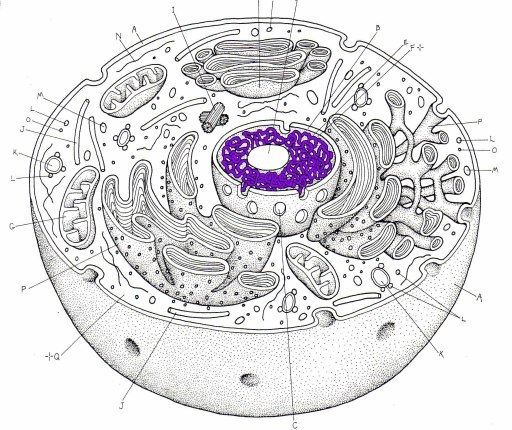
Which of the following is the most significant difference between prokaryotic and eukaryotic cells?
Prokaryotic cells have cell membrane, eukaryotic cells do not
Prokaryotic cells have ribosomes, eukaryotic cells do not
Eukaryotic cells have DNA, prolkaryotic cells do not
Eukaryotic cells have membrane-bound organelles, prokaryotic cells do not


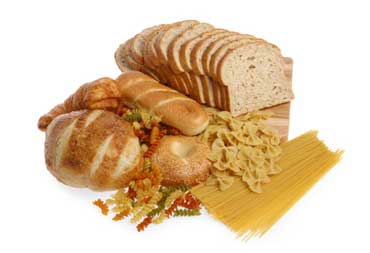
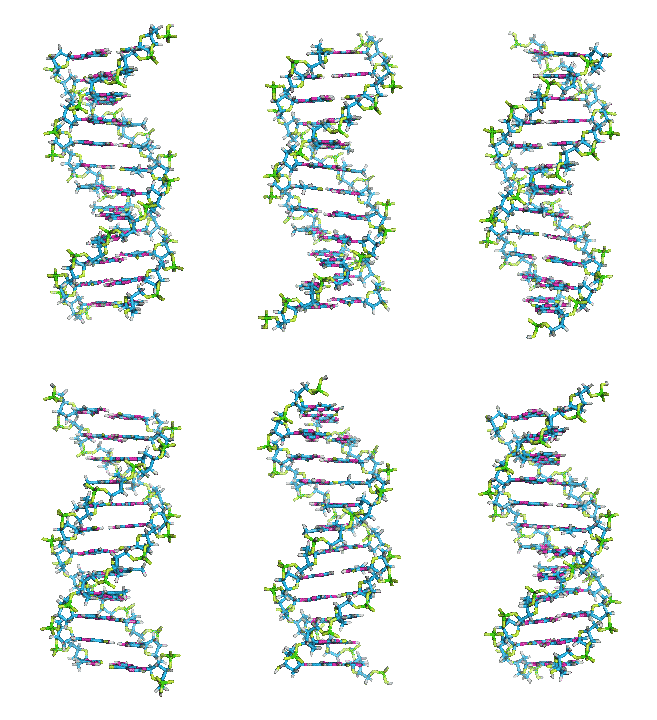
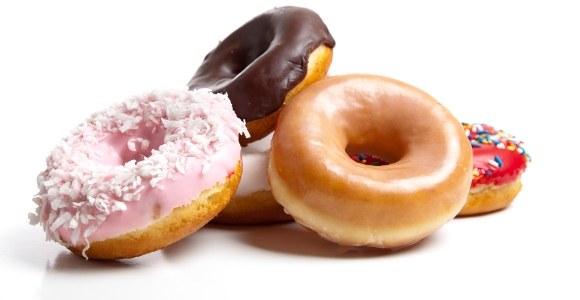



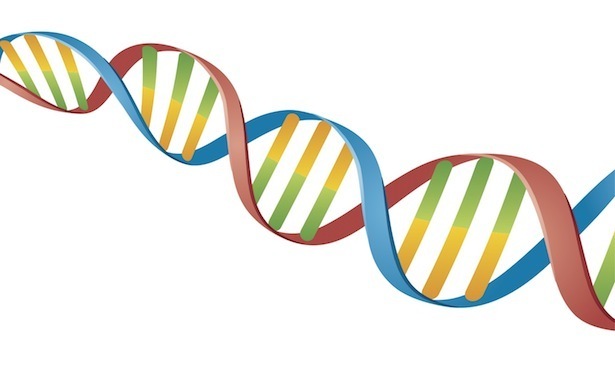
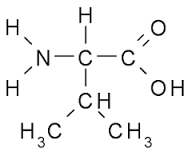
Which biomolecule helps form muscles?
Nucleic Acid
Carbohydrate
Protein
Lipids


In passive transport, substances move across the cell membrane ________ the concentration gradient
AGAINST
ALONG
WITH
BETWEEN

What macromolecule is embedded into the lipid bilayer and helps to transport molecules?
Carbohydrate
Lipid
Protein
Nucleic Acid

Which describes an isotonic environment?
Too much water in the cell will cause the cell to burst - the percentage of water is higher outside the cell than inside the cell
Too little water in the cell will cause the cell to shrink - the percentage of water is lower outside the cell than inside the cell
Concentrations of water are equal inside and outside the cell

The movement of particles from an area of high concentration to an area of low concentration
active transport
osmosis
diffusion
random movement

The movement of materials from an area of low concentration to an area of high concentration would require...
glucose
energy (ATP)
fish
chips

Which of the following is NOT a type of passive transport?
Osmosis
Diffusion
Endocytosis
Facilitated Diffusion
What are the three types of passive transport?
osmosis, diffusion, active transport
active transport, facilitated diffusion, osmosis
diffusion, osmosis, facilitated diffusion
facilitated diffusion, active transport, diffusion


In a saltwater solution, salt is considered the _______.
solvent
solute
solution
Which of these solution types has the highest concentration of solute particles?
Hyptonic
Isotonic
Hypertonic

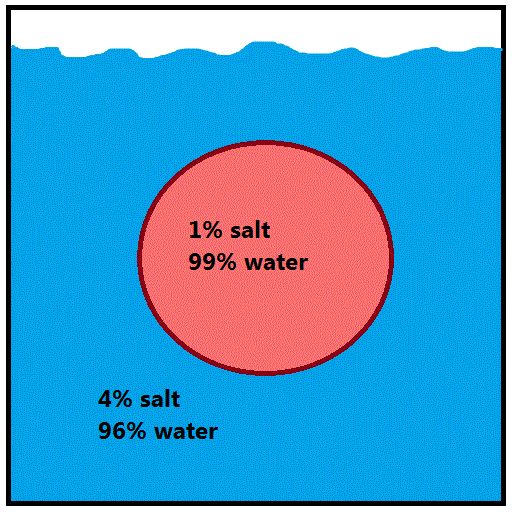
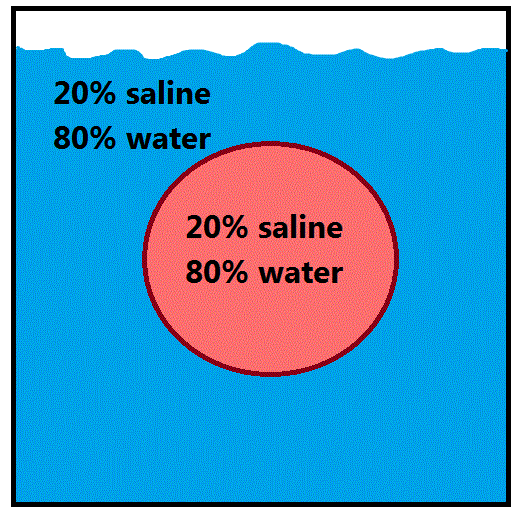

If the dots represent sugar which is more concentrated
Inside the cell
Outside the cell
Neither they are equal (equilibrium)

If the dots represent sugar, what direction will water flow?
Into the cell
Out of the cell
Into and out equally (equilibrium)

If the percentage represents sugar, what direction will water flow?
Into the cell
Out of the cell
Into and out equally (equilibrium)

If the miligrams are referring to the amount of sugar, what direction will water flow?
Into the cell
Out of the cell
Into and out equally (equilibrium)
What are TWO ways you can predict the movement of water?
from a [High] of water to a [Low] of water
towards the [Lower] of solutes
towards the [Higher] of solutes
from a [Low] of water to a [High] of water

