Wayground logo

Free Printable Worksheets

Font size

S
M
L
XL
Worksheets

Intro to Chem Chapter 2 Honors Bio Review

Total questions: 89

Worksheet time: 1hrs 16mins

Name
Class
Date
1.

What does pH measure?

a)

the amount of hydrogen (H+) ions

b)

the amount of hydroxide (OH-) ions

c)

amount of water

d)

all of the above

2.

Which of the following is the strongest acid?

a)

1

b)

5

c)

3

d)

8

3.

Which of the following is the strongest base?

a)

4

b)

14

c)

7

d)

15

4.

What is a mixture of chemicals that react with a base/acid to keep pH in a particular range?

a)

catalyst

b)

enzyme

c)

water

d)

buffer

5.
A(n) ______ is a substance with a pH less than 7
a)
Acid
b)
Alkaline
c)
Base
d)
Buffer
6.
The pH scale is a range from:
a)
1-7
b)
0-14
c)
1-5
d)
1-20
7.
A(n) _______ is a substance with a pH greater than 7.
a)
Base
b)
Acid
c)
Buffer
d)
Water
8.
What is the only substance with a neutral pH of 7?
a)
Milk
b)
Orange Juice
c)
Water
d)
Blood
9.
Complete the sentence.
A substance that is more basic has a _____ pH than a substance that is acidic.
a)
lower
b)
higher
c)
the same
d)
none of the above
10.

In a test of pH levels, a baking soda has a pH of 9 and bleach has a pH of 12. What is true about there relationship?

a)

Both of the solution are Bases

b)

Both of the solution are Acids

c)

The Baking soda is an acid and the Bleach is a base

d)

The baking soda is a base and the Bleach is an Acid.

11.

A base is a substance

a)

That releases OH- ions when dissolved in water

b)

That releases H+ ions when dissolved in water

c)

Does not release any ions when dissolved in water

d)

None of the above

12.

The picture below shows the relative concentrations of H+ and OH- in a solution. Is the solution an acid or a base?

a)

acid

b)

base

13.
A solution has a pH of 7.0.  What would happen to the pH if H ions were added?
a)
pH would go up
b)
pH would go down
c)
pH would stay the same
d)
None of these
14.
A solution has a pH of 7.0.  What would happen to the pH if OH ions were added?
a)
pH would go up
b)
pH would go down
c)
pH would stay the same
d)
None of these
15.
A solution with a pH of 10 is mixed with a solution with a pH of 4.  What would the pH of the mixture most likely be?
a)
10
b)
4
c)
40
d)
7
16.
This piece of pH paper has been dipped into:
a)
An acid
b)
A base
c)
A pH-neutral substance
d)
A buffer
17.

Why would a potato have a buffering system?

a)

To survive if its environment changes

b)

To vary the pH according to the environment

c)

To keep the pH of the potato low

d)

To keep the pH very acidic

18.

What might happen if buffers did not exist within the human body?

a)

Our blood and other bodily fluids might become too acidic or basic.

b)

Our stomach acid would not be able to break down food.

c)

We would not be able to process glucose within our cells.

d)

We would not be able to inhale oxygen into our lungs.

19.

Why were the biological samples generally good buffers?

a)

Water is a poor buffer

b)

They need to maintain a pH of 8.0 at all times

c)

All living organisms need to maintain homeostasis in terms of pH

d)

The samples came in liquid form

20.

Substance dissolved in a solvent.

a)

Solute

b)

Buffer

c)

Base

21.

Mixture that can react w/an acid or a base to maintain the pH w/n a specific range.

a)

Solute

b)

Buffer

c)

Base

22.

Homogeneous mixture formed when a substance (the solute) is dissolved in another substance (the solvent).

a)

Solution

b)

Hydrogen Bond

c)

Macromolecule

d)

Nucleic Acid

e)

Amino Acid

23.

Weak electrostatic bond formed by the attraction of opposite charges b/n a hydrogen atom & an oxygen, fluorine, or nitrogen atom.

a)

Solution

b)

Hydrogen Bond

c)

Macromolecule

d)

Nucleic Acid

e)

Amino Acid

24.
The chemical compound of water is
a)
HO
b)
H2O
c)
H3O
d)
HO2
25.
Water is a universal solvent
a)
True
b)
False
26.
A Compound that is being dissolved is called a
a)
Solution
b)
Solute
c)
Solvent
d)
Suspension
27.
A solvent is...
a)
substance into which the solute dissolves
b)
a compound being dissolved
c)
a substance that does not dissolve
d)
None of the above
28.
A water strider can skate along the top of a pond because:
a)
covalent bonds result in water cohesion
b)
hydrogen bonds result in water cohesion (surface tension)
c)
water striders have adapted to take advantage of water cohesion
d)
low surface tension of water
29.
Why can water have no net charge but have slight charges in different parts of the molecule?
a)
The oxygen end is slightly negative and the hydrogen end is slightly positive
b)
The hydrogen end is slightly negative and the oxygen end is slightly positive
c)
The hydrogen and oxygen ends change in polarity
d)
Because it is hydrophobic
30.
Attractions between water molecules are called
a)
Covalent bonds
b)
Ionic bonds
c)
Polar bonds
d)
Hydrogen bonds
31.
Water is a universal solvent because it...
a)
It can be found anywhere
b)
It freezes when it gets cold
c)
floats when frozen
d)
Dissolves most substances
32.
Water is polar because...
a)
The unequal sharing of electrons gives the water molecule a slight negative charge near its oxygen atom and a slight positive charge near its hydrogen atoms.
b)
The molecule has two poles, at which the it is colder than other regions of the molecule.
c)
The unequal sharing of electrons gives the water molecule a slight negative charge near its hydrogen atoms and a slight positive charge near its oxygen atom.
d)
The water molecule is neutral.
33.
True or false, water is a polar molecule? 
a)
True 
b)
False 
34.
What word describes when water is attracted to other substances?
a)
cohesion
b)
adhesion
c)
capillary action
d)
surface tension
35.
The attraction that causes water and other liquids to form drops on thin films is called ________________. This is also water’s ability to be attraction to other water molecules.
a)
adhesion
b)
capillary action
c)
cohesion
d)
surface tension
36.

Cohesive force between water molecules and adhesive force between water molecules and other molecules enable this phenomenon __________________ occur.

a)

surface tension

b)

capillary action

c)

float on water

d)

photosynthesis

37.

Surface tension of water is the cohesive force between water molecule and other molecule.

a)

True

b)

False

38.
Which end of the water molecule has a slightly positive charge?
a)
the oxygen end
b)
the hydrogen end
c)
both ends are slightly positive
d)
neither end is positive
39.
What word describes when water is attracted to other substances?
a)
cohesion
b)
adhesion
c)
capillary action
d)
surface tension
40.
When water molecules stick easily to other water molecules, this is called what?
a)
cohesion
b)
adhesion
c)
solution
d)
polar molecule
41.
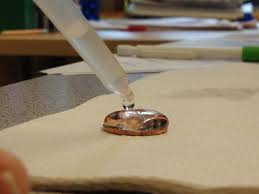
Water beads up on the surface of a penny because of what property?
a)
Adhesion
b)
High Surface Tension
c)
Universal Solvent
d)
Changes in Density
42.
The fact that ice floats on liquid water is due to the fact that water's solid is ___________ than it's liquid form
a)
less polar
b)
more polar
c)
less dense
d)
more dense
43.
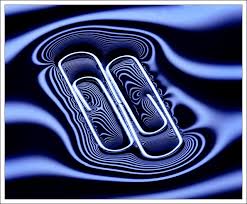
The tightness across the surface of water that enables paper clips to float is ____________.
a)
adhesion
b)
capillary action
c)
surface tension
d)
polarity
44.
Which statement explains why water molecules stick together?
a)
both sides are negative
b)
one side has a positive charge and the other side has a negative charge
c)
one side has a negative charge adn the other side has a neutral charge
d)
both sides are positive
45.

What kind of molecule is water?

a)

Ionic

b)

Polar Covalent

c)

Nonpolar Covalent

d)

Metallic

46.

Which part of a water molecule has a Negative Charge?

a)

The Hydrogen

b)

The Oxygen

c)

The Left

d)

The Right

47.

Which of the following can water NOT dissolve?

a)

Salt

b)

Sugar

c)

Oil

d)

Baking Soda

48.

Which of the following can water NOT dissolve?

a)

Ionic Compounds

b)

Polar Compounds

c)

Nonpolar Compounds

49.

Which of the following is the CORRECT list of water's properties?

Read Carefully!

a)

adhesion, cohesion, high specific heat, universal solvent

b)

adhesion, cohesion, low specific heat, universal solvent

c)

adhesion, no cohesion, low specific heat, universal solute

d)

no adhesion, cohesion, high specific heat, universal solute

50.

Water is polar. What does that mean?

a)

it is a molecule with opposite charges on opposite ends

b)

it is a molecule with no charge

c)

it is a molecule with identical charges on opposite ends

d)

it is a molecule with too many protons

51.

What are the bonds called between a slightly positive hydrogen in a polar molecule and a negatively charged atom?

a)

Hydrogen Bonds

b)

Water Bonds

c)

Covalent Bonds

d)

Bail Bonds

52.

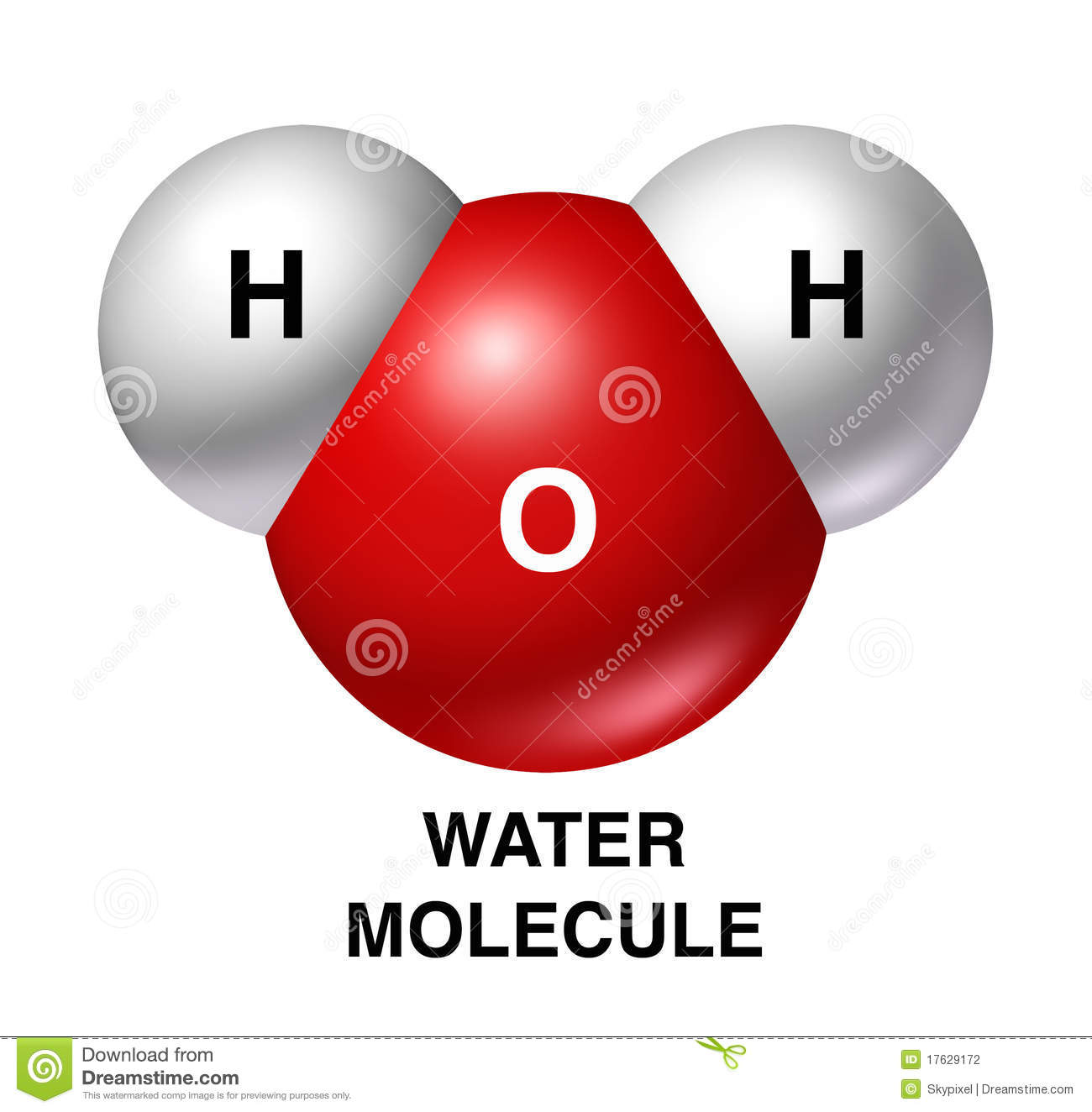
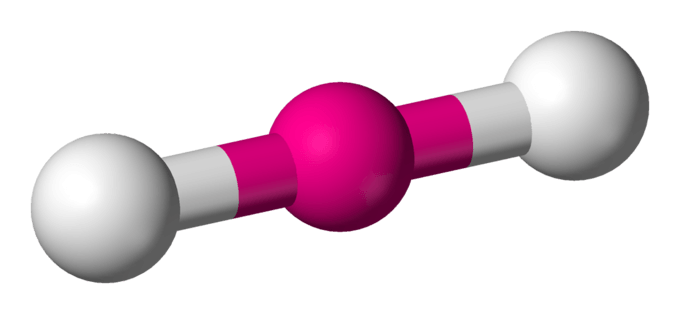
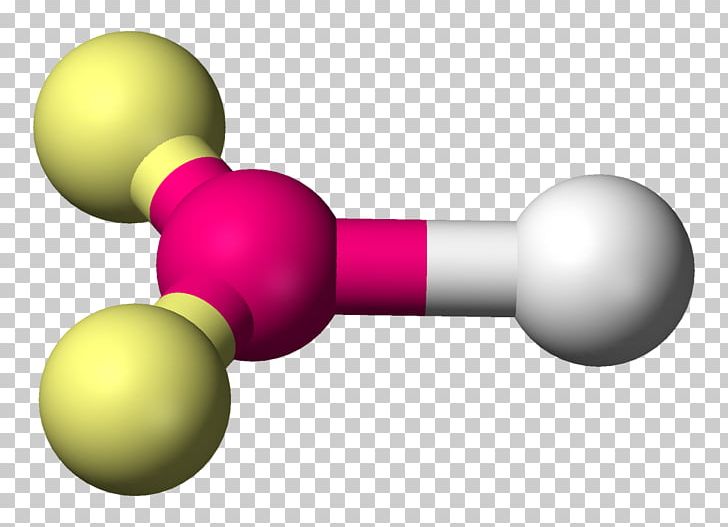
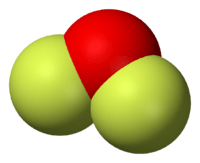
Which of the following is the correct molecular structure for water, H2O?
a)
b)
c)
d)
53.

A water strider can skate along the top of a pond because:

a)

covalent bonds result in water cohesion (surface tension)

b)

hydrogen bonds result in water cohesion (surface tension)

c)

water striders have adapted to take advantage of water cohesion

d)

water striders are afraid of water and avoid it

54.
What do you call a bond that forms when electrons are transferred from one atom to another?
a)
a compound bond
b)
an ionic bond
c)
a crystal bond
d)
an atomic bond
55.
When atoms gain electrons during chemical changes, what charge do they have?
a)
positive charge
b)
negative charge
c)
neutral charge
d)
electric charge
56.

A molecule that has a partial positive end and a partial negative end because of unequal sharing of electrons is a _______________.

a)

nonpolar molecule

b)

polar molecule

c)

ionic compound

d)

metalic compound

57.

Atoms of a polar molecule share their atoms ___________.

a)

Equally

b)

Unequally

58.
When two atoms share electrons, a chemical bond is formed.  This type of bond is called:
a)
covalent bond
b)
ionic bond
c)
crystal bond
d)
polyatomic bond
59.
What charges attract?
a)
Opposite
b)
Same
60.
Covalent bonds actually "share" electrons?
a)
true
b)
false
61.
Atoms are most stable when their outer shell is complete.
a)
true
b)
false
62.
How are ionic bonds formed?
a)
Transfer of electrons
b)
Sharing of electrons
63.
What is a valence electron?
a)
The sum of neutrons and protons.
b)
The # of electrons in the last shell.
c)
A type of bond.
d)
A popular compound.
64.
Gain or lose electrons
a)
Ionic Bonds
b)
Covalent Bonds
c)
Both bonds
d)
Neither bond
65.
Share electrons
a)
Ionic Bonds
b)
Covalent Bonds
c)
Both bonds
d)
Neither bond
66.
This picture shows a...
a)
Ionic Bond
b)
Covalent Bond
c)
Both bonds
d)
Neither bond
67.
This picture shows a...
a)
Ionic Bond
b)
Covalent Bond
c)
Both bonds
d)
Neither bond
68.

Atoms with the same number of protons but different numbers of neutrons (Carbon 14 and Carbon 12) are called ___________.

a)

Anion

b)

Cation

c)

Isotope

69.
An atom becomes negatively charged by
a)
gaining an electron
b)
losing an electron
c)
losing a proton
gaining a neutron
70.
Number of protons that an atom has
a)
Atomic symbol
b)
Atomic Number
c)
Atomic Mass
d)
Mass Number
71.
What determines the chemical properties of an atom?
a)
The number of protons in the nucleus
b)
Number of electrons in the outside shell
c)
The number of protons in the outside shell
d)
The number of electrons in the nucleus
72.
Atoms having the same number of protons but different numbers of neutrons
a)
molecule
b)
atom
c)
compound
d)
isotopes
73.
Two or more atoms combined
a)
Molecule
b)
Compound
c)
Isotope
d)
Ion
74.
Two or more different atoms combined
a)
Molecule
b)
Compound
c)
Isotope
d)
Ion
75.

How many electrons does a Copper atom have?

a)

63

b)

29

c)

92

d)

34

76.

How many electrons does a neutral Hydrogen atom have?

a)

1

b)

2

c)

3

d)

0

77.

How many electrons does an atom of Krypton have?

a)

36

b)

83.80

c)

48

d)

119.80

78.
What is the atomic number for an element with 41 neutrons and a mass number of 80?
a)
39
b)
41
c)
80
d)
121
79.

How many neutrons does this lithium have?

a)

8

b)

3

c)

4

d)

5

80.
What is the atomic number for an element with three protons?
a)
2
b)
1
c)
3
d)
6
81.

A neutral atom of the element sodium has ____ electrons.

a)

22

b)

23

c)

8

d)

11

82.
How many neutrons does an element have with the atomic number of 36?
a)
36
b)
84
c)
48
d)
18
83.
Adding or subtracting neutrons (charge = 0, mass = 1) makes the element change into an...
a)
ion
b)
mixture
c)
isotope
d)
neutral atom
84.
How many electrons does Cu4+ have?
a)
29
b)
33
c)
25
d)
30
85.
How many electrons does S2- have?
a)
16
b)
18
c)
14
d)
12
86.
What does the atomic mass tell you?
a)
Basically,the number of electrons and protons
b)
The number of neutrons
c)
Basically, the number of protons and neutrons
d)
The number of protons.
87.
How many valence electrons in this structure?
a)
6
b)
5
c)
4
d)
7
88.
The first energy level can hold up to how many electrons?
a)
8
b)
4
c)
2
d)
5
89.

Do electrons contribute to the atomic mass of an atom?

a)

YES of course, they are there for a reason

b)

NO, they are useless to the atom

c)

No, their mass is too small to contribute to the mass

d)

YES, silly, they are the superstars of the atom