
 Worksheets
ENV Fall Semester Test Review
Total questions: 188
Worksheet time: 4hrs 50mins
The solid part of earth that consists of all rock, as well as the soils and loose rock on the earth's surface. Extends from the center of the core to the surface of the crust.
geosphere
hydrosphere
atmosphere
biosphere
What compositional layer of the earth is the most dense?
mesosphere
mantle
core
lithosphere
What compositional layer makes up approximately 64% mass of the Earth?
crust
mantle
core
lithosphere
What compositional layer of the earth is the thinnest?
crust
mantle
core
asthenosphere
Seismologists learn about the interior structure of the Earth through measurement of the speed and direction of _______.
air particles
ocean currents
seismic waves
crustal soil deposits
Which of the following is the most geologically active regions on the surface of the Earth?
glacial valleys
mountain peaks
tectonic plate boundaries
recharge zones
What characteristics of the crust and mantle allow Earth to be tectonically active?
Earth's solid surface layer rotates faster than the layers under it
Earth's solid surface layer sits on a moving, semisolid layer
Areas of Earth's solid surface layer are under great pressure from ocean water
Areas of Earth's solid surface layer are thicker and heavier than others
This is the name for the chain of volcanoes around the edge of the Pacific Plate.
Circle of Fire
Ring of Lava
Ring of Fire
Circle of Magma
The outer core is a sphere of _______ nickel and iron, whereas the inner core is a sphere of _______ nickel and iron.
solid, liquid
liquid, solid
only, no
no, only

What type of plate boundary is this?
convergent
divergent
transform
rift valley

What type of plate boundary is this?
convergent
divergent
transform
rift valley

What type of plate boundary is this?
convergent
divergent
transform
rift valley
The Richter scale is used by scientists to measure the amount of energy (magnitude) release by a(n) _____.
tornado
hurricane
earthquake
tsunami
What primarily causes a volcano to erupt?
Clouds of ash, dust, and gases already moving through the atmosphere
When underground rock suddenly breaks along a tectonic plate
The pressure of the magma inside becomes so great that it blows open the solid surface inside of the volcano.
Large, 30 m tall ocean waves crashing into the coastline
In large volcanic eruptions, ash and gases can enter the atmosphere and reduce the amount of _____ that reaches Earth's surface.
ash
nitrogen
carbon dioxide
sunlight
A physical layer, the _____ is the solid, outer layer of the Earth that consists of the crust and the rigid upper part of the mantle.
lithosphere
asthenosphere
outer core
inner core
A physical layer, the ______ is the solid, pliable, flexible layer of the mantle beneath the lithosphere.
mesosphere
outer core
inner core
asthenosphere
Smaller earthquakes that occur in the same area after a larger earthquake has occurred is/are _______________.
tsunami
aftershock
liquification
Richter
The ______ is the point within the earth (under the surface) where an earthquake ruptures (directly below the epicenter)
focus
epicenter
aftershock
asthenosphere
The _______ is the movement of matter due to differences in density that are caused by temperature variations and can result in the transfer of energy as heat.
lithosphere
fault
focus
convection current
A(n) _____ is a break in Earth's crust along which blocks of the crust slide relative to one another.
epicenter
fault
convection current
aftershock
A(n) _______ is a block of the lithosphere that consists of the crust and the rigid, outermost part of the mantle. These pieces glide on top of the asthenosphere.
tectonic plate
focus
fault
epicenter
The _______ is the point on the Earth's surface vertically above the location under the surface where a seismic rupture begins.
epicenter
focus
convection current
asthenosphere
Describe the local and global effects a volcano eruption can have on the environment.
What are the four main types of volcanoes?
An earthquake has just occurred and seismic waves radiating from the earthquake are detected at two recording stations. At Recording Station A, Δt = 90 s. At Recording Station B, Δt = 150 s. Which recording station is closer to the epicenter?
Station A is closer to the epicenter than Station B.
Station B is closer to the epicenter than Station A.
Stations A and B are the same distance from the epicenter.
Cannot be determined.
An earthquake has just occurred and seismic waves radiating from the earthquake are detected at two recording stations. At Recording Station A, Δt = 150 s. At Recording Station B, Δt = 35 s. Which recording station is closer to the epicenter?
Station A is closer to the epicenter than Station B.
Station B is closer to the epicenter than Station A.
Stations A and B are the same distance from the epicenter.
Cannot be determined.
What are some of the local and global effects an earthquake can have on the environment?
In general, the most destructive earthquake waves are the ___________.
P waves
S waves
Surface waves
Q waves
With increasing travel time, the difference in arrival times between the P and S waves _________.
increases
decreases
stays constant
none of the options
Earthquake A has a Richter magnitude of 7 as compared with earthquake B's 6. The amount of ground motion is one measure of earthquake intensity.
A is 10x more intense than B
A is 1000x more intense than B
Richter magnitude does not measure intensity
B is 0.01x as intense as A
Body waves consist of
P waves only
S waves only
Surface waves
P waves and S waves
P waves, S waves, and surface waves
At least how many seismograph stations are needed to locate the epicenter of an earthquake?
1
2
3
4
How do rock particles move during the passage of a P wave through the rock?
back and forth parallel to the direction of wave travel
back and forth perpendicular to the direction of wave travel
in a rolling circular motion
the particles do not move
Which of the following observations may indicate a forthcoming destructive earthquake?
An increase in the frequency of smaller earthquakes in the region
Rapid tilting of the ground
Rapid changes in water levels in wells
All of the options
Which of the following statements best describes the state of earthquake prediction?
Scientists can accurately predict the time and location of almost all earthquakes
Scientists can accurately predict the time and location of about 50% of all earthquakes
Scientists can accurately predict when an earthquake will occur, but not where
Scientists can characterize the seismic risk of an area, but can not yet accurately predict most earthquakes
Where is the focus of an earthquake with respect to the epicenter?
Directly below the epicenter
Directly above the epicenter
In the P wave shadow zone
In the S wave shadow zone
Seismologists learn about the interior structure of the Earth through measurement of the speed and direction of _______.
air particles
ocean currents
seismic waves
crustal soil deposits
What are the physical layers and compositional layers of the Earth? Can you diagram them?
What are the most geologically active regions of the Earth?
List the three plate boundaries and know how to draw them.
What physical structures or events do each of the plate boundaries cause?
In large volcanic eruptions, ash and gases can enter the atmosphere and reduce the amount of _____ that reaches Earth's surface.
ash
nitrogen
carbon dioxide
sunlight
A warm air mass pushes into a cold air mass and then a cold air mass pushes into that warm air mass.
stationary front
cold front
warm front
occluded front
A cold air mass pushes into a warm air mass.
cold front
warm front
stationary front
occluded front
A warm air mass pushes into a cold air mass.
occluded front
warm front
cold front
stationary front
Two masses of air push against the other, but neither is strong enough to move the other.
cold front
occluded front
stationary front
warm front
Air pressure is determined by which three factors?
convection, conduction, radiation
psychrometer, barometer, thermometer
isotherm, isobar, isoline
temperature, altitude, moisture
In a low pressure system in the northern hemisphere, which of the following occurs?
cool air descends
cool air rises
warm air descends
warm air rises
____ is the amount of water vapor in the air.
humidity
dew point
air pressure
air mass
______ is the temperature at which the air is saturated and may form liquid or frost.
dew point
humidity
conduction
convection
In a high pressure system in the northern hemisphere, what happens?
Cool air descends
Warm air rises
Warm air converges
Rotates counterclockwise
_____ is the amount of force that air in the atmosphere puts on an object.
weather front
air mass
air pressure
Coriolis Effect
_________ is the energy that is transferred as electromagnetic waves, such as visible light and infrared waves
radiation
conduction
convection
ozone
_______ is the movement of matter due to differences in density that are caused by temperature variations and can result in the transfer of energy as heat.
conduction
convection
radiation
air pressure
_____ is a large volume of air in the atmosphere that is uniform in temperature and moisture.
weather front
air mass
air pressure
Coriolis Effect
_____ is a transition zone between two different air masses at the earth's surface.
weather front
air mass
air pressure
Coriolis Effect
_______ is the transfer of energy as heat through a material; involves collisions of atoms (physical contact) between two objects.
humidity
radiation
convection
conduction
_____ is a gas molecule made up of three oxygen atoms.
ozone
air mass
radiation
convection
Cold air can hold more water vapor than warm air.
True
False
When they are heated, most materials expand, which causes them to be more dense.
True
False

What is the dewpoint temperature when the dry-bulb temperature is 16 degrees C and the wet bulb temperature is 11 degrees C?
5*C
9*C
7*C
-17*C

What is the relative humidity if the dry-bulb temperature is 22*C and the wet-bulb temperature is 17*C?
5%
14%
60%
68%
Draw the layers of the atmosphere in the proper order and list one fact for each layer.
These air masses are generally very cold (below freezing) and form over the North or South Poles.
Tropical
Polar
Arctic
These air masses are generally hot and form over the equatorial region of the world.
Tropical
Polar
Arctic
These air masses are generally cool (but above freezing) and/or mild in temperature and form between 45* latitude and 75* latitude in both the Northern Hemisphere and the Southern Hemisphere.
Tropical
Polar
Arctic
These air masses contain much moisture, result in high levels of humidity. and form over the ocean.
maritime
continental
These air masses are generally dry and are formed over continents.
maritime
continental
For each of the following air masses, list an example location.
continental Tropical (cT)
maritime Tropical (mT)
continental Polar (cP)
maritime Polar (mP)
continental Arctic (cA)
maritime Arctic (mA)
What is the definition of an air mass?
A small body of air with varying temperature, humidity, and pressure characteristics.
A large body of air with varying temperature, humidity, and pressure characteristics.
A large body of air with relatively uniform temperature, humidity, and pressure characteristics.
A large body of water with relatively uniform temperature, humidity, and pressure characteristics.
Explain the concept of density-driven movement of matter.
The concept of density-driven movement of matter is the movement of substances or particles due to differences in their density.
The concept of density-driven movement of matter is the movement of substances or particles due to differences in their temperature.
The concept of density-driven movement of matter is the movement of substances or particles due to differences in their size.
The concept of density-driven movement of matter is the movement of substances or particles due to differences in their color.
How does the expansion of materials when heated affect their density?
The expansion of materials when heated decreases their density.
The expansion of materials when heated causes their density to remain constant.
The expansion of materials when heated increases their density.
The expansion of materials when heated has no effect on their density.
What is the relationship between cold air and water vapor capacity?
Cold air has a lower water vapor capacity compared to warm air.
Water vapor capacity is not affected by the temperature of the air.
Cold air has a higher water vapor capacity compared to warm air.
Cold air and warm air have the same water vapor capacity.
What happens in a high pressure system in the northern hemisphere?
Air descends and converges counterclockwise
Air rises and converges clockwise
Air rises and diverges counterclockwise
Air descends and diverges clockwise
What happens in a high pressure system in the southern hemisphere?
Air rises and converges counterclockwise
Air rises and converges clockwise
Air descends and diverges counterclockwise
Air descends and diverges clockwise
Where do hot air masses generally form and what is their characteristic?
Near the poles and more dense than the surrounding air.
Over the oceans and more dense than the surrounding air.
Near the equator and less dense than the surrounding air.
In the middle latitudes and less dense than the surrounding air.
In which direction does the Coriolis effect deflect moving objects in the Northern Hemisphere? What about the Southern Hemisphere?
Northward in both hemispheres.
Southward in both hemispheres.
Rightward in the Northern Hemisphere and leftward in the Southern Hemisphere.
Leftward in the Northern Hemisphere and rightward in the Southern Hemisphere.
How does the Coriolis effect affect weather systems, including the direction of winds and the rotation of cyclones and anticyclones?
It makes weather systems move east to west.
It influences wind direction and causes cyclones to rotate counterclockwise (Northern Hemisphere) and clockwise (Southern Hemisphere).
It influences wind direction and causes cyclones to rotate clockwise (Northern Hemisphere) and counterclockwise (Southern Hemisphere).
It causes winds to blow directly towards the equator.
Why does the Coriolis effect become more pronounced as one moves closer to the poles and less pronounced near the equator?
It is the same everywhere on Earth.
Because the Earth's rotation is faster at the poles and slower at the equator.
Because the Coriolis effect is only active in the polar regions.
Because the equator has no Coriolis effect.
What is the primary driving force behind global wind patterns?
Ocean currents
Solar radiation and temperature differences
Earth's magnetic field
Tectonic plate movements
What weather phenomenon is often associated with the subtropical high-pressure belts?
Frequent hurricanes
Stormy weather and tornadoes
Calm, clear skies
Continuous rainfall
Which of the following is NOT a characteristic of the doldrums or the Intertropical Convergence Zone (ITCZ)?
Calm, light winds
Frequent thunderstorms and heavy rainfall
Strong, consistent winds
Found near the equator
How do the trade winds and westerlies differ in terms of their direction, location, and influence on weather patterns?
Trade winds blow from east to west near the equator, while westerlies blow from west to east in the mid-latitudes, and both bring dry, sunny weather.
Trade winds blow from west to east in the mid-latitudes, while westerlies blow from east to west near the equator, and both bring heavy rainfall.
Trade winds blow from east to west near the equator, while westerlies blow from west to east in the mid-latitudes, and both play a role in the formation of hurricanes.
Trade winds blow from north to south in the polar regions, while westerlies blow from south to north in the tropics, and both affect ocean currents.
Air pressure is determined by which three factors?
convection, conduction, radiation
psychrometer, barometer, thermometer
isotherm, isobar, isoline
temperature, altitude, moisture
____ is the amount of water vapor in the air.
humidity
dew point
air pressure
air mass
______ is the temperature at which the air is saturated and may form liquid or frost.
dew point
humidity
conduction
convection
_________ is the energy that is transferred as electromagnetic waves, such as visible light and infrared waves
radiation
conduction
convection
ozone
_______ is the movement of matter due to differences in density that are caused by temperature variations and can result in the transfer of energy as heat.
conduction
convection
radiation
air pressure
_______ is the transfer of energy as heat through a material; involves collisions of atoms (physical contact) between two objects.
humidity
radiation
convection
conduction
What is a station model?
a graphical template showing current weather conditions at a weather station
a symbolic model projecting volcano eruption patterns
a graphical template that shows earthquake recovery data
a symbolic model showing the severity of hurricane damage
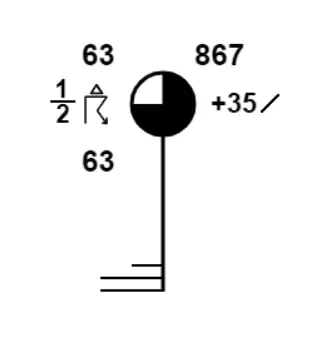
Translate this station model.
Climate in a region is
the long-term, prevailing atmospheric conditions.
determined only by seasonal daylight hours.
the atmospheric conditions on a given day.
never affected by ocean currents.
Explain the circulation patterns of air in the atmosphere.
What is the Coriolis Effect?
The rotation of the Earth on its axis.
The bending of ocean currents due to underwater topography.
The deflection of moving objects caused by the Earth's rotation.
The changing of seasons on Earth.
T or F. The Coriolis Effect is stronger at the equator and decreases toward the poles.
True
False
T or F. The Coriolis effect has a significant impact on the direction of short-distance movements, such as water draining from a sink.
True
False
Which factor determines the strength of the Coriolis effect on an object?
Object's mass
Object's velocity
Object's color
Object's temperature
What is a hydrogen bond? Explain and draw a diagram.
List the properties of water.
T or F. Water has a high specific heat.
True
False
T or F. Water has a high heat of vaporization.
True
False
T or F. Water is called the universal solvent, which means it can dissolve most polar or ionic substances.
True
False
_____ is reduction in temperature due to increased movement of the particles in a liquid (converting to gaseous form), which removes heat from the surface of the substance the liquid is leaving
Evaporative cooling
Specific heat
Cohesion
Density
____ is the sticking together of particles of different substances.
Cohesion
Adhesion
Solute
Solvent
____ is the property of having a partial positive and partial negative charge on either side of the molecule.
Density
Solvent
Polarity
Surface tension
____ the name of a substance when it is able to dissolve other substances.
Specific heat
Evaporative cooling
Solute
Solvent
____ is the amount of heat needed to raise the temperature of 1 g of substance by 1 degree C.
Evaporative cooling
Specific heat
Density
Surface tension
____ is the mass of a substance for a specific volume
Density
Solvent
Solute
Adhesion
____ the name of a substance when it dissolves into another substance.
Cohesion
Solvent
Solute
Surface tension
____ is the sticking together of particles of the same substance.
Specific heat
Cohesion
Polarity
Adhesion
____ is the property of the top layer of a liquid that allows it to resist an external force, due to the cohesive nature of its molecules.
Surface tension
Evaporative cooling
Polarity
Specific heat
What properties of water are most commonly attributed to causing molecules to bunch up like a bubble on a penny?
specific heat and surface tension
cohesion and surface tension
heat of vaporization and cohesion
surface tension and density
What property of water allows it to form a meniscus in a beaker (the slight curve seen as water clings to the side of the glass and crawls up it)?
cohesion and surface tension
adhesion
cohesion
specific heat and surface tension
Order the forms of water from the most dense to the least dense.
Order the forms of water from the least dense to the most dense.
Of the water on Earth, what percent is usable freshwater?
3%
5%
15%
30%
What is the freezing point of water in degrees Celsius?
0*C
32*F
100*C
212*F
What is the freezing point of water in degrees Fahrenheit?
0*C
32*F
100*C
212*F
What is the boiling point of water in degrees Fahrenheit?
0*C
32*F
100*C
212*F
What is the boiling point of water in degrees Celsius?
0*C
32*F
100*C
212*F
Order the Earth's oceans (5 of them) from smallest to largest.
Order the Earth's oceans (5 of them) from largest to smallest.
T or F. Surface currents can be warm or cold water currents and are driven by wind.
True
False, they are always warm currents.
T or F. Deep ocean currents are driven by wind.
True
False, they are driven by density differences and temperature.
T or F. Water flows toward the highest point.
True
False, water flows towards the lowest point to establish equilibrium.
T or F. Cold water is less dense than warm water.
True
False, cold water is more dense than warm water.
Water with high salinity is less dense than water with low salinity.
True
False, water with high salinity is more dense than water with low salinity
T or F. The deepest point of the ocean is called Challenger Deep and is found in the Mariana Trench.
True
False, the deepest point is called the Tonga Trench and is found in Horizon Deep.
Salinity is ____ in places with much rain or in places where freshwater flows into the sea.
lower
higher
insignificant
warm
Salinity is ____ in places where water evaporates quickly and leaves the salts behind.
lower
higher
insignificant
cold
What are the three different temperature zones of the ocean? Draw a diagram and label.
Which is a major warm water surface current that flows along the eastern coast of North America?
Coriolis Current
Pacific Current
Gulf Stream
Equatorial Current
Which key factors impact the density of ocean water?
salinity and temperature
temperature only
salinity only
temperature and wind patterns
In the global conveyer belt, which of the following both drives the conveyer belt and collects the water at the floor of the Atlantic Ocean?
North Atlantic Deep Water
Florida Current
Okhotsk Current
South Indian Deep Water
The sinking, cold water near the north geographic pole, pushes the deep ocean water south in a slow, deep, underwater current. At Antarctica, this current flows east and sometimes a little north and is called ______.
Indonesian Circumpolar Current
Antarctic Circumpolar Current
Artic Circle
Warm Antarctic Current
As the waters travel through the ocean, the deep, cold current mixes with warmer water. What happens as this mixing occurs?
The water warms up and sinks.
The water warms up and rises.
The water cools down more and sinks.
The water cools down more and rises.
The description of what occurs after the mixing of deeper, cold currents and warmer surface currents is ________.
upwelling
aquifer
groundwater
salinity
What would happen if one part of the global conveyer belt broke down?
What are the 5 life zones of the ocean?
What are the parts of the ocean floor? Describe the ones we discussed in class.
Which of the following does NOT address how oceans affect climactic conditions on land?
Water cools Earth because it reflects the most sunlight
Oceans are the source of most water that falls as precipitation.
Coastal areas have more moderate climates than inland areas.
Ocean currents redistribute warm and cold masses of water.
List the properties of water.
T or F. Water has a high specific heat.
True
False
T or F. Water has a high heat of vaporization.
True
False
T or F. Water is called the universal solvent, which means it can dissolve most polar or ionic substances.
True
False
_____ is reduction in temperature due to increased movement of the particles in a liquid (converting to gaseous form), which removes heat from the surface of the substance the liquid is leaving
Evaporative cooling
Specific heat
Cohesion
Density
____ is the sticking together of particles of different substances.
Cohesion
Adhesion
Solute
Solvent
____ is the property of having a partial positive and partial negative charge on either side of the molecule.
Density
Solvent
Polarity
Surface tension
____ the name of a substance when it is able to dissolve other substances.
Specific heat
Evaporative cooling
Solute
Solvent
____ is the amount of heat needed to raise the temperature of 1 g of substance by 1 degree C.
Evaporative cooling
Specific heat
Density
Surface tension
____ is the mass of a substance for a specific volume
Density
Solvent
Solute
Adhesion
____ the name of a substance when it dissolves into another substance.
Cohesion
Solvent
Solute
Surface tension
____ is the sticking together of particles of the same substance.
Specific heat
Cohesion
Polarity
Adhesion
____ is the property of the top layer of a liquid that allows it to resist an external force, due to the cohesive nature of its molecules.
Surface tension
Evaporative cooling
Polarity
Specific heat
What is the water distribution on Earth? (Think salt water vs. freshwater, types of freshwater and where it is stored, etc.)
T or F. Water flows toward the highest point.
True
False, water flows towards the lowest point to establish equilibrium.
T or F. Cold water is less dense than warm water.
True
False, cold water is more dense than warm water.
Water with high salinity is less dense than water with low salinity.
True
False, water with high salinity is more dense than water with low salinity
Salinity is ____ in places with much rain or in places where freshwater flows into the sea.
lower
higher
insignificant
warm
What are the 5 oceans of the world and how would they be organized largest to smallest or smallest to largest? (Be able to do both.)
Know the physical features of the ocean floor and be able to diagram them.
The law of lateral continuity states ___________.
The law of original horizontality states ________________.
vertebrate
bacteria
angiosperm
gymnosperm
Which of the following are the three domains?
archaea, bacteria, animalia
plantae, fungi, bacteria
bacteria, eukarya, fungi
archaea, bacteria, eukarya

Which time period is the first trilobite in?
Silurian
Ordovician
Mississippian
Permian
Which time period is the second cephalopod in?
Pennsylvanian
Devonian
Mississippian
Permian
Which of the following characteristics is shared by archaea, bacteria, fungi, and plants?
They usually have cell walls.
They have cell nuclei.
They are single-celled.
They have the ability to make their own food.
What is the taxa classification system in order from most general classification to most specific classification?
List the four kingdoms of Eukarya.
One way that bacteria and fungi are important to the environment is that they ____.
break down dead organisms
are a major food source in many ecosystems
they both contain a nucleus
they are both part of the same kingdom
What is an angiosperm? What is a gymnosperm? Describe them.
How are archaea and bacteria different from one another?
Explain the difference between a prokaryotic organism and a eukaryotic organism.
What are the roles played by prokaryotes in ecosystems?
How are protists organized in their kingdom?
What roles do protists play in their ecosystems? Explain.
What are some characteristics of fungi? How are they organized within their kingdom?
What roles do fungi play in an ecosystem? Explain.
What are some characteristics of plants? Explain. How are plants organized within their kingdom? Explain their groups.
How does pollination impact plant characteristics?

