
NEW
Font size
 Worksheets
SLG, Phase changes, heating curves
Total questions: 58
Worksheet time: 41mins
This substance consists of two or more elements physically combined together
Element
Compound
Mixture
Plasma
This substance consists of two or more elements chemically bonded together
Element
Compound
Mixture
Plasma
This substance cannot be broken down into simpler substances by physical or chemical means
Element
Compound
Mixture
Plasma
A pure substance that is mater which
can be separated by physical means
has a composition that can change
has a composition that has varying proportions
has a composition that is fixed with constant proportions

Which in the following picture is a Compound
A
B
C
None
Which in the following picture is a Mixture
A
B
C
None
Which in the following picture is a Element
A
B
C
None
Which would best describe Gold (Au)?
Compound
Element
Homogeneous Mixture
Heterogeneous Mixture
Which would best describe table Salt (NaCl)?
Compound
Element
Homogeneous Mixture
Heterogeneous Mixture
Which would best describe ocean water?
Compound
Element
Homogeneous Mixture
Heterogeneous Mixture
Which would best describe a bag of jelly belly jelly beans?
Compound
Element
Homogeneous Mixture
Heterogeneous Mixture
Which of the following would be considered matter
Light
Heat
Air
Sound
When mater is cooled (decrease in temperature), its kinetic energy
Increases
Decreases
Remains the same
Varies depending on the time of day
Which phase of mater will particles of a substance be moving the slowest
Solid
Liquid
Gas
Plasma
A state of high energy gas that has shed their own electrons
Solid
Liquid
Gas
Plasma
A state that does not have a constant shape but does have a constant volume
Solid
Liquid
Gas
Plasma
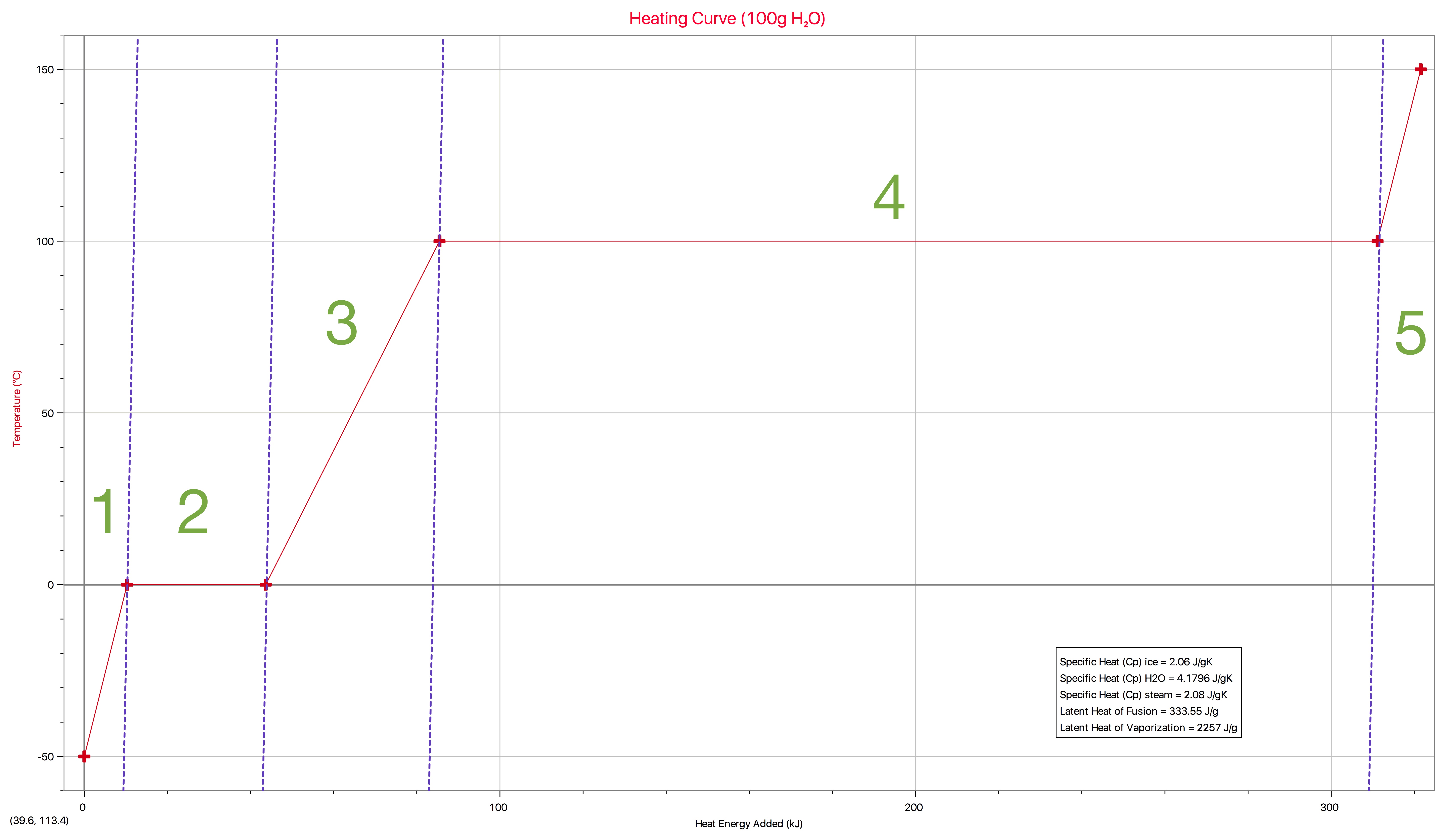
In which region(s) does temperature remain constant?
Region 1, 3, & 5
Region 2 & 4
Region 1 only
Region 1 & 2

The graph represents the heating of water in a pot. At 150 seconds, the water has just reached a boil. If the heat is left on, what will happen to the temperature and volume of water in the pot? (All temperatures in °C.)
The temperature will rise, and the water volume will decrease.
The temperature will rise, and the water volume will remain constant.
The temperature will remain constant, and the water volume will decrease.
The temperature will remain constant, and the water volume will remain constant.

Which of the graphs below illustrates water boiling in Denver, Colorado? (Altitude 1,600 meters.)
Graph A
Graph B
Graph C
Graph D
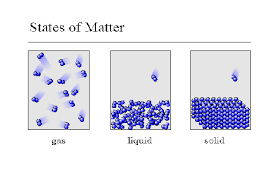
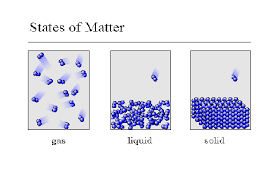


Critical Thinking! If gas particles in a tire are moving slowly, your tire pressure will drop because the gas particles are not pressing against the walls of the tire. What temperature change do you think would cause this pressure drop?
The temperature will have become colder
The temperature will have become hotter
Temperature and pressure have no relation
In a pressure cooker, a lid is screwed tightly onto a pot so that the air pressure in the pot is increased. What effect, if any, will this have on the boiling point of water in the pot?
The boiling point will be raised.
The boiling point will be lowered.
The boiling point will be unaffected.
none of these
Phase change going from Liquid to Solid...
Melting
Freezing
Condensation
Sublimation
Phase change going from a Liquid to a Gas...
Vaporization
Deposition
Condensation
Melting
Phase change going from a Solid to a Gas...
Deposition
Sublimation
Condensation
Recombination

What state of matter is pictured?
Solid
Liquid
Gas
Plasma
Phase change going from a Gas to a Solid...
Deposition
Sublimation
Condensation
Vaporization
According the KMT, the particles are in
different states
organized patterns
constant motion
various containers
Which of the following correctly describes a phase change from liquid to gas?
energy absorbed, density increases
energy absorbed, density decreases
energy released, density increases
energy released, density decreases
A sample of water is brought to a boil. Inside a bubble are (is)
molecules of hydrogen gas and oxygen gas
molecules of water
molecules of air
just empty space
Which is a true statement describing phase changes?
energy is absorbed when a liquid changes to a solid.
Energy is released when a solid changes to a liquid
Energy is absorbed when a gas changes to a liquid
Energy is absorbed when a liquid changes to a gas

