
Font size
 Worksheets
AICE Marine Midterm Review
Total questions: 110
Worksheet time: 1hrs 5mins
What is the proper way to plot points on a graph?
Dots with circles around them
Dots
Xs
Xs with circles around them
What word describes an organism's role in an ecosystem?
Productivity
Community
Niche
Function
Which type of variable is changed by the scientist at the beginning of an experiment?
Constant
Uncontrolled
Dependent
Independent
What process moves nutrient rich deep water to the surface of the ocean?
Runoff
Downwelling
Uptake
Upwelling
Why can't phytoplankton or plants survive the environment surrounding a hydrothermal vent?
Too much pressure
Not enough dissolved CO2
Extreme temperatures
No sunlight
Which word describes the interaction between biotic and and abiotic factors?
Ecosystem
Niche
Population
Community
Why does productivity decrease in the fall and winter months in the northern hemisphere?
Less production of nitrate ions by bacteria
Trick question, it increases
Fewer hours of sunlight
Less CO2 dissolves into the ocean from the atmosphere
What process occurs at hydrothermal vents to anchor the food chain?
Photosynthesis
Metabolism
Consumption
Chemosynthesis
A predator is define as:
an organism living off another organism
an organism that eats another organism
an organism that hunts and kills another organism
an organism that feeds on another organism


Which organelle is responsible making food (Glucose) using sunlight?
Cell Membrane
Nucleus
Chloroplast
Mitochondria
Select all that are raw materials for Photosynthesis.
Water
Carbon Dioxide
Oxygen
Sunlight (Light Energy)
Glucose (Sugar/food)
In this layer of the ocean the water temperature drops with increased depth faster than it does in other layers
surface zone
thermocline
deep zone
An example of a photoautotroph
zooplankton
chemosynthetic bacteria
phytoplankton
heterotrophic bacteria
An organism that cannot make its own food and instead relies on consuming other organisms
Autotroph
Heterotroph
Producer
Lettuce
Cassandra wanted to compare production rates of chemosynthetic bacteria in deep sea hydrothermal vents. Which of the following would be a confounding variable?
Amount of glucose produced
Amount of sunlight
Type of chemicals released by the vent
Sharks
A hypothesis cannot become a theory.
True
False
Control variables are only applied to the control group.
True
False
Control variables are also called constants and they reduce anomalous data.
True
False
Choose the correct statements about systematic and random errors.
Systematic errors come from incorrect readings of the lab equipment
Random errors are the result of failure to control the variables
Systematic errors are the result of failure to control the variables
Random errors come from incorrectly using the lab equipment
Water baths are good control variables since water has a high heat capacity, and does not change temperature quickly, thus it holds a steady constant reliable temperature.
True
False
Choose all the correct statements regarding systematic errors.
usually come from incorrect readings from equipment used
affect all of the results equally
affect only some of the results
usually come from failing to control variables
are difficult to identify because the pattern of results stay the same
Choose all the correct statements regarding random errors.
usually come from failing to control variables
usually come from incorrectly reading the equipment used
are easy to identify because it affects the results in different ways
difficult to identify because it affects the results equally
What are examples of correct suggestions to improve an experiment?
improve the procedure to increase the accuracy of the observation and measurements: more repeats, control variables
use smaller intervals for the values of independent variable
use larger intervals for the values of independent variable
use smaller intervals for the values of controlled variable
How many significant values the number 12,343 has?
5
4
3
2
What is a way to identify anomalous results?
having multiple trials
having only one trial
trials are not as important as identifying the control variables are
recording and analyzing the confounding variables
When performing a controlled experiment, you have to accurately measure liquids. What method will you choose to measure 87mL or salt water?
universal indicator or a pH probe with a minimum value of 100mL
balance that can measure up to 100mL
graduated cylinder of 200mL
graduated cylinder of 100mL
graduated cylinder of 150mL
Choose the correctly paired techniques:
temperature- can be controlled using a water bath
temperature- can be controlled using a thermometer
oxygen levels - can be controlled using an air pump that can add O2 to the solution
light intensity can be controlled by maintaining an equal distance from a light source
How many values of the independent variables should you work with during an experiment?
minimum 5
minimum 3
maximum 5
maximum 3
You are asked to graph the following data: number of grouper fish at three different locations. What type of graph will you use?
bar graph
line graph
histogram
pie chart
You are asked to graph the following data: number of grouper fish at Dania Beach over the past 10 years. What type of graph will you use?
line graph
bar graph
histogram
pie charts
You are asked to graph the following data: distribution of mussels at Dania beach, 0-10m from the water mark, 10-20m from the water mark, and 20-30m from the water mark. What type of graph will you use?
line
bar
histogram
pie chart
When graphing data, what goes on the X and Y axis?
X- independent variable
Y - dependent variable
Y- independent variable
X - dependent variable
Choose the correct way to record data while performing a controlled experiment:
first column in data table must be labeled with the independent variable
second column in data table must be labeled with the dependent variable
second column in data table must be labeled with the confounding variable
third column can be used to present the mean values
first column in data table must be labeled with the dependent variable
While collecting data on a data table, the values of the independent variable will be listed:
first column
second column
third column
forth column

Which of the following compounds is formed by a covalent bond?
H2O
NaCl
KCl
MgCl2
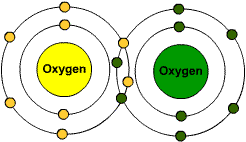
Why do all bonds form?
to fill the outermost energy level
so an atom can be unstable
so the number of protons and electrons can equal.
so they can gain neutrons.
An atom with 1 valence electron 'needs' a full shell, so it can either gain 7 electrons or lose 1. Which is more likely to occur?
nothing
gain 7
lose 1
When an atom loses an electron, it becomes a
positive ion
negative ion
Which compound forms through an ionic bond?
sodium chloride
water
sulfur dioxide
Atoms are most stable when their outer shell is full or complete.
true
false
How are ionic bonds formed?
transfer of electrons
sharing of electrons
Water is an example of what?
molecular compound (covalent compound)
ionic compound
Salt is an example of what?
ionic compound
covalent compound
Atoms involved in a covalent bond are not charged, while atoms involved in an ionic bond are charged (negative or positive)
true
false
The atomic number of Chlorine is 17. How many electrons Cl has on it's outer shell?
7 electrons
17 electrons
10 electrons
8 electrons
Which of the following is found in the highest amount in ocean water?
chloride
sodium
sulfate
magnesium
Choose all correct statements explaining how sodium chloride dissolves in water:
sodium is a positive ion and chloride is negative ion
water has positive and negative ends
hydrogen atoms associate with chloride atoms and oxygen atoms associate with sodium atoms
hydrogen atoms associate with sodium atoms and oxygen atoms associate with chloride atoms
sodium is a negative ion and chloride is positive ion
Describe the effect of increasing salinity on the freezing point of water.
increasing salinity lowers the freezing point
increasing salinity increases the freezing point
increasing salinity doesn't affect the freezing point
Explain the importance of floating sea ice on marine organisms.
sea ice creates habitats
sea ice insulates the water, preventing from further cooling
maintains water as a liquid underneath the ice
can reduce the amount of oxygen reaching the producers
can obstruct the organisms from reaching the surface and breath air, causing decline in biodiversity
What happens if the sea water changes temperature from 4 degrees C to 0 degrees C?
the density of seawater increases
seawater will sink
the density of seawater decreases
seawater will rise up
Explain how thermoclines are produced.
thermoclines are where cold and warm water meet
cold water is more dense, so sinks
warm water is less dense, so rises
warm water is more dense, so rises
cold water is less dense, so sinks
Magnesium has an atomic mass of 24 and atomic number of 12. State the number of protons, neutrons and electrons.
p =12
n=12
e=12
n=24
e=24

Which layer of the Earth is solid iron and nickel?
Mantle
Crust
Inner Core
Outer core
Which way do plates in a divergent boundary move?
toward each other
parallel to each other
away from each other
perpendicular to each other
Which way do plates in a transform boundary move?
toward each other
parallel to each other
away from each other
perpendicular to each other
Evidence showing that new crust is created at mid ocean ridges and recycled at subduction zones includes which of the following. (Choose all answers)
Magnetic stipes
Oldest rock is near the subduction zone
Youngest rock is near the mid ocean ridge
Oldest rock is near the middle of the lithospheric plate
Ridge push and Slab Pull
Which of these tectonic plate boundaries is most likely to form a volcano.
a continental plate colliding with a continental plate
an oceanic plate sliding past a continental plate
a continental plate sliding past a continental plate
an oceanic plate colliding into a continental plate
What causes the tectonic plates to continually to move?
Convection currents
Volcanic and seismic activity
Strong winds and storms
Rotation of the solid core
Which statement best describes why fossils of the same land-dwelling species have been discovered in both South America and Africa?
The organism migrated to two continents
The organisms were separated by the formation of new mountain ranges
The organisms became extinct due to climate change on these continents
These organisms once lived on one large landmass that later split into two continents
A student was asked to make a diagram showing a subduction zone where an oceanic crust and continental crust collide. Which geological feature should she include at the subduction zone?
Island
Plateau
Rift Valley
Trench


What type of plate margin or boundary which is shown by the illustration?
Destructive
Constructive
Conservative
Collision
The phenomenon divergent plate movement is scientifically documented to be main cause of ____?
Sea Floor Spreading
Mountain Ranges
Island Arc
Subduction
Check three of the following factors that affect the tides
the temperature
the moon-earth interaction
the sun
the shape of the continents
Spring tides are when the sun and moon are lined up in a straight line and working together.
True
False
Neap tides are when the sun and moon are lined up and working together.
True
False


Upwelling is stopped when...
winds push cold waters from Peru to Australia
winds push warm waters from Australia to Peru
winds push warm waters from the South Pacific Ocean to North Pacific Ocean

The picture represents a(n) ___ event.
El Nino
La Nina
Non-El Nino (normal conditions)
Why do the fisherman of Peru and South America not welcome a strong El Nino?
El Nino poisons the fish
El Nino causes strong winds and currents which move fish westward
El Nino bring cold water to the surface which kills the base of the food chain
El Nino shuts off upwelling and nutrients needed for the marine food chain do not rise to the surface
Which of these are limiting factors for photosynthesis? Choose 3 answers.
Light intensity
CO2 concentration
Temperature
Light
CO2 levels
Which of these is the correct equation for photosynthesis?
6O2 + C6H12O6 --> 6CO2 + 6H2O
6O2 + 6CO2 --> C6H12O6 + 6H2O
6CO2 + 12H2O --> C6H12O6 + 6H2O + 6O2
6CO2 + 6H2O -->6 O2 + C6H12O6
Chemosynthesis is the
conversion of carbon into sugars and nutrients by bacteria in dark places. They use hydrogen gas, hydrogen sulfide and methane gas as a source of energy, relies on sunlight.
conversion of carbon into sugars and nutrients by bacteria in dark places. They use hydrogen gas, hydrogen sulfide and methane gas as a source of energy, rather than sunlight.
conversion of carbon into sugars and nutrients by bacteria in dark places. They use hydrogen gas, hydrogen sulfide and methane gas as a source of energy, with little to no sunlight.
conversion of carbon into sugars and nutrients by bacteria in dark places. They use hydrogen gas, hydrogen sulfide and methane gas as a source of energy, with some sunlight.
A difference between photosynthesis and chemosynthesis
Photosynthesis doesn't use light and chemosynthesis does
Photosynthesis makes sugar and chemosynthesis doesn't
Photosynthesis uses light and chemosynthesis doesn't
Photosynthesis doesn't make sugar and chemosynthesis does
What is a similarity in chemosynthesis and photosynthesis
they both produce carbon dioxide
they both use light
the both are used by plants
they both produce energy and sugar
Which of the following correctly describes the relationship between photosynthetic algae and coral reefs?
Corals contain photosynthetic algae, called zooxanthellae, that live in their tissues. The coral provides the algae with a protected environment and compounds they need for photosynthesis. The algae produce oxygen and help the coral to remove wastes.
Commensalism
Mutualism
Competitive
Parasitism
What are the reactants of chemosynthesis? Reactants are the things needed for a process to occur. (Select ALL that apply)
sunlight
hydrogen sulfide
oxygen
carbon dioxide
water

Which group is not represented in the food web?
producers
primary consumers
secondary consumers
decomposers

What do the arrows in the food chain indicate about the flow of energy in an ecosystem?
Energy is continuously recycled by the organisms in an ecosystem.
Energy flows in one direction in an ecosystem, from producers to consumers.
More of the available energy in an ecosystem is given to large animals than to small animals.
Organisms at the end of the food chain receive more energy than those at the beginning.

How would the removal of earthworms from the food chain affect the other organisms?
The number of bass will increase.
The number of crayfish will decrease.
The crayfish will get their energy directly from the sun.
The number of bass and ospreys (bird) will increase.

The diagram shows part of an aquatic food web. What is the primary source of energy for the food web?
waves
sunlight
bacteria
rotifers, water fleas and tadpoles

The diagram provided shows a marine food chain. In this food chain, the zooplankton are
primary producers.
primary consumers.
secondary consumers.
tertiary consumers.

The picture provided shows an ocean bay food chain. Sea otters move into the ocean bay. They eat all of the sea urchins. This change will cause the
kelp to have less food.
crabs to have more food.
sea ducks to have less food.
arctic foxes to have more food.
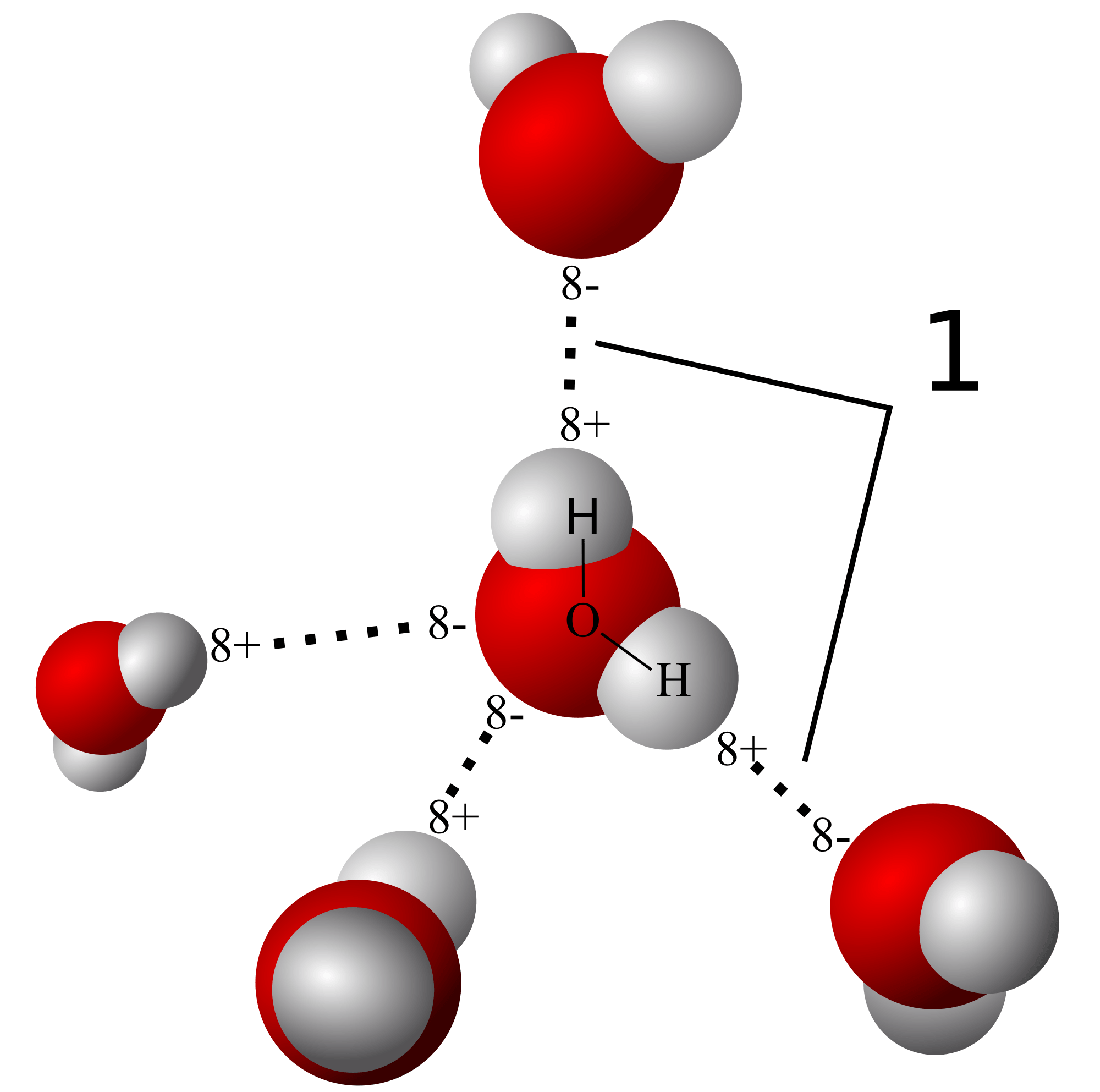
Water is often called the "universal solvent" because many substances can be dissolved in water. What property of water allows it to be such a versatile solvent?
purity
polarity
high heat capacity
expansion upon freezing
A substance that increases the hydrogen ion (H+) concentration of a solution. On the pH scale: 6.9 or below is considered an
acid
base
neutral substance
concentrated substance
What is true about the process of sandy shores formation?
rate of sedimentation is greater than the rate of erosion
rate of erosion is greater than sedimentation
rate of erosion is the same as rate of sedimentation
high rate of weathering causing low sediment deposition
Choose the correct reasons why the transfer of energy from sun to producers is inefficient.
some energy misses the chloroplast or is in the wrong wavelenght
energy is in the same wavelength
only 10% of energy is passed on, 90% is lost as heat or waste
Light is reflected back into the atmosphere
Choose all the correct statements regarding oxygen minimum layer.
oxygen minimum layer (OML)is the layer of ocean with the lowest dissolved oxygen because of lack of photosynthesis
OML is the layer between 100m-1000m deep
There are no organisms in OML
There are still organisms in OML because they have adaptations to low oxygen
How is Coriolis effect acting on ocean surface currents?
currents move clockwise in the Northern Hemisphere
currents move counter-clockwise in the Southern Hemisphere
currents move counter-clockwise in the Northern Hemisphere
currents move clockwise in the Southern Hemisphere
How would you define compensation point?
light intensity at which the rate of photosynthesis and respiration are equal
light intensity at which the rate of photosynthesis and respiration are not equal
light intensity at which the rate of photosynthesis is greater than rate of respiration
light intensity at which the rate of photosynthesis is lower than the rate of respiration

