wayground logo

Free Printable Worksheets

Font size

S
M
L
XL
Worksheets

Physical Science Final Review

Total questions: 100

Worksheet time: 2hrs 40mins

Name
Class
Date
1.
If plants are exposed to sunlight, then they will grow taller.
What part of the scientific method is this an example of?
a)
Procedure
b)
Hypothesis
c)
Question
d)
Results
2.
The summary at the end of an experiment that explains the results. 
a)
conclusion
b)
procedures
c)
materials
d)
hypothesis
3.
The summary at the end of an experiment that explains the results. 
a)
conclusion
b)
procedures
c)
materials
d)
hypothesis
4.
The independent variable is the ONE thing you _____.
a)
change on purpose
b)
control or keep constant
c)
measure
5.
The variable that is being measured or observed is called the _______________. Hint: this is the variable that is the result or effect 
a)
independent variable
b)
dependent variable
c)
control variable
6.
An experiment is performed on plants to see how different liquids affect plant growth. Each plant in the experiment is given a different liquid: water, apple juice, or milk. What variables should be kept constant/controlled? 
a)
type of plant, flower pot,  soil, and amount of sunlight
b)
water, apple juice, milk
c)
only the amount of sunlight
d)
type of plant only
7.
What is being changed in this experiment?
a)
ramp height
b)
the speed that the ball rolls
c)
type of ball
8.
This variable in an experiment is the one being deliberately changed by the scientist. 
a)
dependent variable
b)
independent variable
c)
data
d)
control group
9.

The SI unit for volume is.....

a)

grams

b)

meters

c)

pounds

d)

liters

e)

ounces

10.

The part of the experiment that remains unaffected by the independent variable. Used to compare dependent variable to.

a)

constants

b)

control group

c)

independent

d)

dependent

11.
Why is this graph misleading?
a)
it only lists 5 players
b)
It goes in intervals of 50
c)
The axis doesn't start at zero and makes it look like a big difference in wins.
d)
Not misleading
12.
This type of graph is used to _______
a)
Compare different "groups"
b)
Compare something over time
13.
If I was only going to graph the data for the Amoebae, which would go on the x-axis?
a)
Type of biocrust
b)
# of Amoebae
14.
Explain why this graph may be misleading?
a)
the x-axis does not have equal intervals
b)
San Fransisco is not a real city
c)
you cannot have percents in a line graph
d)
the y-axis does not have equal intervals
15.

The name of column (group) one is

a)

alkaline earth metals

b)

alkali metals

c)

transition metals

d)

noble gases

16.

The name of column (group) eight is

a)

alkaline earth metals

b)

alkali metals

c)

transition metals

d)

noble gases

17.

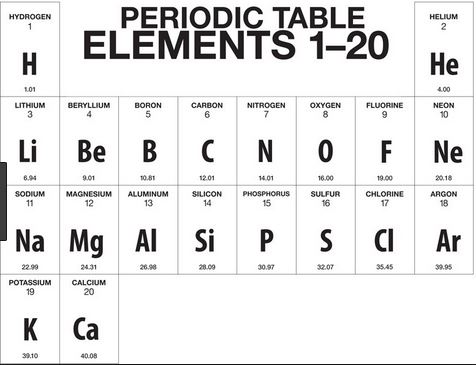
Which number tells you how many protons an element has?

a)

Atomic Number

b)

Atomic Mass

c)

Isotope Number

18.

What does the bottom number in the element box represents?

a)

Atomic Number

b)

Atomic Mass

c)

Isotope Number

19.

What does He represent in the box?

a)

Element equations

b)

Chemical equation

c)

Element Symbol

20.

What element has an atomic number of 30?

a)

Zinc(Zn)

b)

Copper(Cu)

c)

Phosphorus(P)

21.

What element has an atomic number of 37?

a)

Sodium(Na)

b)

Argon(Ar)

c)

Rubidium(Rb)

22.

How many neutrons are in Phosphorus(P)?

a)

16

b)

20

c)

31

23.

What do we call the horizontal rows on the periodic table?

a)

Groups

b)

Families

c)

Periods

24.

How many neutrons are in Chlorine(Cl)?

a)

15

b)

18

c)

35

25.

What do we call the elements in groups 3 - 12 on the periodic table?

a)

Transition Metals

b)

Alkaline Earth Metals

c)

Noble Gases

26.
Elements in a ..................have similar chemical properties.  
a)
period
b)
group
c)
row
27.

Number of valence electrons in halogens is ..........

a)

1

b)

4

c)

3

d)

7

28.

How many electrons does Barium (Ba) have?

a)

13

b)

2

c)

71

d)

56

29.

a subatomic particle, contained in the nucleus of an atom, having the same mass as a proton but no electrical charge

a)

proton

b)

neutron

c)

electron

d)

matter

30.
Which is an electron?
a)
A
b)
B
c)
C
31.

Hydrogen needs _____ electrons in its valence shell to be stable.

a)

4

b)

6

c)

8

d)

2

32.

How many valence electrons does Nitrogen Have?

a)

1 Valence electron

b)

2 Valence electron

c)

3 Valence electron

d)

4 Valence electron

e)

5 Valence electron

33.

The atomic mass of Titanium is 48 and its proton is 22, therefore its number of neutron is ________

a)

22

b)

24

c)

26

d)

70

34.

Element or Not an Element? Is this on the periodic table??

a)

Yes

b)

No

c)

Possibly depending on the weather

35.

When electrons are shared a(an) ________ bond is formed

a)

ionic

b)

covalent

c)

metallic

36.

Of these 3 molecules, which represents a covalent bond?

a)

O2

b)

NaI2

c)

HBr

d)

MgO

37.

A(an) ____________ bond exists between a metal and a nonmetal.

a)

ionic

b)

covalent

c)

polyatomic

38.

What is a negatively charged atom called?

a)

Anion

b)

Cation

c)

Ion

39.
What is a positivly charge atom called?
a)
cation
b)
anion
40.

Why do atoms bond?

a)

They typically don't bond

b)

To add or take away energy levels

c)

To have a full valence shell.

d)

To have a full inner shell

41.

What charge would a potassium (K) ion have?

a)

+1

b)

-1

c)

+2

d)

-2

42.
How many valence electrons in this structure?
a)
6
b)
5
c)
4
d)
7
43.
A charged particle that has gained or lost electrons is called a _____.
a)
molecule
b)
ion
c)
isotope
d)
element
44.

Which part of the atom is responsible for chemical bonding?

a)

Core Electrons

b)

Valence Electrons

c)

Protons

d)

Neutrons

45.

What is the name of K2O?

a)

Dipotassium monoxide

b)

Dipotassium oxygen

c)

Potassium oxide

d)

Potassium oxygen

46.

What is the name for CO?

a)

Copper Oxide

b)

Carbon monoxide

c)

Monocarbon oxide

d)

Copper monoxide

47.
What is the formula for sulfur pentoxide?
a)
SO2
b)
SO3
c)
SO4
d)
SO5
48.
What is the formula for Lithium Iodide?
a)
LiI
b)
LiI2
c)
LiI3
d)
LiI4
49.

How would you draw a Lewis dot diagram for Magnesium?

a)
b)
c)
d)
50.

How many electrons are needed in the outer energy levels of an atom, in order for that atom to be stable?

a)

6

b)

1

c)

8

d)

2

51.
The proper formula for magnesium hydroxide:
a)
MgOH
b)
Mg2OH
c)
Mg(OH)2
d)
Mg2OH2
52.

Name the following ionic compound: Cr(NO2)3

a)

Chromium nitrite

b)

Chromium nitride

c)

Chromium (III) nitride

d)

Chromium (III) nitrite

53.

Name the following ionic compound: MgSO4

a)

Magnesium sulfoxide

b)

Magnesium sulfide

c)

Magnesium sulfate

d)

Magnesium oxide

54.
What is the name of K3PO4?
a)
Tripotassium Phosphate
b)
Tripotassium Phosphite
c)
Potassium phosphide
d)
Potassium phosphate
55.

Name the following ionic compound: Cr(NO2)3

a)

Chromium nitrite

b)

Chromium nitride

c)

Chromium (III) nitride

d)

Chromium (III) nitrite

56.
If copper (II) and phosphate bond together, the resulting chemical formula would be:
a)
Cu2(PO4)3
b)
CuPO4
c)
Cu3(PO4)2
d)
Cu3PO4
57.

Write the formula for copper (I) phosphide

a)

Cu3P

b)

CuP

c)

Cu1P

d)

CuP3

58.
Roman numerals tell you the ____ of the metal cation(s) in an ionic compound.
a)
number
b)
mass
c)
type
d)
charge
59.
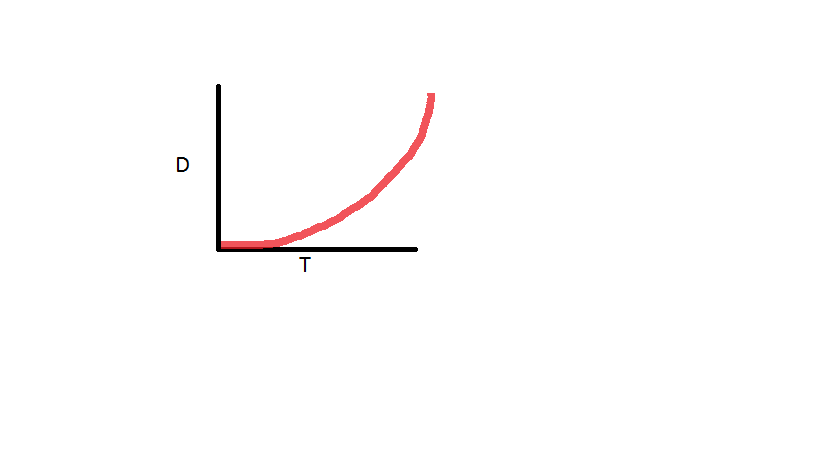
In the distance vs. time graph, what type of motion does the line represent? 
a)
Speed
b)
Velocity
c)
Acceleration
d)
Deceleration
60.
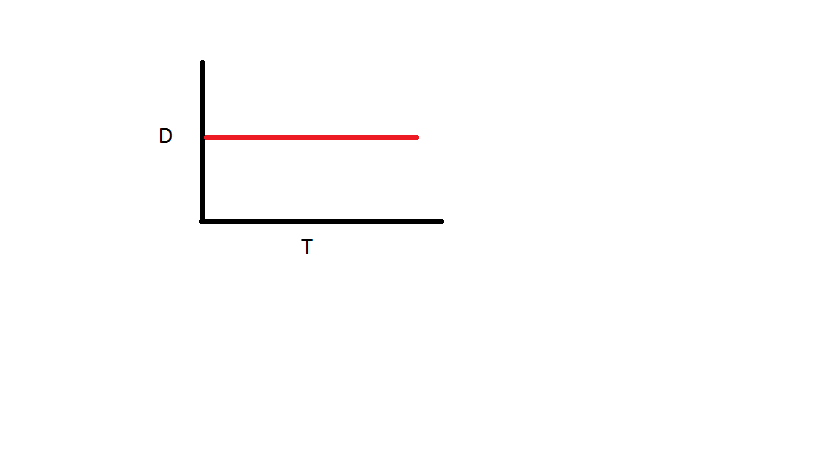
In the distance vs. time graph, what type of motion does the line represent?
a)
No motion
b)
Constant velocity
c)
Acceleration
d)
Deceleration
61.
Describe the speed of the object from 4-6 seconds using the distance vs. time graph.
a)
Increasing speed
b)
Decreasing speed
c)
Not moving
d)
Constant speed
62.
Describe the speed of the object from
0-2 seconds using the distance vs. time graph.
a)
Constant speed
b)
Speeding up
c)
Slowing down
d)
Not moving
63.
What is the object doing from 10-12.5 seconds?
a)
Slowing down 
b)
Returning to the starting position
c)
Speeding up
d)
Not moving
64.
Which time section is the object moving the fastest?
a)
0-10 seconds
b)
10-20 seconds
c)
20-30 seconds
d)
30-40 seconds
65.
Which section of the graph shows decreasing velocity?
a)
CD
b)
DE
c)
EF
d)
GH
66.

Which runner stopped for a rest?

a)

Albert

b)

Bob

c)

Charlie

d)

None of them stopped

67.

The shortest path between an object's starting and ending point is its:

a)

Distance

b)

Disturbance

c)

Disenfranchisement

d)

Displacement

68.

You calculate acceleration by ..?

a)

subtracting starting speed from ending speed and dividing by time

b)

subtracting ending speed from starting speed and dividing by time

c)

subtracting distance by direction

d)

Dividing initial speed by final speed

69.

An object moving at -5 m/s2 is doing what?

a)

Speeding up

b)

Slowing down

c)

Moving at the same speed

d)

Stopped

70.

If you traveled from Point A to Point B to Point C, what would your DISPLACEMENT be?

a)

3 miles

b)

4 miles

c)

5 miles

d)

7 miles

71.

A helicopter flies west 200 miles in 2 hours. What is its velocity?

a)

99 mph

b)

100 mph West

c)

400 mph West

d)

297 mph West

72.

What is Acceleration?

a)

How long it takes me to win at fortnite

b)

The direction of an object

c)

A change in Motion

d)

How fast something is moving

73.
What is Newton's First Law known as? The Law of
a)
Friction
b)
Mass
c)
Inertia
d)
Gravity
74.
An object in motion will stay in what kind of motion as long as the net forces acting on it are zero?
a)
slowing motion in a straight line
b)
accelerating motion in a straight line
c)
constant motion in a straight line
d)
constant motion in an unpredictable direction
75.
What is Newton's First Law
a)
F=ma
b)
Every action has an equal and opposite reaction
c)
An object at rest stays at rest, an object in motion stays in motion. 
d)
Friction 
76.

What is Newton's 2nd Law?

a)

Every action has an equal and opposite reaction

b)

An object at rest stays at rest, an object in motion stays in motion.

c)

F = ma

d)

Friction

77.

Newton's 3rd law says that for every action, there is an ______ reaction.

a)

unequal & opposite

b)

equal & similar

c)

equal & opposite

d)

stronger & opposite

78.

When a cannon fires a cannonball, we can observe Newton's 3rd Law. Which is the reaction force?

a)

The cannon moving forward

b)

The cannon moving backward

c)

The cannonball moving backward

d)

The cannonball moving forward

79.

A rocket pushes burning gases DOWN which causes the rocket to launch UP. Which law is this?

a)

Newton's 1st Law of Motion

b)

Newton's 2nd Law of Motion

c)

Newton's 3rd Law of Motion

80.
Unit of mass
a)
m/s 2
b)
m/s
c)
newtons
d)
kg
81.
What is the difference between mass and weight?
a)
mass is how much matter is in an object, and weight is the gravitational pull on that object
b)
mass and weight are the same
c)
weight affects how much mass is in an object
d)
weight is determined by how many atoms make up an object
82.
If you double the mass of an object with the same force apply on it, the acceleration will
a)
double
b)
cut in half
c)
the same
d)
zero
83.
When you stretch a rubber band, you are storing __________ energy. 
a)
kinetic 
b)
potential
c)
none of the above
d)
all of the above 
84.
At which point is potential energy greatest?
a)
W
b)
X
c)
Y
d)
Z
85.

Heat Energy is called:

a)

Radiant Energy

b)

Chemical Energy

c)

Thermal Energy

d)

Mechanical Energy

86.
According to which law of energy, energy can't be created or destroyed?
a)
First law of motion
b)
The law of tacos
c)
Laws of Energy
d)
law of conservation of energy
87.
The ultimate source of energy is:
a)
The sky
b)
The sun
c)
Plants
d)
Movement
88.
__________is the energy created by wind turning wind turbines.
a)
Geothermal
b)
Hydro
c)
Wind
d)
Nuclear
89.
Dams are built to harness the power of this renewable resource.
a)
Sun
b)
Wind
c)
Water
d)
Geothermal
90.
The highest point on a wave is:
a)
the crest
b)
the trough
c)
the top
d)
the coast 
91.
The lowest point on a wave is the:
a)
Amplitude
b)
Crest
c)
Trough
d)
Wavelength
92.
The number of wavelengths that pass a point each per second is:
a)
frequency
b)
period
c)
longitudinal 
d)
transverse wave 
93.
When the frequency of a wave increases, what happens to the wavelength?
a)
The wavelength is not directly affected by the frequency of a wave.
b)
The wavelength increases.
c)
The wavelength decreases.
d)
More specific information is needed to form a conclusion about the wavelength.
94.
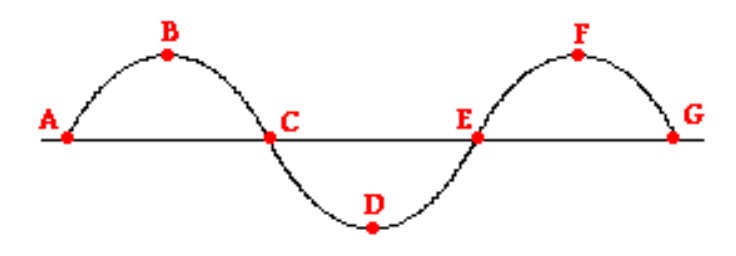
Which letter(s) represent the trough of the wave?
a)
A
b)
B & D
c)
D
d)
C & G
95.
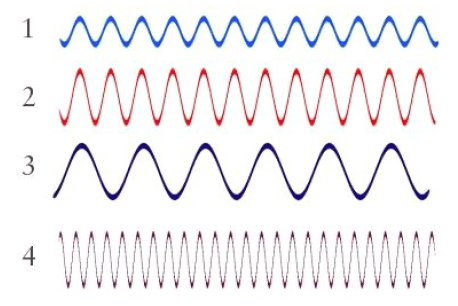
Which wave in the diagram has the greatest wavelength?
a)
1
b)
2
c)
3
d)
4
96.
A compressional wave is another name for a 
a)
longitudinal wave
b)
electromagnetic wave
c)
radio wave
d)
hair wave
97.
Amplitude is a measure of how much _________ the wave is carrying
a)
energy
b)
matter
c)
medium
d)
frequency
98.
What kind of wave moves at right angles to the direction of the wave?
a)
compressional waves
b)
mechanical waves
c)
transverse waves
d)
ultraviolet rays
99.
How would a person measure the wavelength on this sound wave?
a)
dense to less dense
b)
trough to crest
c)
compression to compression
d)
beginning of illustration to the end
100.

Why do you want to make a good grade on this test?

a)

I feel a responsibility to do the best that I can.

b)

I need to past this test.

c)

I just want a good grade

d)

I don't really care if I pass the test