
 Worksheets
Anatomy - MT 21-22
Total questions: 132
Worksheet time: 2hrs 31mins
filters waste from the blood
urinary
circulatory
reproductive
nervous
includes brain and spinal cord
nervous
endocrine
integumentary
digestive
includes ovaries and testes
reproductive
endocrine
nervous
skeletal
functions in support and movement
skeletal
urinary
muscular
digestive
functions to regulate temperature
integumentary
skeletal
muscluar
digestive
includes stomach and esophagus
digestive
circulatory
urinary
muscular


Which of the following is an example of positive feedback?
Thermoregulation
Blood Pressure
Childbirth
Blood Sugar Levels
Which body system controls the body to maintain homeostasis?
excretory
nervous
circulatory
skeletal

Which best describes the stimulus-response model?
Stimulus -> receptor -> effector -> control center -> response
Stimulus -> receptor -> control centre -> effector -> response
Stimulus -> effector -> control center -> receptor -> response
When blood glucose is high, the negative feedback mechanism is to produce which hormone?
Glucagon
Glycogen
Insulin
Basal Insulin
Single layer of flattened cells with disc-shaped central nuclei; the simplest of the epithelium.
simple cuboidal
simple squamous
simple columnar
stratified squamous

What tissue type is this
dense connective
smooth muscle
cardiac muscle
areolar tissue
Location: Under skin; around kidney and eyeballs; in bones and within abdomen; in breasts.
bone
areolar
simple columnar
adipose

blood
adipose
simple squamous
stratified cuboidal

cardiac muscle
dense connective
skeletal muscle
smooth muscle
The hypogastric (pubic) region is ________ to the umbilical region.
superior
inferior
proximal
posterior
Jerome plays football and recently broke a bone in the tarsal region. This region is in the ________.
foot
wrist
ankle
shin


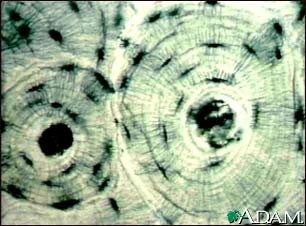
The hands are ____ to the feet.
superior
inferior
superficial
deep
The knees are ____ to the waist.
superior
inferior
posterior
anterior
The heart is medial to the arm.
TRUE
FALSE
The skin is superficial to the skeletal muscles.
TRUE
FALSE
The study of structure, identification of body parts
Anatomy
Physiology
Pathology
Cytology
The study of function, how the parts of the body work
Anatomy
Physiology
Cytology
Gross Anatomy
The study of tissues
Cytology
Physiology
Histology
Pathology
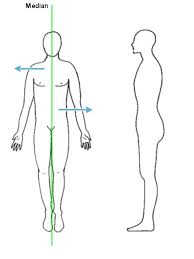


The shoulder is the
axillary
acromial
appendage
cervical
Tarsal and Carpals are
hands and feet
ankle and wrist
Heads and tails
arms and legs
Which would most likely protect the brain?
carpals
nasal
occipital
Sternal
The pinky finger is ______ to the thumb in anatomical position.
posterior
superior
lateral
medial
Which structure is most medial?
nose
ears
heart
femur
close to the origin of a body part (point of attachment)
inferior
proximal
dorsal
distal
the knee is ____ to the thigh
proximal
distal
lateral
ventral
What is the top layer of skin called?
callus
epidermis
dermis
hypodermis
What layer of skin senses pain?
callus
epidermis
dermis
hypodermis
What is the oily substance that protects the skin against water called?
seaweed
callus
sebum
skin
How does sweat cool you?
evaporation
condensation
invagination
oder


An example of a long bone is?
Spinal Cord
Wrist Bone
Thigh Bone
Sternum
Articular cartilage is found in what part of the long bone?
inside of the medullary cavity
on the outer surface of the diaphysis
the outer surface of the epiphyses
in the spaces of the spongy bone
The spongy bone is composed of osteocytes
False
True
Bone cells are known as
Lacunae
Osteocytes
Collagen
Osteon
The function of Osteoclasts is
To breakdown calcified matrix of bone
Secrete acids that dissolve the inorganic component of calcified matrix
Phagocytize components of the bony matrix
All the above
Which vitamin is necessary for proper absorption?
Vitamin A
Vitamin C
Vitamin K
Vitamin D
How many pairs of ribs are in the thoracic cage?
7
2
12
10

What bone is highlighted?
Skull (Cranium)
Mandible
Scapula
Clavicle

What bone is highlighted?
Skull (Cranium)
Scapula
Clavicle
Mandible

What bone is highlighted?
Skull (Mandible)
Clavicle
Mandible
Scapula

What bone is highlighted?
Radius
Ulna
Humerus
Carpals

What bone is highlighted?
Radius
Ulna
Humerus
Carpals

What bone is highlighted?
Femur
Tibia
Fibula
Humerus

What bone is highlighted?
Patella
Pelvis
Clavicle
Femur

What bone is highlighted?
Patella
Pelvis
Clavicle
Mandible

What bone is highlighted?
Tibia
Fibula
Radius
Ulna
From wrist to fingertip, what is the order of bones?
Carpals, metacarpals, phalanges
Phalanges, metacarpals, carpals
Carpals, phalanges, metacarpals
Metacarpals, carpals, phalanges
From ankle to toe, what is the order of bones?
Tarsals, metatarsals, phalanges
Phalanges, metatarsals, tarsals
Metatarsals, phalanges, tarsals
Tarsals, phalanges, metatarsals
The bones at the end of our fingers and toes are known as _______________.
Tarsals
The phalanges
The forearm bone closest to the thumb is the __________.
Ulna
Radius


anterior bone of cranium
frontal
occipital
parietal
temporal

posterior bone of cranium
frontal
occipital
temporal
parietal

lateral bones of cranium
frontal
temporal
occipital
parietal

inferiolateral bones of cranium
frontal
occipital
parietal
temporal

cranial bone that forms the bridge of the nose
nasal bone
ethmoid bone
lacrimal bone
sphenoid bone

cranial bone that forms medial wall of ocular orbit contains a formina for tear ducts
lacrimal bone
nasal bone
ethmoid bone
sphenoid bone

the 7 bones of the neck
cervical vertebrae
thoracic vertebrae
lumbar vertebrae
sacrum

the 5 bones of the lower back
cervical vertebae
thoracic vertebrae
lumbar vertebrae
sacrum

lateral, proximal carpal bone that is commonly fractured when someone tries to catch their body weight with an outstretched hand
scaphoid
lunate
hamate
capitate

smallest carpal bone
pisiform bone
lunate bone
sphenoid bone
capitate bone

the largest carpal bone that is the middle distal carpal bone
lunate
capitate
scaphoid
pisiform

medial, boat-shaped tarsal bone (D on diagram) commonly affected by stress fractures
talus
navicular
calcaneus
cuneiform

the tailbone
coccyx
hyoid
clavicle
patella

posterior and inferior pelvic bone
ischium
pubis
ilium
sacrum

largest, superior bones of the pelvic girdle
pubis
ilium
ischium
sacrum

breastbone
sternum
coccyx
sacrum
scapula
What body system is for support, protection, and creates new blood cells?
skeletal system
muscular system
circulatory system
integumentary system
What body system is for support, protection, and creates new blood cells?
skeletal system
muscular system
circulatory system
integumentary system

