
 Worksheets
Final Exam Quizziz (12/2021)
Total questions: 112
Worksheet time: 6hrs 45mins

The picture below shows the steps of DNA replication beginning with step one and ending with step three.
Because you are reusing the old, or parent, DNA strand DNA replication is said to be
Semi- Conservative
Semi-discontinuous
Continuous
Fully-Conserveative

The picture below shows an enzyme unwinding and unzipping DNA.
What is the name of this enzyme?
DNA Helicase
DNA Ligase
DNA polyermase
RNA Polymerase
Match the nucleotide with its complementary nucleotide. (DNA to DNA).
Adenine -
Thymine
Guanine
Cytosine
Match the nucleotide with its complementary nucleotide. (DNA to DNA).
Cytosine-
Thymine
Guanine
Adenine
Which enzyme is responsible for adding the free nucleotides to the replicating DNA?
DNA Helicase
DNA Ligase
DNA polyermase
RNA Polymerase
Which is the first step?
DNA Helicase unwinds original DNA strand
RNA Primase lays down RNA primer for new nucleotide bases.
DNA polymerase builds new strands by bring in new nucleotide bases.
Ligase knits together fragments on lagging strand
Which is the second step?
DNA Helicase unwinds original DNA strand
RNA Primase lays down RNA primer for new nucleotide bases.
DNA polymerase builds new strands by bring in new nucleotide bases.
Ligase knits together fragments on lagging strand
Which is the third step?
DNA Helicase unwinds original DNA strand
RNA Primase lays down RNA primer for new nucleotide bases.
DNA polymerase builds new strands by bring in new nucleotide bases.
Ligase knits together fragments on lagging strand
Which is the fourth step?
DNA Helicase unwinds original DNA strand
RNA Primase lays down RNA primer for new nucleotide bases.
DNA polymerase builds new strands by bring in new nucleotide bases.
Ligase knits together fragments on lagging strand

Which letter in the picture below depicts the lagging strand in DNA replication?
A
C
B
None of the above
If a person suffered from a disorder where their DNA fragments were unable to fill in the missing slots in between the fragments of the lagging strand, they would most likely have a disorder that affected which enzyme?
DNA Helicase
DNA Ligase
DNA polyermase
RNA Polymerase
Okazaki fragments appear on which strand of DNA during DNA replication?
lagging
leading
The directionality of DNA is said to be ___________, because it is side by side by goes in opposite directions.
Anti-directional
Parallel
Anti-parallel
Anti-uniform

What structure is labeled B in the nucleotide?
Deoxyribose
Phosphate
Nitrogen Base
Which best explains how meiosis is a contributing factor to genetic variation?
Meiosis reduces the number of mutations within an organism
Meiosis produces daughter cells that will contain identical chromosomes
Meiosis results in offspring that contain genes from only one parent gamete
Meiosis allows for crossing over of chromsomes, resulting in new gene combinations
Compared to the number of chromosomes contained in a body cell, how many chromosomes would normally be contained in a gamete?
The same number
Half as many
1/4 as many
Twice as many
During which step of sexual reproduction do homologous chromosomes go through crossing over, exchanging genetic information?
interphase
prophase 1
metaphase 1
prophase 2

The distribution of chromosomes in one type of cell division is shown in the diagram. Which process is being represented in the diagram?
Meiosis
DNA replication
Mitosis
Asexual reproduction
Nitrogen bases always match specifically in pairs. This specific matching is called
Antiparallel
Replication
Transcription
Complementary
What is the complementary nitrogen bases for GATTACA
ATTGCAA
CTAATGT
CGCATCT
GATTACA
węglowodory są to:
organiczne związki chemiczne zawierające w swej strukturze wyłącznie atomy węgla i wodoru.
nieorganiczne związki chemiczne zawierające w swej strukturze wyłącznie atomy węgla i wodoru.
organiczne związki chemiczne zawierające w swej strukturze atomy węgla, tlenu oraz wodoru.
nieorganiczne związki chemiczne zawierające w swej strukturze wyłącznie atomy węgla, tlenu oraz wodoru.
What are the two friends mainly discussing?
Dinner with the boss
Dinner with new boyfriend’s parents
Dinner with friends of the family
Vacation plans
During interphase
DNA lines up in the middle of the cell and DNA attaches to spindle fibers
2 new nuclei form
2 new identical cells are created
DNA gets copied
During prophase
DNA lines up in the middle of the cell and DNA attaches to spindle fibers
centrioles and spindle fibers appear
2 new identical cells are created
DNA gets copied
During metaphase
DNA lines up in the middle of the cell and DNA attaches to spindle fibers
centrioles and spindle fibers appear
2 new identical cells are created
DNA gets copied
During anaphase
DNA lines up in the middle of the cell and DNA attaches to spindle fibers
centrioles and spindle fibers appear
Each DNA gets pull to the opposite sides of the cell
DNA gets copied
During telophase
DNA lines up in the middle of the cell and DNA attaches to spindle fibers
centrioles and spindle fibers appear
Each DNA gets pull to the opposite sides of the cell
2 new nuclei form
During cytokinesis
DNA lines up in the middle of the cell and DNA attaches to spindle fibers
Cell membrane pinches to make 2 new identical daughter cells
Each DNA gets pull to the opposite sides of the cell
2 new nuclei form
Why is DNA important
it provides the instructions/blueprint for a cell
it makes energy
it stores wastes
it is responsible for making food
What is the order of the cell cycle
interphase, prophase, metaphase, anaphase,telophase, cytokinesis
prophase, metaphase, anaphase, telophase, interphase, cytokinesis
interphase, metaphase, prophase, anaphase, telophase, cytokinesis
interphase, anaphase, metaphase, telophase, prophase, cytokinesis
Why do cells go through mitosis?
to make food from sunlight
to create proteins
to get air into the cells
to reproduce, grow and repair/replace
Daughter cells created by mitosis have
half of the parents genetic material
twice the parent cell's genetic material
an exact copy of the parent cell
have a brand new DNA structure
How do multi cellular organisms grow, repair and reproduce cells?
meiosis
mitosis
migrate and differentiate
osmosis

Which phase is shown here?
anaphase
telolphase
metaphase
prophase

metaphase
prophase
anaphase
telophase

metaphase
prophase
anaphase
telophase

metaphase
prophase
anaphase
telophase
What are chromosomes?
They attach to the DNA and pull it to the sides
They contain mitochondria
They contain ribosomes
DNA packaged into threadlike structures
Why is the metaphase important?
The DNA gets copied and the cell grows and develops
The DNA lines up so exact copies can be pulled to each side
The nuclear membrane disappears and the spindle fibers appear
Two identical daughter cells are formed
What happens when something goes wrong during mitosis?
Nothing
cancer
diabetes
the cells die
The process by which cell become specialized is called
central dogma
differentiation
replication
DNA repair
In humans there are 46 chromosomes, after mitosis each cell will have ___________ chromosomes.
46
23
92
31
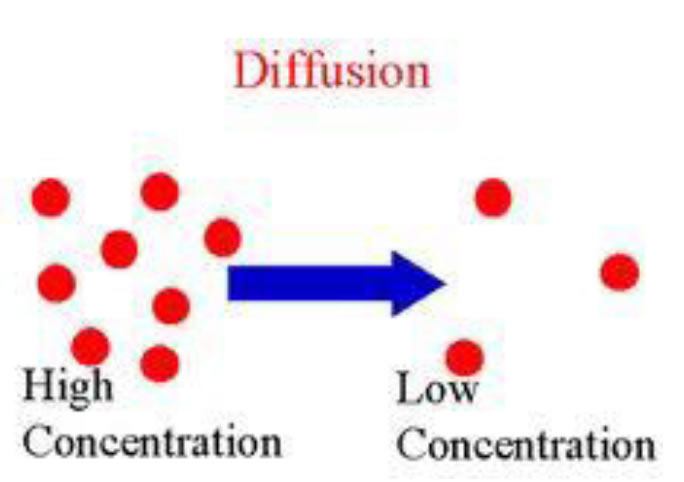
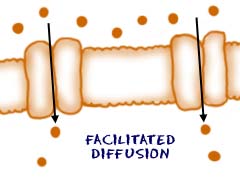
What type of cell transport is shown?
Passive Transport
Active Transport
What is it called when molecules move across the cell membrane from an area of high concentration to an area of low concentration through a transport/tunnel/carrier protein?
Diffusion
Osmosis
Active Transport
Facilitated Diffusion


What type of cellular transport is shown?
diffusion
osmosis
exocytosis
protein pump
endocytosis

What type of cellular transport is shown?
diffusion
osmosis
facilitated diffusion
protein pump
endocytosis

What type of cellular transport is shown?
diffusion
osmosis
exocytosis
protein pump
endocytosis

What type of cellular transport is shown?
diffusion
osmosis
exocytosis
protein pump
endocytosis

What type of cellular transport is shown?
diffusion
osmosis
exocytosis
protein pump
endocytosis

What type of cellular transport is shown?
diffusion
osmosis
facilitated diffusion
protein pump
endocytosis

What type of cellular transport is shown?
diffusion
osmosis
exocytosis
protein pump
endocytosis
when some molecules can cross the membrane while others cannot.

What type of cellular transport is shown?
diffusion
osmosis
exocytosis
protein pump
endocytosis
Which of the following are in ALL cell types?
genetic material
ribosomes
cell membrane
cytoplasm
endoplasmic reticulum
How can you tell a prokaryotic cell from a eukaryotic cell?
Prokaryotic cells have a nucleus and membrane bound organelles.
Eukaryotic cells have a nucleus and membrane bound organelles.
Eukaryotic cells have no nucleus, but do have a nucleoid for their genetic information.
Plant cells are prokaryotic cells.
How can you tell a plant cell from an animal cell?
Plant cells will have a central vacuole, chloroplasts, and a cell wall.
Animal cells will have chloroplasts and mitochondria.
Plant cells will be circular and won't have mitochondria.
Animal cells have a cell wall.

The pictured cell is most likely
prokaryotic
eukaryotic
plant
animal

The pictured cell is most likely
animal
plant
bacteria

The pictured cell is likely
prokaryotic
eukaryotic
a new life form never seen before

The structure labeled A is the
endoplasmic reticulum
Golgi apparatus
nucleus
mitochondria
ribosome
The structure labeled C is the
endoplasmic reticulum
Golgi apparatus
nucleus
mitochondria
ribosome
The structure labeled F is the
endoplasmic reticulum
Golgi apparatus
nucleus
mitochondria
ribosome
Which organelles function in making or modifying proteins for the cell?
nucleus
endoplasmic reticulum
Golgi
ribosome
mitochondria
Which organelles are used in energy conversions?
mitochondria
chloroplast
nucleus
ribosome
Which organelle is used to digest, or break down, substances for the cell?
lysosome
vacuole
chloroplast
ribosome
Which organelles are used in energy conversions?
mitochondria
chloroplast
nucleus
ribosome
What is the function of cell membranes?
create proteins for the cell
determine what may enter/exit the cell
digest food for the cell
create energy for the cell
Which types of cell have a cell membrane?
bacteria
plant
animal
all cells
How does the fluid mosaic model describe the cell membrane?
selectively permeable
impermeable
round
angry

Which part of the membrane is labeled d?
phosphate head of phospholipid
fatty acid tails of phospholipid
cholesterol
transport protein
bilayer
Which part of the membrane is labeled e?
phosphate head of phospholipid
fatty acid tails of phospholipid
cholesterol
transport protein
bilayer
Which part of the membrane is labeled f?
phosphate head of phospholipid
fatty acid tails of phospholipid
cholesterol
transport protein
bilayer
Which part of the membrane is labeled j?
phosphate head of phospholipid
fatty acid tails of phospholipid
cholesterol
transport protein
bilayer
Which part of the membrane is labeled i?
phosphate head of phospholipid
fatty acid tails of phospholipid
cholesterol
transport protein
bilayer

Why do phospholipid heads face out into the cell's environment, and in towards the cytoplasm?
They are hydrophilic, and those are places that have water.
They are hydrophobic, and those are places that have water.
They are hydrophilic, and those places to not normally have water.
They are hydrophobic, and try to avoid water by facing each other.

Why do phospholipid tails face towards other phospholipid tails in a watery environment?
They are hydrophilic, and those are places that have water.
They are hydrophobic, and those are places that have water.
They are hydrophilic, and those places to not normally have water.
They are hydrophobic, and try to avoid water by facing each other.
Why do phospholipids always form a bilayer in a watery environment?
To shield the hydrophobic tails from the water, and orient the hydrophilic heads towards it
To shield the hydrophobic heads from the water, and orient the hydrophilic tails towards it
They always form 2 layers with heads of one phospholipid next to tails of the next phospholipid
Because groupings of three are bad luck

What is the purpose of cholesterol in the cell membrane?
To keep the membrane flexible
To transport things in/out of the cell
To shield the hydrophobic tails from water
To get to the other side
What is the purpose of cholesterol in the cell membrane?
To keep the membrane flexible
To transport things in/out of the cell
To shield the hydrophobic tails from water
To get to the other side

If a substance requires a transport protein to get in/out of the cell, what types of transport might be required?
molecular pump
facilitated diffusion
movement with vesicles
osmosis
diffusion
How is passive transport different from active transport?
Passive transport does not require the cell to spend any energy.
Active transport does not require the cell to spend any energy.
Passive transport is for plant cells, active transport is for animal cells.
What is the purpose of Mitosis?
Growth of an organism and Repair of damaged tissue
To help the body get rid of extra cells
To increase the amount of classwork you have to do
To get rid of the nucleus


Structure (c) is a ____. Hint: It is one half of the X shape.
chromosome
chromatid
centromere


In interphase, the cell is
multiplying chromosomes
growing and copying DNA
destroying DNA
moving inside
In interphase, the cell is
multiplying chromosomes
growing and copying DNA
destroying DNA
moving inside

What stage of mitosis is this?
Interphase
Anaphase
Cytokinesis
Prophase


