
 Worksheets
MATTER AND CHANGE
Total questions: 110
Worksheet time: 1hrs 4mins
Which of the following is not a homogeneous mixture?
blood
low-fat milk
soda with ice
coffee
Which of the following is not a chemical reaction?
melting of lead
spoiling of food
drying of leaves
rusting of iron
The _____________ is a logical, systematic approach to the solution of a scientific problem.
scientific method
steps
procedure
experiment
During any chemical change, the mass of the products is
always less than the mass of the reactants.
always greater than the mass of the reactants.
always equal to the mass of the reactants.
sometimes different than the mass of the reactants.
Which of the following is NOT an example of matter?
Sunglasses
Beach Towel
Sunlight
Water
The study of matter and its changes is called
Biology
Chemistry
Physics
None of the above
The symbol for the element potassium is ___.
P
Po
K
Pt
Solids, liquids, and gases are three phases of matter that
Have mass
Take up space
Are made up of atoms
All of the above
Which of the following is NOT a pure substance?
Element
Compound
Mixture
Molecule
Diamond is known for its
Hardness
Reactivity
Flammability
None of the above
Helium is used in balloons because it is
Reactive to rubber
Lighter than air
Flammable
A colored gas
The steps for solving a conceptual problem are
solve and evaluate.
analyze, solve, and evaluate.
analyze, calculate, and evaluate.
analyze and solve.
Which property of a substance is not affected by a physical change?
Reactivity
Size
Position
Shape
The different substances in a mixture
keep their physical properties
form new molecules
cannot be separated
combine chemically
Which of the following is NOT a potential sign of chemical change?
Change in odor
Boiling
Fizzing
Change in color
Which of the following causes a chemical change?
Moving
Melting
Burning
Shattering
Which of the following is an example of a gas-liquid mixture?
Coffee with milk
A carbonated soda
Ice cubes
A helium balloon
Which of the following is an element?
Steel
Brass
Bronze
Iron
Unlike a mixture, a pure substance has
Atoms
Molecules
A specific size
A fixed composition
Which of the following is an example of a chemical change?
Ice melting
Paint fading
Pounding gold into a coin
A puddle evaporating
Which of the following is a homogeneous mixture?
Diamond
Milk
Sulfuric Acid
Iron
Which of the following is a heterogeneous mixture?
Ammonia
A dog
Bronze
Carbon dioxide
Which of the following is an example of an element?
Kryptonite
Copper metal
Sulfuric Acid
Ammonia
Which of the following is an example of a compound?
Titanium
Dry Ice
Radium
Helium
cutting a piece of paper in half
sugar is dissolved into hot tea
During the analyze step for solving a numeric word problem, you
identify what is known and unknown and make a plan.
convert a measurement from one unit to another.
Effective problem solving always involves developing a plan and then
implementing the plan.
evaluating the plan.
Matter is anything that has:
mass
volume
mass and volume
substance
Mass is a measurement of:
the amount of particles a substance has.
the space an object occupies
Volume is a measurement of:
the amount of particles a substance has.
the space an object occupies
How could you determine if a golden penny is made of gold?
You wouldn't be able to figure it out.
If it looks like gold, it's gold.
You would test the properties of the gold penny and compare those to the properties of gold.
You would guess.
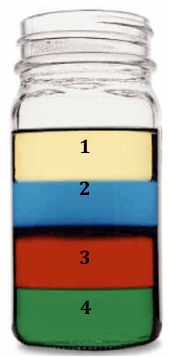
Solid water is called ice; what is gaseous water called?
steam
condensation
What process changes a solid to a liquid?
Melting
Freezing
Evaporation
Condensation
What process changes a gas to a liquid?
Melting
Freezing
Evaporation
Condensation
What process changes a gas to a solid?
Evaporation
Condensation
Deposition
Sublimation
What process changes a liquid to a solid?
Sublimation
Condensation
Liquification
Solidification
An endothermic process involves...
the removal of heat
the addition of heat
An example of an endothermic process is...
Freezing
Deposition
Evaporation
Condensation
An example of an exothermic process is...
Freezing
Boiling
Sublimation
Melting
Snow results from the process called...
Freezing
Deposition
Condensation
Solidification
Fog results from the process called...
Evaporation
Boiling
Condensation
Liquidification
What state of matter is MOST organized?
Solid
Liquid
Gas
What state of matter has the MOST kinetic energy?
Solid
Liquid
Gas
What state of matter takes the shape of its container but has a fixed volume?
Solid
Liquid
Gas
What state of matter is EASIEST to compress?
Solid
Liquid
Gas
What state of matter has molecules that move at a moderate speed?
Solid
Liquid
Gas
Adding heat to a substance...
can change its state of matter
speeds up the molecules
adds kinetic energy
all of these are true
Removing heat from a substance...
weakens the connection between molecules
slows down the molecules
makes molecules less organised
all of these are true
The point at which a liquid has enough energy to become a gas is called its...
boiling point
melting point
The point at which a liquid has lost enough energy to become a solid is called its...
melting point
freezing point
Select all that apply
Which terms refer to physical changes?
burning
rusting
freezing
breaking
boiling
A change that alters a substance without changing its composition is a(n)
physical change
chemical change
Which is a transition of matter from one state to another?
nuclear change
chemical change
phase change
extrinsic change
A process that involves one or more substances changing into new substances is called a(n)
physical change
phase change
chemical change
physical reaction
Cutting paper, crumpling foil, and boiling water are all examples of
shape shifting
chemical changes
physical changes
chemical reactions
Rusting and the spoilage of food are two examples of
shape shifting
chemical changes
physical changes
decomposition
The terms decompose, explode, rust, oxidize, corrode, tarnish,
ferment, burn, and rot generally refer to
physical changes
chemical changes
phase changes
combination reactions
A change in properties must always accompany a(n)
combustion reaction
physical change
state change
chemical change
According to the law of conservation of mass, the mass of the reactants in a chemical reaction ______________ the mass of the products.
is greater than
is less than
equals
cancels
In a chemical reaction, mass is neither created nor destroyed, according to the
law of definite composition
law of multiple proportions
law of conservation of energy
law of conservation of mass
A chemical reaction always produces a change in
color
the state of matter
pressure
properties
Select all that apply
Which are true about chemical reactions, according to the law of conservation of mass?
The mass of the products equals the mass of the reactants.
The total mass involved remains constant.
The total number of product substances is equal to the total number of reactant substances.
Mass is neither created nor destroyed.
The substances involved remain unchanged.
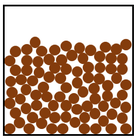
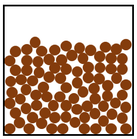
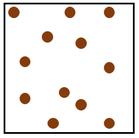
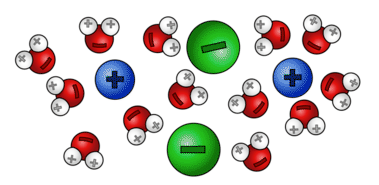
Which state symbol best describes the phase of the substance shown in this particle view diagram?
(s)
(l)
(g)
(aq)
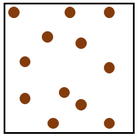
Which of the following best describes the phase of this substance?
compressible with fixed shape
compressible with changeable shape
rigid with fixed shape
rigid with changeable shape
Which of the following shows the phase of a substance whose shape and volume cannot change?
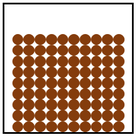
Which of the following is a mixture?
sucrose
carbon dioxide
sodium chloride
air
Which of the following phrases describes a mixture?
components combined chemically
components cannot be seen
composition may vary
components cannot be separated
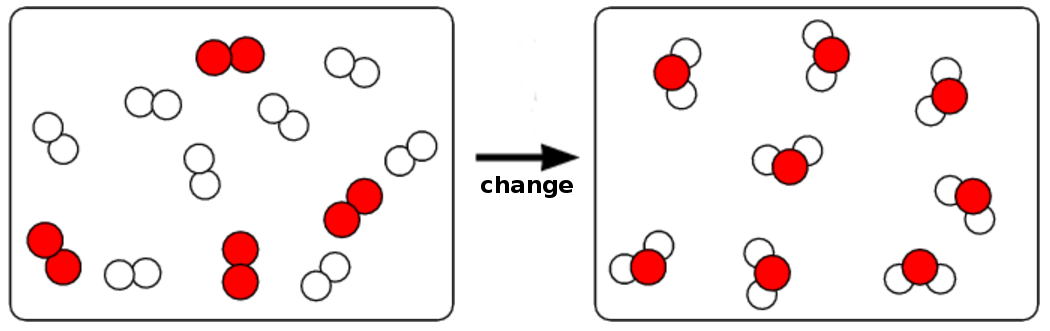
Which of the following best describes the change shown in this diagram?
Physical change because a new substance was created.
Physical change because no new substance was created.
Chemical change because a new substance was created.
Chemical change because no new substance was created.
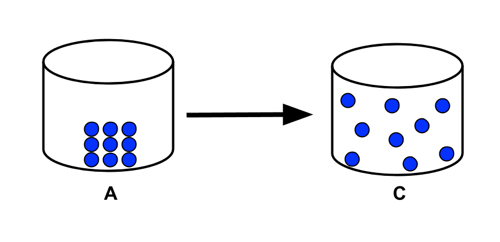
Which of the following best describes the change shown in this diagram?
Physical change because a new substance was created.
Physical change because no new substance was created.
Chemical change because a new substance was created.
Chemical change because no new substance was created.
Increasing the temperature of a substance causes the molecules to...
move faster
move slower
break their bonds
do nothing
For most substances, the phase of matter that has the highest density is...
solid
liquid
gas
aqueous
Which technique is used to separate homogeneous mixtures?
Br2 has weaker filtration
distillation
dissolving
magnetism
Which of the following separation techniques could you use to separate an insoluble solid from a liquid?
(Hint: insoluble means that the substance will not dissolve)
crystallization
distillation
filtration
chromatography
What type of mixture is chocolate chip ice cream?
Homogeneous
Heterogeneous
Which of the following are mixtures?
Sodium bicarbonate (NaHCO3)
Steel (Fe + C)
Salt water (NaCl + H2O)
Gold (Au)

What type of matter is this?
Compound
Element
Mixture of elements
Mixture of compounds

What type of matter is this?
Element
Compound
Mixture of elements
Mixture of compounds

How do you identify a compound?
Same type of atoms and molecules
Same type of atoms different type of molecules
Different type of atoms same type of molecules
Different type of atoms and molecules
Which of the following are evidences of a chemical change? (select all)
sudden change of color
Change of shape by tearing
Change of size by pounding flat
release of odor
Which of the following are physical changes? (Select all)
Cutting your hair
Fruit rotting
Water boiling
Dropping an alka-seltzer in water
Which of the following are examples of chemical changes? (Select all)
Burning paper
Cutting paper
Iron rusting
Writing on paper
Wet clothes become dry
condensation
sublimation
evaporation
melting
Dew appears on grass
deposition
freezing
evaporation
condensation
kool-aid becomes a popsicle
freezing
condensation
evaporation
sublimation
frost becomes fog
melting
evaporation
sublimation
deposition
mirror fogs up during a shower
evaporation
condensation
deposition
melting
ice cream becomes "ice soup" :(
deposition
evaporation
melting
sublimation
chocolate left in sun for too long...
melting
evaporation
deposition
condensation
rain turns into snow
freezing
deposition
melting
condensation
steam becomes ice...
condensation
deposition
sublimation
evaporation
. What do you call the process of breaking down water molecules?
Panning
Filtration
Electrolysis
Distillation
Which of the following is a compound?
aluminum
milk
table sugar
air

