wayground logo

Free Printable Worksheets

Font size

S
M
L
XL
Worksheets

Energy Changes and Thermal Energy

Total questions: 130

Worksheet time: 2hrs 25mins

Name
Class
Date
1.
What energy transformations take place when a battery-operated radio is in use?
a)
Electrical to chemical to light
b)
Sound to chemical to mechanical
c)
Chemical to electrical to sound
d)
Light to electrical to thermal
2.
Which of the following devices transforms electrical energy into mechanical energy?
a)
An e-reader
b)
a fan
c)
a manual pencil sharpener
d)
ipod
3.

Which of the following best describes the energy transformations that occur when a flashlight that runs on batteries is turned on?

a)

chemical to mechanical to electrical to radiant

b)

radiant to electrical to sound

c)

chemical to radiant to mechanical to electrical

d)

electric to radiant to chemical

4.
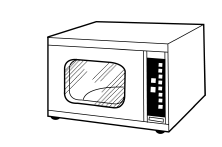
The picture shows a microwave oven. As a microwave oven is operated, electrical energy is transformed into all of the following types of energy EXCEPT —
a)
solar
b)
light
c)
thermal
d)
mechanical
5.
Turning on a lamp is an example of energy transformation from electrical to 3 forms of energy. Which of these is NOT created by the lamp?
a)
radiant
b)
light
c)
heat
d)
chemical
6.
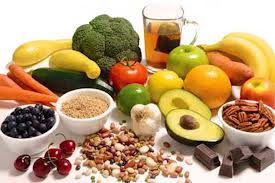
Which of the following energy transfers occurs when food is digested?
a)
chemical to mechanical
b)
radiant to nuclear
c)
mechanical to potential
d)
thermal to chemical
7.
In energy transformations, "wasted energy" usually takes what form?
a)
heat
b)
chemical energy
c)
light
d)
sound waves
8.
On a roller coaster, where is maximum kinetic energy?
a)
At the bottom of a big hill
b)
When going around a corner
c)
When going upside down
d)
At the top of a big hill
9.
According to the Law of Conservation of Energy, energy cannot be _________ or ____________. 
a)
destroyed, destroyed
b)
created, saved
c)
created, destroyed
d)
lost, found
10.
Gravitational potential energy depends on the ________ and ________ of the object. 
a)
Height and mass
b)
Friction and movement
c)
Mass and Movement
d)
Height and Friction 
11.
The roller coaster cart has the most gravitational potential energy at position-
a)
W
b)
X
c)
Y
d)
Z
12.
Energy of motion is which type of energy?
a)
Potential
b)
Kinetic
c)
Sound
d)
Gravitational
13.
What kind of energy is represented in the picture?
a)
Thermal
b)
Chemical
c)
Sound
d)
Nuclear
14.

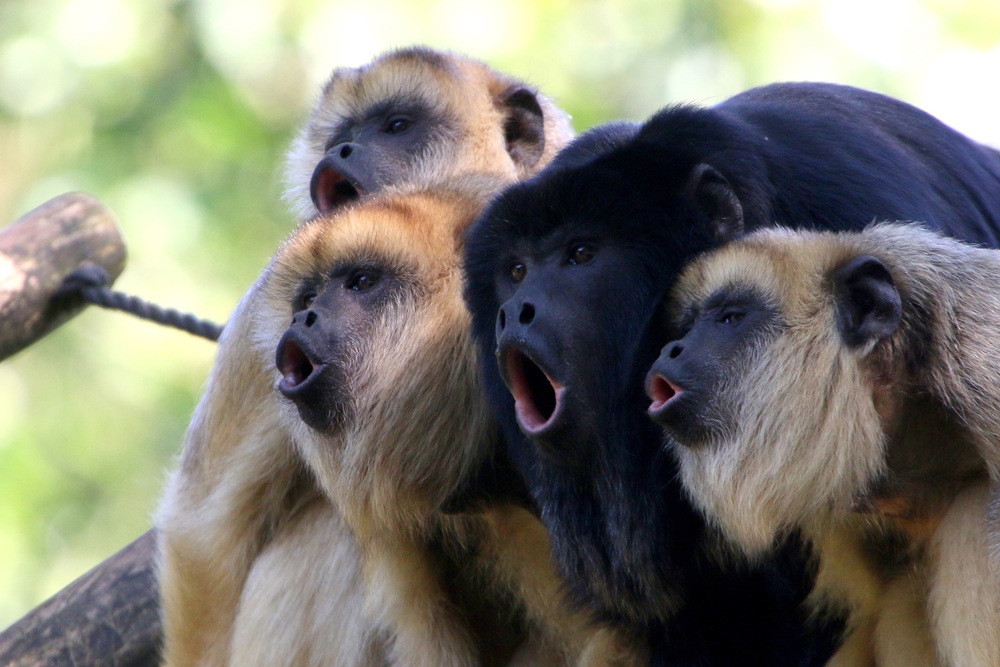
What energy transformation occurs as howler monkeys loudly call to each other in the forest?

a)

Chemical --> Mechanical --> Sound

b)

Chemical --> Sound --> Thermal

c)

Sound --> Chemical --> Radiant

d)

Mechanical --> Chemical --> Sound

15.
Energy transformations occur when...
a)
energy is created through conduction
b)
energy changes from one form to another
c)
two forces slide together that are touching
d)
a chemical reaction takes place
16.
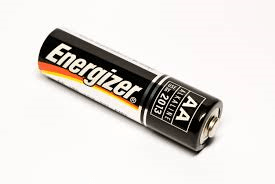
what type of energy is stored in a battery?
a)
electrical
b)
chemical
c)
thermal
d)
mechanical
17.
Mechanical Energy is transferred to _____ Energy.
a)
Solar
b)
Mechanical
c)
Electrical
d)
Potential
18.
Electrical -> Mechanical -> Sound 
a)
A triple beam balance measuring an object’s mass
b)
A pencil sharpener plugged into a wall outlet
c)
A projector displaying a diagram on the screen
d)
A working flashlight used to light up a dark corner
19.

What transfer of heat is responsible for cooking the chicken?

a)

radiation

b)

convection

c)

electrical

d)

conduction

20.
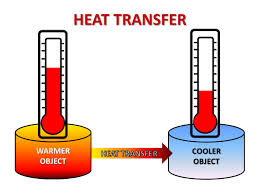
Heat transfers from an area of ____temperature to an area of ___ temperature.
a)
high to low
b)
low to high
c)
high to high
d)
It can travel high to low and low to high. 
21.
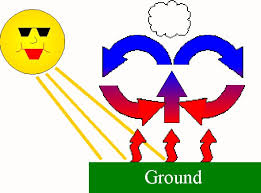
Warm air rises and the cool air sinks demonstrates this type of heat transfer. 
a)
conduction
b)
convection
c)
radiation
d)
Insolation 
22.
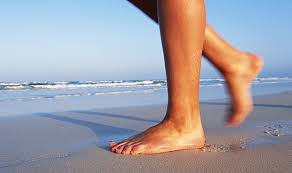
Walking on the warm sand sand with your bare feet demonstrates this type of heat transfer. 
a)
conduction
b)
convection
c)
radiation
23.
Mechanical energy
a)
energy built up before being in motion
b)
energy released in a chemical reaction
c)
energy of motion
d)
sum of kinetic and potential energy
24.
_________ is a force that resists the sliding of two surfaces that are touching.
a)
Ficiton
b)
Friction
c)
Function
d)
Fashion 
25.
A material that transfers heat very well is called a _________.
a)
insulator
b)
conductor
c)
radiator
d)
transistor
26.
A material that does not allow heat to transfer well is called a(n) _______.
a)
conductor
b)
blocker
c)
insulator
d)
blanket
27.
This is an example of a(n) _____________.
a)
Insulator
b)
Conductor
c)
Law of Conservation of Energy
d)
Nonrenewable resource
28.
This is an example of a(n) _____________.
a)
Insulator
b)
Electromagnetic force
c)
Conductor
d)
Insurgent
29.
The spoon in this picture is an example of ______________.
a)
Convection current
b)
Conduction
c)
Currency
d)
Convection
30.
The water in this picture demonstrates an example of _________.
a)
Convection
b)
Conduction
c)
Radiation
d)
Insulation
31.

Most of the world's energy is solar. Solar energy is energy from the

a)

Earth

b)

Solar panels

c)

Sun

d)

Moon

32.

What energy transformation occurs when an alarm clock rings?

a)

electrical to mechanical, sound

b)

chemical to mechanical,sound

c)

electrical to thermal, chemical

d)

mechanical to mechanical, thermal, sound

33.

What are the energy transformations that occur when a person rides a bike to the top of a hill?

a)

mechanical, thermal,

b)

chemical, mechanical, thermal, electrical

c)

chemical, mechanical, thermal, electrical, radiant

d)

chemical, mechanical, thermal

34.

List the energy transformations of this object.

a)

Electrical → Mechanical/ Radiant Energy

b)

Electrical → Mechanical / Sound / Thermal Energy

c)

Mechanical → Chemical / Thermal energy

d)

Mechanical→ Electrical energy

35.

What energy transformations does fire have?

a)

Thermal→ Sound Energy

b)

Thermal→ Radiant energy

c)

Chemical → Thermal energy

d)

Chemical→ Sound energy

36.
What is the process by which heat transfers from one particle of matter to another when the particles collide?
a)
conduction
b)
convection
c)
expansion
d)
radiation
37.
The higher the average kinetic energy the __________________ 
a)
the higher the volume
b)
the higher the mass
c)
the higher the temperature
d)
the higher the density
38.
Potential or kinetic?
Stretched bow and arrow?
a)
kinetic
b)
potential
39.
Potential or kinetic?
Running?
a)
potential
b)
kinetic
40.
fire, friction
a)
heat
b)
light
c)
sound
d)
electrical
41.
light bulbs, Sun
a)
mechanical
b)
chemical
c)
heat
d)
light
42.
talking, radio
a)
sound
b)
light
c)
mechanical
d)
chemical
43.
batteries, food, gasoline
a)
light
b)
heat
c)
chemical
d)
mechanical
44.
windmill, water power
a)
electrical
b)
chemical
c)
mechanical
d)
sound
45.

Which best explains how this roasting marshmallows happens?

a)

Heat from the fire is conducted into the marshmallow.

b)

Heat from the fire is radiated into the marshmallow.

c)

The coolness of the marshmallow is conducted into the fire.

d)

The coolness of the marshmallow is radiated into the fire.

46.

Which best describes heat transfer by radiation?

a)

A slice of bacon frying in a pan.

b)

A pot on a stove boiling water.

c)

Cooking a hotdog in a microwave.

d)

A hot air balloon.

47.

When choosing materials to build a fireplace, why is brick a better choice than metal?

a)

Brick is a conductor.

b)

Brick is heat resistant.

c)

Metal is a conductor.

d)

Meat is heat resistant.

48.

Popcorn is made from corn kernels. What happens when kernels are heated in a microwave?

a)

The kernels expand.

b)

The kernels dissolve.

c)

The kernels become hard and brittle.

d)

The kernels stick together to form ball.

49.

Which of the following best describes CONVECTION?

a)

When heat is transferred through waves.

b)

When heat is transferred through objects that are touching.

c)

The movement of gas or liquid in which warmer parts move up and the colder parts moves down.

50.

What kind of heat transfer is occurring when the sun warms the sand?

a)

Conduction

b)

Convection

c)

Radiation

d)

All of them

51.

What heat transfer happens when you put the pan in the open stove?

a)

Conduction

b)

Convection

c)

Radiation

d)

None

52.

Clark accidentally grabbed the handle of the hot pt. This shows ______________.

a)

radiation

b)

conduction

c)

convection

53.

This is the transfer of thermal energy through "space".

a)

conduction

b)

radiation

c)

convection

d)

spaceship

54.

The transfer of energy through molecules in direct contact is ...

a)

Heat

b)

Conduction

c)

Convection

d)

Radiation

55.
The flow of energy that occurs when a warm liquid or gas rises ..
a)
Heat
b)
Conduction
c)
Convection
d)
Radiation
56.
The transfer of energy by electromagnetic waves.
a)
Heat
b)
Conduction
c)
Convection
d)
Radiation
57.

As you touch a hot stove the heat transfers -

a)

from your hand to the stove by conduction.

b)

from the stove to your hand by conduction.

c)

from your hand to the stove by radiation.

d)

from the stove to your hand by radiation.

58.
In a lava lamp, the warm part rises and the cool part sinks.  This is an example of 
a)
heat computation
b)
convection
c)
conduction
d)
radiation
59.
_________________ are observed in liquids and gases (air).
a)
convection currents
b)
radiation waves
c)
thermal conductivity
d)
conductors
60.
The rubber that makes up the handle on the pan is considered a thermal ___________________ because thermal energy moves slowly through this material.
a)
conductor
b)
insulator
c)
regulator
d)
temperature
61.

True or False?

Heat and temperature are different.

a)

True

b)

False

62.

As thermal energy increases, kinetic energy also...

a)

Increases

b)

Decreases

c)

Remains the same

63.
Why is there more thermal energy in an iceberg than in a pot of boiling water?    
a)
a.  The pot insulates the heated molecules
b)
b.  Most icebergs are fairly warm to the touch
c)
  c.  Icebergs contain many more molecules than pots of water
d)
  d.  Water does not hold heat very well
64.

What tool is used to measure temperature?

a)

a stove

b)

a beaker

c)

a thermometer

d)

a glove

65.

Metal objects heat up more slowly than plastic or wooden objects?

a)

True

b)

False

66.

What materials would be good insulators for a handle on a pan or pot that would be used on the stove?

a)

wood or plastic

b)

metal or rubber

c)

wood or rubber

d)

copper or steel

67.

Heat moves easily through materials called ____

a)

Wood

b)

Plastic

c)

Rubber

d)

Metal

68.

What type of thermal energy transfer is the illustration an example of?

a)

Conduction

b)

Convection

c)

Radiation

d)

Evaporation

69.
When holding a cup of ice water, your warm hand becomes cold. How does the heat transfer?
a)
From the cold cup to your hand
b)
From the cold cup to the warm air
c)
From the ice to your hand
d)
From your warm hand to the cold cup.
70.
Why do you want to live in a home with good insulation during the cold winter months?
a)
The insulation will keep you cool during winter.
b)
If there is good insulation, the thermal energy will not be able to move easily from inside the warm home to the cool areas outside the building.
c)
If there is not good insulation, the air inside the home will become too hot.
d)
A house with good insulation will keep the warm air in the attic.
71.
Heat transfer in wind.
a)
conduction
b)
convection
c)
radiation
72.
Which ice cube will melt first?
a)
The large cube
b)
The small cube
c)
They will melt at the same rate
73.
The Gulf Stream is a current that brings warm ocean water from the south to the north. What type of heat transfer is this?
a)
conduction
b)
convection
c)
radiation
d)
insulation 
74.
When you use a microwave, what is the main way that heat is transferred?
a)
Convection
b)
Conduction
c)
Radiation
75.
Kyra placed a beaker of water at 50° C in a room with an air temperature of 20° C. At what temperature will the water stop decreasing?
a)
b)
20°
c)
35°
d)
50°
76.

Energy is defined as

a)

power

b)

food

c)

ability to produce heat

d)

ability to do work or cause change

77.

Thermal energy is associated with

a)

kinetic and potential energy of particles

b)

position or shape

c)

chemical reactions

d)

chemical bonds

78.

The diagram above represents a thermometer. Which of the following best explains how the thermometer works?

a)

Liquid changes to a gas when heated.

b)

Gas changes to a liquid when heated.

c)

Liquids expand when heated and contract when cooled.

d)

Liquids contract when heated and expand when cooled.

79.

Water’s specific heat is 4,180 and iron’s is 450. Which will heat up faster?

a)

water

b)

iron

c)

oil

d)

air

80.

The measure of the average kinetic energy of particles in an object is its

a)

temperature

b)

heat

c)

thermal energy

d)

hotness

81.

The energy needed to heat up 1kg of a substance by 1K, is its

a)

temperature

b)

heat

c)

specific heat

d)

thermal heat

82.
What happens to particles as they heat up?
a)
They slow down
b)
Nothing
c)
They don't move
d)
They speed up
83.
What happens to particles as they cool down?
a)
They slow down
b)
Nothing
c)
They don't move
d)
They speed up
84.
As you touch a hot stove the heat transfers -
a)
from your hand to the stove
b)
from the stove to your hand
c)
It doesn't transfer
85.
______ occurs when a cooler, denser mass of a liquid or gas replaces a warmer, less dense mass of a gas or liquid
a)
Convection
b)
Conduction
c)
Radiation
86.
What would be the effect on the particles if more heat is supplied to the system?
a)
They would slow down
b)
They would stop moving
c)
They would speed up
d)
There would be no effect
87.
A high specific heat means...
a)
It heats up quickly with energy added
b)
It requires more energy to change temperature
88.
If I heat up 2 pans of water one has 100 mL in it and one has 1000mL. Which one heats up the fastest?
a)
100 mL
b)
1000 mL
c)
They both heat up at the same speed
d)
They cool down.
89.
An insulator is a material that:
a)
Transfers thermal and electrical energy
b)
Transfers electrical energy and slows thermal energy
c)
Slows electrical energy and allows thermal energy to pass
d)
Slows thermal and electrical energy from transfering
90.
Mittens help keep your hands warm in winter because:
a)
They are conductors of heat.
b)
They are fuzzy.
c)
They are conductors of electrical energy.
d)
They are insulators.
91.

Thermal energy that is transferred through empty space

a)

Convection

b)

Conduction

c)

Radiation

d)

Temperature

92.

Which of the following is a factor that determines thermal energy?

a)

Mass

b)

Heat

c)

Transfer of thermal energy

d)

Conduction

93.

Near the ceiling of a room the air is warmer. The warm air rises because of________.

a)

conduction

b)

radiation

c)

convection

94.

The liquid in a thermometer ______________ as the temperature increases.

a)

expands

b)

disappears

c)

freezes

d)

explodes

95.

An increase in the volume of a substance when the temperature increases is called ___________________________________.

a)

kinetic energy

b)

thermal expansion

c)

temperature

d)

heat

96.

What is Thermal Contraction

a)

The movement of particles.

b)

A decrease in a materials volume when its temperature decreases

c)

The movement of fluids in a cycle because of convection

d)

A material through which thermal energy does not flow easily.

97.

Ironing a shirt is an example of:

a)

condensation

b)

evaporation

c)

conduction

d)

convection

98.

What type of thermal energy transfer is occurring when you are warmed by the sun?

a)

Convection

b)

Conduction

c)

Radiation

d)

Solar

99.

In this example, explain the movement of thermal energy in the glass.

a)

Heat is moving from the lemonade to the glass

b)

Heat is moving from the lemonade to the ice

c)

Cold is moving from the ice to the lemonade

d)

Cold is moving from the ice to the glass

100.

Copper wire is a good example of a _____________.

a)

Conductor

b)

Insulator

c)

Metal

d)

Thermometer

101.

Which statement is true?

a)

Oranges contain Elastic Energy

b)

Food contains Chemical Energy

c)

Phone on the table doesn't contain Gravitational Energy

d)

Radiator contains Nuclear Energy

102.

Which 2 types of energy does the object in the image use?

a)

Electric and Thermal

b)

Nuclear and Elastic

c)

Chemical and Mechanical

d)

Sound and Elastic

103.
What type of energy is in this picture?
a)
Kinetic
b)
Potential
c)
Chemical
d)
Sound
104.
Energy that is stored in the nucleus of an atom is called _________ energy.
a)
Chemical
b)
Nuclear
c)
Gravitational
d)
Elastic
105.
Electromagnetic energy (such as visible light waves, X-rays, gamma rays and radio waves) is called _______ energy.
a)
Thermal
b)
Radiant
c)
Sound
d)
Electrical
106.
Food, batteries, and fuel such as gasoline are similar because they are sources of _________ energy.
a)
chemical energy
b)
kinetic energy
c)
mechanical energy
d)
heat energy
107.
What type of energy includes both kinetic and potential energy?
a)
mechanical energy
b)
chemical energy
c)
heat energy
d)
sound energy
108.
What is the transformation shown in the picture?
a)
chemical to electrical to light
b)
electrical to chemical to light
c)
light to chemical to electrical
d)
chemical to light to electrical
109.
What is energy made available by the flow of electric charge through a conductor?
a)
electrical energy
b)
solar energy
c)
mechanical energy
d)
potential energy
110.
What is the movement of an electric charge from one place to another?
a)
energy
b)
reflect
c)
refract
d)
electric current
111.

Energy is found in many different forms, but it can be classified into two distinct categories: kinetic energy and ________________ energy.

a)

electrial

b)

potential

c)

radiant

d)

thermal

112.

Heat is another name for

a)

thermal energy

b)

electrical energy

c)

mechanical energy

d)

gravitational energy

113.

A __________________ is the the substance through which sound travels.

a)

medium

b)

conduct

c)

stored

d)

potential

114.

Sound Energy is

a)

Kinetic Energy

b)

Potential Energy

115.

Splitting the nuclei of atoms in a process called fission

a)

Sound Energy

b)

Electrical Energy

c)

Mechanical Energy

d)

Nuclear Energy

116.

What is thermal energy?

a)

Average kinetic energy of object

b)

Total kinetic energy of object

c)

Energy transferred from one object to the other

d)

Heat

117.

When measuring this, the SIZE of the object MATTERS. *The larger the object, the more of this it has.*

a)

Thermal Energy

b)

Temperature

118.

Which of these glasses has a greater TEMPERATURE?

a)

Glass A

b)

Glass B

c)

They have the same temperature.

d)

Neither has a temperature.

119.

Which of these glasses has more THERMAL ENERGY?

a)

Glass A

b)

Glass B

c)

They have the same thermal energy.

d)

Neither has thermal energy.

120.

Which of these objects has the highest TEMPERATURE?

a)

Iceberg

b)

Ice cube

c)

Sun

d)

Boiling pot of water

121.

Two substances with the same number of molecules and same temperature will have

a)

Different thermal energy

b)

The same thermal energy

122.

If this ice cube was added to the glass of water that would happen to the flow of thermal energy?

a)

The water would heat the ice

b)

The ice would cool the water

c)

Nothing

123.

What is temperature?

a)

Average kinetic energy

b)

Total kinetic energy

c)

Energy transferred between two objects

d)

Heat

124.

Heated air moves from the baseboard heaters to the rest of the room in a process called

a)

conduction

b)

convection

c)

radiation

d)

insulation

125.

5. Two bouncy balls have the same temperature but different masses. Which ball has more thermal energy?


The objects are made of the same type of matter.

a)

a. the bouncy ball with less mass

b)

b. the bouncy ball with no mater

c)

c. the bouncy ball with more matter

d)

d. the bouncy ball with more mass

126.

7. To move from one object to another or from one place to another is called ______

a)

a. system

b)

b. movement

c)

c. equilibrium

d)

d. transfer

127.

8. When things get hotter, its molecules are moving _____ and have ______.

a)

a. faster; less kinetic energy

b)

b. slower, less kinetic energy

c)

c. faster, more kinetic energy

d)

d. steady, no kinetic energy

128.

10. As energy is transferred, it ______ in one part of the system as it _______ in another part of the system

a)

a. stays the same, decreases

b)

b. increases, stays the same

c)

c. increases; decreases

d)

d. increases; increases

129.

12. Think about what you've learned about how particle motion is related to temperature.

Select all of the statements that are true.

a)

a. The total kinetic energy of the particles in a substance determines the substance's temperature

b)

b. All particles in a substance are moving at the same speed, and that speed determines the substance's temperature

c)

c. How hot or cold a substance is depends on how fast its particles are moving

d)

d. If the particles in two pure substances have the same average speed, the substances must have the same temperature

130.

After hot cocoa is poured into a cold mug, thermal energy from the _______ is transferred to the _______.

a)

hot cocoa; cold mug

b)

cold mug; hot cocoa

c)

air; hot cocoa

d)

Thermal energy does not get transferred.