
 Worksheets
Amphibians
Total questions: 156
Worksheet time: 3hrs 36mins
Where do amphibians hatch their eggs?
Water
Land
They do not come from eggs

A tadpole has ____________ to breathe
lungs
gills
skin

A frog has ___________ to breathe
lungs
gills
they do not need to breathe

Amphibians are ____________ which means they have a backbone.
Invertebrates
Vertebrates
Skeletons
Amphibians do not have any bones
Frogs keep their skin wet, this helps them ________
take baths
Find food
See better in the water
Breathe with their skin

What is offspring?
the organism (baby) of the parent
An animal born in spring
An animals parent
A season
The changes in structure that some animals go through during stages of their life cycle.
Offspring
Amphibian
Vertebrate
Metamorphsis
Which words describe the skin of a frog?
Hard and leathery
Soft and scaly
soft and moist
Dry and bumpy
What does the term "amphibian" mean?
Single life
Double life
Lives in water
Lives on land

What are the classes of Amphibians?
anura, frog, and urodela
anura, urodela, and apoda
salamanders, frog, lizards
Which kind of amphibians have scales?
apoda (caecilians)
anura (frogs)
urodela (salamanders)
What adult amphibians have lungs?
apoda (caecilians)
anura (frogs)
urodela (salamanders)
all amphibians
What do omnivores eat?
meat
plants
dead bodies
How do adult frogs breathe?
skin absorbs oxygen from air and water
gills
lungs
tail
Baby salamanders use _________ to breathe.
lungs
gills
feet
Adult amphibians are ______________.
omnivorous
herbivorous
carnivorous
Apoda (caecilians) have _______ legs.
4
10
0
2
Amphibians live in __________ and on _________.
water : land
swamps : lava
air : water
A physical trait of urodela (salamanders) is they have _________.
tailless
scales
lungs
Amphibians need water to ______________.
breathe
eat
reproduce
Most amphibians have 4 ____________.
heads
legs
hearts
Where do amphibians live?
water
land
both
Why do amphibians need to live near water even though they have lungs to live on land?
they need to get food and oxygen
they need water to reproduce
the need water to excrete waste
none of these
The Class name "amphibian" is derived from Greek words meaning...
double life
fishlike
froglike
first lunged
The amphibian heart _________.
has 4 chambers
has 3 chambers as larva and 2 chambers as adult
has 2 chambers as larva, 3 chambers as an adult
has 1 chamber
Which of the following is NOT a characteristic of an amphibian?
live on land as adults
they breathe with lungs as adults
they have scales and claws
they have mucus glands to keep them from drying out
Frogs and Toads are classified in the Order___________.
Anura
Apoda
Salamander
Caudata
What is the cavity in which waste, eggs and sperm leave the body of amphibians?
cloaca
kidney
gallbladder
intestine
The male frog gives the female a "firm embrace" during mating. The sperm and eggs are released at the same time. What is this event called?
amplexus
hermaphrodite
budding
regeneration
A person that studies amphibians and reptiles is called a/an_________.
herpetologist
ornithologist
entomologist
ichthyologist
During metamorphosis, what happens to the frog?
lungs replace gills
limbs develop
the tail disappears
All of these
Eggs of amphibians dry out easily because they _______
do not have shells to protect them
are usually laid on land.
are always fertilized internally
Period of rest during summer or winter when the frog body slows down.
torpor
estivation
hibernation
What is the State Amphibian of Alabama?
Red Hills Salamander
Red Salamander
Barking Tree Frog
Red-bellied turtle

Where do most amphibians spend the first part of their life cycle?
on land
in water
on a boat
in trees
Which order is NOT correctly matched?
anura = frogs
apoda = toads
caudata = salamanders
gymnophiona - caecilians

How do adult frogs breathe? (choose all that apply)
skin absorbs oxygen from air and water
gills
lungs
tail

Amphibian means ____.
both land and water
both land and air
both water and air
metamorphosis

Which is NOT an amphibian?
green tree frog
hellbender salamander
gecko lizard
desert toad

The term "ectothermic" means amphibians, fish and reptiles are all ___.
warm blooded.
cold blooded.
filled with ectoplasma.

Salamanders, unlike lizards have
scaled skin.
all limbs the same size.
lungs
amniotic eggs.

Amphibian eggs, like fish eggs are ______..
amniotic
laid in water to avoid drying out
land on land to absorb moisture from air
hatched inside the body and live young are born

Amphibians are the only vertebrate class to not have any __________.
protective skin covering like scales, fur or hair.
claws.
protective coloration.
mating rituals.

Amphibians have many unique adaptations to aid their survival on land, but DO not have ___.
jaws.
flattened skulls.
vertebral column.
scales.

How many chambers in an amphibian heart?
2
3
4
1

On which continent are amphibians NOT found?
south america
australia
antarctica
europe
All amphibian lay eggs.
True
False
Please check ( ✓ ) all the boxes that describe the characteristics of amphibians.
Cold-blooded animals.
Vertebrates (have backbones).
Breathe with lungs, gills and through their skin.
Their bodies are covered with smooth skin without covering.
Have 3 legs.
The eggs look like soft jelly balls.
True
False
How many stages are there in a frog life cycle?
(a)
Frogs and toads are the same.
True
False
What is the third stage called in the life cycle of a frog?
Tadpole
Froglet
Frog
Egg
What is the second stage called in the life cycle of a frog?
(a)
The largest frog is called the Goliath frog or Goliath bullfrog.
True
False
Please check ( ✓ ) all the boxes that describe a frog.
Frogs have slim bodies.
The skin of a frog is smooth, wet and has more colour.
Frogs prefer to leap.
Frogs like to live near water.
Frogs lay eggs in a chain.
Please check ( ✓ ) all the boxes that describe a toad.
The skin of a toad is rough and bumpy, dry and less colour.
Toads prefer the land.
Toads have long legs.
Toads prefer to take short jumps.
Toads have stout bodies.

Amphibians have got...
hair
bare skin
feathers
Choose the amphibian


Choose the amphibian


Choose the amphibian


Choose the amphibian


A ray is an amphibian
True 👍
False 👎

A toad is an amphibian.
True 👍
False 👎

A chameleon is an amphibian.
True 👍
False 👎

A parrot is an amphibian.
True 👍
False 👎

A newt is an amphibian.
True 👍
False 👎

A kangaroo is an amphibian.
True 👍
False 👎

A frog is an amphibian.
True 👍
False 👎

Amphibians are...
Oviparous
Viviparous
Amphibians are ....
toad, frog, and lizard
toad, newt, and salamander
salamander, frog, lizard
Where do amphibians hatch their eggs?
Dimana amfibi menetaskan telur?
Water (air)
Land (tanah)
A tadpole has ____________ to breathe
lungs (paru - paru)
gills (insang)
skin (kulit)
A frog has ___________ to breathe
lungs (paru - paru)
gills (insang)
they do not need to breathe (tidak memerlukan apapun)
Amphibians are ....
Invertebrates (invertebrata)
Vertebrates (vertebrata)
Skeletons (rangka)
Amphibians do not have any bones (Amfibi tidak memiliki tulang)
Frogs keep their skin wet, this helps them ________
Katak menjaga kulitnya tetap basah untuk membantu ______
take baths (mandi)
Find food (mencari makan)
See better in the water (melihat jelas di air)
Breathe with their skin (bernapas dengan kulit)
What does the term "amphibian" mean?
Single life (hidup di satu habitat)
Double life (hidup di dua habitat)
Lives in water (hidup di air)
Lives on land (hidup di darat)

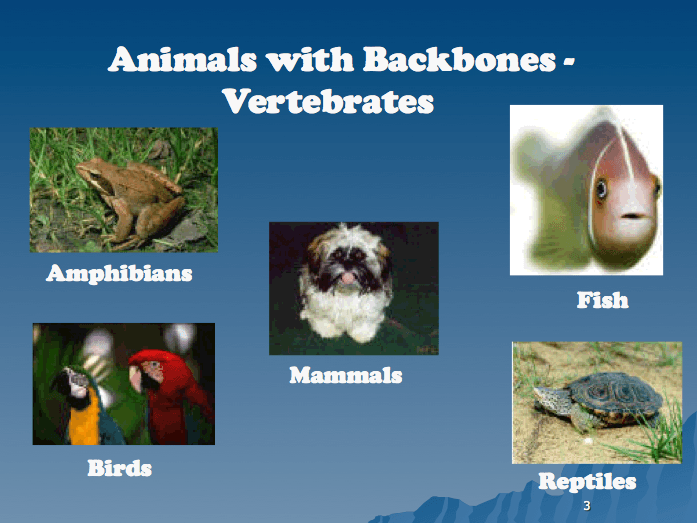
There are five categories of vertebrates. Which one is not a vertebrate?
Mammals
Birds
Insects
Reptiles
Animals that begin their life in the water and later live on land are called...
Birds
Amphibians
Mammals
Reptiles
Where amphibians live when they are young?


What of these animals is NOT an amphibian?


A cold-blooded vertebrate animal of a class that comprises the frogs, toads, newts, and salamanders.
CAECILIAN
AMPHIBIAN
CLOACA
EXTERNAL NARES

A burrowing wormlike amphibian of a tropical order distinguished by poorly developed eyes and the lack of limbs.
TOAD
SALAMANDER
CAECILIAN
FROG

Being cold-blooded, any animal whose regulation of body temperature depends on external sources, such as sunlight or a heated rock surface.
KERATIN
CLOACA
TETRAPOD
ECTOTHERM

A body cavity through which urine and feces are eliminated and acts as the reproductive organ in birds, reptiles, and amphibians,
CLOACA
TYPANUM
CAECILIANN
TETRAPOD

An amphibious animal of the genus rana. Adults live mainly in fresh water.
TOAD
SALAMANDER
FROG
TETRAPOD

The common name for certain frogs, of the family Bufonidae, that are characterized by dry, leathery skin, short legs, and large bumps. Adults live mainly on land.
SALAMANDER
FROG
TOAD
CAECILIAN

A group of amphibians typically characterized by a lizard-like appearance, with slender bodies, blunt snouts, short limbs.
TOAD
FROG
SALAMANDER
ECTOTHERM

The two external openings of the nose, which lead to the nasal cavity in amphibians.
EXTERNAL NARES
TYMPANUM
CLOACA
KERATIN

A vertebrate having four limbs or leg-like appendages.
CLOACA
TETRAPOD
ECTOTHERM
CAECILIAN

Large external oval shape membrane made up of nonglandular skin. It is located just behind the eye. It transmits sound to an amphibians ear.
EXTERNAL NARES
TETRAPOD
CLOACA
TYPANUM
Where do amphibians hatch their eggs?
Water
Land
They do not come from eggs
A tadpole has ____________ to breathe
lungs
gills
skin
A frog has ___________ to breathe
lungs
gills
they do not need to breathe
Amphibians are ____________ which means they have a backbone.
Invertebrates
Vertebrates
Skeletons
Amphibians do not have any bones
Frogs keep their skin wet, this helps them ________
take baths
Find food
See better in the water
Breathe with their skin
What is offspring?
the organism (baby) of the parent
An animal born in spring
An animals parent
A season
The changes in structure that some animals go through during stages of their life cycle.
Offspring
Amphibian
Vertebrate
Metamorphsis
Which words describe the skin of a frog?
Hard and leathery
Soft and scaly
soft and moist
Dry and bumpy
What does the term "amphibian" mean?
Single life
Double life
Lives in water
Lives on land
Where do amphibians live?
water
land
both
Why do amphibians need to live near water even though they have lungs to live on land?
they need to get food and oxygen
they need water to reproduce
the need water to excrete waste
none of these
The Class name "amphibian" is derived from Greek words meaning...
double life
fishlike
froglike
first lunged
The amphibian heart _________.
has 4 chambers
has 3 chambers as larva and 2 chambers as adult
has 2 chambers as larva, 3 chambers as an adult
has 1 chamber
Which of the following is NOT a characteristic of an amphibian?
live on land as adults
they breathe with lungs as adults
they have scales and claws
they have mucus glands to keep them from drying out
Frogs and Toads are classified in the Order___________.
Anura
Apoda
Salamander
Caudata
What is the cavity in which waste, eggs and sperm leave the body of amphibians?
cloaca
kidney
gallbladder
intestine
The male frog gives the female a "firm embrace" during mating. The sperm and eggs are released at the same time. What is this event called?
amplexus
hermaphrodite
budding
regeneration
A person that studies amphibians and reptiles is called a/an_________.
herpetologist
ornithologist
entomologist
ichthyologist
During metamorphosis, what happens to the frog?
lungs replace gills
limbs develop
the tail disappears
All of these
Eggs of amphibians dry out easily because they _______
do not have shells to protect them
are usually laid on land.
are always fertilized internally
Period of rest during summer or winter when the frog body slows down.
torpor
estivation
hibernation
What is the State Amphibian of Alabama?
Red Hills Salamander
Red Salamander
Barking Tree Frog
Red-bellied turtle
eardrum-like structure, can be external, responsible for hearing
tympanic membrane
nictitating membrane
glottis
esophagus
digestive structure that absorbs water and stores fecal matter
large intestine
stomach
glottis
esophagus
digestive structure that stores food and begins digestion
large intestine
stomach
glottis
esophagus
digestion continues and the absorption of nutrients takes place in this digestive structure
large intestine
small intestine
glottis
esophagus
exit for digestive, excretory, & reproductive systems
large intestine
small intestine
cloaca
esophagus
structure that stores bile before it is released into the small intestine
bile duct
liver
gallbladder
esophagus
responsible for catching food
stomach
skin
mouth
esophagus
filters toxins and dead red blood cells from the body; makes bile
bile
liver
gallbladder
esophagus
stores urine and other nitrogenous wastes
bile
liver
urinary bladder
esophagus
responsible for pulling air into the lungs & pushing air out of the lungs
diaphragm
movement of limbs
back of mouth
movement shoulder & pelvic girdles
makes and secretes digestive enzymes
bile
liver
pancreas
esophagus
blood is pumped separately to pulmonary and systemic circuits
double circulatory system
pulmonary circuit
systemic circuit
single circulatory system
supplies heart with oxygenated blood from lungs, gills, or skin
double circulatory system
pulmonary circuit
systemic circuit
single circulatory system
supplies body with oxygenated blood from the heart, returns oxygen-depleted blood back to heart
double circulatory system
pulmonary circuit
systemic circuit
single circulatory system
brings air from the outside into the body
external nares
Vomerine teeth
glottis
esophagus
opening inside the body for air, typically inside the mouth
internal nares
Vomerine teeth
glottis
esophagus
specialized pigment cells found in the skin of mollusks and amphibians
chromatophores
photophores
mucus glands
poison glands
specialized glands in the skin that secrete mucus to help animals remain moist
chromatophores
photophores
mucus glands
poison glands
respiration that occurs across skin
double circulatory system
pulmonary circuit
cutaneous respiration
single circulatory system
responsible for swallowing food
stomach
skin
mouth
esophagus
amphibians have 2 of these chambers & they are found on the top portion of the heart
atria
ventricles
pulmonary circuit
aortic arches
V-shaped, bottom chamber of the heart, amphibians have 1
atria
ventricle
pulmonary circuit
aortic arches
two teeth in the roof of a frog's mouth that are used to hold prey
Vomerine teeth
maxillary teeth
mandibles
incisors
tiny teeth along upper jaw of frog's mouth
Vomerine teeth
maxillary teeth
mandibles
incisors
animals that have 4 limbs; most are terrestrial
tetrapods
bipeds
decapods
isopods

Do all sharks have the same size teeth?
Yes
No


pumps water to gills
for hearing and balance
Electrosense

The tail fin of a shark is called the:
Pectoral fin
Dorsal fin
Caudal fin
Pelvic fin

