
 Worksheets
Ecology
Total questions: 84
Worksheet time: 1hrs 1mins
What would be the most likely effect of a wildfire that burned a large area of a forest?
more sugars and starches would be available for animals in the area
the availability of fossil fuels for use by industries in the area would be reduced
Less carbon dioxide would be removed from the atmosphere in the area by plants.
An increase in animal respiration would increase the release of carbon dioxide in the area.
As part of the nitrogen cycle, animals acquire some amino acids by doing which of the following?
Breathing air
Eating plants
Drinking water
Producing waste

This diagram demonstrates why the ocean is a larger carbon sink.
An increase in the amount of carbon dioxide in the atmosphere can cause atmospheric temperatures to increase. which statement explains how this could affect the ocean as a carbon sink?
Less atmospheric carbon dioxide would be available to phytoplankton.
Dissolved carbon dioxide gas in the ocean would increase because surface winds would cause a deeper circulation pattern, making more room for gas.
Less carbon dioxide gas would be contained in the ocean because increasing precipitation would dilute the carbon entering the ocean.
less carbon dioxide would be dissolved in the ocean because increasing atmospheric temperatures would cause ocean temperatures to increase.
Atmospheric nitrogen has to be combined with other elements, or fixed, in order to be used by plants. Lightning is one way that nitrogen is fixed.
when lightning occurs, the extreme heat breaks the bonds in nitrogen to combine with oxygen and form nitrogen oxides. In what ways is most of the nitrogen fixed by lightning made available for use by plants?
it is moved by the wind toward dry areas.
it is incorporated into the exoskeletons of flying insects that eat plants.
it is inhaled and exhaled by birds roosting in trees during rainstorms
it is carried by rain to the soil

The diagram shows the flow of organic molecules through an ecosystem. One process that occurs in the ecosystem is labeled X, and another process that occurs is labeled Y.
Which two processes are identified by eh labels X and Y?
X: Respiration
Y: Predation
X: Adaptation
Y: Decomposition
X: Fermentation
Y: Nitrogen fixation
X: Decomposition
Y: Respiration
During secondary succession, which of these best describes why decomposing pioneer plants give way to larger more complex plants species, such as hardwood trees?
Increased amounts of sunlight are able to reach the ground while the pioneer species are decomposing.
increased soil temperatures from decomposing pioneer species help tree seeds germinate more quickly.
increased amounts of decomposing pioneer species remove nutrients that tree seedlings need to grow and mature.
increased amounts of soil from decomposing pioneer species allow plants with more extensive root systems to become established.
grassland ecosystem in Texas have evolved to depend on periodic fires to return nutrients to the soil and encourage plant reproduction. humans have prevent fires in many of these grassland areas, resulting in plant and animal communities with tlittle diversity. wildlife biologists often recommend purposefully stating fires called prescribed burns. which are moonitored and controlled, in grassland ecosystems every 3 to 4 years. These biologists observe greater diversity in plant and animal life in the years following a prescribed burns.
What natural processes are the biologist attempting to imitate?
biomagnification
succession
population bottleneck
species extension
A small town in the piney woods of East Texas has a soccer field composed of native grasses. The soccer field is mowed once a week.
What effect does continual mowing have on the ecology of the field?
Mowing increases the likelihood of nonnative species displacing native species.
Mowing increases the number of species found in the field.
Mowing causes different types of communities to form across the field.
Mowing maintains a low species diversity by inhibiting further succession.
An estuary collects sediments from the ocean and rivers that feed into it. The sediments swirl around and then settle to form a mudflat. Eel grass is then established on the mudflat. The ecosystem changes over time and ultimately develops into a salt marsh that contains mangrove trees.
Which of the following is likely NOT involved in this example of ecological succession?
the rotting remains of plants add to the fertility of the soil.
the soil becomes so fertile that eel grass is replaced by the other plant species.
the roots from plants help stabilize the sediment, keeping it in place.
the concentration of salt becomes so high that all plant life is destroyed.
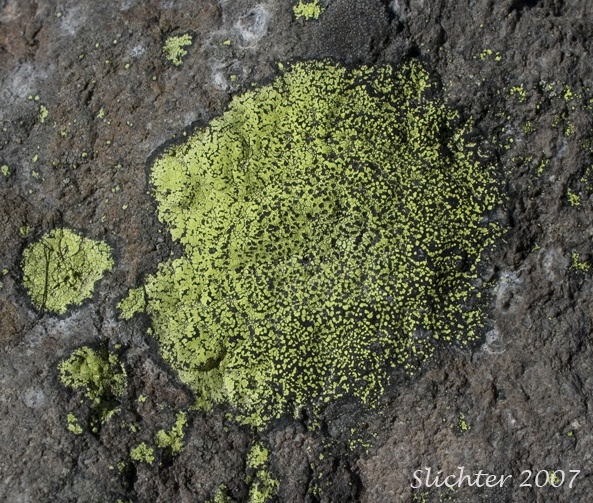
The rocky material left behind by a retreating glacier forms what is called a moraine. When primary succession occurs on a moraine, which life forms will help create the soil by breaking down bare rock?
insects
lichens
grasses
deciduous trees
The San Marcos salamander, Eurycea nana, is a light reddish-brown translucent salamander about 2-5 cm in length. E. nana is found only in Spring Lake and a portion of the San Marcos River.
Which human activity would most likely decrease the ability of the salamanders to survive?
increasing water consumption that decreases the flow of clean water from the springs that feed the river
public transportation that reduces the number of automobiles that contribute to pollution runoff into the river
tourism that helps fund the educational programs related to river ecosystem conservation
the addition of a new food source into the river limits competition for resources.
In the mid-1980s an aggressive strain of algae known as Caulerpa was accidentally introduced into the Mediterranean Sea when a seaside aquarium cleaned out its tanks. The algae contain a toxin that prevents native herbivores from consuming it. Caulerpa quickly spread over the seafloor, crowing out many species including sponges, corals, sea fans, and lobsters.
Which statement explains the most likely impact Caulerpa has had on the biodiversity in the Mediterranean Sea?
The presence of Caulerpa within an ecosystem is an indicator of the ecosystem's health.
The spread of Caulerpa improved the habitat for many species of seagrasses, and increased the biodiversity.
Caulerpa interbred with native species with the same adaptations within the ecosystem.
Caulerpa became dominant within the ecosystem and reduced biodiversity.
Scientist have observed many types of tropical fish moving beyond their traditional ocean ranges into waters that have historically been more temperate. These fish compete for food with native fish, consuming much from the kelp forests and beds of sea grass.
agricultural runoff that contributes to dead zones in the ocean
global droughts that raise the salt concentration of ocean waters
the rising temperatures of ocean waters
acid rain pollution that lowers the pH of oceans waters
Roads are often built through forests for industrial purposes or as land is developed for residential and commercial needs. How would road construction through a forest most likely affect the ecosystem?
non-native species would replace native species
the number of primary consumers would increase
the natural succession of vegetation would change
all producers would be eliminated from the community

Food webs such as the one shown were first used in 1927 by the animal ecologist Charles Elton. The food web below represents the feeding relationships among organisms in an Alaskan ecosystem.
an environmental change that removed which of these organisms from the ecosystem would cause the most instability in the ecosystem?
Auklets
Foxes
Salmon
Zooplankton

A partial Texas food web is shown.
The populations of which organisms will most likely increase as a result of a disease that suddenly reduced the population of Texas horned lizards?
grasses and ants
ants and grasshoppers
grasshoppers and texas cottonmouths
texas cottonmouths and red-shouldered hawks

A biomass pyramid of an ecosystem is shown.
Which statement provides the best explanation for the difference in biomass of organisms found at each trophic level?
Organisms at higher trophic levels have less energy available to them than organisms at lower trophic levels.
Organisms at higher trophic levels require smaller habitats than organisms at lower trophic levels.
organisms at lower trophic levels provide less energy than organisms at higher trophic levels.
Organisms at lower trophic levels outcompete organisms at higher trophic levels.

The table lists some organisms found in a swamp ecosystem and their sources of energy.
When constructing an energy pyramid of the swamp ecosystem, which of these would be placed at the top of the pyramid?
Grass carp
American alligator
Eastern mud turtle
Great blue heron

A partial meadow food web is shown.
Based on this food web, which organisms are direct sources of energy for secondary consumers?
Aphid, Bird, Rabbit
Ladybug, Fox, Dragonfly
Frog, Butterfly, Berries
Mouse, Snake, Hawk

The energy pyramid below shows the energy made available by producers.
Based on the energy flow between trophic levels in an energy pyramid, how much energy would be expected to be found at the secondary consumer level in this pyramid?
100 joules
500 joules
1,000 joules
50 joules
Some species of millipedes will roll into a ball when threatened, while other species of millipedes can secrete noxious chemicals from their bodies.
These adaptations allow the millipedes to -
survive in different temperatures
avoid different types of predators
conserve different amounts of energy
blend into different types of environments
The Indian leaf butterfly has traits that allow it to resemble a leaf. The bright colors of the monarch butterfly indicate that the butterfly tastes bad and can be poisonous.
How does the appearance of these butterflies help them to survive?
The Indian leaf butterfly is able to avoid predators while the monarch butterfly warns predators away.
The Indian leaf butterfly frightens predators away while the monarch butterfly poisons predators before they can eat it.
Both butterflies rely on camouflage to avoid predations.
Both butterflies cooperate with one another to avoid predation.

The table below provides some information about the feeding methods of the five rhinoceros species.
Which rhinoceros species is best adapted for feeding in the large open grasslands of Africa's Serengeti ecosystem?
Black rhinoceros
White rhinoceros
Sumatran rhinoceros
Javan rhinoceros
Which role of protist has the most positive effect on maintaining the plant population in an ecosystem?
protists are a major food source for animals.
protists produce approximately 75 percent of the oxygen on earth.
protist decompose dead materials, retuning nutrients to the soil.
protist found in the gut of animals assist in digestion.
Saprophytes are fungi that feed on dead and decomposing organisms. They secrete enzymes that digest components of cell walls, such as cellulose and lignin.
Which statement explains why these fungi are an important part of the biogeochemical cycle?
Saprophytes perform gas exchange that assists the cellular activaties of autotrophs.
Saprophytes extract minerals from living tissue to recycle them back into the soil.
Saprophytes transport nutrients through the xylem and phloem in autotrophs.
Saprophytes return organic material to the oil for use by living organisms.

A student researching bacteria concluded a report with the claim in the box.
Which statement correctly addresses the validity of the claim?
the claim is valid because many studies and experiments have shown that bacteria disrupt homeostasis
the claim is invalid because there are many types of bacteria that help organisms maintain homeostasis.
the claim is invalid because only microorganisms such as viruses disrupt the health of organisms.
the claim is valid because bacteria cause disease.
Some fungi secrete substances that are toxic to bacteria that compete with them for food. Scientists have used their knowledge of this ability of fungi in order to produce which of the following substances?
yogurt
fertilizers
Plastic
Antibiotics
A student sets up a compost bin outdoors. Inside the bin, microorganisms convert the student's vegtable and paper scraps into rich fertilizer. Which of the following best describes the role that these microorganisms play in natural habitats?
the microorganisms help balance the number of producers and consumers.
the microorganisms help keep nutrients cycling through the ecosystem.
the microorganisms turn solar energy into sugar
the microorganisms function as autotrophs
If a scientist in New Zealand was studying how a group of herbivores interacted with a group of omnivores, and all of their abiotic surroundings, what level of ecology would she be studying?
Community
Population
Species
Ecosystem
Biome
What is the PRODUCT of the process used by producers that is passed on as energy throughout an ecosystem?
photosynthesis
Sun
glucose
carbon dioxide
water
If there are 100 KJ of energy available at the secondary consumer level, how many KJ of energy are available at the producer level?
10 KJ
1,000 KJ
10,000 KJ
1 KJ


A diagram that shows the transfer of energy in an ecosystem by using several food chains.
ecosystem
food web
environment
food chain

What kind of organism is NOT shown in the diagram?
producer
consumer
herbivore
decomposer

How many producers are shown in the food web?
2
3
4
5

Which consumers will receive the most energy captured by the producers?
hawk
snake
rabbit
flowers
Food Web
Shows the flow of energy and all interactions in an ecosystem.
living factors in an environment
non living factors in an environment
Shows the amount of energy for each trophic level ecosystem.

Biome with many different species of cacti and reptiles and very little rainfall.
Desert
Temperate Rainforest
Tropical Rainforest
Arctic Tundra
Which of the following statements about primary succession is true?
it begins with a climax community
small mammals are first to inhabit the area
it only occurs after glaciers retreat
it begins with bare rock
Pioneer species are the first
trees to grow in an area that has been disturbed
trees that replace the original trees after a forest fire
organisms to live in previously uninhabited areas
organisms to live in a forest canopy
A sequence of biotic changes that regenerate or create an ecological community is known as
migration
factors
succession
erosion

Primary or secondary ecological succession?


Primary or secondary ecological succession?

Primary or secondary ecological succession?
Primary or secondary ecological succession?
Which of the following statements about primary succession is true?
it begins with a climax community
small mammals are first to inhabit the area
it only occurs after glaciers retreat
it begins with bare rock
Pioneer species are the first
trees to grow in an area that has been disturbed
trees that replace the original trees after a forest fire
organisms to live in previously uninhabited areas
organisms to live in a forest canopy
The reestablishment of a damaged ecosystem in an area where the soil is intact is called...
primary succession
secondary succession
pioneer succession
symbiotic succession
In 1988 several large forest fires occurred in Yellowstone National Park. What process occurred after these fires?
primary succession
secondary succession
pioneer succession
symbiotic succession
A sequence of biotic changes that regenerate or create an ecological community is known as
migration
factors
succession
erosion

What is a climax community?
An ecosystem that is just beginning to grow.
An ecosystem that is stable and mature and has reached the final stages of succession.
An ecosystem that is damaged by a forest fire.
An ecosystem that is damaged by a landslide.
Which statement best describes how bacteria recycle matter in an ecosystem?
Bacteria are producers that create energy for second-order consumers.
Bacteria produce toxins to prevent the growth of invasive species.
Bacteria cause disease that limit the reproduction of organisms in a population
Bacteria are decomposers that help to transfer organic material to the soil.
sand dunes along the coast are formed of bare sand. Eventually, grasses take root on the dunes. over time, larger plants such as shrubs and trees are able to grow at the edge of the sand dune ecosystem.
This gradual change in plant communities of a sand dune ecosystem can result in -
A reduced symbiotic relationship between producers and bacteria
Reduced energy absorption by consumers
Greater erosion rates
Greater species diversity
In an experiment, two plants are grown together for a time and then separated. Plant 2 is a parasite of Plant 1.
Which graph best predicts the growth of Plant 1 and Plant 2 during the experiment?


Researchers have observed striped hyenas and gray wolves hunting together in certain areas. One hypothesis suggests that changing hunting behavior aids both species in obtaining better and more resources. In this hypothesis, the hyenas benefit because the wolves chase and takedown large animals, such as goats, that the hyenas usually cannot catch alone. The wolves benefit from hyenas using their jaw strength to crack open large bones of prey to access additional nutrients from bone marrow.
Which table best identifies the ecological relationships among the gray wolf, hyena, and goats?


The defenses of two flightless birds that live in different habitats are shown.
How do the wings of the Gentoo penguin and the legs of the common ostrich provide an advantage in their habitat?
allows them to find prey
allows them to escape from predators
allows them to control their body temperature
allows them to be camouflaged in their environments

The flow of energy in a grassland ecosystem is shown.
Based on the diagram, which two populations best represent trophic levels that receive the LEAST amount of the total energy provided to the ecosystem by the grass?
crickets and sparrows
toads and spiders
rabbits and mice
hognose snakes and owls

A food web representing a gulf coast ecosystem is shown.
Based on this food web, which organism occupies multiple trophic levels?
Canada goose
Eastern cottontail
Loggerhead sea turtle
Sand dollar
Which statement is an example of how carbon moves through a food chain as part of the carbon cycle?
producers release carbon dioxide, and consumers take it in.
producers take in carbon dioxide, and consumers release it.
producers take in carbon from the soil, and they release it when they decompose.
producers release carbon into the soil, and consumers take it in from the soil.
Overfishing is causing the decline of fish populations, such as eastern Atlantic bluefin tuna in the Mediterranean. Eastern Atlantic bluefin tuna are caught faster than they can reproduce.
Which statement describes the most likely effect that overfishing will have on this ecosystem?
Overfishing makes the ecosystem more stable by increasing competition for limited resources.
Overfishing decreases the stability of the ecosystem by disrupting food chains.
Overfishing does not affect ecosystem stability because it affects one species out of many.
Overfishing increases ecosystem stability by allowing prey populations to overproduce.
A farmer is struggling to control the population of a certain insect on his farm. After researching population control techniques, he discovers that a particular bird is a predator of this insect. The farmer purchases a number of these birds and releases them onto his farm.
How might the farmer's action most likely have a negative impact on the ecosystem?
the birds will increase the biodiversity of native plant species.
the birds will pollinate native species, increasing genetic variation
the birds will consume beneficial insects as well as the pest species
the birds will mate with native birds and create a new species
Which role of protist has the most positive effect on maintaining the plant population in an ecosystem?
protists are a major food source for animals.
protists produce approximately 75 percent of the oxygen on earth.
protist decompose dead materials, retuning nutrients to the soil.
protist found in the gut of animals assist in digestion.
During secondary succession, which of these best describes why decomposing pioneer plants give way to larger more complex plants species, such as hardwood trees?
Increased amounts of sunlight are able to reach the ground while the pioneer species are decomposing.
increased soil temperatures from decomposing pioneer species help tree seeds germinate more quickly.
increased amounts of decomposing pioneer species remove nutrients that tree seedlings need to grow and mature.
increased amounts of soil from decomposing pioneer species allow plants with more extensive root systems to become established.
grassland ecosystem in Texas have evolved to depend on periodic fires to return nutrients to the soil and encourage plant reproduction. humans have prevent fires in many of these grassland areas, resulting in plant and animal communities with tlittle diversity. wildlife biologists often recommend purposefully stating fires called prescribed burns. which are moonitored and controlled, in grassland ecosystems every 3 to 4 years. These biologists observe greater diversity in plant and animal life in the years following a prescribed burns.
What natural processes are the biologist attempting to imitate?
biomagnification
succession
population bottleneck
species extension
A small town in the piney woods of East Texas has a soccer field composed of native grasses. The soccer field is mowed once a week.
What effect does continual mowing have on the ecology of the field?
Mowing increases the likelihood of nonnative species displacing native species.
Mowing increases the number of species found in the field.
Mowing causes different types of communities to form across the field.
Mowing maintains a low species diversity by inhibiting further succession.
Which of these best demonstrates mutualism between certain types of bacteria and humans?
Intestinal bacteria obtain nutrients from the gut and produce vitamin K used by humans.
bacteria become resistant to antibacterial medication that humans use for treatment.
invasive bacteria at an area of injury produce toxins that damage the healthy tissues of the human body.
bacteria in improperly prepared food are consumed by humans, causing food poisoning.
The San Marcos salamander, Eurycea nana, is a light reddish-brown translucent salamander about 2-5 cm in length. E. nana is found only in Spring Lake and a portion of the San Marcos River.
Which human activity would most likely decrease the ability of the salamanders to survive?
increasing water consumption that decreases the flow of clean water from the springs that feed the river
public transportation that reduces the number of automobiles that contribute to pollution runoff into the river
tourism that helps fund the educational programs related to river ecosystem conservation
the addition of a new food source into the river limits competition for resources.
What would be the most likely effect of a wildfire that burned a large area of a forest?
more sugars and starches would be available for animals in the area
the availability of fossil fuels for use by industries in the area would be reduced
Less carbon dioxide would be removed from the atmosphere in the area by plants.
An increase in animal respiration would increase the release of carbon dioxide in the area.
Some species of millipedes will roll into a ball when threatened, while other species of millipedes can secrete noxious chemicals from their bodies.
These adaptations allow the millipedes to -
survive in different temperatures
avoid different types of predators
conserve different amounts of energy
blend into different types of environments
A partial Texas food web is shown.
The populations of which organisms will most likely increase as a result of a disease that suddenly reduced the population of Texas horned lizards?
grasses and ants
ants and grasshoppers
grasshoppers and texas cottonmouths
texas cottonmouths and red-shouldered hawks
A biomass pyramid of an ecosystem is shown.
Which statement provides the best explanation for the difference in biomass of organisms found at each trophic level?
Organisms at higher trophic levels have less energy available to them than organisms at lower trophic levels.
Organisms at higher trophic levels require smaller habitats than organisms at lower trophic levels.
organisms at lower trophic levels provide less energy than organisms at higher trophic levels.
Organisms at lower trophic levels outcompete organisms at higher trophic levels.

