
Font size
 Worksheets
Chapter 2- Chemistry
Total questions: 76
Worksheet time: 44mins
Anything which has mass and occupy space is called as ________
Mass
Matter
Nothing
Anything
What are the 3 states of matter?
Solids, Liquids and gas
Solids, paper and atoms
Liquids, solids, hot
hot, cold, wet
______ is the gravitational force exerted on an object
Mass
Gravity
Force
Weight
What is Energy?
The ability to do anything
The ability to cause change or do work
The investigation of nature
A fact of life
What is an example of kinetic energy?
An apple in a tree
A bouncy ball on the table
A car driving on the highway
A stretched out rubber band
What is an example of potential energy?
A bowling ball rolling down a lane
A car parked in a lot
An apple falling from a tree
Sunlight heating up the atmosphere

A battery is an example of which type of potential energy?
Electrical
Mechanical
Thermal
Chemical
What four elements make up 96% of the human body
Carbon, Hydrogen, Oxygen, Sulfur
Carbon, Hydrogen, Oxygen, Nitrogen
Carbon, Hydrogen, Nitrogen, Silicon
Carbon, Hydrogen, Oxygen, Phosphorous
Subatomic particles with a negative charge
Electrons
Neutrons
Protons
Quarks
Isotopes of an element have a different number of...
Protons
Neutrons
Electrons
An isotope with an unstable nucleus
Background radiation
Critical mass
Radioisotope

How would H2O be classified? Check all that apply.
Atom
Molecule
Compound
How would O2 be qualified. Check all answers that apply.
Atom
Molecule
Compound
In which of the following do particles sit at the bottom
Solution
Suspension
None of the above
Colloid
How are suspensions and colloids different?
Suspensions settle out and colloids do not settle.
Colloids settle out and suspensions do not settle.
Suspensions dissolve and colloids do not.
Colloids dissolve and suspensions do not.
In a ______________, one substance is dissolved in another substance.
solution
suspension
colloid

An ionic bond is formed when
Valence electrons are shared.
Valence electrons surround the cations.
Valence electrons are transferred between atoms.
Valence electrons are completely transferred between two metals.
What is a valence electron?
an electron that is found in the outermost shell of an atom
an electron found in the innermost shell of an atom
an electron found in the middle shell
an electon found in the nucleus
Ice has less density as compared to water due to ___________ bonds.
ionic
hydrogen
covalent
metallic
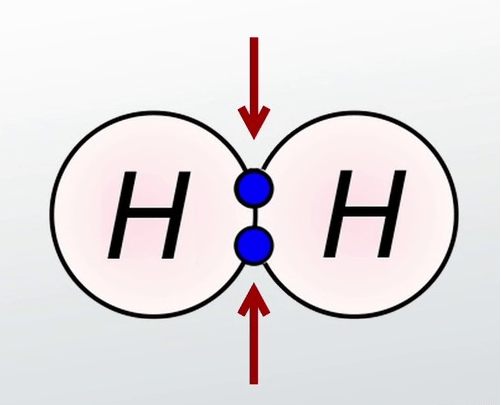
Identify the type of reaction that involves the synthesis of larger molecules from smaller simpler molecules
Metabolism
Anabolic reaction
Digestion
Catabolic reaction
Digestion would be what type of reaction?
Catabolic reaction
Metabolic reaction
Anabolic reaction
Synthesis

Oxidation is ________ of electron
Gain
Loss
Share
Transfer
Reduction is the ________ of electrons
Transfer
Share
Loss
Gain
An _______ reaction is when more energy is released than is absorbed. This energy can be in the form of light, heat, electricity, etc.
endothermic
endergonic
exothermic
exergonic
In a _____ reaction, the products have more energy than the reactants.
exergonic
endergonic

What property of water allows for water to act as a temperature regulator for the world?
Cohesive Behavior
Expansion Upon Freezing
High Specific Heat
Universal Solvent

What characteristic is shown in the image?
Polarity
Hydrogen Bonds
Cohesion
Adhesion

What is cohesion?
The ability of a molecule to "stick" to itself
The ability of a molecule to "stick" to other molecules
Large amounts of energy are required to change the temperature of a substance
A well-organized and efficient team

The fact that water can stick to other substances is called:
pH
Adhesion
Cohesion
Insulation

The ability of water molecules to stick to each other, creating surface tension is called:
Cohesion
Adhesion
Insulation
pH
Acids have a pH of _______________.
below 7
above 7
exactly 7
Bases have a pH of _______________.
below 7
above 7
exactly 7
Neutral solutions have a pH of _______________.
below 7
above 7
exactly 7

What is the monomer of carbohydrates
disaccharides
monosaccharides
amino acids
fatty acids
Which of the following is NOT a monosaccharide?
starch
fructose
glucose
galactose
Which polysaccharide is used by plants to store glucose?
glycogen
cellulose
starch
chitin
What is the polysaccharide used by animals to store glucose?
glycogen
fructose
starch
cellulose
Monomers of Lipids include
amino acids
monosaccharides
nucleotides
glycerol and fatty acids
Which of these are examples of Lipids?
simple sugars
complex carbohydrates
fats, oils, & waxes
hair, skin, & nails
______- Have no double bonds between the carbons in the chain.
Saturated Fats
Unsturated Fats
Trans Fats
Polyunsaturated Fats
_________ Have one or more double bonded carbons in the chain.
Unsaturated Fats
Saturated Fats
Trans Fats
Polyunsaturated Fats
Proteins are made of many ____ bonded together.
amino acids
enzymes
polypeptides
All amino acids have the same basic structure. Which part of the amino acid makes each each one unique?
amino group
carboxyl group
R-group (side chain)
The protein structure that results from hydrogen bonds forming beta pleated sheets and alpha helix is:
primary structure
secondary structure
tertiary structure
quaternary structure
The protein structure that results from a sequence of amino acids is:
primary structure
secondary structure
tertiary structure
quaternary structure

Proteins are composed of_______ . Select all that applies.
carbon
hydrogen
nitrogen
phosphorus

All proteins
have a unique structure that determines their unique function.
are exactly the same in function but different in structure.
are exactly the same in structure but different in function.
are enzymes.

The order of amino acids determines the ______ and ultimately the function of a protein.
shape
color
flavor
texture
Enzymes are an example of
Lipids
Carbohydrate
Protein
Nucleic Acid
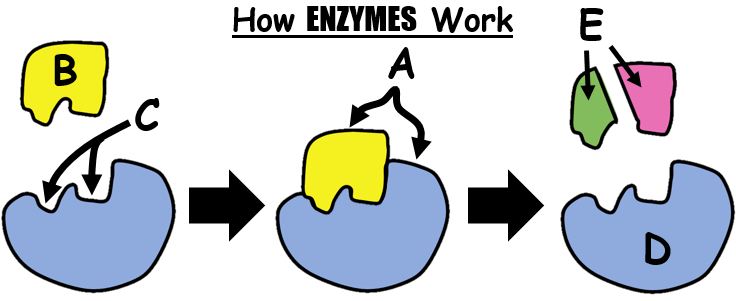
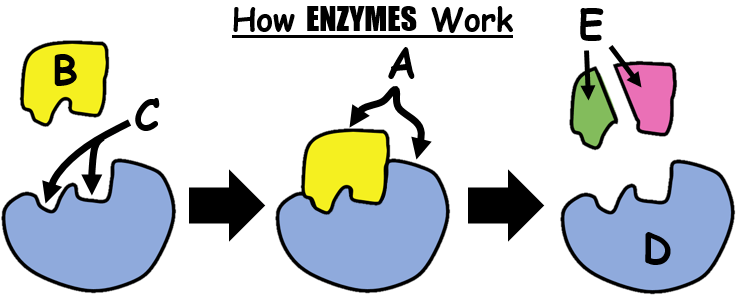
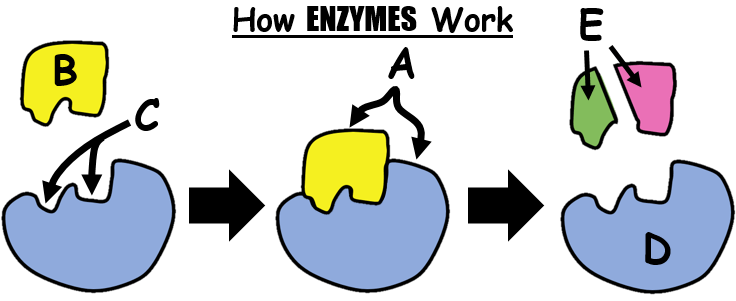
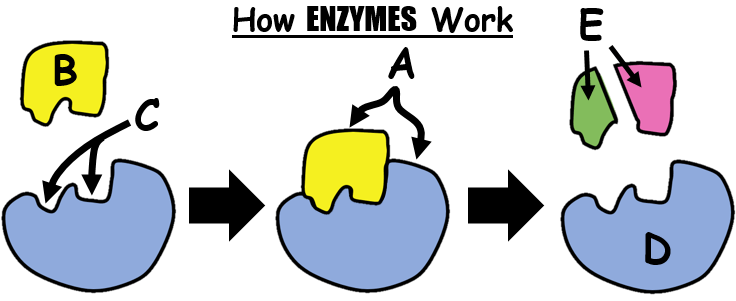
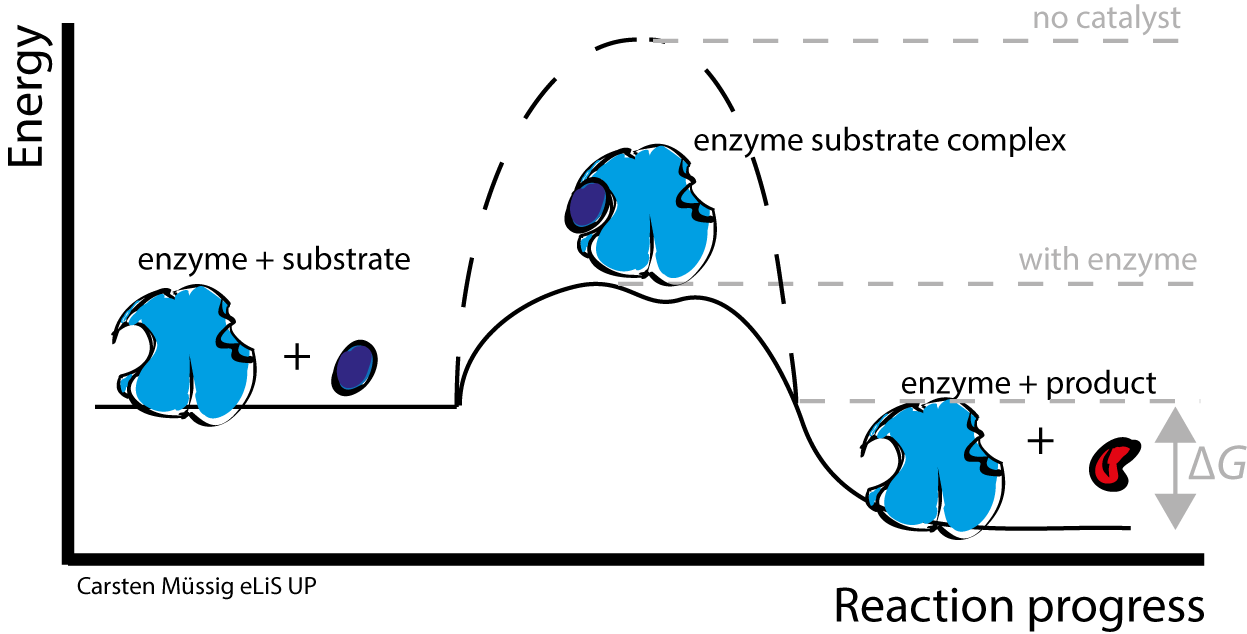
What happens when enzymes are heated to a high temperature?
The enzymes die.
The shape of the enzyme are changed and it denatures
The enzymes' amino acid sequence changes.
The enzymes remain the same


