
Font size
 Worksheets
ORB Check In quiz
Total questions: 81
Worksheet time: 48mins
The Plasma membrane mainly consists of
Proteins embedded in carbohydrate-lipid layer
Proteins embedded in a carbohydrate bilayer
Proteins embedded in a phospholipid layer
Proteins embedded in a lipid molecules
The following are the components of plasma membrane. EXCEPT one?
cholesterol
proteins
carbohydrates
nucleotide
According to the Fluid mosaic model, the quasi-fluid nature of the lipids enable
Lateral movement of carbohydrates within the bilayer.
Lateral movement of proteins within the bilayer.
Free movement of lipids within the bilayer.
Free movement of ions within the bilayer
Plasma membranes are selectively permeable. This means
anything can pass in and out
the membrane regulates the passage of the material in and out of the cell
glucose cannot enter the cell
cholesterol cannot enter
The head of a phospholipid is attracted to water, and is referred to as:
Hydroscopic
Hydrogenated
hydrophobic
Hydrophilic
What is the component of the plasma membrane that helps to minimize the effects of temperature on fluidity
cholesterol
phospholipids
carbohydrates
proteins

Which one identifies the cell?
transport protein
glycoprotein/glycolipid
cholesterol
phospholipid bilayer

'Which one is the hydrophilic (water-loving) portion of the plasma membrane that can mix with water?
A
B

'Which one is the hydrophobic (water-fearing) portion of the plasma membrane that can't mix with water?
A
B

Identify a peripheral protein
structure a
strucure b
structure g
structure h
Which of the following substances would have the most trouble crossing the membrane by diffusing through the bilayer?
water
oxygen
carbon dioxide
a sodium ion
A major function of glycoproteins and glycolipids in the membane is to
glue cells together to form tissues
allow cells to identify each other
attach membrane to cytoskeleton
help retain shape
What kinds of molecules pass through a cell membrane most easily?
ionic
small and hydrophobic
large polar
large and hydrophobic
When doctors perform organ transplants, they choose a donor tissue match. Which component is being matched?
membrane phospholipids
cytoskeleton
cell surface carbohydrates
cholesterol
Which type of biological macromolecule is the main component of the plasma membrane?
carbohydrate
lipid
protein
nucleic acid
Phospoholipid
Lipophillic
Amphiphatic
Hydrophobic
Hydrophillic
Active transport is different to passive transport because....
it doesnt require ATP.
molecules move agaisnt a concentration gradient.
it only uses channel proteins.
molecules move towards a concentration gradient.
Which type of biological macromolecule is the main component of the plasma membrane?
carbohydrate
lipid
protein
nucleic acid
What is the function of cholesterol in a plasma membrane?
To make the membrane flexible
To control the effect of temperature changes
To attract water molecules
To allow nutrients and other essential molecules into the cell
Which is NOT a function of the membrane?
it forms a selective barrier, allowing some things in while keeping others out
maintains homeostasis
it is the control center of the cell
boundary between the inside of the cell and its environment
Plasma membranes are selectively permeable. This means
anything can pass in and out
the membrane regulates the passage of the material in and out of the cell
glucose cannot enter the cell
cholesterol cannot enter

Identify a cholesterol molecule
structure A
structure B
structure C
structure D

identify a glycolipid
structure A
structure B
structure C
structure D

Identify a glycoprotein.
structure A
structure B
structure C
structure D
A major function of glycoproteins and glycolipids in the membane is to
glue cells together to form tissues
allow cells to identify each other
attach membrane to cytoskeleton
help retain shape
Which of these is NOT embedded in the hydrophobic portion of the lipid bilayer at all?
peripheral proteins
transmembrane proteins
integral proteins
all of these are embedded
If a cell is in an extremely hot environment, what is the function of cholesterol in the plasma membrane?
the cholesterol will increase the fluidity of the plasma membrane by making sure the phospholipids don't stick together
the cholesterol will do nothing
the cholesterol will decrease the fluidity of the plasma membrane by holding the phospholipids together
the cholesterol will increase the fluidity of the plasma membrane by increasing the number of cholesterol molecules in the plasma membrane
If a cell is in an extremely COLD environment, what is the function of cholesterol in the plasma membrane?
the cholesterol will increase the fluidity of the plasma membrane by making sure the phospholipids don't stick together
the cholesterol will do nothing
the cholesterol will decrease the fluidity of the plasma membrane by holding the phospholipids together
the cholesterol will increase the fluidity of the plasma membrane by increasing the number of cholesterol molecules in the plasma membrane
Transport proteins move substances and wastes through the plasma membrane that cannot get through because they are too big.
True
False
Which is NOT a function of the membrane?
it forms a selective barrier
it has receptors for chemical messages
it is the control center of the cell
it is involved in self recognition

This image is an example of a phospholipid. Which part of a phospholipid is HYDROPHOBIC?
the phosphate "head"
the lipid "tails"
This image is an example of a phospholipid. Which part of a phospholipid is HYDROPHILIC?
the phosphate "head"
the lipid "tails"
What does "hydrophilic" mean?
water loving, associates with water
water fearing, does not associate with water
a world war II submarine
an example would be solutes like oil or fat

In the plasma membrane, polar heads face the _________ outside of the membrane where the non-polar tails face the ________________ of the membrane.
inside, outside
outside, inside
Which type plasma membrane structure allows substances and wastes to move through the membrane?
transport proteins
carrier proteins
movement proteins
elimination proteins

chose the correct option for labelling the mitochondria
a. outer membrane
b. inner membrane
c. matrix
d. cristae
a. inner membrane
b. outer membrane
c. cristae
d. matrix
a. inner membrane
b. envelope
c. lamellae
d. cytoplasm
a. outer membrane
b. inner membrane
c. lumen
d. matrix

chose the correct option for the labelled parts
a. golgi apparatus
b. cell membrane
c. cellulose
d. vacuole
e. chloprophyll
a. mitochondria
b. cell wall
c. outer membrane
d. gas vacuole
e. chloroplast
a. mitochondria
b. cytoplasm
c. cell wall
d. vacuole
e. chloroplast
a. mitochondria
b. plasma membrane
c. cell wall
d. vacuole
e. chloroplast
What type of cell has a nucleus?
eukaryotic
prokaryotic
neither
both
Plants and animal cells are examples of ___ cells
prokaryotic cells
eukaryotic cells
both eukaryotic and prokaryotic
neither
Which type of cells has a chloroplast?
Prokaryote
Plant Cell
Animal Cell
Bacteria
Which do BOTH prokaryotes and eukaryotes contain?
nucleus
mitochondria
ribosomes
cell wall
Prokaryotes do NOT have....
membrane bound organelles
DNA or RNA
Cell membrane
Life
Bacteria are considered what?
Eukaryotes
Prokaryotes
You can distinguish a prokaryote apart from a eukaryote by--
The presence of a ribosome
The presence of a cell membrane
The presence of DNA
The presence of a nuclear membrane

Prokaryotic cells do not have…….
membrane bound organelles
cell membrane
DNA or RNA
life
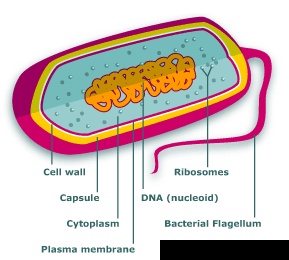
Which of the following is NOT a characteristic of a Prokaryotic cell?
unicellular
floating DNA
very small
complex

Which type of cell?
Prokaryote
Eukaryote
Both
Neither
Endosymbiotic Theory is the idea that ______ cells could have evolved from_____cells
prokaryotic, eukaryotic
eukaryotic, animal
prokaryotic, plant
eukaryotic, prokaryotic
Prokaryotic cells do not have
cell wall
nucleus
cytoplasm
ribosomes
Both prokaryote and eukaryotes have a cell membrane
True
False
Only eukaryotes have a membrane
Only prokaryotes have a membrane
How did one type of prokaryote get inside of another type of prokaryote
Acts as a ligand
One engulfed the other
Fused in as a vesicle
snuck in as a retrovirus
Symbiosis means
Feeding off of something
Using something for its ATP
Living in harmony
Producing sugars
Early bacteria that could make its own energy evolved into
Mitochondria
Chloroplast
ATP
ADP
Early bacteria that could perform photosynthesis evolved into
Mitochondria
Chloroplast
ATP
ADP
Eukaryotic cells can have
Only chloroplast
Only mitochondria
both mitochondria and chloroplast
neither chloroplast nor mitochondria
Evidence for endosymbiosis includes
Mitochondria and Chloroplast are the same color
Mitochondria and Chloroplast are the same size
Mitochondria and Chloroplast are the same structure
Mitochondria and Chloroplast have the same pH
Evidence for endosymbiosis includes
Mitochondria and chloroplast have their own Lysosomes
Mitochondria and chloroplast have their own vesicles
Mitochondria and chloroplast have their own RNA
Mitochondria and chloroplast have their own DNA
Mitochondria and Chloroplast are similar to prokaryotic cells like bacteria in what way?
They have the same lifespan
They divide the same way
They are the same color
They have the same shape
Mitochondria and Chloroplast are similar to prokaryotic cells like bacteria in what way?
Their DNAs are copies of each other
Their DNAs both have uracil
Their DNAs are circular
Their DNAs both have short lifespans


An action by the target cell, often turning genes on and off:
reception
transduction
response
A series of steps inside the cell that passes along a message:
reception
transduction
response
When a ligand binds to the target cell it is called:
reception
transduction
response

