
 Worksheets
Environmental Science Semester 1 Final Exam 2022-2023
Total questions: 206
Worksheet time: 5hrs 34mins
How do you "win" at natural selection?
survive
go extinct
survive & reproduce
What word describes a trait that helps an organism survive in its environment?
natural selection
mutation
camouflage
adaptation
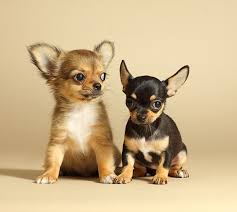
Natural Selection is driven by a change in the environment and survival of the
Earth
Fastest
Fittest
Biggest
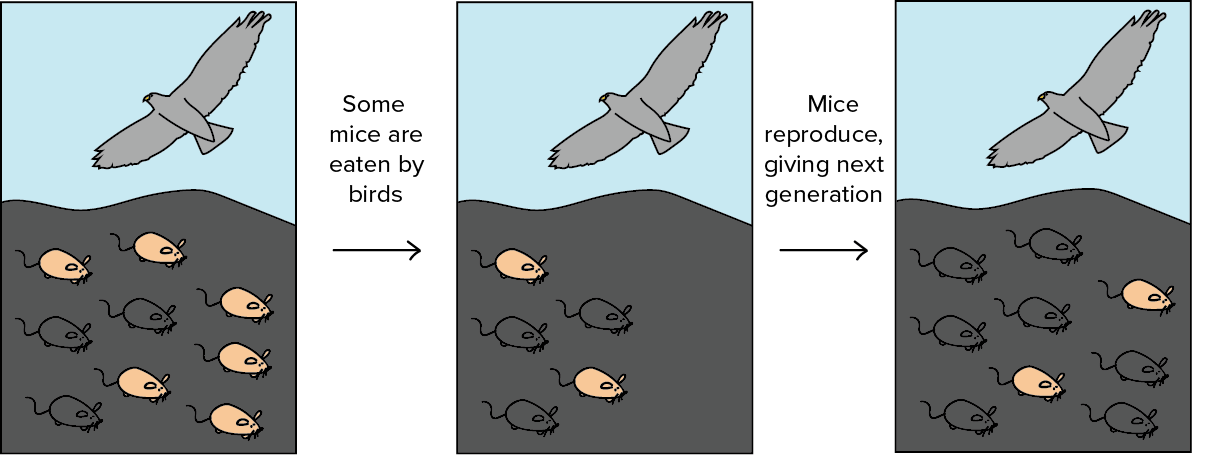
Natural selection is where ___________ decides which traits should be passed on
Nature
A human
Charles Darwin
The illuminati
In a cold environment what are some traits that could increase fitness? Select all that apply.
thick blubber
thick fur
thin fur
wings
What is a trait?
a color
the quality or characteristic of an organism
the DNA of an organism
when mutatuons cause extra limbs.
Why are some traits more common in some populations?
It is random
organims choose their traits
common traits are usually adaptive and help organisms survive and reproduce
organisms traits change all the time
Why are advantageous traits more likely to be passed onto offspring?
Because they are more likely to survive and reproduce.
Because they come from dominant alleles.
Because they come from recessive alleles.
Because the organism knew it needed that trait, survives, and passes it on.
Mutations are a change in what?
DNA
tRNA
protein
rRNA

Where do adaptations come from?
The individual organism decides to adapt
Mutations that give an organism an advantage in its environment
Genetic recombination during meiosis
Both mutations and genetic recombination are sources of adaptation
"Organisms that are better adapted to the environment survive to pass traits to their offspring" is the definition of
Natural Selection
Evolution
Selective Breeding
Artificial Selection
Which best describes the role of mutations in natural selection?
Mutations help an organism to better survive in their environment
An organism may acquire a helpful mutation by interacting with the environment
A mutation may result in a beneficial trait that makes an organism more likely to survive and reproduce
Organisms with certain traits are more likely to win competitions for mutations

All rabbits of the same species living in a particular area would be an example of a(n)
population
species
community
ecosystem
The more genetic variation a population has,
the more likely it is for some individuals to
evolve
migrate
survive
mutate
Mutations are important because they bring about
death of the organism in which they develop
genetic variation needed for a population to evolve
benefits for the individual, not for the population
changes in genotype, but not phenotype


Why is competition important for natural selection?
It shows which variations are more successful, allowing the organisms with those variations to survive.
It causes organisms, regardless of which traits they have, to die out, reducing the population size.
It causes organisms to get stronger due to having to outcompete other species.
Competition is not important for natural selection.
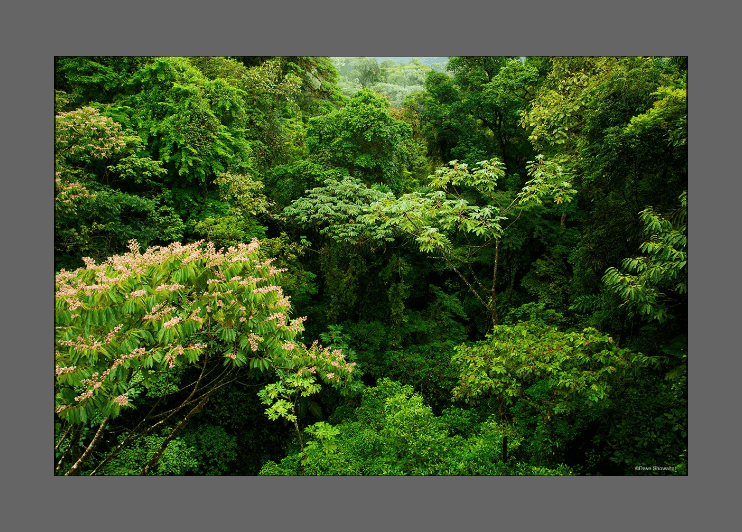
A yellow morph and green morph of an insect lives in the rainforest canopy. You would expect:
the green population to increase and the yellow to decrease
both populations should stay the same
both populations will increase
the green population to decrease and the yellow to increaseThis is a wrong answer
What word describes a trait that helps an organism survive in its environment?
natural selection
mutation
camouflage
adaptation
Natural Selection is driven by a change in the environment and survival of the
Earth
Fastest
Fittest
Biggest
Why are advantageous traits more likely to be passed onto offspring?
Because they are more likely to survive and reproduce.
Because they come from dominant alleles.
Because they come from recessive alleles.
Because the organism knew it needed that trait, survives, and passes it on.
Mutations are a change in what?
DNA
tRNA
protein
rRNA
Where do adaptations come from?
The individual organism decides to adapt
Mutations that give an organism an advantage in its environment
Genetic recombination during meiosis
Both mutations and genetic recombination are sources of adaptation
"Organisms that are better adapted to the environment survive to pass traits to their offspring" is the definition of
Natural Selection
Evolution
Selective Breeding
Artificial Selection
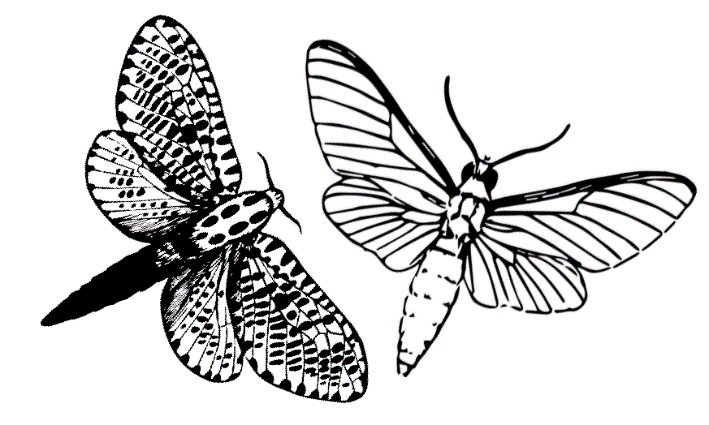
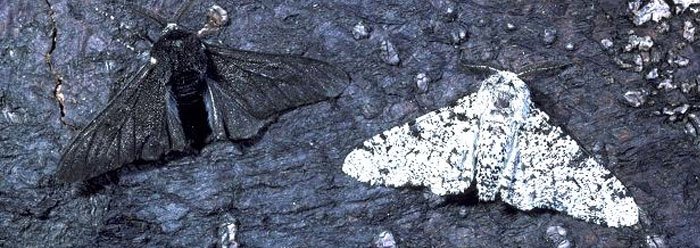
According to natural selection, light colored tree trunks would favor
light colored moths
dark colored moths
red colored moths
red and light colored moths

Speciation can occur as a result of geographic isolation because _________.
members of a species can no longer find mates
populations that live in different environments may be exposed to different selection pressures
exchange of genes during recombination
movement of genes within a population because of interbreeding

_______________ occurs when a population declines to a very small number then goes back up but results in a permanent loss of genetic diversity in the population (example: the Cheetah population)
coevolution
bottleneck
archaeopteryz
mutation


Click on the image to make it larger-- Choose all that apply: The hawk gets energy from...
mouse
rabbit
wildflowers
snake

Click on the image to make it larger-- Choose the living things that are producers...
wildflowers
rabbit
snake
grass

Click on the imgae to make it larger-- Choose the herbivores in the food web....
hawk
mouse
rabbit
snake
A ____________________ shows how energy is passed from one living thing to another...
ecosystem
food chain
habitat
A cow eats grass found in its habitat. A cow is a
producer
consumer
herbivore
Bears eat berries and salmon. Bears are ...
producers
carnivores
omnivores

Why might an organism have more than one arrow coming from them in a food web?
More than one organism may eat them.
They may eat more than one other organism.
This organism gets its energy from multiple sources.
Grass > Grasshopper > Bird > Snake

Plants are called _____________ as they make their own food.
consumers
producers
decomposers
conductors

Plants obtain light from the sun to make food during _______________.
respiration
pollination
reproduction
photosynthesis
Consumers that feed on plants are also known as ____________.
herbs
herbivores
spores
reservoirs
Consumers that eat other animals are also known as ________________.
carnivores
carnivals
producers
decomposers
Animals that eat both plants and animals are known as ______________
greedy
herbivores
carnivores
omnivores


In the food web shown, who is the secondary consumer?
grass
mouse
rabbit
fox
What does a primary consumer eat?
tertiary consumers
secondary consumers
producers
decomposers


What is the carrying capacity of the graph?
1000
8000
800
600
This may cause a population to increase
increase of food supply
removal of predators
removal of disease
all of these


If the carrying capacity of a predator decreases, what will happen to the carrying capacity of the prey?
Will Increase
Will Decrease
Will stay the same

The graph to the right shows the interaction of the wolf and moose populations on Isle Pekie. If the moose population continues to increase, the wolves' food supply will increase. What will most likely happen to the wolf population as a result?
It will decrease.
It will increase.
It will remain the same.

In the graph to the right, what is the population of deer at the carrying capacity of the environment?
3
7
70
40

When a population grows past the ecosystem's carrying capacity, what happens to the population?
It continues to grow higher and higher.
The population starts to die off and returns to the carrying capacity.
The population will go extinct due to lack of resources.

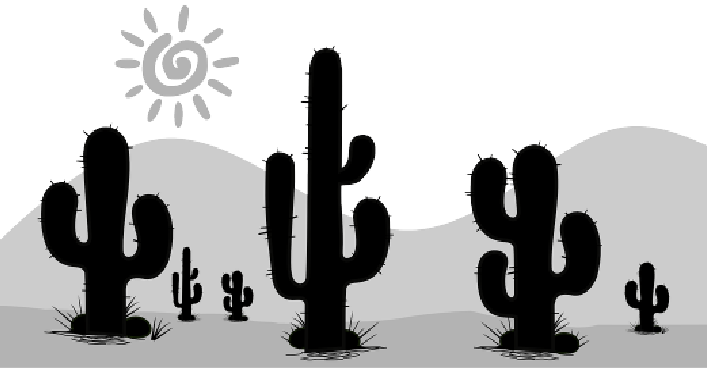
The picture to the right represents a sunny, dry desert.
Which factor most likely limits the desert’s carrying
capacity for plant life?
the number of animals that eat plants
the amount of sunlight
the availability of space to grow
the availability of water

A population of salamanders that live in a river require clear, fresh water to survive. New housing developments have caused tons of sediment to muddy the river. Which
of these most likely will happen to the salamander population?
The salamanders go live on land.
The salamanders will move across land to another river.
The salamanders will quickly adapt to living in the muddy water.
The salamanders will decrease in number because of the water quality.

Primary or secondary ecological succession?


Primary or secondary ecological succession?
Primary or secondary ecological succession?
Pioneer species are the first
trees to grow in an area that has been disturbed
trees that replace the original trees after a forest fire
organisms to live in previously uninhabited areas
organisms to live in a forest canopy
A sequence of biotic changes that regenerate or create an ecological community is known as
migration
factors
succession
erosion


Natural disturbances, such as fires or hurricanes, can result in
A.parasitism.
B.competition.
C.commensalism.
D.succession.

How is primary succession different from secondary succession?
Primary succession starts with soil.
Secondary succession start with bare rock.
Primary succession starts with bare rock, with lichens and moss.
Fire is an example of primary succession.

What does this represent?
Biotic
Abiotic
Organism
d

What does this represent?
Adaptation
species
niche
d

What does this represent?
climate
Biotic
competition
d

What does this represent?
mutualism
population
boundary
d

What does this represent?
carrying capacity
limiting factor
resource
D

What does this represent?
parasitism
interdependent species
Climate

What does this represent?
organism
Commensalism
species
D

What does this represent?
abiotic
community (communities)
niche
D

What does this represent?
predation
mutualism
competition
D

What does this represent?
Keystone Species
organism
adaptation
D

What does this represent?
commensalism
biotic
interdependent relationship
D

What does this represent?
limiting factor
boundary
resource

What does this represent?
Mutualism
commensalism
communuty
D

What does this represent?
organism
niche
biotic
D

What does this represent?
keystone species
predation
organism
D

What does this represent?
parasitism
commensalism
interdependent relationship
D

What does this represent?
organism
population
species
D

What does this represent?
mutualism
competition
predation
D

What does this represent?
abiotic
resource
adaptation
D

What does this represent?
biotic
organism
species
D
What is the carrying capacity of the graph?
1000
8000
800
600
This may cause a population to increase
increase of food supply
removal of predators
removal of disease
all of these
If the carrying capacity of a predator decreases, what will happen to the carrying capacity of the prey?
Will Increase
Will Decrease
Will stay the same
The graph to the right shows the interaction of the wolf and moose populations on Isle Pekie. If the moose population continues to increase, the wolves' food supply will increase. What will most likely happen to the wolf population as a result?
It will decrease.
It will increase.
It will remain the same.
A scientist was studying a population of fish in a pond over a period of 10 years. He observed that
the population increased each year for 3 years, and then remained nearly constant for the rest of
the study. The best explanation for this observation is that the population had
stopped reproducing
reached carrying capacity
mutated into a different species
run out of food and all died
What are factors that affect carrying capacity?
Biotic only
Biotic and abiotic
Depends on the ecosystem
Abiotic only

What happens if a population grows past its carrying capacity?
The population keeps growing
The population starts to die off
The entire species will go extinct
The carrying capacity just increases

What type of growth is demonstrated in the graph?
Exponential
Carrying capacity
Linear
Negative
Logistic population growth can be described as
growth when resources are limited
a s-shaped curve
reaching carrying capacity
all of the above

Exponential Growth occurs when-
populations have plenty of food/space
home to keystone species
have few evasive species in a habitat
have little to no competition or predators

What point on the graph represents the carrying capacity?
A
B
C
D

Logistic growth displays a ____-shaped curve which indicates a population size capped at carrying capacity.
J
S
C
V


A community is composed of
living organisms and their nonliving environment.
one species of organism living in a specific environment on Earth.
the factors that constitute an organism's niche.
potentially interacting populations of different kinds of organisms.
An owl and a hawk both eat mice. Which of these describes the relationship between a hawk and an owl?
parasitism
competition
predation
mutualism
The sum total of a population's use of the biotic and abiotic resources of its habitat constitutes its
evolution.
range.
niche.
environment.
In an ecosystem, you would expect to find interspecific competition between
males and females of a species in which both sexes occupy the same niche.
two wasp species that mimic each other's appearance.
populations of two species that occupy the same niche.
a prey species and its predator.
Camouflage typically evolves as a result of
mutualism.
herbivory.
predation.
interspecific competition.
Some herbivore-plant interactions evolved through a series of reciprocal evolutionary adaptations in both species. The process is called
coevolution.
herbivory.
selection.
trophism.
In a hypothetical food chain consisting of grass, grasshoppers, sparrows, and hawks, the grasshoppers are
primary producers.
secondary producers.
primary consumers.
secondary consumers.
Organisms that digest molecules in organic material and convert them into inorganic forms are
detritivores.
primary producers.
decomposers.
primary consumers.
Which of the following statements regarding food webs is true?
Several species of primary consumers may feed on the same species of producer.
A consumer eats only one type of producer.
Detritivores consume dead organic matter from a specific trophic level.
Nutrient transfer moves from producer to consumer and back.
The number of species in a community is called the
species population.
species index.
species diversity.
species richness.
We expect that a keystone species that is a predator will
reduce the diversity of the community.
harvest prey species down to extinction.
help many of its prey reproduce.
maintain the species diversity in a community.
During ecological succession, the species composition of a plant community generally
remains stable as long as major environmental factors (climate, human interference) remain constant.
changes gradually because each species responds differently to the changing environment.
changes from a diverse community in which many plants are common to one in which a few species are numerically dominant.
changes until forest is established and a single species remains.
When a New England farm is abandoned, its formerly plowed fields first become weedy meadows, then shrubby areas, and finally forest. This sequence of plant communities is an example of
secondary succession.
evolution.
primary succession
a trophic chain.
For a given area and time period, the amount of solar energy converted to chemical energy in organic compounds is called
secondary succession.
secondary production.
primary production.
primary succession.
Bu sizinle yaptığım son ders... Eğer isterseniz bundan sonra dışarıda Evren ablanız olarak hayatınızda olmaya devam edeceğim :) Çok kalp

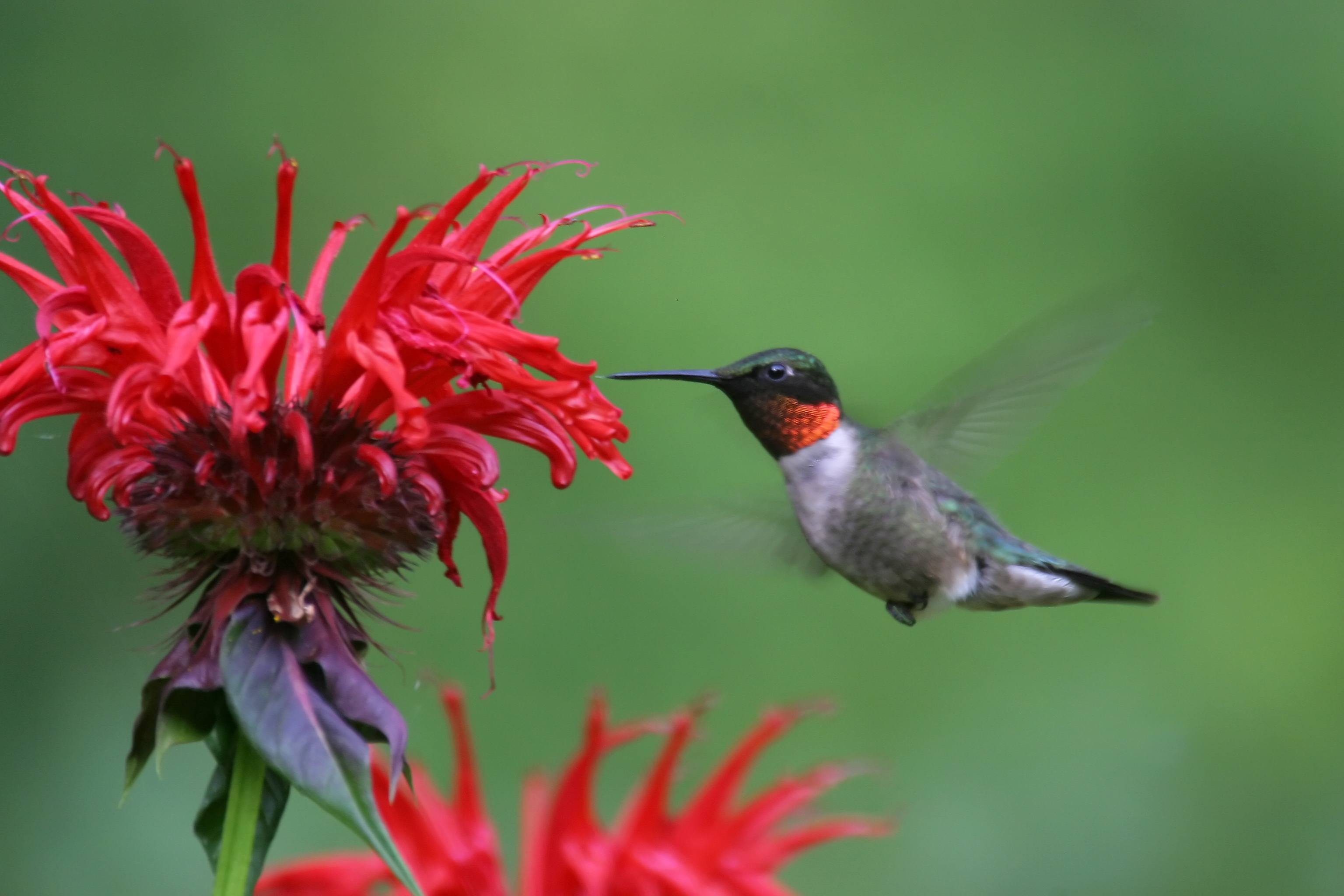
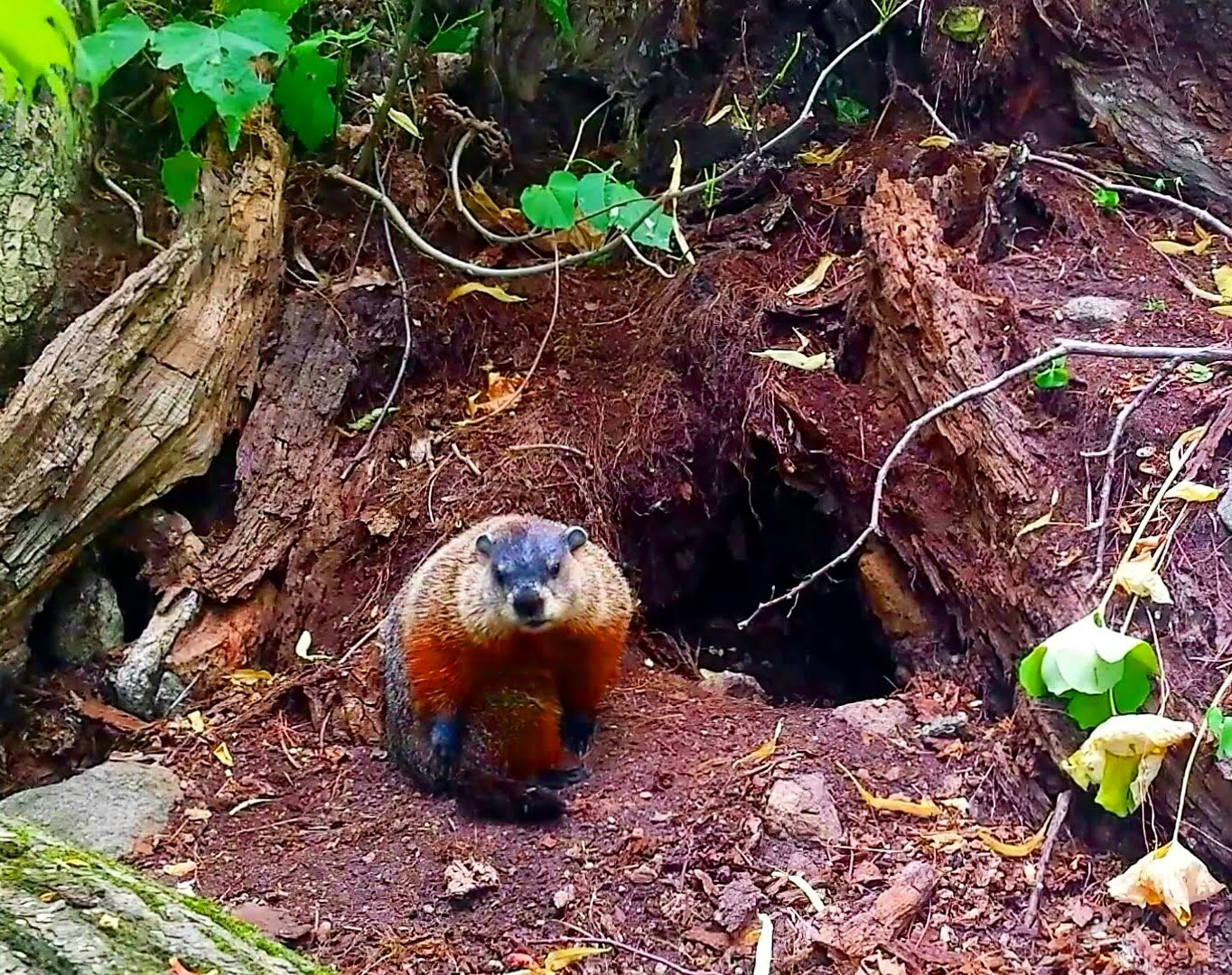
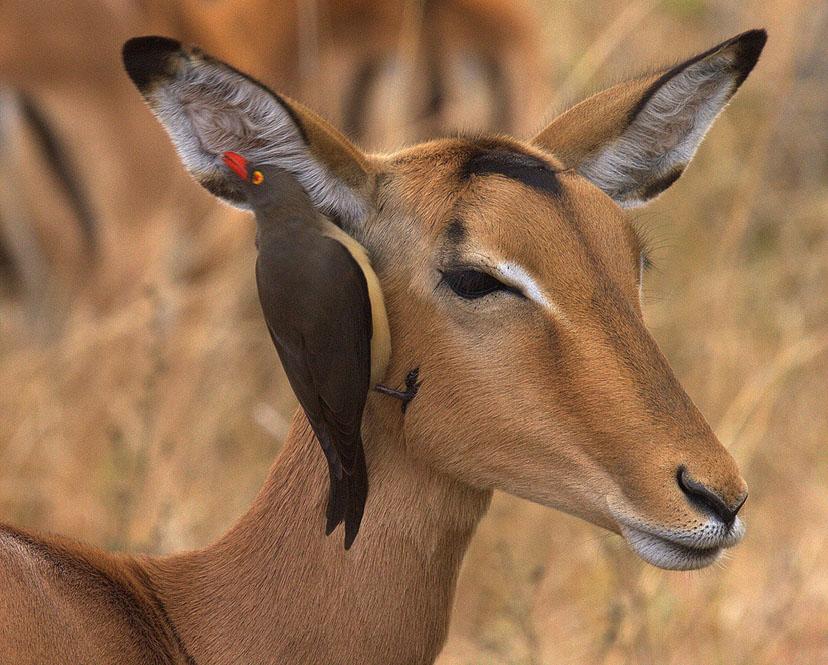
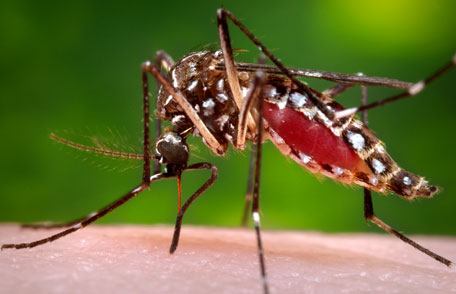

Aphids are tiny insects that live on and eat the leaves of plants, removing vital nutrients from the plants.
Predation
Parasitism
Commensalism
Mutualism
*Hermit crabs find shells left by snails that have died and move in.
* Snails die and leave behind their shells.


Two arctic fox are fighting with a polar bear for a sea lion carcass. One fox distracts the bear while the other eats. What type of limiting factor is the polar bear?
Predator-Prey Relationships
Competition
Herbivory Effect
Weather

A group of elephants gets stuck in mud at the edge of the river from a recent mud slide. A lion waits for an elephant to get tired before it attacks. What is the limiting factor to the elephant population?
Predator-Prey Relationships
Natural Disaster
Herbivory Effect
Competition

A duck population is breeding at exponential rates. The snakes that hunted them have been collected by fur collectors. They make boots from python snake skin. What is the limiting factor to the snakes?
Ducks
Predator-Prey
Exponential Growth
Humans

A duck population normally begin migrating south right after the last rain of the late summer season. Suddenly, they’re migrating much earlier. The climate has been changing far too often which is altering the effects of their magnetite.
Predator-Prey Relationships
Weather
Herbivory Effect
Competition

One of the wolf populations leaves the forest. Over time, bushes, trees and moisture begin to leave as well. There is an effect on the producer populations because the herbivores are overgrazing the land. What is the limiting factor to the producer?
Competition
The wolf
Herbivory Effect
Mutualism

One of the wolf populations begins to compete with a new bear population for the same herbivores. Over time, bushes, trees and rivers improve in numbers. There is an effect on the producer populations. What is the limiting factor to the herbivore?
Predator-Prey Relationships
Herbivory Effect
Competition
Wolves and Bears

Small krill sweep the river bottom rocks for debris and muck. Next, the krill is suddenly swooped up by a small fish. The small fish then gets eaten by a salmon. A week after the bear eats the salmon, it begins to have symptoms. Over time the bear weakens from a botfly infection. What is the limiting factor to all the consumers?
Predator-Prey Relationships
Parasites
Disease
Competition

A honey-badger digs the ground tunnels in search for snakes. In one occasion, the badger finds a snake and competes with it. The badger leaves scratches and bite marks on the snake before it escapes. After twenty-four hours the snake dies. What is the limiting factor to the snake?
Predator-Prey Relationships
Competition
Disease
Predation

The wolf population gets reintroduced to the ecosystem. There is enough deer to go around, so they eat comfortably. The wolf population begins to grow out of control with so much food. The different wolf families then begin to compete for the few caves that exist. Not everyone has good shelter so some have to sleep in the forest floors. What is the limiting factor to the wolves?
Overcrowding
Competition
Weather
Shelter

The wolf goes extinct, and the deer population has no predator to worry about. They graze the land. Because there is no more food. Some of the deer begin to bite at each other, while others die of starvation. What is the limiting factor to the deep population?
Competition
Overcrowding
Predator-Prey Relationships
Herbivory Effect

A landslide covers the river’s path. Further downstream, water depletes and fish populations start to go down. In this case the landslide was a limiting factor.
Weather
Natural Disaster
Climate Change
Global Warming

A random cloud forms and fills the rivers with excess water. In one lake biome, the excess rain pulls trees into rivers destroying bird shelters. What is the limiting factor to the biome?
density-dependent limiting factor
Weather
Climate
Natural Disaster
Which of these factors do not respond to the density of a population in an ecosystem?
Density Dependent Limiting Factors
Density Independent Limiting Factors
Herbivory Effect
Competition
Which of these limiting factors has an influence on the growth of a population based on its density?
Natural Disasters
Seasonal Changes
Weather
Overcrowding

A student brings home a bull toad from the Amazon in Brazil. It gets fat and ugly so he tosses it in the river. This toad starts competing with local toads for their food, shelter, and space. What kind of limiting factor best represents what happened to the local toads?
Competition
Overcrowding
Natural Disaster
Human Impact

Which of these has the greatest effect on the population of moose?
Population of Grass
Population of Ticks
Population of Humans
Population of Wolves

