wayground logo

Free Printable Worksheets

Font size

S
M
L
XL
Worksheets

Midterm Review-8th Grade-2022

Total questions: 200

Worksheet time: 50hrs 0mins

Name
Class
Date
1.
 The following footwear is best in the laboratory. 
a)
shoes appropriate for the weather
b)
open-toed shoes
c)
closed-toed shoes
d)
sandals
2.
Which of the following would be safe to do during a lab activity?
a)
Running in the classroom
b)
Leaving a water spill on the floor
c)
Touching hot surfaces
d)
Following lab rules
3.
What is this science tool?
a)
thermometer
b)
hand lens
c)
graduated cylinder
d)
beaker
4.
The most important reasons for keeping your workspace neat is to ...
a)
make the teacher happy
b)
prevent accidents or unsafe situations
c)
lose materials in the lab
d)
prevent the room from looking messy
5.
What does this graduated cylinder measure?
a)
mass
b)
volume
c)
weight
d)
length
6.
Students placed some frogs in a tank to study their behavior.  What should the students do for safety reasons after feeding the frogs?
a)
Wash the floor with soap and water
b)
Wash their hands with soap and water
c)
Rinse the frog tank with cool water
d)
Rinse the frogs with cool water
7.
What is this science tool?
a)
sun glasses
b)
safety goggles
c)
hand lenses
d)
beaker
8.
You are heating a substance in a test tube. Always point the open end of the tube
a)
towards your body
b)
toward your lab partner
c)
towards another classmate
d)
away from all people
9.
The proper technique for smelling chemicals is ______________
a)
keeping your nose close to the glassware
b)
wafting
c)
to sniff only a small amount
d)
Trick question; you never are allowed to smell chemicals in class
10.

What is this tool ?

a)

test tubes

b)

graduated cylinders

c)

beakers

d)

flask

11.

What is this tool ?

a)

test tubes

b)

graduated cylinders

c)

beakers

d)

flask

12.

What tool is this?

a)

ruler

b)

meter stick

c)

stopwatch

d)

triple beam balance

13.

Safe or Unsafe: Michael enters science class and sees glass beakers with colorful liquids inside. They look like chemicals he used last year in a Fizz lab so he decides to mix them all together to see them fizz.

a)

safe

b)

unsafe

14.

Safe or Unsafe: Grace thought a substance smelled weird so he took a deep whiff of it. He didn’t think it smelled poisonous and tasted a little bit of the substance.

a)

safe

b)

unsafe

15.

Safe or Unsafe: Cindy broke a glass test tube. She raised her hand and told the teacher about the accident.

a)

safe

b)

unsafe

16.
What is a hypothesis?
a)
A hypothesis is the right answer to an experiment.
b)
A hypothesis is the wrong answer to an experiment.
c)
A hypothesis is an educated guess.
d)
I don't know.
17.
During this step of the scientific method, a scientist would gather background information. 
a)
Hypothesis
b)
Research
c)
Observation
d)
Experiment 
18.
The information you record in an experiment is called your ____________.
a)
data
b)
conclusions
c)
notebook
d)
inquiry
19.
What is using your 5 senses (seeing, hearing, touching, smelling, and tasting when appropriate) along with the right tools to gather information called?
a)
hypothesizing
b)
communicating
c)
observing
d)
questioning
20.

List the Scientific Process steps in order.

a)

Observation, Question, Hypothesis, Experiment, Data, Conclusion

b)

Conclusion, Observation, Experiment, Data, Hypothesis

c)

Observation, Experiment, Hypothesis, Conclusion, Data, Question

d)

None of the above

21.

The __________________________________ is the organized way scientists answer questions and solve problems.

a)

scientific method

b)

scientific explanation

c)

scientific notation

d)

scientific guesses

22.

Choose the best-written hypothesis that answers the question:

Question: Why is my room warmer during the day than at night?

a)

Sunlight is making my room warmer.

b)

Mr. Nuzzo has the heat turned on in the morning.

c)

If I close my blinds during the day, then my room will be cooler because sunlight cant get in.

d)

Sunlight actually cools down a room.

23.
This variable in an experiment is the one being changed by the scientist. 
a)
dependent variable
b)
independent variable
c)
data
d)
control group
24.
An experiment is performed on plants to see how different liquids affect plant growth. Each plant in the experiment is given a different liquid; water, apple juice, or milk. Each plant has the same amount of soil, sunlight, and listens to the same music. In this investigation, the independent variable is ...
a)
The type of plant
b)
The amount of sunlight
c)
The type of music
d)
The type of liquid
25.
Dependent variable means
a)
the scientist controls what to test
b)
educated guess
c)
ask a question
d)
what is being measured
26.
If you increase the amount of spinach you eat, then you will increase the iron in your blood. 
What's the dependent variable?
a)
increase the amount of iron in your blood
b)
spinach you eat
27.
If I ride my bike to school instead of walking, then I will get to school faster. What is the dependent variable?
a)
True
b)
How fast you get to school
c)
Riding a bike or walking
d)
False
28.
If I read this question carefully, then I will answer it correctly. What is the independent variable?
a)
I hope so
b)
Yes
c)
Reading or not reading carefully
d)
Likelihood of a correct answer
29.
This is the group that we will compare our experimental group to. This group stays "normal."
a)
Control Group
b)
Experimental Group
c)
 Normal Group
d)
Weird Group
30.
What is an inference?
a)
An observation
b)
Conclusions or deductions based on observation
c)
A safety rule
d)
The unit of measurement for mass
31.
Is the phrase an inference, qualitative observation, or a quantitative observation? 
She had six fingers.
a)
Inference
b)
Qualitative 
c)
Quantitative
32.
Is the phrase an inference, qualitative observation, or a quantitative observation? 
The tree was tall.
a)
Inference
b)
Qualitative
c)
Quantitative
33.

Which of the following is NOT a testable question?

a)

How do rockets work?

b)

Does fertilizer help plants grow bigger?

c)

Does heart rate increase with exercise?

d)

Does the freezing point of water change at different elevations?

34.

An observation that is measurable and made with tools (such as a ruler or scale) is what type

a)

quantitative

b)

qualitative

c)

koalatative

35.
Why do we want to test one variable at a time?
a)
Because it is hard to setup a data table with more
b)
To know what is causing the changes. This helps us understand cause and effect.
c)
It is what has always been done
36.

The ability to burn is known as---

a)

Flammability

b)

Combustion

c)

Density

d)

Exploding

37.

Reactivity (bubbling, fizzing) is a --- property.

a)

Chemical

b)

Physical

38.

Combustion or exploding, is a --- property.

a)

Chemical

b)

Physical

39.

Malleability, the ability to be flattened into thin sheets, is a ---property.

a)

Physical

b)

Chemical

40.

Color change like in a drop of food coloring in water, is a --- change.

a)

Physical

b)

Chemical

41.

Bubbles produced as in the yeast and peroxide demonstration is an example of a --- property.

a)

Chemical

b)

Physical

42.
Iron rusts.
a)
Chemical change
b)
Physical Change
43.
Milk Sours
a)
Chemical Change
b)
Physical Change
44.

What is a chemical change?

a)

Forming a new substance

b)

When two or more substances combine to make a greater one

c)

When two or more substances combine to make a new chemical substance

d)

Combing substances

45.

In a chemical reaction...

a)

The atoms of the reactants always stay together to form the products

b)

The atoms of the reactants unbond, rearrange, and then rebond to form the products

c)

New atoms are formed which combine to make the products

d)

Some atoms disappear while others multiply to form the products

46.

In a chemical reaction, mass is conserved. This means that

a)

The mass of the products stays the same during a chemical reaction

b)

The mass of the products is always twice the mass of the reactants

c)

The mass of the reactants stays the same during a chemical reaction

d)

The type and number of atoms in the reactants equals the type and number of atoms in the products

47.

If two substances react and the temperature of the mixture increases, the reaction is

a)

Not one that produces anything new

b)

Exothermic

c)

One that needs a catalyst

d)

Endothermic

48.

If two substances react and the temperature of the mixture decreases, the reaction is

a)

Endothermic

b)

Never going to happen unless it is heated

c)

Exothermic

d)

one that causes atoms to be destroyed

49.

The law of conservation of mass states

a)

matter can not be created or destroyed

b)

matter can be created and destroyed

c)

matter can be changed and created

d)

matter can be rearranged and destroyed

50.
_______________ is an example of both a color change and new substance produced from a chemical change with oxygen and metal.
a)
shredded paper
b)
rust (iron oxide)
c)
wood chips
d)
melted wax
51.

Subatomic particles that have a negative charge

a)

electrons

b)

protons

c)

quarks

d)

neutrons

52.

The atomic number identifies the number of __________.

a)

electrons

b)

atoms

c)

protons

d)

neutrons

53.

In what part of an atom can the protons and neutrons be found?

a)

nucleus

b)

neutrine

c)

electron cloud

d)

proton cloud

54.
Which subatomic particle has a neutral or no charge?
a)
Proton
b)
Electron
c)
Neutron
55.
In order for an atom to be neutral what has to be true?
a)
The atom has more protons than neutrons
b)
The atom has more neutrons than protons
c)
The atom has the same number of protons and neutrons
d)
The atom has the same number of protons and electrons
56.
Most of the mass in an atom is made up of _____________________?
a)
protons and electrons
b)
protons and neutrons
c)
neutrons and electrons
d)
electrons and quarks
57.
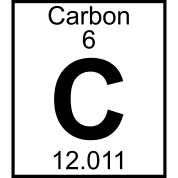
What does the C represent?
a)
atomic mass
b)
atomic number
c)
element name
d)
chemical symbol 
58.
If an atom has 12 positively charged subatomic particles, which of the following must it also have to be considered a neutral atom?
a)
12 neutrons
b)
12 electrons
c)
12 protons
d)
24 protons and neutrons
59.
What is the atomic number of the atom pictured? 
a)
9
b)
10
c)
18
d)
19
60.

Which of the following determines the identity of an element?

a)

number of protons

b)

atomic mass

c)

number of neutrons

d)

number of shells

61.
In the Bohr model of the atom, what is the maximum number of electrons in the first shell?
a)
1
b)
2
c)
6
d)
8
62.
In the Bohr model of the atom, what is the maximum number of electrons in the second shell?
a)
2
b)
6
c)
8
d)
18
63.

Ions are atoms with __________________.

a)

a positive or negative charge

b)

no charge

c)

ONLY a positive charge

d)

ONLY a negative charge

64.

Beryillium and Magnesium become positive ions that have a charge of 2+.

What conclusion can be made for the other elements in the same group on the periodic table?

a)

they lose the same amount of electrons

b)

they gain the same amount of electrons

c)

no conclusions can be made

65.

Positive ions (or cations) form when atoms ________ electrons and have more protons than electrons.

a)

lose

b)

gain

c)

share

66.

A neutral sodium atom has an atomic number of 11. What would be the charge of a sodium ion?

a)

1-

b)

1+

c)

2-

d)

2+

67.

Which statement about valence electrons is NOT TRUE?

a)

they determine the atoms stability

b)

they are in the outermost electron shell

c)

period numbers on the periodic table tell the number of valence electrons

68.

The vertical (up and down) columns in the Periodic Table are called

a)

groups

b)

towers

c)

periods

d)

atomic numbers

69.
The Modern Periodic Table of Elements is arranged by
a)
atomic mass
b)
atomic number
c)
valence electrons
d)
number of isotopes
70.

An atom with 3 valence electrons "wants" a full shell, so it can either gain 5 or lose 3. Which is more likely to occur?

a)

Gain 5

b)

Lose 3

c)

Nothing

71.
When an atom loses a valence electron, it becomes a(n) _________ion.
a)
positive 
b)
negative
72.

What happens when two oppositely charged ions are pushed together?

a)

they will repel (move apart)

b)

they will be attracted to each other (move together)

73.

found in group one of the periodic table; highly reactive

a)

Non-metals

b)

Transition Metals (Groups 3-12)

c)

alkali metals (group 1)

d)

metalloids (semimetals)

74.
Each column in the periodic table is called a _________ .
a)
period
b)
group
c)
cluster
d)
unit
75.
Periods on the periodic table are __________.
a)
Horizontal Rows
b)
Vertical Columns
76.
The atoms along the staircase are called 
a)
metals
b)
nonmetals
c)
metalloids
d)
noble gases
77.

What are the three main groups of the periodic table?

a)

groups

b)

metal

c)

nonmetals

d)

metalloids

e)

periods

78.

What do the vertical columns on the periodic table tell us?

a)

The number of orbitals

b)

The number of valence electrons (electrons on the outer most shell)

79.

What do the horizontal rows on the periodic table tell us?

a)

The number of orbitals

b)

The number of valence electrons (the electrons on the outer most shell)

80.

How many orbitals does Nickel have?

a)

3

b)

4

c)

5

d)

10

81.

How many valence electrons and energy levels does (Pb) lead have?

a)

4 valence electrons and 6 energy levels (orbitals)

b)

6 valence electrons and 4 energy levels (orbitals)

c)

5 valence electrons and 5 energy levels (orbitals)

d)

5 valence electrons and 10 energy levels (orbitals)

82.

A neutral Fluorine atom has an atomic number of 9. What would the charge be for a Fluorine ion?

a)

-1

b)

+1

c)

-2

d)

+2

83.

How many neutrons does platinum have?

a)

78

b)

117

c)

195

d)

196

84.
How many neutrons will an atom have it has an atomic number of 26, an atomic mass of 58 and a charge of +3?
a)
26
b)
58
c)
32
d)
3
85.
How many electrons are in an atom with an atomic number of 20, an atomic mass of 45, and a charge of +2?
a)
20
b)
45
c)
18
d)
2
86.
How many valence electrons are found in atoms of group 14?
a)
4
b)
3
c)
14
d)
16
87.

Which statement best explains why protons are used to identify an element?

a)

Protons are the most easily identified subatomic particles

b)

Positive charges are more easily detected during an investigation than negative and neutral charges

c)

The number of protons is unique to each element and remains constant

d)

Protons alone cannot be used to identify an element. The number of electrons and neutrons must also be known.

88.

A group of students examines a Bohr model of an atom with 8 valence electrons. What conclusion can the students make about the chemical reactivity of the element?

a)

The element is extremely reactive because the outer energy level is full

b)

The element is nonreactive because the outer energy level is full

c)

The element is somewhat reactive because the outer energy level is full

d)

Additional information is necessary to determine reactivity

89.

Which particles change the charge in atoms when ions are formed?

a)

Protons

b)

Electrons

c)

Neutrons

90.
What is the charge of an atom that has gained one electron?
a)
-1
b)
-2
c)
+1
d)
+2
91.

A Bromine ion gains 1 electron, which of the following is the correct symbol for a Bromine ion?

a)

Br-1

b)

Br+1

c)

Br+7

d)

Br-7

92.

What is the ion formed from Sulfur?

a)

S+2

b)

S-2

c)

S+6

d)

S-6

93.
How many atoms of carbon (C) are in C6H12O6?
a)
3
b)
6
c)
12
d)
24
94.
The red numbers in the image below represent ________
a)
subscripts
b)
coefficients
c)
I don't know, and don't want to try
d)
None of the answers are correct
95.
How many atoms are there TOTAL in:
H2SO4
a)
6
b)
5
c)
7
d)
3
96.
Na + MgF2 -->  NaF + Mg
What are the reactants?
a)
Na + MgF2
b)
Na
c)
NaF + Mg
d)
NaF
97.
In this image, the symbols to the right of the arrow (in black) are called the_______.
a)
Products
b)
Reactants
c)
Subscripts
d)
Coefficients
98.
How many O's are in Al₂(SO₄)₃
a)
4
b)
12
c)
7
d)
24
99.

The formula shown here represents the breakdown of a metal into rust. What elements are involved in this reaction? Check all that apply. 4Fe + 3O2  2Fe2O34Fe\ +\ 3O_2\ \rightarrow\ 2Fe_2O_3  

a)

Iron

b)

Oxygen

c)

Carbon

d)

Nitrogen

100.

To balance an equation you should:

a)

ONLY change subscripts.

b)

ONLY change coefficients.

c)

Change BOTH subscripts and coefficients.

101.
Why must we balance chemical equations? 
a)
Our teacher said so
b)
to abide by the law of conservation of energy
c)
to abide by the law of conservation of mass
102.

What does the symbol inside the circle mean?

a)

"yields, or produces"

b)

"dissolved in water"

c)

"forms a precipitate"

d)

"released as a gas"

103.
How many atoms of aluminum are on each side of the following equation: 4Al + 3O--> 2AlO3
a)
2
b)
6
c)
1
d)
4
104.
Balance this equation...
H2 + Cl2 --> HCl
a)
It is balanced 
b)
3H2 + Cl2 --> 6H2Cl
c)
H2 + Cl2 --> 2HCl
105.
What is the total number of atoms present in 5Na3PO4
a)
5
b)
40
c)
55
d)
8
106.
Is the following equation balanced?
2C2H2 + 5O2 --> 4CO2 + 2H2O
a)
yes
b)
no
107.
Is the following reaction balanced?
NaHCO3 --> Na2CO3 + H2O + CO2
a)
yes
b)
no
108.
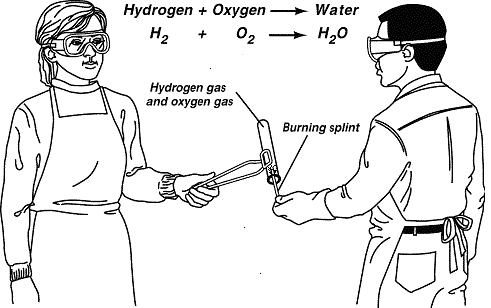
Identify the reactant(s) and product(s) of the reaction.
a)
All three are reactants and none are products.
b)
Hydrogen and water are the reactants, and oxygen is the product.
c)
Water and oxygen are the reactants, and hydrogen is the product.
d)
Hydrogen and oxygen are the reactants, and water is the product.
109.

How many molecules of KNO3 are shown?

a)

1

b)

2

c)

3

d)

4

110.

First person to propose the concept of an atom

a)

Rutherford

b)

Democritus

c)

Dalton

d)

Bohr

111.

JJ Thomson discovered what subatomic particle

a)

nucleus

b)

neutron

c)

proton

d)

electron

112.
Who discovered the nucleus using the gold foil experiment?
a)
Democritus
b)
Robert Millikan
c)
James Chadwick
d)
Ernest Rutherford
113.
His atomic model was depicted similar to a planetary/solar system
a)
Niels Bohr
b)
Joseph Thomson
c)
Ernest Rutherford
d)
Democritus
114.
How did each model of the atom help to develop the atomic theory? 
a)
Each model provided opinions that were added.
b)
Each model showed different properties of the same structure. 
c)
Each model showed new particles that had been discovered.
d)
Each model built upon the other to show new particles or properties of previously discovered particles. 
115.
What is an ion?
a)
A Charged Atom
b)
A Large Atom
c)
A Small Atom
d)
A Cute Atom
116.
Why are ions formed?
a)
To make our lives difficult
b)
Because atoms want 8 valence electrons
c)
Because atoms have the same number of protons and electrons
d)
Because atoms gained neutrons
117.
An atom becomes _________ when it gains electrons.
a)
Positive
b)
Negative
c)
Neutral
d)
Invinsible
118.
An atom becomes _______ when it loses electrons.
a)
Positive
b)
Negative
c)
Neutral
d)
Invinsible
119.
What is the ionic symbol for a Gallium atom?
a)
Ga+3
b)
Ga-3
c)
Ga+2
d)
Ga-2
120.
How do covalent bonds form?
a)
Donating & receiving valence e- between atoms.
b)
Opposite slight charges attract each other between compounds.
c)
Scientists are still not sure how they form.
d)
Sharing valence e- between atoms.
121.
What two types of atoms make a covalent bond?
a)
2 Nonmetals
b)
1 Nonmetal and 1 Metal
c)
2 Metals
d)
2 Noble Gases
122.

An atom with 1 valence electron 'needs' a full shell, so it can either gain 7 electrons or lose 1. Which is more likely to occur?

a)

nothing

b)

gain 7

c)

lose 1

123.

Why are sodium and chlorine attracted to each other?

a)

they have opposite charges

b)

they both have negative charges

c)

they both have positive charges

124.
How are ionic bonds formed?
a)
Transfer of electrons
b)
Sharing of electrons
125.
Ionic bonds are between...
a)
Metal and Non-metal
b)
Non-metal and Non-metal
c)
Metal and Metal
126.

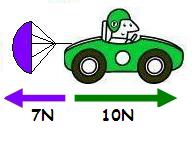
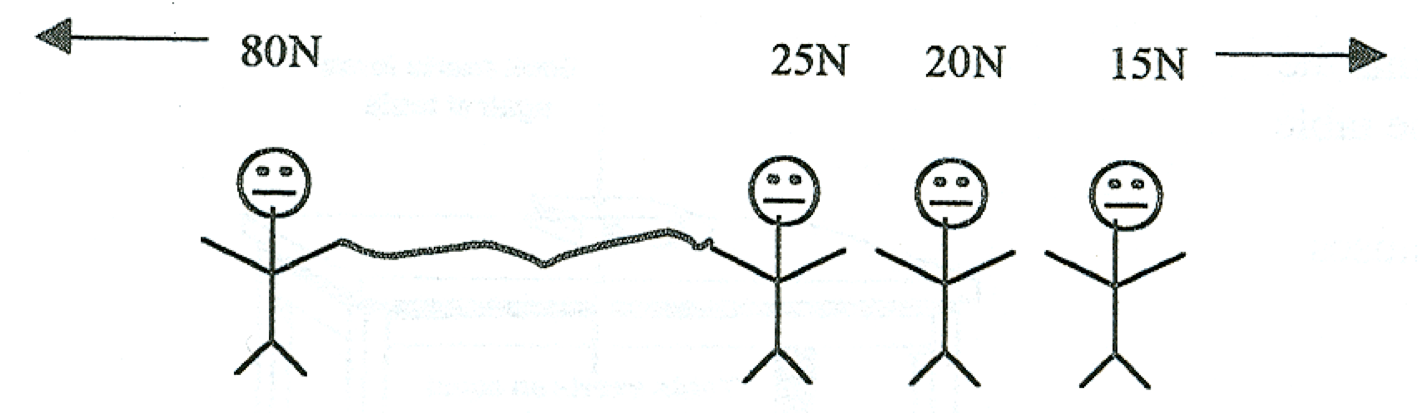
What is the net force?

a)

3 N

b)

3 N, right

c)

17 N, right

d)

3 N, left

127.
Who wins the tug of war with what net force?
a)
The person on the left with 20 N
b)
The person on the left with 80 N
c)
The people on the right with 20 N
d)
The people on the right with 100 N
128.

A ____________ is a push or a pull on an object.

a)

friction

b)

force

c)

magnet

d)

gravity

129.

In an endothermic reaction, energy is _________.

a)

absorbed

b)

released

130.

What instrument would you use to detect an endothermic or exothermic reaction?

a)

triple beam balance

b)

ruler

c)

thermometer

131.

If the surrounding temperature during a chemical reaction gets colder, the reaction is considered to be ______.

a)
Endothermic
b)
Exothermic
132.

The initial temperature during a lab was measured to be 20oC and the final temperature was 45oC. The reaction that occurred was ______.

a)

exothermic

b)

endothermic

133.

When barium hydroxide and ammonium chloride react, the temperature of the mixture decreases. What kind of reaction is this?

a)

Endothermic

b)

Decomposition

c)

Exothermic

d)

Indothermic

134.

What is happening at A?

a)

Stationary

b)

Accelerating

c)

Slower steady speed; moving away from the starting position

d)

Steady speed; returning to start position
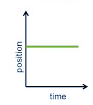
135.

Describe the motion of the object in the graph

a)

Moving with constant speed

b)

Speeding up

c)

Not moving

136.
Which graph shows the object standing still?
a)
A
b)
B
c)
C
d)
D
137.
Which graph represents the greatest acceleration?
a)
A
b)
B
c)
C
d)
D
138.

During which interval is the object speeding up?

a)

A to B

b)

B to C

c)

D to E

d)

E to F

139.
Acceleration occurs when an object changes its speed or ______.
a)
direction
b)
force
c)
inertia
d)
mass
140.
Velocity is
a)
speed and acceleration
b)
constant speed
c)
a frame of reference
d)
speed in a given direction
141.
What is happening at E?
a)
Stationary
b)
Accelerating
c)
Fast steady speed; moving away from the starting position
d)
Steady speed; returning to start position
142.
This graph demonstrates an object that is -
a)
Increasing speed away from the start
b)
Moving away from the start at a constant speed
c)
Decreasing speed toward the start
d)
Moving toward the start at a constant speed
143.

What is the formula for speed?

a)

speed = distance x time

b)

speed=distance / time

c)

speed = time / distance

d)

speed = distance + time

144.
At 60 seconds, how far had this object traveled? 
a)
0 m
b)
10 m
c)
20 m
d)
40 m
145.
How long did it take this object to travel 10 m?
a)
0 s
b)
10 s
c)
15 s
d)
20 s
146.
How far is the person from the starting point after 3 seconds?
a)
0 m
b)
2 m 
c)
3 m
d)
6 m 
147.
During the second segment, which is between 50 seconds and 70 seconds, which direction is Tom moving?
a)
Tom was moving back towards his house
b)
Tom was moving down a hill
c)
Tom was moving towards the bus stop
d)
Tom was not moving
148.
Which runner stopped for a rest?
a)
Albert
b)
Bob
c)
Charlie
149.
What will cause an object to move?
a)
Applied forces
b)
Balanced forces
c)
Unbalanced forces
150.

When forces are going in the opposite direction of each other you should do what do find the net force

a)

Subtract

b)

Add

c)

Divide

d)

Multiply

151.

If both forces are going in the same direction you should______ those forces

a)

Add

b)

Subtract

c)

Divide

d)

Multiply

152.
What law of motion does this picture represent?
a)
Newtons 3rd law
b)
Newtons 4th law
c)
Newtons 1st law
d)
Newtons 2nd law 
153.
What law of motion does this picture represent?
a)
Newtons 1st law
b)
law of gravity 
c)
Newtons 4th law 
d)
Newtons 2nd law
154.
What Newtons law does this picture represent
a)
Newtons 2nd law 
b)
Law of gravity 
c)
Newtons 1st law
d)
Newtons 5th law
155.
What is the tendency of an object to resist a change in motion?
a)
coffee
b)
motion
c)
inertia
d)
gravity
156.

A force that causes an object to slow down when it touches another object is _________.

a)

gravity

b)

friction

c)

inertia

d)

Newton

157.

if an object stays still or continues moving at the same speed and in the same direction, it is a _______ force.

a)

weak

b)

strong

c)

balanced

d)

unbalanced

158.

Net force is a combination of all ________ acting on an object.

a)

forces

b)

speeds

c)

accelerations

d)

velocities

159.
An object at rest will remain at rest unless acted on by an unbalanced force. An object in motion continues in motion with the same speed and in the same direction unless acted upon by an unbalanced force.
a)
Newton's 1st Law
b)
Newton's 2nd Law
c)
Newton's 3rd Law
d)
None of them
160.
Two students are in a baseball game. The first student hits a ball very hard and it has a greater acceleration than the second student who bunts the ball lightly.
a)
Newton's 1st Law
b)
Newton's 2nd Law
c)
Newton's 3rd Law
d)
None of them
161.

A squid moves through the water by ejecting water out of its body into the surrounding water. When the water is pushed out, the ejected water pushes back and thrusts the squid forward.

a)

First Law of Motion (law of inertia)

b)

Second Law of Motion (law of force and acceleration)

c)

Third Law of Motion (law of motion and reaction)

d)

Fourth Law of Motion (law of balanced forces)

162.

Which example best demonstrates an application of Newton's first law of motion?

a)

A child tries to push sofa across the floor, but it will not move. His sister comes to help him. Pushing together, the children are able to move the sofa.

b)

A child pushes two different sofas across the floor. He finds that the light sofa is easier to push than the heavy sofa.

c)

A child and his sister push on a sofa from opposite sides. They are equally strong, and the sofa does not move in their direction.

d)

A child and his sister push two identical sofas across the floor in a race. His sister is stronger than he, and she wins the race.

163.

Damian L. just bought coffee and put it on the seat next to him. As he was driving, a rabbit crossed the road and he immediately pressed on the breaks to avoid hitting the rabbit. The rabbit was not harmed but his coffee spilled on the seat. What law explains why Dame's coffee spilled when he stopped?

a)

Newton's 1st Law (Law of Inertia)

b)

Newton's 2nd Law (Law of Acceleration)

c)

Newton's 3rd Law (Law of Action-Reaction)

d)

Newton's 4th Law (Law of Science)

164.

Newton's third law of motion states that for every action, there is an equal and opposite reaction. Which of the following object's motion is an example of Newton's third law of motion?

a)

A person riding a car without seatbelt will move forward when the car comes to a sudden stop.

b)

A motor boat must exert a force of 100 Newtons to accelerate a 50 kg water skier at a rate of 2 m/s2.

c)

A hockey player skating towards her goal will continue to slide towards her goal if she slips and falls.

d)

A rocket forces gas in a downward direction to launch itself into the air.

165.

A large man applying a force of 5 Newtons to a box pushes the box across a smooth wooden floor. The floor surface changes to a carpet which applies an opposing force of 2 Newtons to the box. What effect does the carpet's frictional forces have on the motion of the box?

a)

The box moves to the left at a faster speed because of the greater net force of 7 Newtons/

b)

The box moves to the left a slower speed because of a lesser bet force of 3 newtons.

c)

The box moves to the right at a slower speed because of a lesser net force of 3 newtons.

d)

The box moves to the right at a slower speed because of a lesser net force of -4 Newtons.
166.
Which of the following energy transformations occur when a lamp that is plugged into a wall socket is functioning correctly?
a)
Chemical to light
b)
Electrical to chemical
c)
Electrical to light
d)
Chemical to electrical
167.
Which of the following shows an energy transformation from chemical energy to electrical to light energy?
a)
A bolt of lightning lights the night sky.
b)
A candle glows brightly in the dark.
c)
A fire in a fireplace lights up a room.
d)
A battery causes a flashlight to shine.
168.
What energy transformations take place when a battery-operated radio is in use?
a)
Electrical to chemical to light
b)
Sound to chemical to mechanical
c)
Chemical to electrical to sound
d)
Light to electrical to thermal
169.
People get energy from the food that they eat and transform that energy as they move. Which energy transformations occur as a student rapidly rubs the palms of his hands together?
a)
mechanical to thermal to electrical
b)
chemical to mechanical to thermal
c)
mechanical to chemical to sound
d)
chemical to sound to electrical
170.
A television works by transforming electrical energy into what other kinds of energy?
a)
Light, thermal, and sound
b)
Thermal, chemical, and solar
c)
Sound, mechanical, and electrical
d)
Light, chemical, and mechanical
171.
Which of the following shows the correct order of the energy transformations that occur when green plants produce their food from the Sun’s energy?
a)
chemical to thermal
b)
light to chemical
c)
thermal to light
d)
chemical to electrical
172.
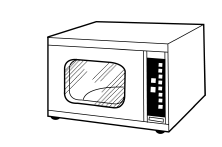
The picture shows a microwave oven. As a microwave oven is operated, electrical energy is transformed into all of the following types of energy EXCEPT —
a)
solar
b)
light
c)
thermal
d)
mechanical
173.
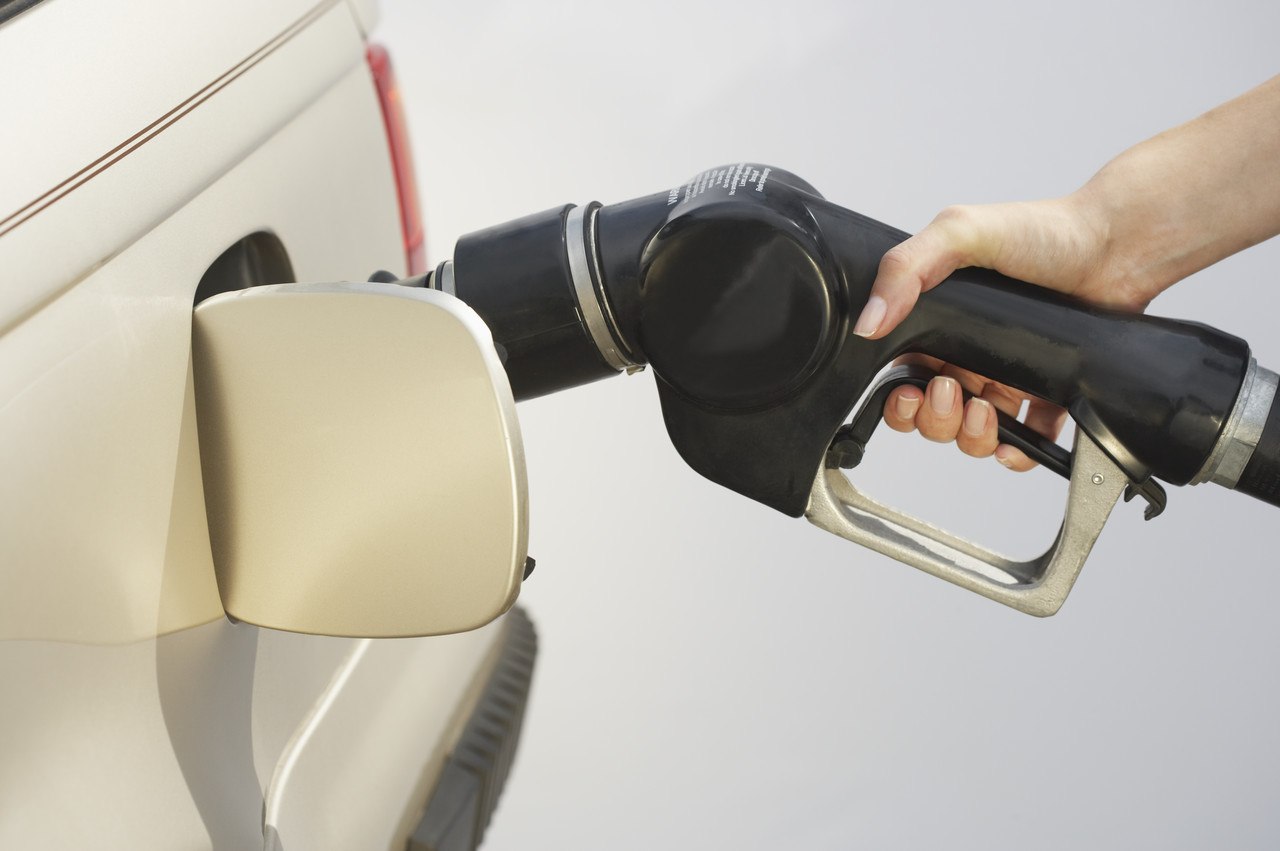
Which energy conversion is taking place when you put gasoline in a car?
a)
thermal -> electrical
b)
mechanical -> electrical
c)
chemical -> mechanical
d)
mechanical -> electromagnetic
174.
Energy transformations occur when...
a)
energy is created through conduction
b)
energy changes from one form to another
c)
two forces slide together that are touching
d)
a chemical reaction takes place
175.
According to the Law of Conservation of Energy, energy cannot be _________ or ____________. 
a)
destroyed, destroyed
b)
created, saved
c)
created, destroyed
d)
lost, found
176.
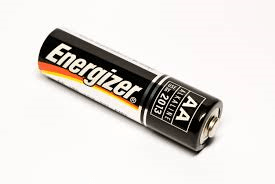
what type of energy is stored in a battery?
a)
electrical
b)
chemical
c)
thermal
d)
mechanical
177.
Mechanical Energy is transferred to _____ Energy.
a)
Solar
b)
Mechanical
c)
Electrical
d)
Potential
178.
Electrical Energy is transferred to _____ Energy.
a)
Thermal
b)
Solar
c)
Electrical
d)
None
179.
Electrical -> Mechanical -> Sound 
a)
A triple beam balance measuring an object’s mass
b)
A pencil sharpener plugged into a wall outlet
c)
A projector displaying a diagram on the screen
d)
A working flashlight used to light up a dark corner
180.
Which energy transformation occurs in a toaster?
a)
chemical to electric
b)
electric to thermal
c)
kinetic to chemical
d)
thermal to potential
181.
Turning on a lamp is an example of energy transformation from electrical to 3 forms of energy. Which of these is NOT created by the lamp?
a)
radiant
b)
light
c)
heat
d)
chemical
182.

In every type of energy transformations, a small amount of ________ energy is formed.
a)
heat
b)
chemical energy
c)
light
d)
sound waves
183.
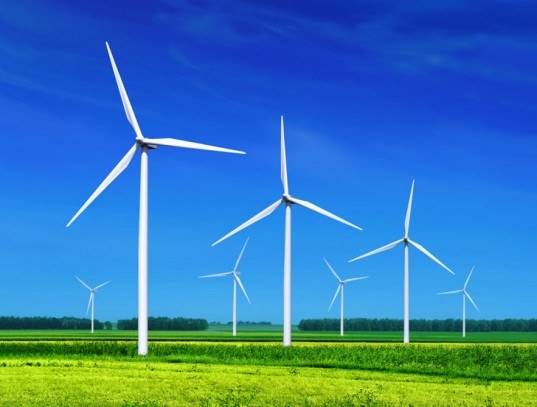
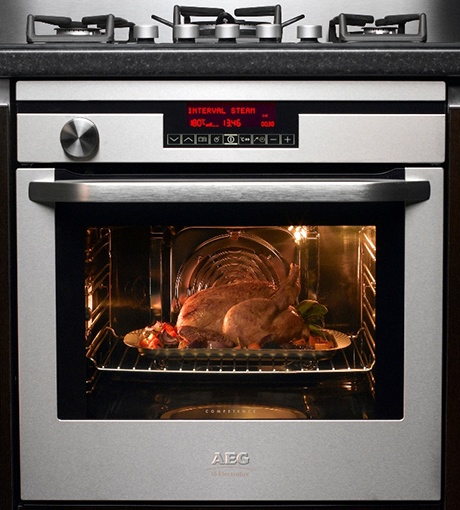
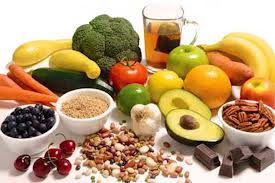
What kind of energy is represented in the picture?
a)
Thermal
b)
Chemical
c)
Sound
d)
Nuclear
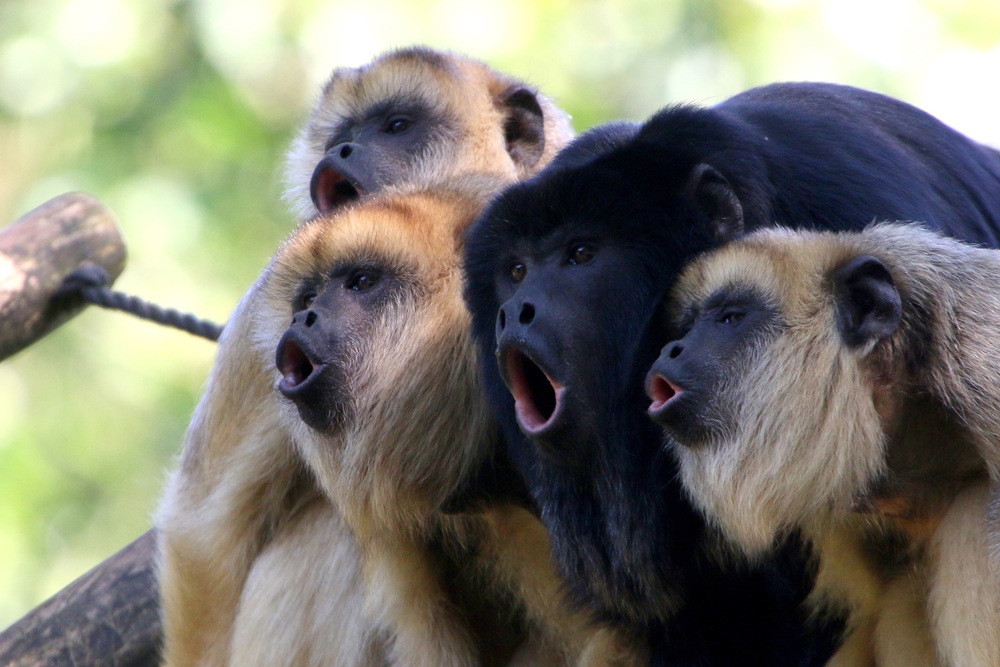
184.

What energy transformation occurs as howler monkeys loudly call to each other in the forest?

a)

Chemical --> Mechanical --> Sound

b)

Chemical --> Sound --> Thermal

c)

Sound --> Chemical --> Radiant

d)

Mechanical --> Chemical --> Sound

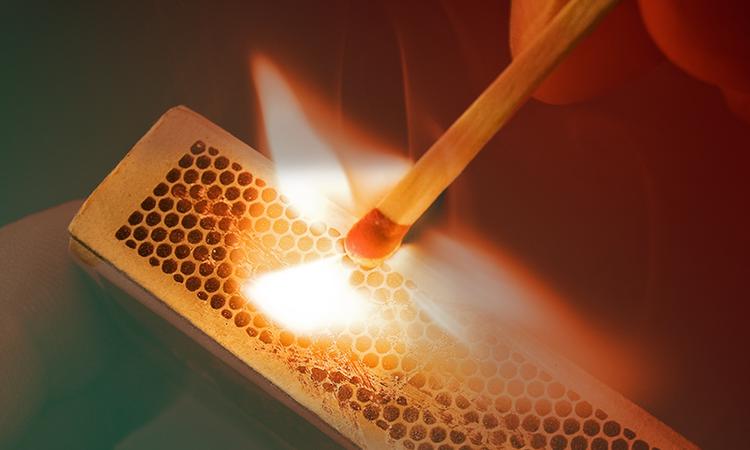
185.

A teacher rubbed a match against a piece of sandpaper. The match started to burn. Which statement best describes the energy changes that occurred?

a)

The chemical energy stored in the match changed to thermal energy and light energy.

b)

The thermal energy stored in the match changed to light energy and chemical energy.

c)

The light energy and thermal energy stored in the match changed to mechanical energy.

d)

The light energy and thermal energy stored in the match changed to chemical energy.

186.
The Law of Conservation of Energy states:
a)
Energy can created or destroyed but not transformed 
b)
Energy cannot be created or destroyed, it can only transformed
c)
Energy can't be created, destroyed or transformed
187.
At which point is potential energy greatest?
a)
W
b)
X
c)
Y
d)
Z
188.
What kind of energy is in an acorn hanging from an oak tree?
a)
Potential
b)
Kinetic
189.
What kind of energy is in a moving skateboard?
a)
Potential
b)
Kinetic
c)
Both potential and kinetic energy
d)
none of the above
190.
A crayon placed on a dark driveway in bright sunlight melted into a colorful puddle. What caused the crayon to melt?
a)
Solar radiation heated the driveway and then heat transferred to the crayon by conduction.
b)
Solar radiation heated the driveway and then heat transferred to the crayon by radiation.
c)
Solar convection heated the driveway and then heat transferred to the crayon by radiation.
d)
Solar convection heated the driveway and then heat transferred to the crayon by conduction.
191.

Match the following

a)
1.

Chemical

b)
2.

Radiant

c)
3.

Mechanical

d)
4.

Nuclear

e)
5.

Electrical

192.

What is an example of Electric Energy

a)

Apple

b)

Rubber Bands

c)

Car Battery

d)

Table

193.

Which statement is true?

a)

Oranges contain Elastic Energy

b)

Food contains Chemical Energy

c)

Phone on the table doesn't contain Gravitational Energy

d)

Radiator contains Nuclear Energy

194.

What type(s) of energy does a fridge contain?

a)

Sound Energy

b)

Thermal Energy

c)

Mechanical Energy

d)

All of the above

195.

Which type of energy does a TV remote have while turning on the TV?

a)

Thermal Energy

b)

Gravitational Energy

c)

Radiant Energy

d)

Sound Energy

196.

What is the definition of Elastic Energy?

a)

Energy stored in the nucleus of the atoms hold the nucleus together

b)

Energy stored in an object by the application of force

c)

Movement of objects or substances from one place to another

d)

The energy an object or substance has because of its position up high

197.

Which is Potential Energy?

a)

Radiant Energy

b)

Mechanical Energy

c)

Chemical Energy

d)

Sound Energy

198.

Heat Energy is called:

a)

Radiant Energy

b)

Chemical Energy

c)

Thermal Energy

d)

Mechanical Energy

199.

Which 2 types of energy does the object in the image use?

a)

Electric and Thermal

b)

Nuclear and Elastic

c)

Chemical and Mechanical

d)

Sound and Elastic

200.

Which is Kinetic Energy?

a)

Gravitational Energy

b)

Thermal Energy

c)

Elastic Energy

d)

Nuclear Energy