
 Worksheets
Unit 6 - Natural Resources/Earth's History/Natural Selection
Total questions: 200
Worksheet time: 3hrs 56mins
What is classification?
organizing organisms according to their characteristics
basic unit of life
the process for averaging my grades in class
the total count of all living things on earth
How are organisms put into groups?
They are organized by characteristics.
If they have similar characteristics they are grouped together.
Each group is organized into more specific groups.
All of these answers are true.
What characteristics describe parts of an organism that you canNOT see?
external structure
internal structure
genetic similarities
embryology similarities
What characteristics show that similar organisms have similar DNA and similar characteristics?
external structure
internal structure
genetic similarities
embryology similarities
What characteristics show that similar organisms develop similarly (the embryos look nearly the same)?
external structure
internal structure
genetic similarities
embryology similarities
What characteristics describe parts of the organism that you can see?
external structure
internal structure
genetic similarities
embryology similarities
I can see that dogs, cats, and elephants all have 4 legs. This is an example of:
external structure
internal structure
genetic similarities
embryology similarities
Catfish and goldfish both have organs that allow them to breath underwater . This is an example of:
external structure
internal structure
genetic similarities
embryology similarities
Chickens and eagles lay eggs; this is where their babies grow and develop before they hatch. This is an example of:
external structure
internal structure
genetic similarities
embryology similarities
The colors of my hair and my eyes are the same as my mom's because I have her DNA. This is an example of:
external structure
internal structure
genetic similarities
embryology similarities
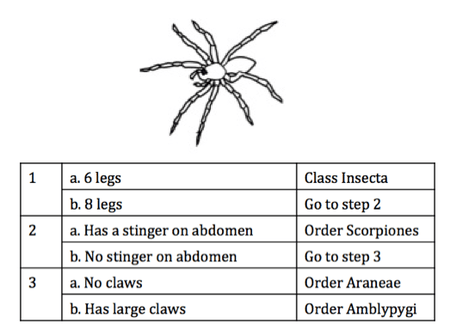

arachnids and insects?


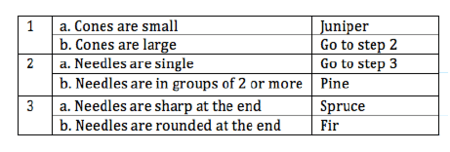
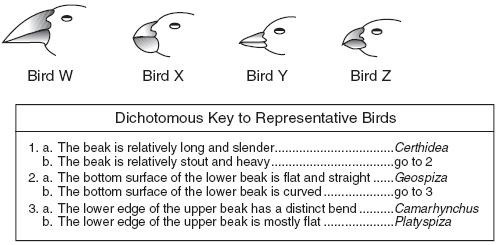
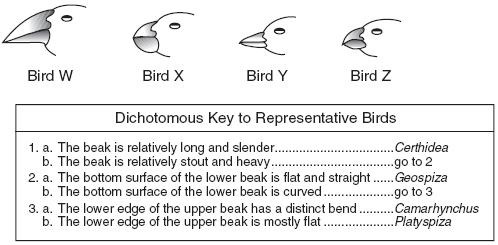



Which type of substance is a homogeneous mixture?
Compound
Solution
Colloid
Suspenseion

Which type of substance is not a pure substance?
Element
Compound
Mixture
What is the purpose of a cladogram?
To map the ancestral relationships and shared traits of different organisms.
To trace the inherited traits of a single species over time.
To check the likelihood of an offspring having a particular trait.
To monitor mutations that arise among different populations.
How has technology helped us in understanding evolutionary relationships?
We can travel back in time to observe different organisms in their habitats.
We clone different organisms using DNA from fossils so we can bring them back and observe.
We can now compare the DNA of different organisms to help determine the relationships between them.
We can follow different organisms on Twitter to look for similar traits and characteristics.
How can a cladogram be used to show how closely related two organisms are?
The further apart two organisms are on a cladogram the more they have in common.
If two organisms are next to each other on a cladogram then they must be the same species.
All organisms share a common ancestor.
You can use a cladogram to see how many traits two organisms have in common. The more in common, the more closely related they are.
What traits do most mammals share? Check all that apply.
Vertebrates
Lay Eggs
Have hair
Produce Milk for their young
Endothermic (Warm Blooded)
A branched diagram that shows ancestry, or how you and your relatives have descended from common relatives.
Cladogram
Pedigree
Family Tree
DNA Test
A “family tree” made by scientists to show relationships of ancestry and similar traits between organisms.
Cladogram
Scientific Family Tree
Pedigree
DNA Test

What characteristics do all of these animals have in common?
Vertebrate
Lungs
Endothermic
Mammal

What do both the squirrel and lion have in common that the other animals do not?
They are both vertebrates
They both have lungs
They are both mammals
They both lose their canine teeth.

Is a bird more closely related to a prosimian or to an amphibian?
Birds are more closely related to prosimians because they have more in common.
Birds are more closely related to amphibians because they have more in common.

What do amphibians, birds, prosimians and humans all have in common? Check all that apply.
Hair
Endothermic
Eukaryotic
Tetrapod
Vertebrate

According to this cladogram, what characteristics do prosimians have in common with humans?
Hair
Eukaryotic
Vertebrate
Endothermic
Tetrapod

Which plant(s) have vascular tissue?
Charophytes
Gymnosperms
Mosses
Flowering Plants
Ferns

What characteristics (features) do liverworts and mosses share?
vascular tissue
reproduce sexually
multicellular
perform photosynthesis

What is different about ferns, gymnosperms, and flowering plants compared to the rest of the plants?
use seeds to reproduce
have leaves with veins
have vascular tissue
reproduce sexually
What do the circles represent?
Shared traits
Common ancestors
Extinctions
Missing fossils

Which lettered circle (or circles) represents a common ancestor of flowering plants and gymnosperms?
F
E
D
C

Which lettered circle (or circles) represents the most recent common ancestor of flowering plants and gymnosperms?
F
E
D
C

Are mosses a direct ancestor of flowering plants?
Yes
No

The letter (a) represents the most recent common ancestor of mosses and flowering plants.

This image is an example of a.....
Mendelian Life Graph
Cladogram
Punnett Square
Pedigree Chart
What is the purpose of a cladogram?
When looking at a cladogram, what is a derived character?
A trait that is unique to the most common ancestor and passed to its defendants.
The ability of an organism to survive and reproduce.
fitness
energy
agility
instinct

Structures or behaviors that help an
organism survive in its surroundings
adaptations
inherited traits
learned behaviors
structural behaviors
What is the process where animals live or die based on their adaptations to their environment.
Genetic Drift
Natural Selection
The Circle of Life
Mammoth
Shows how different groups of organisms have changed over time.
fossil record
homologous structures
embryology
Scientist that contributed the most to our understanding of evolution
Darwin
Lamarck
Adaptations can be:
camouflage
ability to survive cold weather
hunting skills
all of the above
A species could go extinct if:
food becomes more plentiful.
members of the species have adaptations to enhance survival.
the environment changes drastically and no one can adapt.
there is less competition for resources.


Based on Darwin's findings, what determines an organism’s ability to survive?
Its ability to have babies
Its ability to adapt to the environment
Its ability to move out of a bad environment
Its ability to win competitions


The venom of a snake is considered to be _____________ adaptation.
Structural
Behavioral
Physiological
Mimicry
The spines on a hedgehog is considered to be _____________ adaptation.
Structural
Behavioral
Physiological
Learned
Running away from a predator is considered to be _____________ adaptation.
Structural
Behavioral
Physiological
Camouflage
A characteristic or trait that helps an organism survive in its environment is a/an (a)
Variation in (a) would best help bison survive a harsh winter

Beak shape depends on...
where birds live
who they hang out with
diet (fish or seeds)
exercise

A giraffe has a long neck in order to better reach leaves to eat. This is an example of _____.
an adaptation
environment
response
stimulus
Which of the following is an inherited trait?
swimming
eye color
skateboarding
callused fingers
Determine if the traits are structural or behavioral.
Migration
Behavioral because it makes animals move away and find better resources
Hibernation
Behavioral because it allows animals to save energy
Camouflage
Structural because it allows organisms to hide in plain sight
Venom
Structural because it is a chemical defense
Storage of food in bulb
Structural because it allows plants to save energy for later use

Physiological
Structural
Behavioral

Physiological
Structural
Behavioral

Physiological
Structural
Behavioral
A(n) _____________ is a trait that helps an organism survive and reproduce.
natural selection
trait
adaptation
evolution
Match the type of adaptation with the correct example.
physical
zebra's stripes
behavioral
hunting in a pack
physiological
sweating / fluffing feathers
Animals that only eat meat are called (a) Animals that only eat plants are called (b) Animals that eat both plants and animals are called (c) If an animal hunts other animals for survival, it is a (d) , and if it is hunted, it is the (e)
When cold-blooded animals prepare their bodies for winter, the process is known as __________.
migration
brumation
hibernation
molting
_____________ sailed on the British ship, HMS Beagle and studied on the __________.
Goodall, Galapagos
Darwin, Galapagos
Goodall, Canary Islands
Darwin, Canary Islands
Compare and contrast the iguanas Darwin observed:
reptiles
4 legs
tendrils
eat plants
green
smaller claws
climb trees
eat leaves
brown
larger claws
grip rocks
eat seaweed
Draw the beak shape that would be BEST for a bird that picks insects off of sticks.

Scientists said they could identify which island a __________ was from just by looking at them.
sloth
iguana
finch
tortoise
Match the factors of Natural Selection with their description.
Overproduction
Too many offspring + not enough resource
Variation
Many versions of a trait in a species
Selection
desirable traits are chosen to mate
Competition
Fighting for resources
Environmental Change
Any change in the habitat
When animals fight for resources, it is called (a) . If there are too many offspring, or (b) , and some animals may die out. The ones that survive have the positive (c) of the trait, and are more desirable for (d) of a mate.
Evolution is the result of a process called ____________
Natural Selection
Artificial Selection
Survival of the Weakest
Supernatural Selection
According to natural selection, organisms more suited to their environment are better able to
Sleep
Survive
Perish
Migrate
The process of passing down favorable traits to one's offspring is called
Artificial Selection
Mutations
Evolution
Inheritance
Natural selection happens when an individual's genes ______________ from the genes of other members of its species.
Become different
Stay the same
Become separated
Differences in genes can cause differences in __________ (Choose the best answer).
Mutations
RNA
Appearance
Changes in genetic material are called _____________
Mutations
RNA
Genes
Mutations can be inherited or be
Chosen by the individual organism
Caused by environmental factors
Refused at any time
True or False? All changes in genes are harmless.
True
False
Some changes in genes can help organisms _____
Survive
Mutate
Rest

How does waterproof feathers help penguins survive in the Antarctic. (Choose all that apply)
Helps keep them warm and dry
Helps them blend in
Helps them swim in cold waters
Helps them see further in cold weather

Guppies are small fish that live in South American rivers. They can have different- sized spots on their bodies.
The river bottoms are covered in rocks. Guppies with spots that are the same size as the rocks on the bottom are harder for bigger fish to see and catch.
The diagram below shows a population of guppies that live in a river. At time 1, the population had the same number of guppies with small and large spots. At time 2, after many generations, there were many more guppies with small spots and fewer guppies with large spots in the population.
How did the environment change between time 1 and time 2? How did the population change?
You cannot tell how the environment changed. With each generation, more guppies passed on the gene for small spots to their offspring.
The rocks became smaller. With each generation, more guppies with small spots survived long enough to pass on the gene for small spots to their offspring.
The rocks became smaller. Guppies with small spots are more likely to survive, so the guppies with large spots changed to have small spots.
The rocks became smaller. Guppies with small spots are more likely to survive, so both kinds of guppies passed on the gene for small spots to their offspring.
What is the process where animals live or die based on their adaptations to their environment.
Genetic Drift
Natural Selection
The Circle of Life
Mammoth

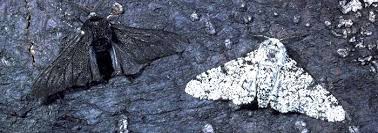
A white moth living on a brown tree is an example of a(n).....
adaptive trait
non-adaptive trait
trait
moth in trouble
Which word describes the word "variation"?
Adaptations
Differences
Traits
Genetics
A variation is . . .
when organisms have camouflage like spots or stripes
an organism from a different dimension
when you order different food than your friend
differences between organisms in the same species


Which animal is the most FIT to live in the desert?
Penguin
Bear
Tiger
Lizard
A green rat snake that lives in the grass and a brown rat snake that lives in the desert is a form of ______________.
Human Genetic Modification
Selective Breeding
Natural Selection
Artificial Breeding
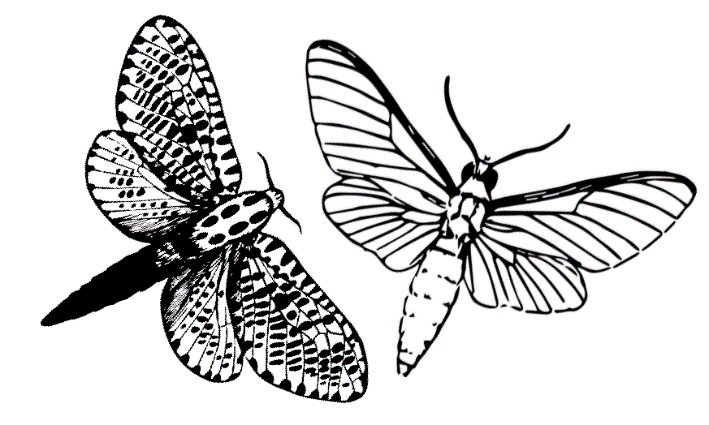
According to natural selection, light colored tree trunks would favor
light colored moths
dark colored moths
red colored moths
red and light colored moths
A fox with thicker fur than average would have a survival advantage over other foxes if:
There is more competition for food in the fox population.
The air temperature significantly decreases in winter.
A drought occurs, limiting the amount of water available.
A new disease appears that infects the foxes.
What is the advantage of having different shaped beaks?
To look different from other species.
To protect itself against predators.
To protect itself against prey
To be able to eat the food readily available in the environment.
Which word best describes the following definition?
The process by which individuals that are better adapted to their environment are more likely to survive and reproduce than other members of the same species.
Trait
Generation
Adaptive Trait
Natural Selection

Tree squirrels can have different fur colors.
Squirrels live in forests where foxes also live. Foxes hunt squirrels for food. Squirrels that have fur that is the same color as the trees are harder for the foxes to see and catch.
The diagram below shows a population of squirrels that live in a forest. At time 1, the population had the same number of black and gray squirrels. At time 2, after many generations, there were many more black squirrels and fewer gray squirrels in the population.
How did the environment change between time 1 and time 2? How did the population change?
You cannot tell how the environment changed. With each generation, more squirrels passed on the gene for black fur to their offspring.
There were more black trees. Squirrels with black fur are more likely to survive, so the squirrels with gray fur changed to have black fur.
There were more black trees. Squirrels with black fur are more likely to survive, so both types of squirrels passed on the gene for black fur to their offspring.
There were more black trees. With each generation, more squirrels with black fur survived long enough to pass on the gene for black fur to their offspring.

Which histogram has more variation?
A
B
C
The both have the same amount of variation
Variations are caused by . . .
Kaleidoscopes
Variety Shows
Mutations
A change in phenotypic expression
The phrase "Survival of the Fittest" would best describe...
Natural selection
Artificial selection
Selective breeding
None of the above
Who is the English naturalist that's responsible for Natural Selection?
Gregor Mendel
Robert Hooke
Charles Darwin
Isaac Newton
Which of the following species did Charles Darwin study while on his voyage to the Galapagos Islands?
Finches
Spiders
Giraffes
Fishes
_________ is when an organism resembles another animal.
Instinctive behavior
Camouflage
Natural Selection
Mimicry
__________ is when an organism blends in with its environment.
Mimicry
Camouflage
Adapting
Learned behavior
What are the two types of behavioral adaptations?
Learned and natural selection
Instinctive and camouflage
Camouflage and mimicry
Instinctive and learned
The venom of a snake is considered to be _____________ adaptation.
Structural
Behavioral
Physiological
Mimicry
The spines on a hedgehog is considered to be _____________ adaptation.
Structural
Behavioral
Physiological
Learned
Running away from a predator is considered to be _____________ adaptation.
Structural
Behavioral
Physiological
Camouflage


What type of evidence is represented in the picture above:
Fossils
Vestigial Structures
DNA
Homologous Structures

Which statement is true comparing natural selection and artificial selection?
In natural selection, traits benefit humans and in artificial selection, the traits benefit the species
In natural selection, traits benefit the species and in artificial selection, the traits benefit humans
In natural and artificial selection, the process takes hundreds of years to occur
In natural and artificial selection, nature determines what traits will be passed down to offspring.
What is an example of artificial selection?
Letting dogs choose their own mate
Letting plants pollinate on their own
Crossing a labrador and a poodle to create a labradoodle
1. The process of choosing parent organisms for desired characteristics is called
natural selection
Artificial selection
random selection
genetic manipulation

The Galapagos Islands are off the coast of ________________.
North America
South America
Central America
Antarctica
have the ability to interbreed.
What classifies a mass extinction?
Only 5% of species go extinct.
Massive flooding due to hurricanes.
Happens in a relatively short period of time and is global
There have never been any mass extinctions on Earth.
Which of the following is NOT an accepted criterion for a mass extinction event?
The event must have occurred in a relatively short time frame.
The extinction involves multiple lifeforms and is widespread.
A significant part of life on Earth became extinct.
The cause of the mass extinction must be obvious.
Which of the following mass extinctions occurred first?
Ordovician-Silurian
End Permian
Late Devonian
Cambrian
Which of the following events resulted in the most species extinctions overall?
Cretaceous-Tertiary
Ordovician-Silurian
End Triassic
End Permian
What is another widely used name for the Cretaceous-Tertiary boundary?
X1-X2 boundary
C-T boundary
K-T boundary
M-C boundary
The Devonian extinction had the most effect on which community of species that were living at the time?
Freshwater tetrapods.
Terrestrial plants.
Marine reef builders.
Small mammals.
The Geologic Time Scale is a record of what?
The known history of rocks and fossils.
A list of every living thing ever.
Classification of rocks.
Paleozoic, Mesozoic & Cenozoic are all
Epochs
Eras
Periods
Eons
Which is the most recent era of time- the one that we are currently in?
Mesozoic
Cenozoic
Paleozoic
Precambrian
Which Eon or Eons were the longest in Earth history and the one geologist know the least about?
Tertiary
Hadean, Archean, Proterozoic
Phanerozoic
Silurian

An index fossil is used by scientists to
tell us the absolute age
tell us the relative age

You can tell that a fossil is an index fossil because...
Only because the fossil is in one row .
Because the fossil is only in one column.
Because the fossil is in all of the rows and columns.
Because the fossil is in only one row in all of the columns.

Place the mass extinctions in order from the most that were extinct to the least.
Devoninan 30%, triassic, 35%, Cretaceous 50%, Ordovician 50%, Permian 60%
Permian 60%, Ordovician 50%, Cretaceous, 50%, Triassic, 35%, Devonian 30%
What is a mass extinction?
affects a large number of species at the same time
only affects a few species at a time
is only caused by climate change
caused the dinosaur extinction

How many major mass extinctions have occurred in the past?
4
5
3
10

Index fossils is used by scientists to
determine the relative age
determine the absolute age

What do scientists use to help determine when a mass extinction has occurred?
The rock layers do not have that organism present
Index fossils
younger and older rock layers
fossils

Which fossil appears the be the best index fossil?
a
b
c
d

What two organisms are the most closely related?
Sharks and ray finned
ray finned and amphibian
amphibian and primate
primate and rodent
When two organisms seem to be closely related, this means they have a common ancestor?
true
false

The fly and the flea have what traits in common?
segmented bodies
wings
double wings
legs
What two organisms have the most traits in common, meaning they are most closely related according to the Cladogram
worm and spider
butterfly and fly
dragonfly and spider
ant and flea
If two organisms have common structure and function they do not necessarily have a common ancestor
true
false

Do the bat and the bird have similar structures?
Yes
no
Do the bat and the bird have similar functions?
Yes
no
Do the bat and the bird have a common ancestor?
Yes
no

What is the order of extinctions from the greatest amount of extinctions to the least?
1,2,3,4,5
5,4,3,2,1
3,1,5,4,2
3,5,1,4,2
What is the order of extinctions from the least amount of extinctions to the greatest?
2,5,1,4,6
2,4,5,1,6
5,4,3,2,1
1,2,3,4,5

When a fossil no longer is in the fossil record scientist know that that organism is...
ready to mate
extinct
a dodo bird
a dinosaur
Which of these answer BEST describes a fossil?
fossils are remains or traces of once-living organisms found in layers of rock or ice, or in amber.
organism from which other organisms are descended.
body of an organism that died recently but has not decomposed

Jonah's science class is examining different rocks. Jonah finds the rock shown below. What can Jonah see on this rock?
DNA
Fossil
organism that died recently
Which of these statements is TRUE of the fossil record?
The fossil record contains a complete record of every extinct organism.
The fossil record contains mostly soft organisms that had no hard bones of outer shell
Newer layers contain organisms more similar to modern-day organisms than do older layers.

The diagram below shows a portion of the fossil record in sedimentary rock. Different rock layers and fossils are clearly visible.
Layer B contains the second-oldest fossils.
Layer A contains the most recently formed fossils.
The fossils in layer B are older than those in layer D.
Alex is studying leg bone fossils of an extinct species to see if the extinct organism could be an ancestor of a certain living species. Which of the following types of evidence could he obtain from studying fossils?
genetic evidence
embryological evidence
structural evidence
A scientist described two modern-day species as sharing a common ancestor. What does it mean when two species share a common ancestor/
It means that the two species are actually the same species
It means that one of the species evolved from other species
It means that both species evolved from one species that lived in the past.
Which of these best describes the tiny leg bones that some whales have, which do not aid in their movement or serve any other function?
structures that grows and improved in function as they are used
structures that function at certain times of the year or under certain conditions
structures that may have been useful for ancestral species, but are reduced in size and have little or no function in a living species.
Which of these descriptions is an example of an unused body structure?
a bat's wing that enables it to fly
the tiny leg bones found in snakes that have no legs.
the front legs of a dog that supports its weight as it walks and runs.
Which of these statements is MOST LIKELY true of two species that share a recent common ancestor?
The two species have different developmental patterns
The two species share DNA sequences
The two species have similar arms and legs

The diagram below shows a model of the proposed relationship among some groups of mammals. Which of these organisms is MOST CLOSELY related to whales?
camel
bison
hippo

The diagram shows a model of the proposed relationships between some groups of ancient and modern mammals. According to the diagram, how long ago did whales and pigs have a common ancestor?
about 15 million years
about 55 million years
about 65 million years
Why do we classify living things?
To keep information private.
To make finding information easier.
To confuse people.
To make animals healthier.
What does classify mean?
Going to class
to put things into groups
You have a backbone
Kingdom

