
 Worksheets
FX chem 20 Final Review
Total questions: 162
Worksheet time: 4hrs 12mins

This could be the dot diagram of
Mg
Cl
C
O
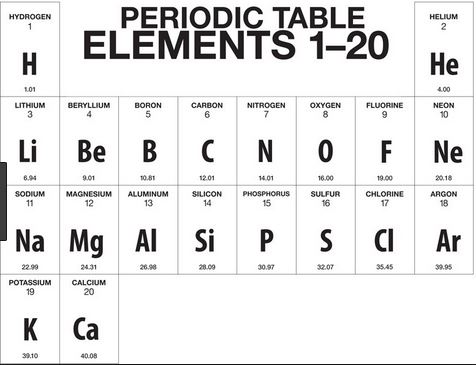
How many valence electrons does Aluminum Have?
1 Valence electron
2 Valence electron
3 Valence electron
4 Valence electron
5 Valence electron
How would you draw a Lewis dot diagram for Magnesium?


Chloroform was used as anesthesia and a sedative a long time ago. Which of these is the probable formula of the molecule shown?
Cl2
C6H12O6
CHCl3
CH4
H2O
Why do metals conduct electricity?
They are shiny
The electrons are delocalised and able to move
The electrons are held tightly within the lattice
The electrons are shared between two metal ions
What is the basis of a metallic bond?
the attraction of neutral metal atoms.
the attraction between protons and neutrons.
the attraction between positive metal ions and interlocking electrons.
the attraction between positive metal ions and free moving electrons.
Cu, Mg, Sr, Ca
F, Cl, Br, Si
Cs, Rb, Ca, Mg
Zn, Cd, Ag, Cu
What shape would PH3 have?
Trigonal Planar
Trigonal pyramidal
Bent
Linear

linear
trigonal planar
bent
tetrahedral
3 atoms bonded and 0 lone pairs
linear
trigonal planar
bent
tetrahedral
trigonal pyramidal
Silicon and carbon react to form silicon carbide. The crystal structure of silicon carbide is similar to that of diamond. Silicon carbide is very hard because
it has a high melting point.
silicon atoms and carbon atoms form triple bonds.
it has a giant network structure with strong covalent bonds.
both silicon and carbon atoms have four outermost shell electrons.
Which type of solid has mobile electrons in the crystal (sea of electrons)?
Ionic
Molecular
Metallic
Covalent Network
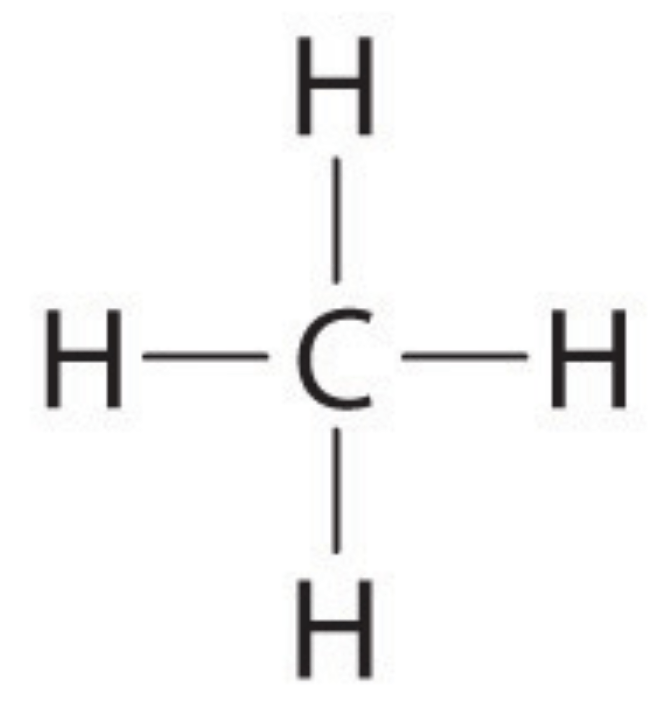
Classify the following molecule.
polar
nonpolar
Classify the following molecule as polar or nonpolar: HCl
Polar
Nonpolar
Which of the following formulas represents a polar molecule?
H2
NI3
CO2
CCl4
Which force is only found between polar covalent molecules?
Ionic bond
Dipole Dipole
London Dispersion Force
Covalent bond
In this force, electron movement cause a slight charge at a single instant. This charge is temporary.
Hydrogen bonding
Dipole Dipole
London Dispersion Forces
Ionic Bonds
Which is not a bond, but is an intermolecular force?
Covalent Bond
Ionic Bond
Hydrogen Bond
These are all bonds
All polar covalent molecules contain:
(Check all that apply)
Hydrogen bonds
Dipole Dipole
London Dispersion Forces
Ionic Bonds
H2O, NH3, and HF all contain:
(Check all that apply)
Hydrogen Bonds
Dipole Dipole
London Dispersion Forces
Ionic Bonds
Nonpolar molecules all contain
(Check all that apply)
Hydrogen Bonding
Dipole Dipole
London Dispersion Forces
Ionic Bonds
What could make London Dispersion Forces stronger?
Heating up the molecules
Heavier molecules
Molecules with more electrons
Which of these forces is always the strongest?
Hydrogen bonds
Dipole Dipole force
London Dispersion force
Ionic bonds
Which of the following is an intramolecular force?
hydrogen bonding
covalent bonding
Which of these is the weakest intermolecular force [IMF]?
Dipole-dipole
Hydrogen bonding
London dispersion forces
Which intermolecular force [IMF] requires hydrogen and one of the following: nitrogen, oxygen, fluorine?
Dipole-dipole
Hydrogen bonding
London dispersion forces
Which intermolecular force [IMF] is characterized by partial charges?
Dipole-dipole forces
Hydrogen bonding
London dispersion forces
Which intermolecular force [IMF] causes water to have an elevated boiling point?
London dispersion forces
dipole-dipole forces
hydrogen bonding

Which type of intermolecular force [IMF] does this molecular drawing best represent?
dipole-dipole forces
hydrogen bonding
London dispersion forces
What explains the very high melting and boiling point of water?
Strong dipole-dipole bonds between water molecules
Strong hydrogen bonds between water molecules
Dispersion forces which are present in all molecules
Asymmetrical shape of the polar bonds.
Which substance has the weakest intermolecular forces [IMF]?
Substance A, boiling point of 75 °C
Substance C, boiling point of 25 °C
Substance B, boiling point of 105 °C
Substance d, boiling point of 45 °C

Which type of bond is being formed in this diagram?
covalent bond
energy bond
ionic bond
Which of the following is the correct Lewis dot between Rb and O?


What is the formula for Boyle's Law?
P1V1=P2V2
P1V1/P2V2
P1V2=P2V1
P1/V1=P2/V2
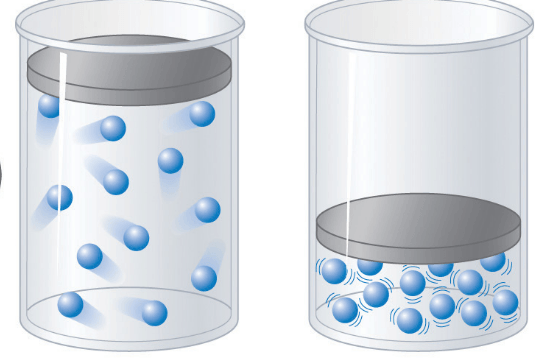
Which best explains why increasing the pressure on a gas decreases the volume of the gas sample?
Increasing the pressure causes the gas particles to hit the container walls more often.
Increasing the pressure on a gas sample moves the gas particles closer together.
Increasing the pressure on a gas sample causes the kinetic energy to increase.
There are 40 liters of helium in a balloon at a temperature of 100 K. If the temperature of the balloon is increased to 200 K, what will be the new volume of the balloon?
80 L
45 L
54 L
45.33 L
If a beach ball has a volume of 261 L at a temperature of 502 K, what will be the new temperature of the balloon if the volume decreases to 176 L?
744 K
0.0030 K
339 K
512 K
When the temperature of a gas decreases (with pressure and amount held constant), does the volume increase or decrease?
Unaltered
Remains constant
Increase
Decrease
If the Kelvin temperature of a gas is doubled, the volume of the gas will increase by ____.
A factor of 2
A factor of 1
A factor of 3
A factor of 0.5
If I initially have 4.0 L of a gas at a pressure of 1.1 atm, what will the volume be if I increase the pressure to 3.4 atm?
1.29 L
12.36 L
1.29 atm
12.36 atm
Oxygen gas is at a temperature of 40oC when it occupies a volume of 2.3 liters. To what temperature should it be raised to occupy a volume of 6.5 liters?
611.84oC
611.84 K
880.33 K
880.33oC
How do you convert Kelvin to Celsius?
Add 273
Subtract 273
You can't convert those
They are the same thing
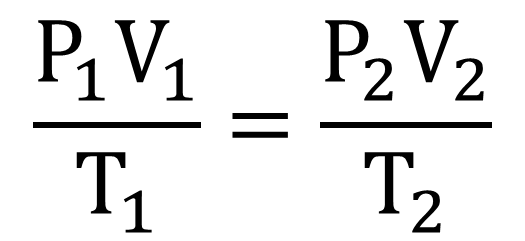
Which answer shows the correct Combined Gas Law


A rigid plastic container holds 1.00 L methane gas at 0.9 atm pressure when the temperature is 22.0°C. How much more pressure will the gas exert if the temperature is raised to 44.6°C?
0.97 atm
1.82 atm
0.97oC
1.82oC
What does R stand for
Ideal gas constant
Real gas constant
Temperature constant
Ideal gas law
Under which conditions of temperature and pressure does carbon dioxide behave most like an ideal gas?
A) Low temperature and low pressure
B) Low temperature and high pressure
C) High temperature and low pressure
D) High temperature and high pressure
A real gas differs from an ideal gas because the molecules of a real gas have
A) Some volume and no attraction for each other
B) Some volume and some attraction for each other
C) No volume and no attraction for each other
D) No volume and come attraction for each other
One reason that a real gas deviates from an ideal gas is that the molecules of a real gas have
A) a straight-line motion
B) no net loss of energy on collision
C) a negligible volume
D) forces of attraction for each other
According to the kinetic molecular theory, the molecules of an ideal gas
A) have a strong attraction for each other
B) have significant volume
C) move in random, constant, straight-line motion
D) are closely packed in a regular repeating pattern
A sample of chlorine gas is at 300K and 1.00 atmosphere. At which temperature and pressure would the sample behave more like an ideal gas?
A) 0 K and 1.0 atm
B) 150 K and 0.50 atm
C) 273 K and 1.00 atm
D) 600 K and 0.50 atm

Identify the manipulated variable :
Total weight before the glass rod is broken
Length of copper wire
Type of glass rod
Size of glass rod

Identify the manipulated variable :
Volume of distilled water
Steel nail and iron nail
Type of nail
Resistance towards rusting
Identify the constant variable :
Volume of distilled water
Condition of nail
Type of nail
Size of nail

What is the INDEPENDENT variable (cause)in this experiment?
"Which type of metal, copper or aluminum, conducts heat faster?"
size of metal
types of metal
time it takes to heat up
shape of the metal
Thomas tests different types of liquids to see which will grow his plants the most. He has water, soda, milk, and no liquid at all. What is the control group?
Water
Soda
Milk
No liquid
Copper(II) sulphate solution
Electrolyte
Non-electrolyte
Solid copper(II) chloride
Electrolyte
Non-electrolyte
What state of matter is an electrolyte?
solid
gas
plasma
aqueous
What is required for a liquid to conduct an electric current?
ions that are mobile
ions in a strong bond
covalent bonds
shared protons
Why are all ionic compounds electrolytes?
because they are non-metals
because they share electrons when they bond
because they are electrically neutral
because they dissociate into ions
Why are molecular compounds nonelectrolytes?
they do not have kinetic energy
they do not contain atoms
they do not have chemical bonds
they are not composed of ions

Which of the following containers most likely contains sugar?
A B
Container A because it forms ions.
Container B because it forms ions.
Container A because it does not form ions.
Container B because it does not form ions.

Four chemical solutions are shown above. Which of the following solutions would correspond to a weak electrolyte?
IV
III
II
I and II
A solution has an [OH] of 1.0x10⁻⁸. What is the pOH? Give your answer to 1 significant figure.
(a)
A solution has a pH of 6.72. What is the pOH? Give your answer to two decimal places
(a)
What is the concentration of hidroxide ions in a solution with a pH = 7.65?
2.24x10⁻⁸
2.5x10⁻⁷
4.47x10⁻⁷
1.8x10⁻⁸
If the pH of a solution is 4.0, what is the pOH?
4.0
10.0
1.0 x 10 -4
cannot be determined from the information
If a solution has a pH of 1 what is the pOH? Is it an acid or base? (pick 2)
acid
base
13
15
neutral


If we have a solution of NaCl at of 6.6 mol/L at 60°C, what will happen?
More NaCl can be dissolved.
NaCl will precipitate out.
The solution is saturated.

If we have a solution of NaCl at of 6.5 mol/L at 90°C, what will happen?
More NaCl can be dissolved.
NaCl will precipitate out.
The solution is saturated.
You are given a small beaker of solution at room temp. You add a bit of solute to the solution and it dissolves. The solution was:
saturated
unsaturated
concentrated
warm

What is this image representing?
Saturated
Unsaturated
Supersaturated
Insoluble

What is this image representing?
Saturated
Unsaturated
Supersaturated
Insoluble

Molarity is measured in _____.
mol/g
mol/L
mol
mol/mL
What is the molarity in 650 mL of solution containing 63 grams of sodium chloride (NaCl)?
What is the concentration of a solution in parts per million if 0.02 grams of NaCl is dissolved in 1000 grams of water?
2 ppm
20 ppm
200 pm
0.2 ppm
In general as temperature decreases, the solubility...
increases
decreases
stays the same
How do you increase the concentration of a solution?
Add more solute
Reduce the amount of solute
Add more solvent
Reduce the amount of solvent
A student prepares a solution by dissolving 60.00 g of glucose (molar mass 180.2 g mol-1) in enough distilled water to make 250.0 mL of solution. The molarity of the solution should be reported as
12.01 M
12.0 M
1.332 M
1.33 M
1.3 M
What mass of NaCl is needed to make 10 mL of 50 mg/mL NaCl solution? *Give final answer!
500 mg NaCl
0.5 g NaCl
500,000 g NaCl
50 mg NaCl
What mass of CaCl2 is needed to make 100 mL of 1.2 g/mL CaCl2 solution? *Give final answer!
0.12 g CaCl2
120 mg CaCl2
0.12 mg CaCl2
120 g CaCl2
120,000 g CaCl2
Which of the following is the Dilution Formula?
V1M1 = V2M2
M = m/V
V = mT
PV = nRT
A dilution is when
solute is added to the volume of solution
water is added to the volume of solution
solute is removed from the volume of solution
water is removed from the volume of solution
What volume, in milliliters, of 10.0 M NaOH is needed to prepare 300.0 mL of 2.00 M NaOH by dilution?
0.067 mL
60.0 mL
100 mL
125 mL
What is the molarity of a solution made by diluting 26.5 mL of 6.00M HNO3 to a volume of 250.0 mL?
15.9 M
0.636 M
0.642 M
1.59 M
To prepare a solution of accurately known volume, use a
measuring cylinder
beaker
concial flask
volumetric flask
To deliver a fixed accurate volume of a solution, use a
pipette
burette
dropper
beaker

What is the reading on this burette?
24.2 mL
24.0 mL
25.8 mL
23.9 mL
25.0 cm3 of sodium hydroxide solution is tritrated against 0.200 mol dm–3 hydrochloric acid until the indicator just changes colour. 27.5 cm3 of the acid are required to reach the end point.
Which of the following pieces of apparatus should be used to transfer 25.0 cm3 of the sodium hydroxide solution?
Burette
Measuring cyclinder
Pipette
Volumetric flask
You need to make 200 mL of a 0.20 M aqueous solution of sodium chloride. The only available solution is 1.0 M. Determine how to make the needed dilution.
Add 160 mL to the initial volume
Add 160 grams to the initial volume
Evaporate 160 mL from the initial volume
the experiment cannot be conducted with the materials provided
In an aqueous solution of 0.12M calcium phosphate, what is [Ca2+]?
0.12 M
0.06 M
0.24 M
0.36 M
In the reaction of aqueous MgCl2 and aqueous NaOH, a spectator ion would be:
Na+
OH-
Mg2+
H+
Standard temperature and pressure (STP) mean
A temperature of 0°C and a pressure of 101.3 kPa, or 1 atmosphere (atm).
A temperature of 100°C and a pressure of 101.3 kPa, or 1 atmosphere (atm).
A temperature of 0°K and a pressure of 10 atmosphere (atm).
What is the molar mass of C2H4O2?
40 g/mol
50 g/mol
60 g/mol
68 g/mol
At STP, 1 mol, or representative particles, of any gas occupies a volume of......................
24.4 L
44.2 L
22.4 L.

Tastes bitter
acid
base
both an acid and a base
Which is the correct set of acid properties:
sour taste, corrosive, change litmus from red to blue
sour taste, corrosive, change litmus from blue to red
sweet taste, slippery, change litmus from blue to red
sour taste, slippery, change litmus from blue to red

Reacts with metals
acid
base
both acid and base
Complete the following reaction:
HCl + Mg(OH)2 -->
MgCl2 + H2O
Mg +H2O
MgCl2 + H2
MgCl2 + H2O + CO2
Your teacher tells you that a substance is acidic. This means the pH will be...
More than 7
7 exactly
Less than 7
Higher than 14
Holly has an unknown substance in a beaker. She wants to determine the relative pH of the unknown substance. She places a piece of blue litmus paper into the substance, and the litmus paper stays blue.
The substance in the beaker
is a base
is an acid
have neutral pH
doesn't have pH
An acid that has more than one ionizable hydrogen is a ____.
binary acid
polyprotic acid
strong acid
weak acid
Which of the following is a polyprotic acid?
HCl
HF
HBr
H2SO4
HCl is a strong acid because ____.
it ionizes completely into H+ and Cl- ions
it is very concentrated
it ionizes incompletely into H+ and Cl- ions and some stays as HCl
it will react with bases
Household vinegar has a pH of approximately 3.0. Which would appear yellow when added to a vinegar solution?
Methyl orange
Bromcresol green
Phenophthalein
Litmus
Phenolphthalein has a pink color in a solution that has a pH of
5
11
1
7
Which indicators would cause a solution with a pH of 2 to turn red?
Bromthymol blue and thymol blue
Bromcresol green and litmus
Litmus and methyl orange
Methyl orange and phenolphthalein
An indicator was used to test a water solution with a pH of 3. Which indicator color would be observed?
Yellow with methyl orange
Pink with phenolphthalein
Blue with litmus
Yellow with bromcresol green
At what pH will bromthymol blue, thymol blue, and bromcresol all be yellow?
4
2
7
5
NaCl
Ca(NO3)2
2NaOH(aq) + CuCl2(aq) → 2NaCl(aq) + Cu(OH)2(s)
The separation of ions that occurs when an ionic compound dissolves is
ionization
dissociation
electronegativity
spectation
_AgNO3 + _H2S →_Ag2S+_HNO3
Balance this equation, AlCl3 + NaOH → Al(OH)3 + NaCl
3,1,3,1
1,3,3,1
1,1,1,3
1,3,1,3
PCl5(g) ⇌ PCl3(g) + Cl2(g)
Which statement describes this system?

