
 Worksheets
Grade 9 Advance EOT-1
Total questions: 162
Worksheet time: 3hrs 17mins
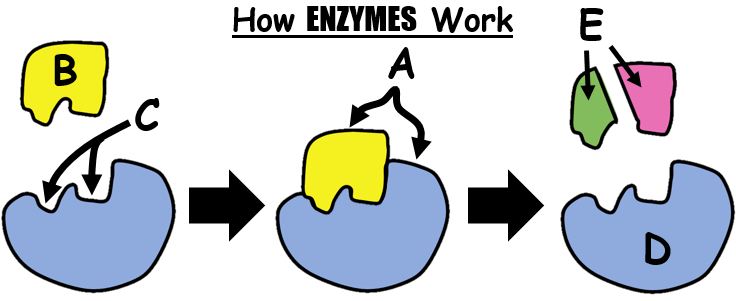
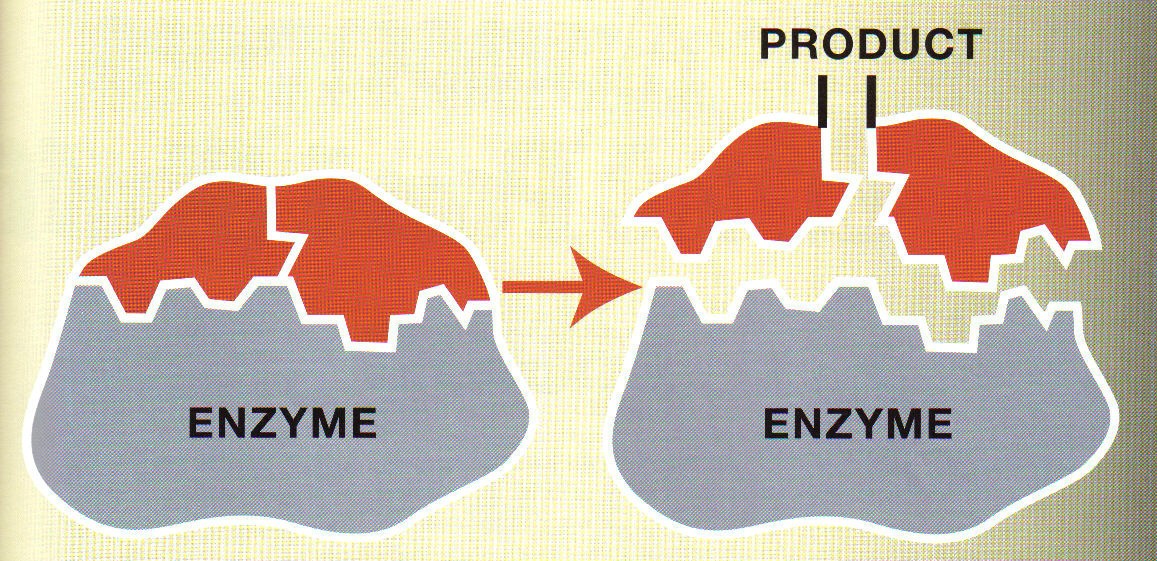
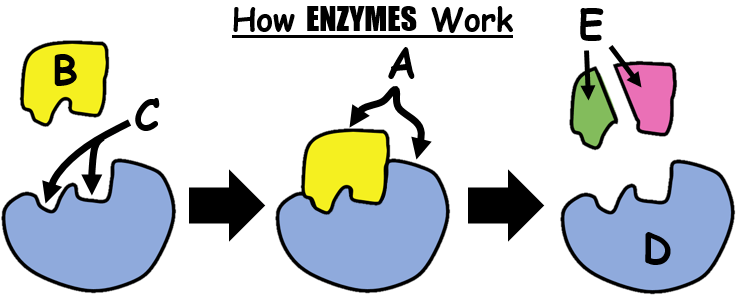
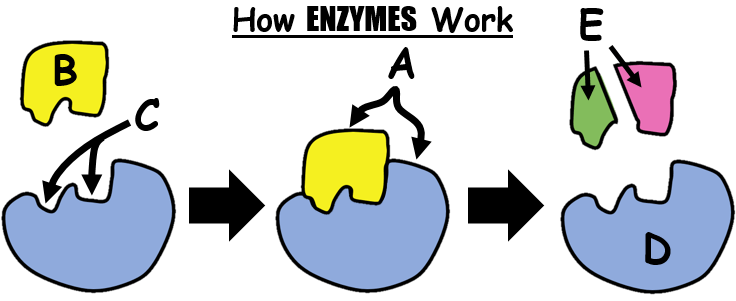
Enzymes are ............................
Alkaline
Biocatalysts
Lipids
Sugars
Different enzymes work best in different pH.
True
False
The protease enzyme works best in the ..................... condition of the stomach.
acidic
alkaline
basic
neutral
What does the term optimum mean for enzyme temperature?
The lowest temperature at which the enzyme works
The temperature which gives the highest enzyme activity
The temperature which gives the lowest enzyme activity
The highest temperature before denaturing occurs


The graph above is from which type of reaction?
Endothermic reaction
Exothermic Reaction

Enzymes are
proteins that function as catalysts
broken down in reactions that require energy input
used up in chemical reactions.
not needed for catabolic reactions
The monomers that make up polysaccharides are:
polypeptides
monosaccharides
amino acids
fatty acids
The monomers that make up polypeptides are called:
amino acids
fatty acids
nucleotides
monosaccharides
Another name for a polypeptide is:
lipid
carbohydrate
protein
amino acid
Which organic molecule would a long-distance runner most likely choose to eat two hours before a race?
A protein, because it builds muscle mass.
A lipid because it provides long term energy storage.
A carbohydrate because it releases energy quickly.
A protein, because it transports oxygen into the blood stream.
Which biomolecules transport oxygen and other substances and also form part of most organelles?
Lipids
Carbohydrates
Proteins
Nucleic Acids
Which biomolecules provide quick energy for the cell and also provide materials to build the cell membrane/wall?
Carbohydrates
Proteins
Lipids
Nucleic Acids
Which biomolecules contains your genetic information?
Proteins
Lipids
Carbohydrates
Nucleic Acids
Which biomolecules act as energy storage for the cell and also cushions and insulates organs?
Carbohyrdates
Lipids
Proteins
Nucleic Acids

The biomolecule that holds an organism's genetic information is called ___________.
carbohydrate
lipid
nucleic acid
protein
Which of the following is the correct pair of biomolecules and their monomers?
Carbohydrate: Fatty Acids
Protein: Amino acid
Lipid: Nucleotide
Nucleic Acid: DNA
Which biomolecule is important for insulation?
Lipid
Proteins
Carbohydrates
Nucleic acid
Which statement was NOT included in cell theory?
All living things are composed of cells.
Living cells come only from other living cells.
Each cell contains a cell membrane, cytoplasm, nucleus, mitochondria, and endoplasmic reticulum.
Cells are the smallest structure of living things that can perform the functions necessary for life.


The 3 parts of the Cell Theory are...?
All living things are composed of cells
Cells are the basic units of structure and function in living things
All cells are produced from other cells
All living things are composed of cells
Cells are the basic units of dance and vibes in living things
All cells are destroyed from other aliens
All living things are composed of Jell-O
Cells are the basic units of structure and function in living things
All cells are produced from factories in Canada
All living things are composed of cells
Cells do karate and practice eating whole pies in their free time
All cells are produced from other cells

Define plasma membrane
lipid that helps minimize effects of temperature
only on the outer surface of the plasma membrane and are attached to proteins or lipids; form distinctive cellular markers
flexible boundary of a cell that separates a cell from its surroundings
may extend partway into the plasma membrane, cross the membrane entirely, or be loosely attached to its inside or outside face
Which type of biological macromolecule is the main component of the plasma membrane?
carbohydrate
lipid
protein
nucleic acid

Where can carbohydrates be found when part of a plasma membrane?
On the outside of the membrane
On the inside of the membrane
Embedded part of the way into the membrane
Embedded the whole way through the membrane
All of the above
Where can PROTEINS be found when part of a plasma membrane?
On the outside of the membrane
On the inside of the membrane
Embedded part of the way into the membrane
Embedded the whole way through the membrane
All of the above
What is the function of cholesterol in a plasma membrane?
To make the membrane flexible
To control the effect of temperature changes
To attract water molecules
To allow nutrients and other essential molecules into the cell

Identify cholesterol molecule
structure a
structure b
structure h
structure i

Which structure is the hydrophilic polar head of the phospholipid molecule?
F
D
C
A1

Which structure is the hydrophobic tail of the phospholipid molecule?
E
B
G
A2

The majority of the plasma membrane is composed of ______.
phospholipids
proteins
carbohydrates
cholesterol

Which structure A-D allows the cell to detect chemical signals sent by the body?
A
B
C
D

The image represents a phospholipid found in plasma membranes. Which of the following best describes A2?
Nonpolar tail
Polar tail
Nonpolar head
Polar head

Which structure would allow useful substances like glucose to enter the cell?
Transport proteins
Fatty acids
Cholesterol
Phosphate head
Which of the below may happen if the plasma membrane had no cholesterol molecules within the phospholipid bilayer?
The plasma membrane would be less fluid
The fatty acid tails would be less sticky
Transport proteins would stop transporting substances
Phospholipid molecules would form a single layer

Large particles being encased in a vesicle and brought into the cell is an example of
endocytosis
exocytosis
facilitated diffusion
osmosis
What type of active transport releases particles from inside the cell into outside of the cell by fusing a vesicle to the cell membrane?
Exocytosis
Sodium-Potassium Pump
Facilitated Diffusion
Endocytosis


Active transport is movement of particles through the cell membrane from a region of ...1... to a region of ...2... using energy in the form of ...3...
1: lower concentration, 2: higher concentration, 3: NADPH
1: higher concentration, 2: lower concentration, 3: NADPH
1: higher concentration, 2: lower concentration, 3: ATP
1: lower concentration, 2: higher concentration, 3: ATP
Prokaryotic cells do not have…….
membrane bound organelles
cell membrane
DNA or RNA
life
Which do BOTH prokaryotes and eukaryotes contain?
nucleus
mitochondria
ribosomes
cell wall

Which type of cell is this?
Prokaryote
Eukaryote
Nucleus

All cells are divided into two different types of cells.
animal/plant
bacteria/plant
unicellular/multicellular
prokaryote/eukaryote
Which organelle provides energy to eukaryotic cells
lysosomes
mitochondria
ribosomes
ER
Lysosome have what function?
provides energy?
stores energy
digests waste and bacteria
where photosynthesis occurs
What is the largest organelle in a plant cell?
chloroplast
nucleus
mitochondria
vacuole
Students observe cells under a microscope. Which of the students’ observations will be most helpful in classifying a cell as either prokaryotic or eukaryotic?
Shape of the cell.
Presence of a nucleus.
Presence of organelles.
Visible DNA.

Students use a microscope to look for structures present in four different cells. The students placed an X for each structure that was viewed for each cell on the table shown. Which cell that was viewed is most likely a prokaryote?
Cell W
Cell X
Cell Y
Cell Z
Which of the following correctly compares prokaryotes and eukaryotes? Select all that apply.
Prokaryotes: smaller in size.
Eukaryotes: less complex.
Prokaryotes: nucleus absent.
Prokaryotes and eukaryotes: have DNA.
Prokaryotes and eukaryotes: membrane-bound organelles.
these package proteins to be shipped out of the cell
proteins
ribosomes
golgi bodies
endoplasmic reticulum
Packages proteins to be distributed in and out of the cell.
Nucleus
Endoplasmic Reticulum
Nucleolus
Golgi Bodies

What is #1?
Golgi bodies
smooth endoplasmic reticulum
rough endoplasmic reticulum
Nucleus
Nucleolus
The control center of the cell; contains DNA
mitochondria
nucleus
ribosomes
ER
Golgi Bodies
Controls what enters and exits the nucleus
cell membrane
nucleus gate
Nuclear membrane
ER
Nuclear wall

Directs all cell activities through the DNA located there.
Endomembrane System
Nucleus
Ribosomes
Mitochondria
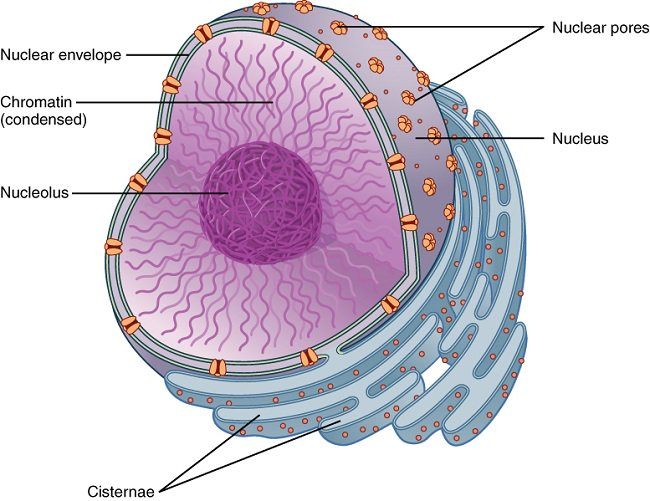
Helps assemble ribosomes, which are combinations made of protein and RNA (ribonucleic acid ).
nuclear membrane
nuclear pores
nucleoplasm
nucleolus
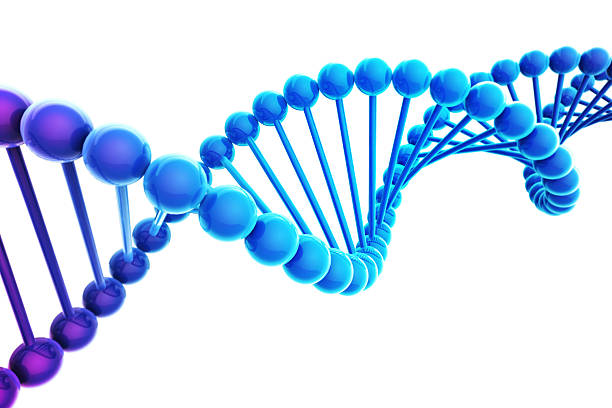
A double stranded helix that holds the code for all the cells in the body.
RNA
DNA
Chromatin
Nucleus
What is the function of the nucleus?
The nucleus gives the cell energy
The nucleus protects the cell from outside things
The nucleus controls what happens in the cell
The nucleus does not have a job in the cell

List the names for the structures A-G. You can do this!
What is the function of a cuticle?
Water Transport
Sugar Transport
Reduce Water Loss
Increase Water Loss

#1 - outermost layer and not made of cells; helps regulate water loss.
Epidermal cells
Palisade cells
Xylem cells
Waxy cuticle
#2 & #5 - outermost layer of cells; provides protection from outside elements.
Epidermal cells
Palisade cells
Phloem cells
Waxy cuticle
#3 - layer of tall, columnar cells that contain many chloroplast for photosynthesis
Epidermal cells
Guard cells
Pallisade mesophyll
Spongy mesophyll
#4 - layer of irregular cells with space in between the cells
Pallisade mesophyll
Phloem
Spongy mesophyll
Xylem
#6 - porous opening in the bottom of the leaf that allows for gaseous exchange
Pallisade mesophyll
Spongy mesophyll
Stomata
Vein
#7 - two cells that surround each porous opening; regulates gaseous exchange by opening and closing the pore.
Epidermal cells
Guard cells
Stomata cells
Xylem cells
#8 - Cell tissue that makes up part of each vein that transports glucose and nutrients throughout the plant
Epidermal cells
Guard cells
Phloem cells
Xylem cells
#9 - Cell tissue that makes up part of each vein that transports water throughout the plant
Epidermal cells
Guard cells
Phloem cells
Xylem cells

This plant was tipped on its side, it's roots continue to grow downward, and its stem up. This response to gravity is known as ______________.
phototropism
thigmotropism
gravitropism
hydrotropism

This plant is growing towards the light, this is an example of ___________.
phototropism
thigmotropism
gravitropism
hydrotropism

This plant is showing the turning or bending of a plant or other organism in response to a touch stimulus. It is known as _________________.
phototropism
thigmotropism
gravitropism
hydrotropism
A plant's response to an environmental stimuli is known as a _______.
action
tropism
reply

This plant closes when it feels an insect land on it. This could be considered ____________.
thigmotropism
hydrotropism
gravitropism
phototropism
Primary function of stem is to
Bear and hold out leaves
Absorb water and minerals
Fixation of plant
Help in vegetative propagation
Which is not a stem modification
Rhizome of Ginger
Corm of Colocasia
Pitcher of Nepenthes
Tuber of Potato
Potato tuber is modified /Edible part of potato is
Stem
Bulb
Stolon
Root
An underground specialised shoot with reduced disc like stem covered by fleshy leaves is
Bulb
Bulbil
Rhizome
Rhizophore
the plant stores the food in the stem in
brinjal
potato
carrot
radish
the stem is modified to store food in
ginger
banyan tree
sweet potatoes
brinjal
the function of the stem is -------
to absorb water & minerals from the soil
to carry water & minerals from the roots to the leaves
to carry prepared food from leaves to other parts of the plant
Both b & c
What is the top layer of skin called?
callus
epidermis
dermis
hypodermis
What layer of skin senses pain?
callus
epidermis
dermis
hypodermis

What layer is represented by letter B?
Stratum Corneum
Dermis
Stratum Lucidum
Epidermis

What layer of skin is this
Melanin
epidermis
dermis
hypodermis

What layer of skin is this
hypodermis
epidermis
dermis
pore

What layer of skin is this?
epidermis
dermis
hypodermis
melanin
The formation of vitamin D helps your body absorb
glucose
calcium
nutrients
oxygen
Which is not a function of the skin
produces vitamin D
eliminates waste
stores calcium and phosphorus
helps regulate body temperature
The functions of the skin include all of these except:
taking in nutrients
Reducing water loss
preventing the entry of microorganisms
regulating body temperature
Adipose tissue is most abundant in the ________________ layer under the skin.
epidermal
dermal
subcutaneous
transdermal
What skin disease is caused by too much exposure in the sun's radiation?
acne
dermatitis
skin cancer
rash
Which of the following is NOT a function of our skin?
It absorbs sunlight for heat
It absorbs sunlight for photosynthesis
It absorbs sunlight for vitamins
It protects against the outside environment

Which bone protects the brain?
number 1
number 2
number 3
number 4

Which bones protect the heart and lungs?
number 7
number 8
number 9
number 10

What is the name of bone number 6?
humerus
femur
patella
mandible

What is the name of bone number 3?
tibia
fibula
humerus
pelvis

What bone is highlighted?
Skull (Cranium)
Mandible
Femur
Scapula
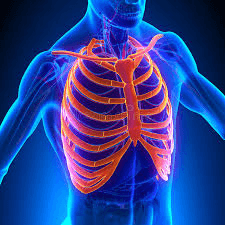
What bone is highlighted?
Ribs
Cranium
Clavicle
Femur

What bone is highlighted?
Vertebrae
Femur
Cranium
Ribs

What bone is highlighted?
Femur
Cranium
Ribs
Skull

Which of the bones in the picture are part of the appendicular skeleton?
A
B
C
D


Which of these types of Muscles can be INVOLUNTARY
Cardiac
Smooth
Smooth & Cardiac
Smooth, Cardiac and Skeletal

What are these types of muscles called?
Cardiac muscle
Smooth muscle
Striated muscle

What are these types of muscles called?
Cardiac muscle
Smooth muscle
Striated muscle
Found attached to bones throughout the body
smooth
cardiac
skeletal
all
What is the length between Z-lines of an actin molecule called?
fascicle
sarcomere
myosin binding site
sarcoplasmic length
____________ attaches to actin to form the cross bridge.
Troponin
Tropomyosin
Myosin
Calcium

What is the contractile unit formed from Z line to Z line?
Sarcomere
T Tubule
Sarcoplasmic reticulum
Fascicle

The A band is labeled here as _______.
AD
AC
BC
AB
The actin is labeled here as _______.
AD
AC
BC
AB
____________ attaches to actin to form the cross bridge.
Troponin
Tropomyosin
Myosin
Calcium
The I band is labeled here as _______.
AD
AC
BC
AB
The A band is labeled here as _______.
AD
AC
BC
AB
The myosin is labeled here as _______.
BD
AC
BC
AB
A sarcomere is labeled here as _______.
BD
BC
AE
AB
__________ is attached to the Z line?
myosin
actin
thick filament
troponin

