
 Worksheets
3 Review Meiosis and Mitosis
Total questions: 111
Worksheet time: 28hrs 45mins
The human diploid number is:


A
B
C
D

A
B
C
D

A
B
C

A
B
C
D

A
B
C
D

A
B
C
D

A
B
C
D

A
B
C
D

A
B
C
D

A
B
C
D

A
B
C
D
Which of the following distinguishes prophase 1 of meiosis from prophase of mitosis?
homologous chromosomes pair up
spindle forms
nuclear membrane breaks down
chromosomes become visible
A cell with a diploid number of 24 undergoes meiosis, how many chromosomes are in each haploid daughter cell?
6
12
24
48

The picture depicts what stage of meiosis?
Prophase 1
Anaphase 1
Metaphase 1
Metaphase 2

In the process shown, ____________are created
4 haploid gametes
2 diploid sex cells
4 diploid reproductive cells
2 haploid reproductive cells

Examine the diagram shown, what mistake in meiosis happened in cell #2?
nondisjunction
crossing over
variation
homologous pairing
All of the following will result in a gamete being different from the others except ________________
mitosis
crossing over
independent assortment
mutations

Because the green and yellow chromosomes both contain genes for the SAME traits, they are called _____________
homologous pairs
sister chromatids
haploids
homozygous pairs
Why is meiosis important?
it produces gametes that are different
it results in zygotes that are genetically diverse from other zygotes
it produces the haploid number of chromosomes in gametes so when fertilization occurs, the zygote will be diploid
all of these
One cell with 46 chromosomes ----> 4 cells each with 23 chromosomes
mitosis
meiosis
both

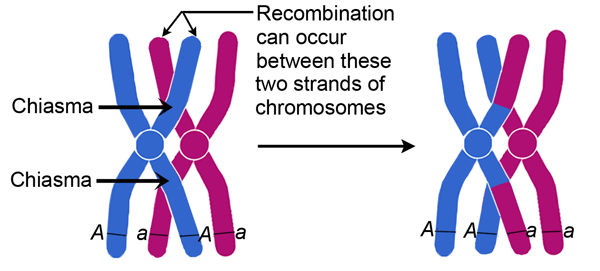
A. What does the picture below show?
B. Why is this important?
A. crossing over
B. increases variation/diversity
A. crossing over
B. decreases variation/diversity
A. nondisjunction
B. increases variation/diversity
A. nondisjunction
B. decreases variation/diversity
Asexual reproduction, 1 cell division, somatic cells
mitosis
meiosis
both
If the egg cell of a fruit fly has 4 chromosomes, how many chromosomes would a wing cell have?
8
4
2
16
What best describes cancer?
uncontrolled cell growth
meiosis
mitosis
trisomy

What phase is this?
anaphase
anaphalytic
aneurysm
antibacterial
What is the first phase of mitosis?
Process
Prokyratoic
Protest
Prophase

What phase is this?
Metaphase
Telophase
Prophase
Anaphase

Interphase is the ________________ period for the cell.
growing
glowing
going
guessing

What are the "x" particles lined up in the middle called?
DNA
Genes
RNA
Chromosomes

What pulls the chromosomes apart?
Spinner wheels
Spiral windows
Spindle fibers
Spiral fibers

What is happening during prophase?
chromosomes condense, nucleus disappears
chromosomes appears, nucleus condenses
chromosomes condense, nucleus condenses
chromosomes disappears, nucleus disappears
What occurs after cytokinesis is completed?
Cells creates spindle fibers
Cell enters G1
Cell begins replicating DNA
Cell enters G2
Predict why normal cells become cancer cells.
regulation of cell growth & development occurs
cells respond to control mechanism (signals)
cells pass through G1
cells do not respond to checkpoints
An advantage of sexual reproduction is that
many offspring are produced in a short time
it increases genetic diversity
production of gametes requires energy
organisms remain stable in a changing environment
What is a chromosome?
x shaped structure that carries the DNA
cell division of the nucleus
How does diploid differ from haploid?
Diploid is having 1 set of chromosomes, 23 chromosomes total
Haploid is having 1 set of chromosomes, 46 chromosomes total
Hapolid is having 2 sets of chromosomes, 23 chromosomes total
Diploid is having 2 sets of chromosomes 46 chromosomes total
How does haploid differ from diploid?
Hapolid is having 1 set of chromosomes, 23 chromosomes total
Diploid having 1 set of chromosomes, 46 chromosomes total
Diploid is having 2 set of chromosomes, 23 chromosomes total
Hapolid is having 2 set of chromosomes, 46 chromosomes total
What does homologous chromosomes mean?
having 46 chromosomes (23 pairs)
programmed cell death
Pair of chromosomes that have the same information
Pair of chromosomes that have different information
What is crossing-over?
Moving on from the living
Exchanging genetic material during prophase 1
A type of mutation where information is moved around
The process of rearranging the chromosomes to prepare for division
A male shark has 40 chromosomes in each sperm cell. How many would be present in its body cells?
20
40
80
160
A key difference between daughter cells resulting from mitosis and meiosis is that
After meiosis, cells are diploid. After mitosis, cells are haploid.
After meiosis, there are 4 daughter cells. After mitosis, there is 1 daughter cell.
After meiosis, cells are haploid. After mitosis, cells are diploid.
After meiosis, there are 2 daughter cells. After mitosis, there are 4 daughter cells.

Does this image represent mitosis or meiosis?
Mitosis
Meiosis
What occurs during the S phase of interphase?
The cell grows
The chromosomes split up
The chromosomes pair up
DNA replicates
Mitosis occurs in a
sex cell
somatic cell

A 2n cell of a bat has 44 chromosomes, how many chromosomes will you find in one of his gametes
23
22
44
88
A haploid cell from a male camel has 35 chromosomes. What type of cell is this? Choose all that apply
Sperm
Egg
Heart Cell
Muscle Cell
MITOSIS
INCREASES GENETIC VARIATION
ALLOWS TRAITS TO BE PASSED ON TO OFFSPRING
PRODUCES 2 IDENTICAL DAUGHTER CELLS
ALL ARE TRUE

What is the longest stage of the cell cycle?
Interphase
Mitosis
Cytokinesis
Prophase

Interphase
The longest stage of a cell's life
G1
part of interphase where the cell is growing
S phase
DNA Synthesis
When the cell is making more DNA
G2
part of interphase where the cell prepares to divide
Cell Division
A small stage in the cell's life where the cell splits to make more cells

Prophase

Metaphase

Anaphase

Telophase

Interphase
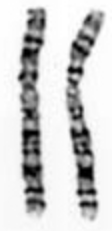


Homologous pairs:
(select all that apply)
Have the same genes on them
May have different alleles
Each comes from one parent
Combine to give you your genotypes
Do homologous chromosomes always look identical?
Yes, same everything (shape, size, position, and bands)
No, not quite (different positions but same band patterns and similar size)
SELECT ALL THAT APPLY: Autosomes:
Pair #23
Determine whether you're male / female
Pairs #1-22
Every chromosome except sex chromosomes
SELECT ALL THAT APPLY: What is true for the two "sides" of the X of a chromosome?
Each side is called a sister chromatid
Each side is called a homologous chromosome
Each side is composed of identical DNA
Each side is composed of different DNA

The structure in the image is called a:
Chromosome
Karyotype
Gene
Protein

Which chromosomes are shown in the image?
Sex Chromosomes
Autosomes
Trisomy
Monosomy

Metaphase 1
Telophase 1
Anaphase 1
Prophase 1

Metaphase 1
Telophase 1
Anaphase 1
Prophase 1

Metaphase 1
Telophase 1
Anaphase 1
Prophase 1

Metaphase 1
Telophase 1
Anaphase 1
Prophase 1

Anaphase 2
Metaphase 2
Telophase 2
Prophase 2

Anaphase 2
Metaphase 2
Telophase 2
Prophase 2

Anaphase 2
Metaphase 2
Telophase 2
Prophase 2

Anaphase 2
Metaphase 2
Telophase 2
Prophase 2

Meiosis 1
Meiosis 2

Meiosis 1
Meiosis 2

Meiosis 1
Meiosis 2

Meiosis 1
Meiosis 2

Meiosis 1
Meiosis 2

Meiosis 1
Meiosis 2

Meiosis 1
Meiosis 2
During Metaphase/Anaphase (a) (b) chromosomes line up along the middle of the cell and are separated.
Crossing over occurs
prophase 1
homologous chromosomes are pulled apart
anaphase 1
A tetrad forms
prophase 1
sister chromatids separate
anaphase 2
Ends with 4 haploid cells
telophase/cytokinesis 2
(a) creates somatic cells and (b) creates haploid cells
goes through PMAT once
mitosis
goes through PMAT twice
meiosis
purpose is for growth and repair
mitosis
purpose is for sexual reproduction
meiosis
4 genetically different cells
meiosis

