
 Worksheets
Endrocine End of Unit
Total questions: 79
Worksheet time: 20hrs 45mins
Secreted by the pituitary; stimulates the thyroid
Thyroxine
TSH
ADH
ACTH
Secreted by the pituitary. Stimulates the adrenal cortex.
ACTH
Thyroxine
ADH
ICSH
Stimulates birth contractions and milk flow; secreted by the posterior lobe of the pituitary.
LH
oxytocin
FSH
Gonadocorticoids
Released by the pituitary gland into the bloodstream; is one of the hormones essential to pubertal development and the function of women’s ovaries and men’s testes
ICSH
Oxytocin
FSH
LH
It stimulates the reabsorption of water and electrolytes from distal tubules of kidneys to prevent diuresis
LTH
ICSH
ADH
Oxytocin
When released, it causes specific reactions in your body (heart beats faster than normal, pushing blood to the muscles, heart, and other vital organs. Pulse rate and blood pressure go up. The person undergoing these changes also starts to breathe more rapidly).
These are intended to ensure your survival but can be a problem if you aren’t in a stressful situation.
insulin
glucagon
norepinephrine
epinephrine
Cortisol
increases heart rate, blood pressure, and breathing rate
raises blood calcium levels by breaking down bone (osteoclasts)
Converts fats and proteins into glucose in times of stress (for extra energy)
regulates circadian rhythms
Parathyroid hormone
stimluates metabolism
breaks down bone to release calcium from bone into the bloodstream
regulates circadian rhythms
lowers blood calcium levels by depositing calcium in bones (osteoblasts)
Melatonin
regulates circadian rhythms
affects production and differentiation of certain white blood cells
raises blood calcium levels by breaking down bone (osteoclasts)
stimulates metabolism
Glucagon
releases glucose from the liver in the bloodstream for energy (counteracts insulin)
stimulates the liver to form glycogen from glucose; lowers blood glucose levels
raises blood calcium levels by breaking down bone (osteoclasts)
lowers blood calcium levels by depositing calcium in bones (osteoblasts)
Which Endocrine gland produces Melatonin?
Pineal gland
Pituitary gland
Thryoid gland
Adrenal gland
Which 2 hormones are produced by the Adrenal gland?
cortisol
insulin
adrenaline
thyroxin
Which of the following is a function of the endocrine system?
maintain homeostasis through regulation of growth, metabolism, and sexual development
provide the body with defense mechanisms to protect against pathogens
provide boundaries and protective surfaces to lubricate and line vital organs
propagate electrical impulses to communicate information between brain, spinal cord, muscles, and sensory organs
What hormone stimulates milk production in females?
Calcitonin
Estrogen
Prolactin
Progesterone
Although both the nervous and endocrine systems are able to control the body, the endocrine system uses ___ to produce a response, which are ___ than the nervous system control.
neurons, faster
neurons, slower
hormones, faster
hormones, slower
This hormone regulates the menstrual cycle in females.
Testosterone
Prolactin
Progesterone
Oxytocin
This hormone fuels childhood growth and helps maintain tissues and organs throughout life
Oxytocin
Luteinizing hormone
Growth hormone
Thyroid stimulating hormone
As you get dehydrated ADH responds, your blood becomes thicker and harder to pump. Your kidneys will respond by stopping urine production, sending the water from urine into your bloodstream to thin your blood back to normal level.
Positive Feedback Response
Negative Feedback Loop


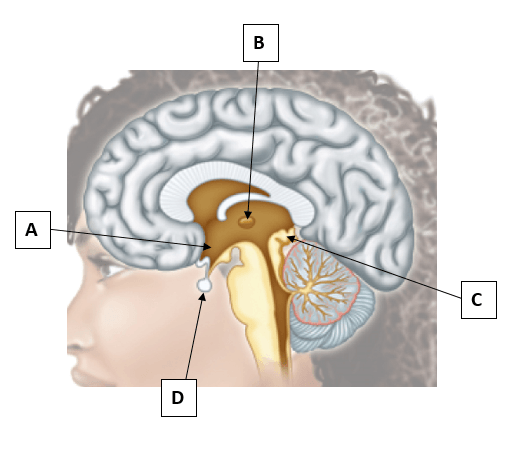
Identify the Pineal gland.
A
B
C
D
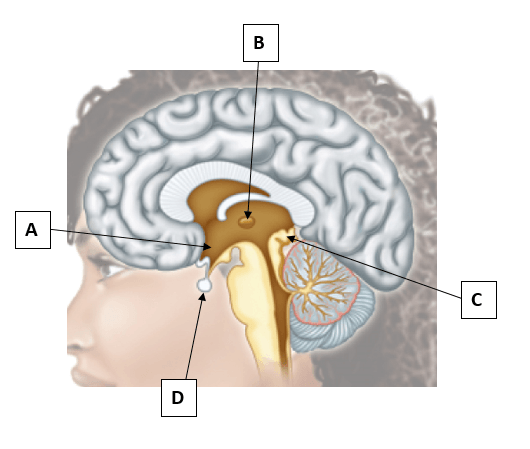
Identify the Pituitary gland.
A
B
C
D
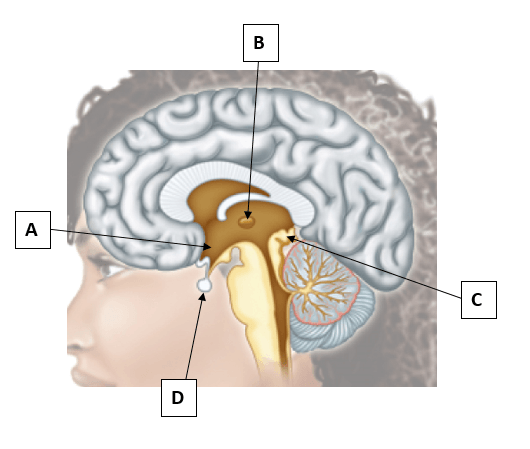
Identify the Hypothalamus.
A
B
C
D
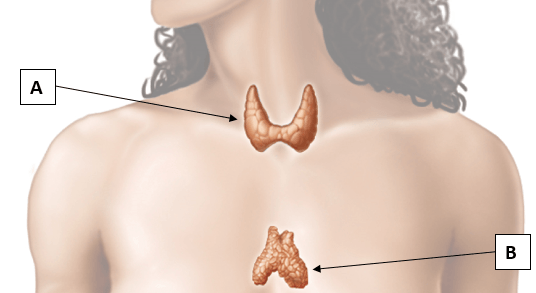
Name gland A.
Pineal gland
Thymus
Adrenal gland
Thyroid
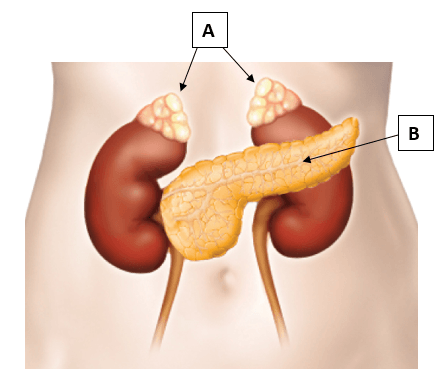
Name gland A
Pancreas
Adrenal glands
Renal calyx
Ovaries
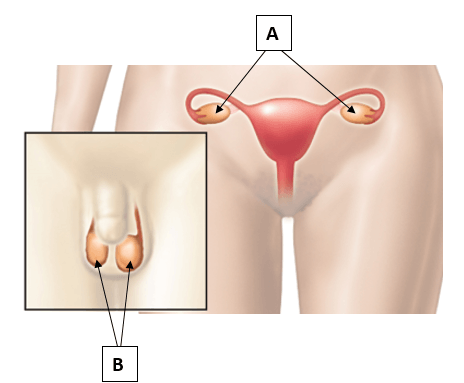
Structure A and B are both know as...
Paracrine glands
Adrenal glands
Gonads
Reproductive calyxes
Which Endocrine gland/organ is only present during pregnancy?
Pineal gland
Thymus
Ovaries
Placenta
What type of hormones can pass through the lipid membrane of a cell?
Steroid hormones
Amine hormones
both
neither
The inner part of the Adrenal Gland is called...
Adrenal Cortex
Adrenal Interior
Adrenal Medulla
Adrenal Core
Select all of the hormones produced by the adrenal cortex.
Cortisol
Aldosterone
ADH
Renin
Epinephrine
The outer portion of the adrenal gland is known as the:
Adrenal Cortex
Adrenal Medulla
True or False?
The Luteinizing (LH) hormone targets only Males.
True
False
What hormone helps females produce eggs and males produce sperm?
Follicle Stimulating (FSH)
Antidiuretic (ADH)
Prolactin
Oxytocin

Identify this gland.
hypothalamus
anterior pituitary
posterior pituitary
pineal

Identify this region.
thalamus
hypothalamus
pineal gland
pituitary gland
Which anterior pituitary hormone(s) affect(s) the gonads?
Choose all that apply.
LH
GH
PRL
FSH

What is "A"?
Adrenal Glands
I don't know
Parathyroid glands
Lymph Vessels
The layers of Adrenal Cortex
Zona Glomerulosa
Chromaffin cells
Zona Fasciculata
Zona Reticularis

Identify the substance at the arrows in the image.
C cells
calcitonin
thyroid stimulating hormone
colloid
What element is necessary for the T3 and T4 to be produced properly?
sodium
calcium
magnesium
iodine
Thyroid gland secretes three different hormones, but generally thyroid hormones refer to .. ?
T3, T4
Calcitonin
T3, Calcitonin
T4
Goiter can occur due to .. ? (2 answers)
Hypothyroidism
Hyperthyroidism
Hyperglycemia
Hypotension
The thyroid gland secretes the hormones:
T4
T3
glucagon
Calcitonin
which of the following glands works with the thyroid gland
parathyroid
adrenal
thymus
pancreas
A rise in thyroid hormone level _____ thyroid-stimulating hormone
decreases
increases
does not change
Why is Goiter no longer common in the US?
Iodized salt
seafood
modern medicine
vaccines
Which endocrine glands are found in the brain?
Pituitary
Hypothalamus
Thryroid
Adrenal
Pancreas
The thyroid controls
respiration.
growth.
all metabolic processes.
locomotion.
Parathyroid hormone controls
metabolism.
water levels.
calcium levels.
secondary sex characteristics.
secrete the hormones glucagon, insulin, somatostatin, and pancreatic polypeptide (PP)
pancreatic islets
alpha cells
beta cells
adrenal cortex
What hormone is released when blood glucose levels rise above normal?
insulin
glucagon
glycogen
leptin
What hormone is released when blood glucose fall below normal?
insulin
glycogen
glucagon
leptin
How does insulin reduce blood glucose levels?
it breaks down glucose
promotes the release of glucose from cells
promotes the uptake of glucose into cells
it prevents the intestine from releasing glucose into the blood
Primary Targes of Insulin for glucose uptake (pick all that apply)
Skeletal Muscle Cells
Adipose Tissue Cells
Osteo Cells in Bone
Nuerons of the CNS & PNS
Which term describes the breakdown of glycogen into glucose?
Glycolysis
Glycogenesis
Glycogenolysis
Gluconeogenesis
Glucagon does not do which of the following?
Increases glycogenolysis (It stimulates the liver to convert its stores of glycogen back into glucose.)
Increases lipolysis
(the breakdown of stored triglycerides into free fatty acids and glycerol. )
Increases gluconeogenesis
(It stimulates the liver to take up amino acids from the blood and convert them into glucose.)
Increases cellular respiration (Triggers body cells to start using glucose for energy)
Which of the following hormone performs the following functions
Triggers body cells to start using glucose for cellular respiration
Inhibits glycogenolysis (stops glycogen from being split)
Inhibits gluconeogenesis (stops the formation of glucose from aminos)
Glucagon
Cortisol
Insulin
Pancreatic polypeptide hormone
Beta cells
Alpha cells
Delta cells
Insulin cells
What is the normal fasting blood sugar level range?
70-140 mg/dl
70-110 mg/dl
110-140 mg/dl
120-140 mg/dl
Anything above 140 mg/dL while fasting
Hyperglycemia
Hypoglycemia
Isoglycemia
A circulatory condition in which narrowed blood vessels reduce blood flow to the limbs
Peripheral vascular disease
Periodontal Disease
Renal Failure
Vasodilation
Reduces blood volume, blood pressure, and Na+ concentration
Gastrin, secretin, and cholecystokinin
Atrial natriuretic peptide (ANP)
Erythropoietin (EPO)
Renin
Modified to form vitamin D
Leptin
Adiponectin
Cholecalciferol
Renin
Triggers the formation of red blood cells in the bone marrow
Adiponectin
Osteocalcin
Calcitriol
Erythropoietin (EPO)
Stimulates egg/sperm production
follicle stimulating hormone
progesterone
luteinizing hormone
oxytocin
Stimulates release of sex hormones
luteinizing hormone
antidiuretic hormone
oxytocin
parathyroid hormone
Stimulates uterine contraction during child birth
oxytocin
progesterone
growth hormone
epinephrine
Aids in controlling Uterian cycles
progesterone
oxytocin
follicle stimulating hormone
melanocyte stimulating hormone

