
 Worksheets
science
Total questions: 134
Worksheet time: 2hrs 33mins
Brass is a mixture of
Copper
Iron
Zinc
Steel
Convert 470 K temperature to the celsius scale.
(a)
Convert 373 ℃ temperature to the Kelvin scale.
(a)


What would you use this piece of equipment to measure?
Time
Volume of liquid
Temperature
Force

The amount of the solute present in the saturated solution at a definite temperature is called its
Concentration
Solubility

The process of acquiring food by amoeba is called
Endocytosis
Plasmolysis


What would you use this piece of equipment to measure?
Time
Volume of liquid
Mass
Force
Blood matrix is called ..........
WBCs
RBCs
Plasma
Platelets

What is the name of this piece of equipment?
Measuring cylinder
Tripod
Jug
Filter funnel


Anything that has mass or takes up space.
mass
matter
volume
state
The amount of space something takes up.
volume
mass
weight
state
Measured in grams.
mass
volume
Measured using a graduated cylinder.
mass
volume
Whether something will sink or float.
mass
volume
density
solubility
sharpening a pencil
physical change
physical property
chemical change
chemical property
size of an object
physical change
physical property
chemical change
chemical property
freezing point
physical change
physical property
chemical change
chemical property
This property of matter is how easily a substance will dissolve in a liquid, such as water.
melting point
boiling point
solubility
viscosity
why does a cork float while a rock sinks when placed in water?
they are different states of matter
they are different sizes
they have different densities
they have different shapes

if the containers are A B C:
which of the containers contains a solid?
A
B
C
when marbles sink to the bottom of a beaker of water, it demonstrates:
marbles are solids and more dense than water
marbles are not soluble in water and less dense than water
Marbles are good conductors of energy
Anything that has mass or takes up space.
mass
matter
volume
state
The amount of space something takes up.
volume
mass
weight
state
Measured in grams.
mass
volume
Measured using a graduated cylinder.
mass
volume
Whether something will sink or float.
mass
volume
density
solubility
sharpening a pencil
physical change
physical property
chemical change
chemical property
size of an object
physical change
physical property
chemical change
chemical property
freezing point
physical change
physical property
chemical change
chemical property
This property of matter is how easily a substance will dissolve in a liquid, such as water.
melting point
boiling point
solubility
viscosity
why does a cork float while a rock sinks when placed in water?
they are different states of matter
they are different sizes
they have different densities
they have different shapes
if the containers are A B C:
which of the containers contains a solid?
A
B
C
when marbles sink to the bottom of a beaker of water, it demonstrates:
marbles are solids and more dense than water
marbles are not soluble in water and less dense than water
Marbles are good conductors of energy
The particles in a solid are...
loose and have high energy
tightly packed and have very little energy
move freely and have lots of energy
I dont know Ms. Turner, I didnt take notes
The particles in a liquid are...
loose and have high energy
tightly packed and have very little energy
move freely and have lots of energy
I dont know Ms. Turner, I didnt take notes
The particles in a gas are...
loose and have high energy
tightly packed and have very little energy
move freely and have lots of energy
I dont know Ms. Turner, I didnt take notes

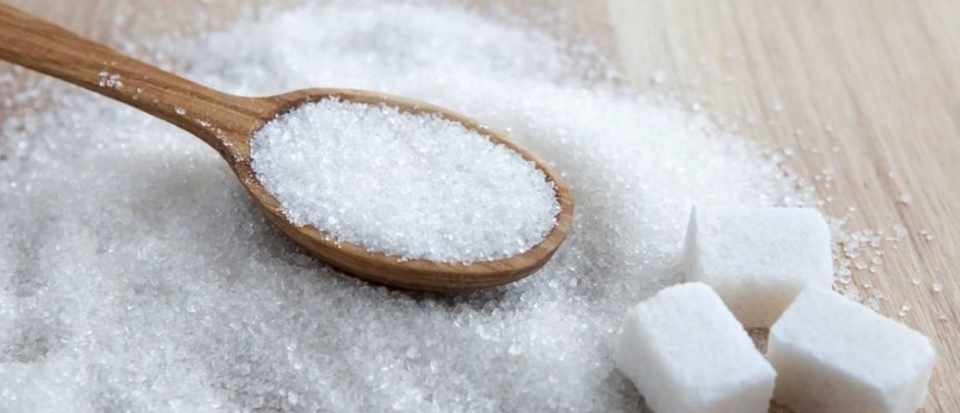
What happens when sugar dissolves in water?
Physical change because a new substance is formed
Chemical change because a new substance is formed
Physical change because the sugar is just getting smaller
Chemical change because the sugar is just getting smaller

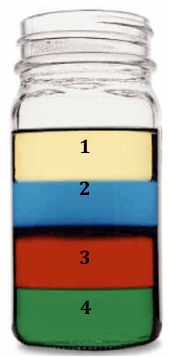
The tendency of a substance to float or rise in a fluid.
buoyancy
boiling point
color
conductivity
The temperature at which a substance changes from a liquid to a gas.
density
odor
boiling point
buoyancy
The range of visible light that a substance reflects.
hardness
color
solubility
boiling point
The ability of a substance to conduct heat, sound, or electricity.
malleability
magnetism
color
conductivity
The amount of matter in a certain volume.
odor
boiling point
density
conductivity
The ability of a substance to be pulled into a thin strand.
ductility
melting point
buoyancy
density
The ability of a substance to resist being scratched.
ductility
hardness
solubility
color
The ability of a substance to attract iron.
malleability
conductivity
hardness
magnetism
The ability of a substance to be pressed or pounded into a thin sheet.
magnetism
conductivity
ductility
malleability
The temperature at which a substance changes from a solid to a liquid.
melting point
boiling point
ductility
buoyancy
the ability of a substance to give off a certain smell.
boiling point
density
odor
melting point
The ability of a substance to dissolve in another substance.
color
solubility
hardness
odor
สมบัติที่สังเกตได้จากลักษณะภายนอกและวิธีการทางฟิสิกส์ เช่น ความหนาแน่น, จุดเดือด, จุดหลอมเหลว คือสมบัติของสารทางด้านใด
สมบัติทางกายภาพ
สมบัติทางชีวภาพ
สมบัติทางเคมี
สมบัติเชิงกล
สมบัติที่เกิดขึ้นจากการทำปฏิกิริยาเคมี เช่น การเผาไหม้, การเกิดสนิม ความเป็นกรด-เบส ของสาร คือ สมบัติของสารทางด้านใด
สมบัติทางกายภาพ
สมบัติทางชีวภาพ
สมบัติทางเคมี
สมบัติเชิงกล
สถานะของสารชนิดใดที่ มีปริมาตรคงที่แต่มีรูปร่างที่ไม่คงที่ สามารถเปลี่ยนรูปร่างตามภาชนะที่อยู่ได้
ของแข็ง (Solid)
ของเหลว (Liquid)
ก๊าซ (Gas)
พลาสมา (Plasma)

ขนาดของสารคอลลอยด์ คือข้อใด
น้อยกว่า 10-7 cm
10-7-10-4 cm
มากกว่า 10-4 cm
10-9-10-6 cm

ถ้าใช้ขนาดของอนุภาคเป็นเกณฑ์ในการจำแนกสาร น้ำอัดลม จะถูกจัดอยู่ในสารประเภทใด และต้องมรขนาดอนุภาคขนาดเท่าใด
สารละลาย น้อยกว่า 10-7 cm
สารคอลลอยด์ 10-7-10-4 cm
สารคอลลอยด์ มากกว่า 10-4 cm
สารละลาย 10-9-10-6 cm
ถ้าแบ่งสารจากความสามารถในการละลายน้ำเป็นเกณฑ์ เกลือแกง จะถูกจัดอยู่ในประเภทใด
สารที่ละลายน้ำได้
สารที่ละลายน้ำได้บางส่วน
สารที่ไม่ละลายน้ำ
สารที่แยกชั้นจากน้ำ
ถ้าแบ่งสารจากความสามารถในการละลายน้ำเป็นเกณฑ์ ก๊าซคาร์บอนไดออกไซด์ จะถูกจัดอยู่ในประเภทใด
สารที่ละลายน้ำได้
สารที่ละลายน้ำได้บางส่วน
สารที่ไม่ละลายน้ำ
สารที่แยกชั้นจากน้ำ
การแยกสารออกได้เป็น 2 ประเภทคือ สารเนื้อเดียวและสารเนื้อผสม คือการใช้เกณฑ์ใดในการแนกสาร
การใช้สถานะเป็นเกณฑ์
การใช้เนื้อสารเป็นเกณฑ์
การใช้การละลายน้ำเป็นเกณฑ์
กานนำไฟฟ้าเป็นเกณฑ์
ถ้าใช้สมบัติการนำไฟฟ้าเป็นเกณฑ์ สารใดเป็นสารที่ไม่นำไฟฟ้า
ทองแดง (Copper)
ไส้ดินสอ (Graphite)
เงิน (Silver)
หินปูน (CaCO3)
ถ้าใช้ขนาดของอนุภาคในการจำแนกสาร สารที่สามารถผ่านกระดาษกรองได้ แต่ไม่สามารถผ่านกระดาษเซลโลโฟนได้ คือ สารชนิดใด
สารแขวนลอย
สารคอลลอยด์
สารละลาย
สารเนื้อผสม
Anything that has mass and takes up space
volume
length
matter
energy
characteristics used to describe matter
properties
sublimation
phase changes
state of matter
any of the four physical forms of matter (solid, liquid, gas, plasma)
physical change
condensation
state of matter
properties
state of matter with a definite shape and a definite volume
solid
liquid
gas
plasma
state of matter with a definite volume, but not definite shape
solid
liquid
gas
plasma
state of matter that has no definite shape or volume
solid
liquid
gas
plasma
state of matter made up of electrically charged particles; found in sun and stars in natural state
solid
liquid
gas
plasma
a change in matter from one state to another
state of matter
properties
chemical change
phase change
change in state from a liquid to a gas
melting
freezing
evaporation
condensation
change in state from a liquid to a solid
melting
freezing
evaporation
condensation
change in state from a gas to a liquid
melting
freezing
evaporation
condensation
change in state from a solid directly to a gas
sublimation
condensation
evaporation
freezing
change in state from a solid to a liquid
melting
freezing
evaporation
sublimation
change that DOES NOT produce a new substance
physical change
chemical change
matter
state of matter
change that produces a new substance
physical change
chemical change
properties
plasma
Particles are very close together and vibrate in place in
a solid
a liquid
a gas
plasma
Particles are slightly spread apart and can slide past each other in
a solid
a liquid
a gas
plasma
Particles are far apart and move quickly in
a solid
a liquid
a gas
plasma
how tightly packed the molecules are in an object
volume
density
mass
space
A phase change is
a physical change
a chemical change
Torn paper is an example of
a physical change
a chemical change
Burned paper turning to ash is an example of
a physical change
a chemical change
Phase changes occur by adding or removing
wind energy
hydro energy
thermal (heat) energy
potential energy

