
 Worksheets
Y10 Combined Science T1 Revision Quiz - Chemistry
Total questions: 101
Worksheet time: 51mins
Which diagram represents particles in a gaseous element?


Which statement describes a molecule?
It consists of one nucleus surrounded by electrons
It consists of two or more atoms bonded together
It has a negative charge because it has gained electrons
It has a positive charge because it has lost electrons
Which diagram shows a gas made up of molecules?


Which term describes ammonia, NH3
element
ion
atom
molecule

What are changes X and Y?
X: Freezing
Y: Boiling
X: Freezing
Y: Condensing
X: Melting
Y: Boiling
X: Melting
Y: Condensing

The diagram represents the arrangements of particles in different physical states. Which arrow represents evaporation?
A
B
C
D
A fixed mass of argon gas in a sealed container is heated. The pressure inside the container increases. Which statement explains why the pressure increases?
There is an increase in the number of gaseous particles inside the container
There is an increase in the number of collisions per second between the particles of gas and the walls of the container
The particles of gas have less energy and collide with the wall of the container more frequently
There is a decrease in the space that the particles have to move in.

The melting point and boiling point of oxygen and nitrogen are shown.
A sealed flask contains a mixture of oxygen and nitrogen.
Which diagram shows the arrangement of oxygen and nitrogen particles at –190 C?


What happens to water molecules when water is heated to 100 °C in a beaker?
They gain energy and escape from the beaker
They gain energy and move more slowly
They lose energy and escape from the beaker
They lose energy and move more slowly
A gas is stored in a sealed container of constant volume. The temperature of the gas increases.
This causes the pressure of the gas to increase.
What happens to the gas molecules during this pressure increase?
The average kinetic energy of the molecules increases
The average separation of the molecules decreases
The average separation of the molecules increases
The volume of each molecule increases

Air in a sealed syringe is slowly compressed by moving the piston. The temperature of the air stays the same.
Which statement about the air is correct?
The pressure of the air decreases because its molecules now travel more slowly
The pressure of the air decreases because the area of the syringe walls is now smaller
The pressure of the air increases because its molecules now hit the syringe walls more frequently
The pressure of the air increases because its molecules now travel more quickly

The diagram shows four labelled changes of state between solid, liquid and gas.
Which changes need an energy input?
P and Q
Q and R
R and S
S and P
In which change of state do the particles gain kinetic energy and remain tightly packed?
gas to liquid
liquid to gas
liquid to solid
solid to liquid

A substance Y has a melting point of –7ºC and a boiling point of 63ºC. At which temperature is Y a liquid?
A
B
C
D

In which changes do the particles move further apart?
W and X
W and Z
X and Y
Y and Z

Why solids and liquids cannot be compressed?
The particles are closely packed together and there are no empty spaces.
The particles are far apart from one another and there are empty spaces.
The particles are arranged in an orderly manner.
The particles are not arranged in an orderly manner.
Which statements describe the arrangement of particles in solids?
particles are moving in all directions
Particles are arranged closely packed together in an orderly manner
particles can slide over one another.
particles move freely
The particles of liquids ________________
vibrate about their fixed postions
are able to move around and slide over each other
move about freely at high speeds and in random direction
do not move
The particles of gases ________________
vibrate about their fixed postions
are able to slide over each other
move about freely at high speeds and in random direction
do not move
Arrange the strength of the forces of attraction between the particles of solids, liquids and gases from the strongest to weakest
(strongest) gases > liquids > solids (weakest)
(strongest) solids > liquids > gases (weakest)
(strongest) gases > solids > liquids (weakest)
(strongest) solids > gases > liquids (weakest)
The change of state of matter directly from solid state to gaseous state without going through liquid state
sublimation
liquefaction
evaporation
depoaition

Ink can be separated by a method of -----------------------------------------------
distillation
filtration
chromatography
sedimentation
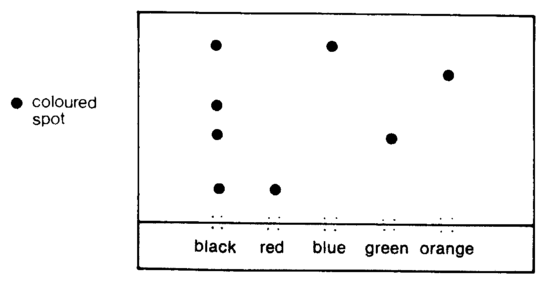
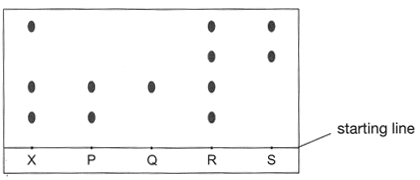
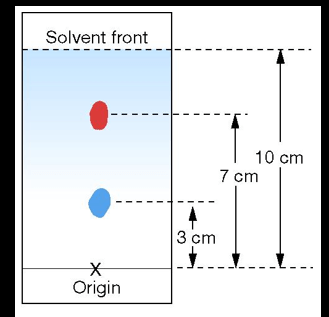

Used to separate an insoluble solid from liquid or soluble solid
Filtration
Distillation
Crystallisation
Evaporation
Used to separate a dissolved solid from its solution
Filtration
Evaporation
Crystallisation
Sublimation
Used to separate liquid from a solution
Filtration
Sublimation
Distillation
Fractional distillation
Used to separate liquid mixtures for identification
Filtration
Distillation
Fractional distillation
Chromatography
Used to separate miscible liquids with a wide range of boiling points
Distillation
Fractional distillation
Chromatography
Evaporation
Used to separate immiscible liquids
Paper chromatography
Separating funnel
Distillation
Fractional distillation
Used to separate a solid from a mixture of solids
Filtration
Evaporation
Crystallisation
Sublimation
Which one of the following solids is insoluble in water?
sugar
copper sulfate
sand
salt
Water and petrol can be separated by
separating funnel
filtration
decanting
evaporation
A Leibeg condenser is used in
filtration
evaporation
chromatography
distillation
Name the separation method that causes wet clothes on a clothes line to dry
chromatography
distillation
filtration
evaporation
Which one of the following would you use to separate sand from iron filings?
a bar magnet
chromatography
filter papre
evaporation
In filtration, the solid that remained on the filter paper is called the
solid
solute
filtrate
residue
In filtration, the clear liquid which passes through the filter paper is called
filter paper
filtrate
filter
filtration
Dyes in water soluble markers may be separated by means of
crystallisation
chromatography
filtration
distillation
To separate a mixture of soil and water, what separation method is used?
filtration
chromatography
distillation
evaporation
Water and ethanol can be separated by
distillation
fractional distillation
chromatography
evaporation
Water and ethanol are easily separated by fractional distillation because of their
different melting points
different densities
different colours
different boiling points
The separation technique that involves heating a solution until the liquid changes into a gaseous state, leaving behind a solid is known as
filtration
distillation
evaporation
chromatography
Chromatography separate the mixture of dyes on the basis of their
density
solubility
gravity
boiling point

Water and ethanol are easily separated by fractional distillation because of their
different melting points
different densities
different colours
different boiling points
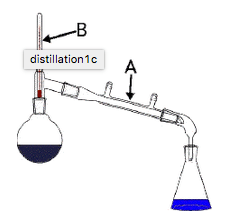
Atomic number is
the number of electrons in an atom
the number of protons in an atom
the number of neutrons in an atom
number of protons and neutrons
What type of charge does a proton have?
negative
postive
no charge/neutral
RM 50
What type of charge does an electron have?
positive
no charge/neutral
negative
Turbo Charge
What is the center of the atom called?
nucleus
electron cloud
energy level
neutron
What two sub-atomic particles can you find in the nucleus of an atom?
electrons and protons
protons and neutrons
electrons and neutrons
Magic beans
What type of charge does a neutron have?
negative
positive
no charge/neutral
electrical charge
Where are electrons located in an element?
nucleus
energy shells
elements don't have electrons
The empty space

What is the atomic number of this Carbon atom
6
8
14
12

What is the mass number of this Carbon atom?
8
12
6
15

What is the element symbol?
Argon
Ar
18
39.948

What is the element name?
Argon
Neon
18
Ar

The number 18 represents the
Atomic number
Neutrons
Element Name
Element symbol
The mass number of an atom =
protons + neutrons
protons - neutrons
electrons - neutrons
neutrons + electrons
In the modern periodic table, elements are arranged by:
atomic mass
atomic number
valence electrons
number of isotopes
An atom with atomic number 6 would have how many protons
6
12
3
cannot be determined

What is the number of protons that the element in this image contain?
14
7
15
18

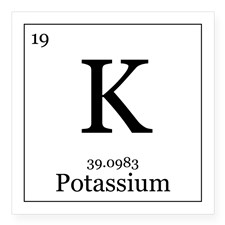
How many neutrons are in the atom "K"?
7
2
39
20
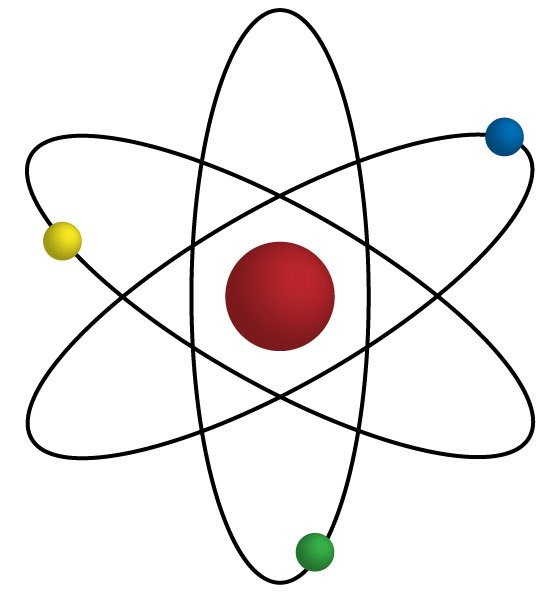

In an atom, the number of electrons is the same as the number of protons
Always
Never
Sometimes
Sausages
Subatomic particles with a negative charge
Electrons
Neutrons
Protons
Quarks
Y atom has 3 protons and 4 neutrons and 3 electrons. what is its nucleon number?
3
4
7
6
X atom has 10 proton and 11 neutron. How many electron does it have?
10
11
12
13
Z atom has 11 protons, 10 neutron and 11 electrons. what is its proton number?
11
10
21
22
an atom has 10 electrons and 8 neutrons. How many protons does it have?
8
18
10
2
A atom has nucleon number of 14 and it has 8 electrons. how many neutron does it have?
14
8
6
10
B atoms has 7 protons and 6 neutron. what is the nucleon number of this atom?
7
6
8
13
which sub-particles give mass to an atom?
proton
neutron
electron
shell
which sub-particle involves in reactions when atoms react?
proton
neutron
valence electron
core electron
an atom has proton number of 7 and nucleon number of 13. what is the number of neutron the atom has?
7
6
13
14

how many valence electron does this atom have?
1
2
3
7
what is the charge of an atom
0
1
2
3
which sub-particle that identifies the atom?
electron
neutron
proton

