
 Worksheets
Evolution Unit 5 Review
Total questions: 124
Worksheet time: 2hrs 50mins
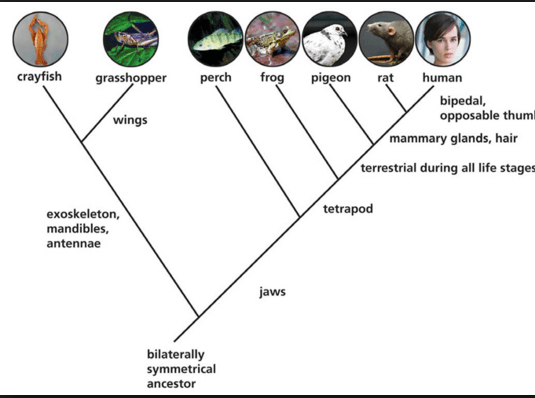

Which cladogram best fits the data table?


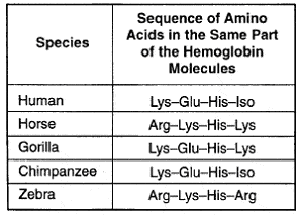


arachnids and insects?
Living things that have a backbone are called...
invertebrates
vertebrates
jellyfish
sponge
How many different Domains are there?
1
2
3
How many different Kingdoms are there?
6
5
4
Which domain would the following organisms belong to? Seaweed, turtle, octopus, algae
Archaea
Eukarya
Bacteria
Which of the following is BIOTIC?
Rocks
Temperature
Acorns
Water


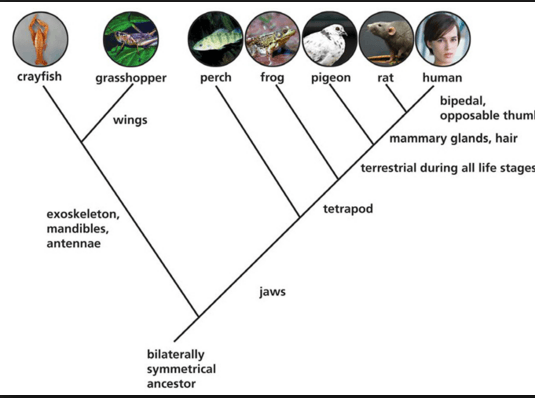
In the cladogram shown, which animal clade possesses both mammary glands and a placenta?
Bullfrog
Kangaroo
Shark
Chimp
These two kingdoms contain multicellular heterotrophs.
fungus and plant
plant and animal
fungus and plant
fungus and animals
In trying to classify a newly discovered organism, the following characteristics were noted: multicellular, specialized tissues and organs, chlorophyll-containing structures and cell walls. Which kingdom should this organism be placed and why?
Eubacteria, because it is multicellular and has specialized tissues
Protista, because it has chlorophyll and is multicellular
Fungi, because it has cell walls and specialized tissues
Plant, because it is multicellular and has chlorophyll
What is one characteristics that separates the animal and plant kingdoms?
Animal kingdom consist of multicellular organisms, while the plant kingdom consists of unicellular organisms.
Animal kingdom consist of unicellular organisms, while the plant kingdom consists of multicellular organisms.
Animal kingdom consist of organisms that do not produce their own food for energy, while the plant kingdom does produce their own food for energy
Animal kingdom consist of organisms that produce their own food for energy, while the plant kingdom does not produce their own food for energy
● The mystery species can perform photosynthesis.
● The mystery species is multicellular.
● The mystery species has a cell wall.
You can eliminate the animal kingdom because animals are multicellular but do not perform photosynthesis.
You can eliminate the animal kingdom because animals have cell walls but cannot perform photosynthesis
You can eliminate the protist kingdom because protists are multicellular but cannot perform photosynthesis
You can eliminate the protist kingdoms because protist can perform photosynthesis but do not have cell walls
What are the three domains?
Yellow, Red, Blue
Autotrophic, Heterotrophic, Both
Marine Organism, Land organism, Both
Archaea, Bacteria, Eukarya
Which Kingdom contains members who are prokaryotic?
Archaebacteria and Eubacteria
Eubacteria and Animalia
Archaebacteria and Protista
Eubacteria and Fungi
Members of this Kingdom never have a cell wall
Animalia
Plantae
Archaebacteria
Protista
Organisms that are classified as autotrophs are able to _____.
be seen without a microscope
move
reproduce
make their own food
Which domain contains organisms that are unicellular, prokaryotic, and can cause diseases like strep throat or E. coli infections?
Eukarya
Fungi
Animalia
Bacteria
Which of the six Kingdoms contain eukaryotic organisms?
Eubacteria and Archaebacteria only
Eubacteria, Archaebacteria, Protista, and Fungi only
Plantae and Animalia only
Protista, Fungi, Plantae, and Animalia only
True or False: An electron microscope gives a higher resolution than a light microscope.
True
False
Only in certain conditions
True or False: You cannot see the nucleus of a cheek cell with a light microscope.
True
False
Only under certain conditions
Select the best answer to the question: Explain why a scientist might choose to use an electron microscope rather than a light microscope.
The light microscope won't show as much and it doesn't make the picture as bigger as the electron microscope.
Electron microscope is better for a scientist to choose than a light microscope it uses electrons and not light.
An electron microscope gives a greater magnification and better resolution than a light microscope.
Scientists might need to choose the electron microscope because it is cheaper and easier than the light microscope.
What type of microscope uses a magnetic field to operate?
electron microscope
light microscope
plasmid microscope
micro microscope
What does TEM stand for?
transmission electron microscope
translation electron microscope
telepathic electron microscope
tori eats mangos
What does SEM stand for?
scanning electron microscope
sandwich electron microscope
soft electron microscope
Sara eats margarine
The microscopes we use are called
compound microscopes
dissecting microscopes
stereo microscopes
electron microscopes
All living organisms are composed of...
cells
monkeys
eukaryotes
tissues
What is one disadvantage of using an electron microscope
The specimen cannot be alive when viewed
The specimen cannot be viewed with as great a magnification as with a light microscope
One cannot view thin sections, only the surface of objects
It has less resolving power compared to a compound light microscope
What is the difference between transmission electron microscopes and scanning electron microscopes
TEM is used for thin sections while SEM is for surface photography
SEM does not require heavy metal staining while TEM does.
One can use a slide prepared for a compound light microscope directly in TEM, but not in SEM.
SEM generally has higher magnification than TEM

A change in the gene pool of a small population due to chance.
Gene flow
Genetic drift
Non-Random mating
Artificial Selection
Mutation
Results in mating of those in close proximity and changes in the gene pool.
Gene flow
Genetic drift
Non-Random mating
Artificial Selection
Mutation

Which of the following is the collection of life's remains found in sedimentary rock?
natural selection
homologous structures
Charles Darwin
the fossil record
Similar structures with different purposes found in different species are known as _____
vestigial structures
DNA
homologous structures
the fossil record

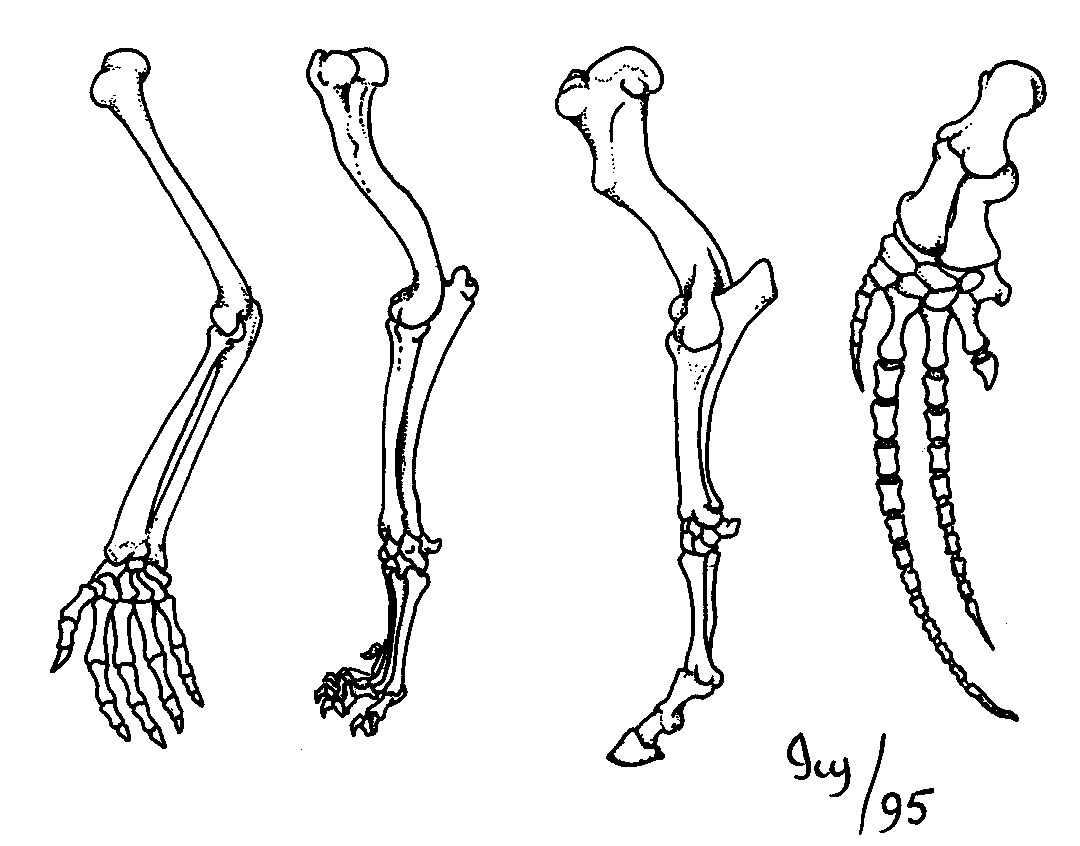
The picture shows a/an ___________
homologous structure
vestigial structure
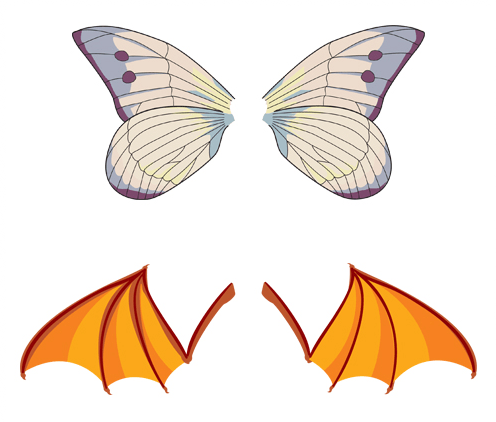
What is this an example of?
Homologous structure
Analogous structure
Vestigial organs
Functional adaption


Which of the following can be determined by observing the embryos shown in the diagram

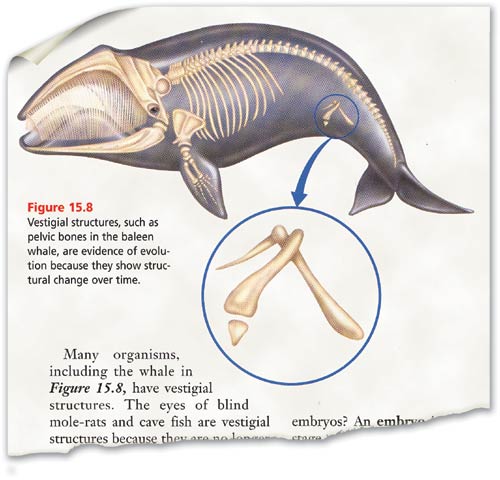
What best describes the hind leg bones seen in the whale?
The bones are analogous structures to the fins of living fish.
The bones are vestigial structures that had a function in an ancestor.
The bones are homologous structures to the wings of butterflies.
The bones are fossil structures from an extinct ancestor.


Because whales have a pelvis and femurs, it shows whales are descended from an ancestor that was able to _____________________.
walk
sing
swim
polka
Which of the following can be determined by observing the embryos shown in the diagram

Vestigial structures
structures that perform a similar function but are not similar in origin
remnants of once-important structures that have slowly lost all or most of their function
features found in different organisms that share structural similarities but may have very different functions
preserved remains of an organism
Part of the plant that absorbs water.
Roots
Flowers
Petals
Leaves
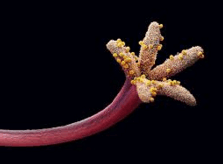
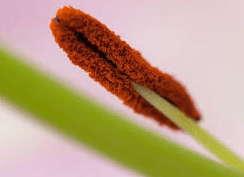

What part of the plant is the highest arrow pointing at
Stem
Flower
Root
Leaves

What type of plant tissue allows for the growth of the plant?
meristematic tissue
dermal tissue
ground tissue
vascular tissue
Seeds are reproductive structures in a variety of plants and can be considered an advancement over spores. All seeds have similar structures. Along with a food supply, what else is found in a seed?
Separated egg and sperm
either egg or sperm, but not both
one sperm and one egg, ready to be joined
a living embryo of the plant
Which organism developed first?
Fungi
Prokaryotic
Eukaryotic
Fish
The reactant(s) for photosynthesis are
6CO2 + 6H2O
C6H12O6
C6H12O6 + 6O2
ATP
carbon dioxide + water -> glucose + oxygen

Which organelle is responsible making food (Glucose) using sunlight?
Cell Membrane
Nucleus
Chloroplast
Mitochondria

Which of the following is the correct equation for PHOTOSYNTHESIS?
light + carbon dioxide + water --> glucose + oxygen
carbon dioxide + sugar + water --> oxygen + light
oxygen + light + water --> carbon dioxide + sugar
carbon dioxide + oxygen + water --> Light+ Sugar
What is the equation for aerobic cellular respiration?
Does cellular respiration store or release energy?
Store
Release
In what molecule is the energy carried in cells?
Glucose
Oxygen
ATP
Carbon Dioxide
Which organelle does aerobic cellular respiration happen in?
Nucleus
Mitochondria
Chlorophyll
Chloroplast
The rate of transpiration in directly proportional to the
humidity
surface area
pressure
carbon dioxide content increase
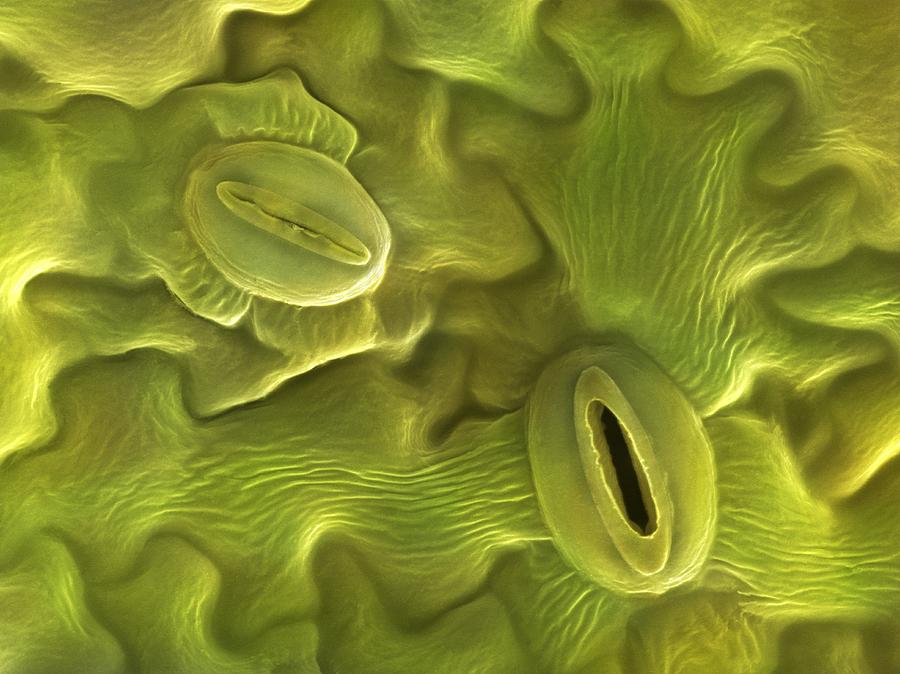
Kidney shaped cells at the border of the stomata
Lenticels
Cuticle
Guard cells
Hydathodes
Transpiration is a part of____________?
Condensation
Sublimation
Evaporation
Precipitation
Water transported from stems to leaves through what?
xylem
phloem
stems
roots
Which is true?
99% of water taken by the plant evaporates through transpiration
9% of water taken by the plant evaporates through transpiration
Evaporation through transpiration accounts only for 1% of all the water the plant takes in
Evaporation through transpiration is minuscule

Which number or numbers identify the stamen?
3,4
5, 6, 7
2
8, 9

Which of the following tissues whose role is to protect and cover the plant?
Dermal tissue
Epidurial tissue
Ground tissue
Vascular tissue

Apical meristems can be found in
The leaves
The tips of the shoots and roots
The xylem cells
The epidermal cells
Which of the following is not a type of tissue found in plants
Dermal
Vascular
Root
Ground
This tissue makes up much of the interior of a plant and carries out basic metabolic functions. In stems, it provides support and may store food or water. In roots, it may also store food.
Dermal tissue
Ground tissue
Meristematic tissue
Vascular tissue

Within the epidermis, thousands of pairs of bean-shaped cells swell and shrink to open and close _______, which are tiny pores that control the exchange of oxygen and carbon dioxide gases and the release of water vapor.
stomata
stamen
stigma
style

