
 Worksheets
Soil and Botany Basics Notes Review
Total questions: 134
Worksheet time: 2hrs 28mins


Soil sample that is 60% clay, 30% silt, and 10% sand has which texture?
clay
clay loam
sandy loam
silt

Soil sample that is 10% clay, 20% silt, and 70% sand has which texture?
clay
clay loam
sandy loam
silt
When you plant the seeds of the next crop along side the remains of the previous crop (in order to decrease erosion), it is known as...
terracing.
contour plowing.
drip irrigation.
no-till farming.
The process by which land in arid and semi-arid areas becomes more desert like is...
fallow.
desertification.
salinization.
chemical weathering.
Dirt is
the inorganic portion of soil
the organic port of soil
the part of soil that contains the nutrients
where roots grow in soil
Humus is
the inorganic portion of soil
the organic port of soil
the part of soil that contains the nutrients
where roots grow in soil
Soil provides plants with
physical support
air and water
nutrients
all of the above
Good characteristics of soil include
a lot of dirt
drains quickly
dark in color
needs a lot of fertlizer


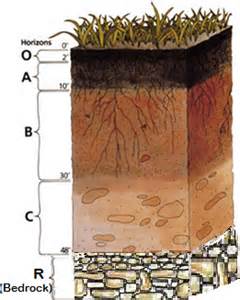
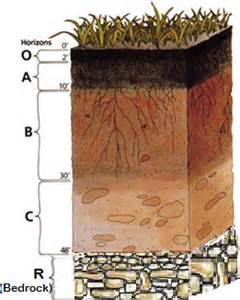

What soil horizon is shown?
Horizon O
Horizon A
Horizon E
Horizon B
Horizon C

What soil horizon is shown?
Horizon O
Horizon A
Horizon E
Horizon B
Horizon C

What soil horizon is shown?
Horizon O
Horizon A
Horizon E
Horizon B
Horizon C

What soil horizon is shown?
Horizon A
Horizon E
Horizon B
Horizon C
Horizon R

What soil horizon is shown?
Horizon A
Horizon E
Horizon B
Horizon C
Horizon R

What soil horizon is shown?
Horizon A
Horizon E
Horizon B
Horizon C
Horizon R

Match the description of the horizon to the horizon name.
Horizon O
Horizon A
Horizon B
Horizon E
Horizon C

Match the description of the horizon to the horizon name.
Horizon O
Horizon A
Horizon B
Horizon E
Horizon C

Match the description of the horizon to the horizon name.
Horizon R
Horizon A
Horizon B
Horizon E
Horizon C

Match the description of the horizon to the horizon name.
Horizon R
Horizon A
Horizon B
Horizon O
Horizon C

Match the description of the horizon to the horizon name.
Horizon R
Horizon A
Horizon B
Horizon O
Horizon C

Match the description of the horizon to the horizon name.
Horizon R
Horizon A
Horizon B
Horizon O
Horizon C
What soil layer contains the most humus?
Horizon A
Horizon E
Horizon R
Horizon O
Horizon B
What soil layer contains the LEAST amount of humus?
Horizon A
Horizon E
Horizon R
Horizon O
Horizon B
Match the horizon letter with its name.
Horizon R
Organic Matter
Topsoil
Eluviation
Subsoil
Bedrock
Match the horizon letter with its name.
Horizon E
Organic Matter
Topsoil
Eluviation
Subsoil
Bedrock
Match the horizon letter with its name.
Horizon A
Organic Matter
Topsoil
Parent Material
Subsoil
Bedrock
Match the horizon letter with its name.
Horizon O
Organic Matter
Topsoil
Parent Material
Subsoil
Bedrock
Match the horizon letter with its name.
Horizon B
Organic Matter
Topsoil
Parent Material
Subsoil
Bedrock
Match the horizon letter with its name.
Horizon C
Organic Matter
Topsoil
Parent Material
Subsoil
Bedrock
Which horizon would you expect to find the following:
Living and dead plants and animals
Horizon E- Eluviation Layer
Horizon O- Organic Material
Horizon A- Topsoil
Horizon B- Subsoil
Horizon R- Bedrock
Which horizon would you expect to find the following:
Leached clay and minerals from the horizon above
Horizon E- Eluviation Layer
Horizon O- Organic Material
Horizon A- Topsoil
Horizon B- Subsoil
Horizon R- Bedrock
Which horizon would you expect to find the following:
Sand and silt (clay and minerals get leached to layer below)
Horizon E- Eluviation Layer
Horizon O- Organic Material
Horizon A- Topsoil
Horizon B- Subsoil
Horizon R- Bedrock
Which horizon would you expect to find the following:
True soil layer: a mixture of humus, mineral grains, water, and air
Horizon E- Eluviation Layer
Horizon C- Parent Material
Horizon A- Topsoil
Horizon B- Subsoil
Horizon R- Bedrock
Which horizon would you expect to find the following:
Thick slab of unbreakable rock
Horizon E- Eluviation Layer
Horizon C- Parent Material
Horizon A- Topsoil
Horizon B- Subsoil
Horizon R- Bedrock
Which horizon would you expect to find the following:
Slightly weathered rock chunks; very little organic material found here.
Horizon E- Eluviation Layer
Horizon C- Parent Material
Horizon A- Topsoil
Horizon B- Subsoil
Horizon R- Bedrock


In which horizon do most animals such as bugs live?
Humus
Topsoil
Subsoil
Parent Material
Bedrock
Which of these is NOT a main ingredient in soil?
Mineral Matter
Organic Matter
Air
Dirt
How much air AND water is in a ideal soil
25%
50%
10%
5%
How much Mineral Matter is in an ideal soil?
25%
5%
50%
45%
What is the best type of soil texture for plant growth?
Sandy clay
Silt clay
Fertilizer
Loam
What type of soil texture would hold too much water and flood plants?
Clay
Sand
Loam
Silt
What would happen if there is too much sand in the soil?
It would hold too much water and flood plants.
Too much water would run off and plants would dry out.
Nothing. Sand is perfect for soil.
Aquatic animals would eat the plants.
Most plants prefer a pH...
Closer to 0.
Closer to 14.
Between 4-8
That is very acidic.
pH tells you...
How acidic or basic a solution is.
The mixture of sand, silt, and clay.
Which fertilizer you may need.
The levels of Phosphorus in the soil.
Which nutrient is needed to make chlorophyll (which is green) to allow your plants to do photosynthesis?
Nitrogen
Phosphorus
Potassium
pH
Why is Phosphorus specifically so important in soil?
Helps them grow.
Keeps them green.
Helps them bloom and create fruits and vegetables.
Helps them with immunity.
If a client's soil is too acidic, what will you tell them to do to fix it?
Add lime.
Add peat moss.
Add nitrogen.
Add sand.
If a client's grass is not green, what will you tell them to do to fix it?
Add lime.
Add peat moss.
Add a 28-3-3 fertilizer.
Add a 3-28-3 fertilizer.
Of the four soil components, 45% of a soil is comprised of:
Air
Water
Minerals
Organic Matter
Fifty (50) percent of a soil is composed of:
Air
Organic Matter
Water
Minerals
What is a mixture of minerals, organic matter, gases, and organisms that can support plant life
Weathering
Loam
silt
Soil
what remains are found in organic material? Along with plants animals and their waste products?
dead organisms
Inorganic material
Soil
Topsoil

This pie chart shows the soil composition in general. What's A?
Minerals
organic content
humus
water

Look again. What's B? Find all correct answers
minerals
organic content
humus
water
Which soil component is coarse and gritty?
clay
silt
sand

Now, what type of soil is this sample?
sandy soil
clay
loam

You know the drill. What is this type of soils?
clay
loam
sandy

Back again to this picture. What component is missing from this type of soil?
(a)

Look at the soil sample. What type of soil is that?
loam
sandy
clay

Select the correct term for the following definition:
"The water transport system in plants."
Villi
Bronchi
Bolus
Xylem
Select which of the following statements are true for xylem.
Tubular shape with no cross walls.
Transportation of food and nutrients.
Elongated, tubular shape with thin walled sieve tubes.
Occupy the center of the vascular bundle.
Water and mineral transport from roots to aerial parts of the plant.

Select the correct term for the following definition:
"The nutrient transport system in plants."
Enzyme
Guard cells
Phloem
Proteins
Select which of the following statements are true for phloem.
Bi-directional movement (up and down stem).
Elongated, tubular shape with thin walled sieve tubes.
Transportation of feed and nutrients.
Occupy the centre of the vascular bundle.
Water and mineral transport from roots to aerial parts of the plant.
What type of water in most useful to plants in soil?
unavailable capillary water
available capillary water
gratitational water
above of the above
What nutrient is essential for new plant growth and chlorophyll synthesis?
Sulfur
Potassium
Nitrogen
Calcium
_________promotes root development and early seedling growth
Nitrogen
Potassium
Phosphorus
Iron
Plants lacking _______are also more susceptible to pests and diseases
Potassium
Nitrogen
Magnesium
Sulfur
N-P-K stands for what?
Nitrogen-Potassium-Phosphorus
Nickle-Phosphorus-Potassium
Nitrogen-Phosphorus-Potassium
Need-Plants-Know
Which is a non- fertilizer element?
Nitrogen
Hydrogen
Calcium
Magnesium
What does macro mean?
Tiny
Small
Large
Little

This plant is showing what deficiency?
Nitrogen
Potassium
Phosphorus
Calcium

What nutrient is deficient in this plant?
Phosphorus
Nitrogen
Calcium
Potassium

___ helps with porosity is growing medium
Vermiculite
Perlite
Peat Moss
Lime

_____helps with water holding capacity
perlite
vermiculite
peat moss
gold
Which term signifies a positive ion?
anion
cation
plus ion
minus ion
Which term signifies a negative ion?
Anion
Cation
Plus Ion
Minus Ion
If you have an acidic soil, what should you add if you want to raise the pH?
sulfur or gypsum
salt
lime
calcium
If you have an alkaline soil and want to lower the pH, what would you add?
sulfur or gypsum
salt
lime
calcium
What does the term acidic mean?
pH of 7-14; low
pH of 7-14; high
pH of 0-7; low
pH of 0-7; high
What does the term alkaline mean?
pH 7-14; high
pH 7-14; low
pH 0-7; high
pH 0-7; low
What is the pH of water?
0
5
7
14
What is the optimum pH range for most plants?
4.0-5.0
6.0-7.0
8.0-9.0
If a plant turns a purple to brown color, what deficiency does it likely have?
nitrogen
potassium
calcium
phosphorus
If a plant has brown, crispy edges, what deficiency does it likely have?
magnesium
potassium
nitrogen
phosphorus

Vascular tissue (tubes) responsible for the transportation of water and minerals up from the roots and around the plant.
Stomata
Transpiration
Phloem
Xylem

Vascular tissue (tubes) responsible for the transportation of glucose down and around in a plant.
Transpiration
Xylem
Phloem
Root Hairs


_________________ are fungi that live on the roots of plants and aid in nutrient uptake.
protozoa
lichen
mycorrhizae
chanterelles
Which property of soil can you determine by rubbing a sample between your fingers?
Ability to support life
Formation process
Texture
Color
Which property of soil determines how much water it will retain?
Texture
Porosity
Humus
pH
What soil can only be seen using a microscope?
Clay
Top soil
Silt
Sand
What does the Ribbon Test test for?
structure
nutrients
texture
water holding capacity
What is a mixture of sand, silt and clay called?
Loam
Humus
Sandy Clay
Silty Sand
Vascular plants
produce seeds
are seedless
are leafless
The terms annual, biennial, and perennial describe plant:
leaf loss
life cycle
production practices
root type
Plants that complete their life cycles in two years are:
annuals
biennials
centennials
perennials
Because trees live many years, they are:
annuals
biennials
perennials
semi-annuals
Plants that take three or more years to complete their life cycle are:
annuals
biennials
millennials
perennials
Annual plants complete their life cycle in:
one year
two years
three years
ten years

