Wayground logo

Free Printable Worksheets

Font size

S
M
L
XL
Worksheets

Biology: Units 1-7b Review

Total questions: 135

Worksheet time: 3hrs 40mins

Name
Class
Date
1.
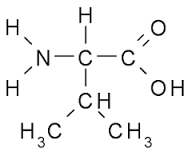
The monomer of a protein is called...
a)
an amino acid
b)
a monosaccharide
c)
a fatty acid
d)
a nucleotide
2.
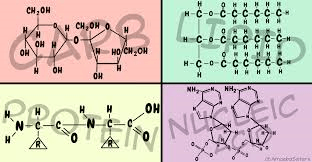
Which biomolecule contains fats, oils, and waxes?
a)
Proteins
b)
Nucleic Acid
c)
Lipids
d)
Carbohydrate
3.

Nucleotides are a monomer of which biomolecule?

a)

Nucleic acids

b)

Proteins

c)

Carbohydrates

d)

Lipids

4.
What elements are common to all 4 biomolecules?
a)
Carbon, hydrogen, nitrogen
b)
Carbon, Nitrogen, Phosphorus
c)
Carbon, Hydrogen, Oxygen
d)
Carbon, Hydrogen, Phosphorus
5.
Carbon, Hydrogen, Oxygen and Nitrogen are elements in what biomolecule?
a)
Carbohydrate
b)
Lipid
c)
Protein
d)
Nucleic acid
6.
What is the function of nucleic acids?
a)
Stores energy
b)

Stores genetic information (holds instructions on how to make proteins)

c)
Movement
d)
Physical structure
7.
Which biomolecule helps form muscles?
a)
Nucleic Acid
b)
Carbohydrate
c)
Protein
d)
Lipids
8.

Which biomolecule is largely found in pastas and breads?

a)
Lipid
b)
Protein
c)
Nucleic Acid
d)
Carbohydrate
9.

Which biomolecule is an enzyme?

a)
Carbohydrate
b)
Lipid
c)
Nucleic Acid
d)
Protein
10.

Which macromolecule is paired with its function?

a)

nucleic acid- to store energy

b)

lipids – to regulate metabolic.

c)

protein- to provide insulation.

d)

carbohydrates – to provide quick-release energy.

11.

Which biomolecule makes up cell membranes?

a)

Protein

b)

Carbohydrate

c)

Lipid

d)

Nucleic acid

12.

Which biomolecule is important for insulation?

a)

Lipid

b)

Proteins

c)

Carbohydrates

d)

Nucleic acid

13.

Cellulose is a fiber molecule that gives structure to plant cell walls. What type of biomolecule is Cellulose?

a)

Lipid

b)

Carbohydrate

c)

Protein

d)

Nucleic Acid

14.

What element do proteins contain that carbs and lipids do not?

a)

Carbon

b)

Hydrogen

c)

Nitrogen

d)

Phosphorous

15.

Why do viruses have projections on the outside?

a)

To send signals to other viruses.

b)

To maintain their structure.

c)

To attach to the host cell.

d)

To reproduce.

16.

Which of the following correctly describes viruses?

a)

non-living because they grow and develop

b)

living because they can use energy

c)

non-living because they cannot reproduce on their own

d)

living because they can maintain homeostasis

17.

Which of the following is something bacteria and viruses have in common?

a)

they are both living

b)

they are both cells

c)

they both contain genetic material

d)

they are both non-living

18.

These cells do not have organelles with membranes around them, which includes a nucleus.

a)

Prokaryotic

b)

Eukaryotic

c)

Both

19.

These cells have a nucleus and membrane-bound organelles.

a)

Prokaryotic

b)

Eukaryotic

c)

Both

20.

The protein coat of a virus is known as the __________.

a)

capsid

b)

genome

c)

cell membrane

d)

envelope

21.

The ___________ cycle allows replication of the virus genome without destroying the host. *Hint: This cycle occurs slowly; symptoms do not present for long periods of time (many years)

a)

lysogenic

b)

lytic

22.

Which viral life cycle kills its host cell by causing it to burst open when it becomes too full with new viruses? *Hint: this method of replication is quick (it happens quickly and symptoms show up in host quick)

a)

lytic

b)

lysogenic

23.

Which of the following is something viruses and cells have in common?

a)

Size

b)

Proteins

c)

Capsid

d)

Shape

e)

Protein coat

24.

In passive diffusion, substances always move...

a)

from an area of higher concentration to an area of lower concentration

b)

from an area with more of the molecules to an area with fewer of the molecules

c)

from an area of lower concentration to an area of higher concentration

d)

from an area with fewer of the molecules to an area with more of the molecules

25.
What process occurs when WATER diffuses across a membrane?
a)
endocytosis
b)
mitosis
c)
osmosis
d)
nuclear fission 
26.
What does selectively-permeable mean?
a)
The cell controls what passes in and out of the cell
b)
Nothing gets through
c)
The cell lets only large substances through
27.
The movement of molecules across a membrane from high concentration to low concentration is called:
a)
Osmosis
b)
Diffusion
c)
Endocytosis
d)
Active Transport
28.
Active Transport typically uses ______ to transport materials across the cell membrane.
a)
ATP
b)
Glucose
c)
Na+
d)
K+
29.
When the concentration of particles inside of a cell is the same as the concentration of particles outside of the cell. 
a)
active transport
b)
concentration
c)
diffusion
d)
equilibrium
30.

What are the two types of cell transport?

a)

Passive and Active

b)

Active and Facilitated

c)

Passive and Facilitated

d)

None of the above

31.

What macromolecule is embedded into the lipid bilayer and helps to transport molecules?

a)

Carbohydrate

b)

Lipid

c)

Protein

d)

Nucleic Acid

32.
This picture represents what type of cell transport?
a)
endocytosis
b)
exocytosis
c)
osmosis
d)
passive transport
33.
What type of transport is this?
a)
facilitated diffusion
b)
active transport
c)
diffusion
d)
osmosis
34.
Active transport requires ______, moves materials from __________________, and goes _______ the concentration gradient.
a)
No energy, low to high, against
b)
ATP, high to low, with
c)
ATP, low to high, with
d)
ATP, low to high, against
35.
Which of the following modes of cellular transport does NOT require energy?
a)
Facilitated Diffusion
b)
Protein Pumps
c)
Endocytosis
d)
Exocytosis
36.

The correct sequence of mitosis:

a)

metaphase, anaphase, telophase, prophase

b)

prophase, metaphase, anaphase, telophase

c)

prophase, anaphase, metaphase, telophase

d)

telophase, metaphase, prophase, anaphase

37.

Identical halves of a chromosome are called?

a)

Cousins

b)

Chromatids

c)

Centromere

d)

Centrosome

38.

Chromosomes are visible and spindle fibers start to appear

a)

prophase

b)

metaphase

c)

telophase

d)

anaphase

39.

There are 2 nucli in one cell

a)

telophase

b)

prophase

c)

anaphase

d)

metaphase

40.
During which part of the cell cycle does the cell divide?
a)
Interphase
b)
Mitosis
c)
S phase
41.
During which phase of the cell cycle does the cell spend the most time?
a)
Mitosis
b)
Cytokinesis
c)
Interphase
42.
During which part of the cell cycle is DNA copied?
a)
Mitosis
b)
Cytokinesis
c)
S phase
43.
Which phase of mitosis is shown in the picture?
a)
Interphase
b)
Metaphase
c)
Telophase
44.
Which phase of mitosis is shown in the picture?
a)
Prophase
b)
Metaphase
c)
Anaphase
45.
What is shown in the picture?
a)
Mitosis
b)
Interphase
c)
Cytokinesis
46.

Uncontrolled cell division which usually leads to tumors and disease is called:

a)

Metaphase

b)

Cytokinesis

c)

Cancer

d)

Diabetes

47.
Which of the following phrases best describes cytokenesis
a)
division of the cytoplasm
b)
division of the nucleus
c)
division of DNA
d)
division of surface area
48.
What is a substance called if it speeds up a chemical reaction?
a)
reusable
b)
catalyst
c)
specific
d)
fragile
49.
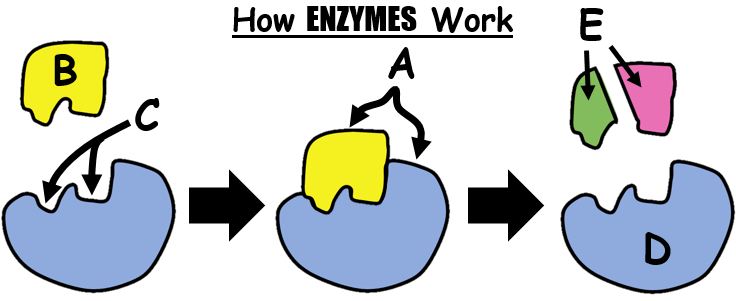
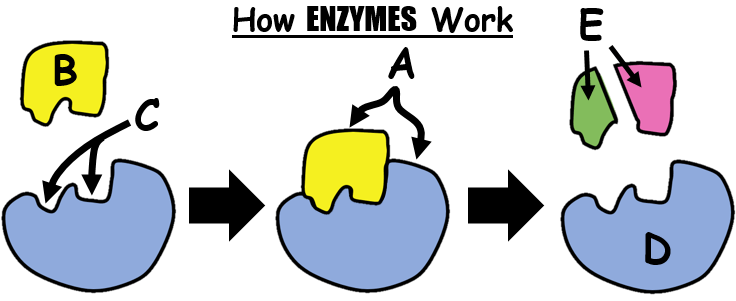
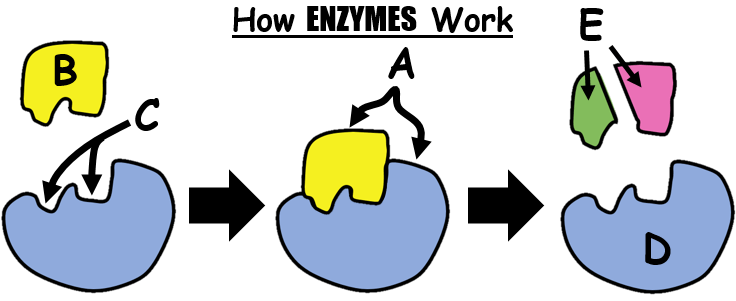
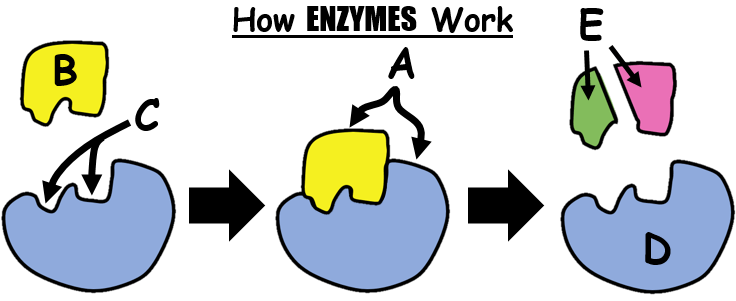
In the diagram, what is letter A? 
a)
product
b)
substrate
c)
enzyme-substrate complex
d)
active site
50.
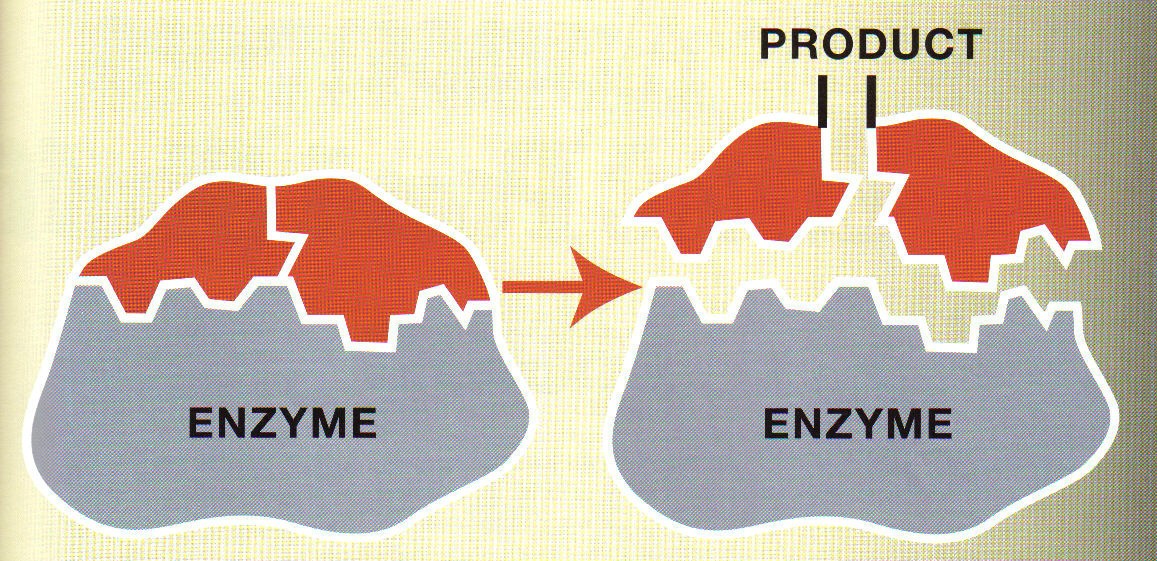
What is the function of an enzyme?
a)
enzymes break themselves into small pieces
b)
enzymes slow down chemical reactions
c)
enzymes speed up chemical reactions
d)
enzymes combine products to form reactants 
51.
Enzymes speed up reaction rates by changing...
a)
Activation Energy
b)
pH
c)
Hydrogen Bonds
d)
Kinetic Energy
52.
Letter C...
a)
active site
b)
enzymes
c)
substrate
d)
products
53.
Letter E...
a)
active site
b)
enzyme
c)
substrate
d)
products
54.
Letter B...
a)
active site
b)
enzyme
c)
substrate
d)
products
55.
Letter D...
a)
active site
b)
enzyme
c)
substrate
d)
products
56.
Every enzyme has a optimal temperature and pH. True or False?
a)
True 
b)
False
57.
Enzymes are composed of which of the following monomers? 
a)
amino acids
b)
carbohydrates
c)
nucleotides
d)
monosaccharides
58.

Which of the following is the correct equation for photosynthesis?

a)

CO2 + light + H2O --> O2 + Glucose

b)

CO2 + Glucose+ H2O --> O2 + light

c)

O2 + light + H2O --> CO2 + Glucose

d)

CO2 + O2 + H2O --> Light+ Glucose

59.
Which gas is removed from the atmosphere during photosynthesis?
a)
hydrogen
b)
oxygen
c)
nitrogen
d)
carbon dioxide
60.

Oxygen (O2) is a reactant for which process?

a)

Photosynthesis

b)

Cellular Respiration

61.

Cellular respiration is a process that occurs in the cells of –

a)

plants

b)

Plants and Animals

c)

Animals

d)

None

62.
Fermentation involves
a)
aerobic respiration
b)
anaerobic respiration 
63.

Which of the following best explains one result of cell respiration?

a)

Oxygen is released into the atmosphere

b)

Carbon dioxide is released into the atmosphere

c)

Glucose is released into the atmosphere

d)

ATP is released into the atmosphere

64.

Which of the following best explains the purpose of cell respiration?

a)

In cell respiration, sunlight is used to make sugar

b)

In cell respiration, sunlight is used to make ATP

c)

In cell respiration, glucose is used to make energy

d)

In cell respiration, oxygen is used to make sugar

65.
What is the correct equation for cellular respiration?
a)
6O2 + C6H12O6 -> 6CO2 + 6H2O + Energy
b)
6O2 + C6H12O6 + Energy -> 6CO2 + 6H2O
c)
6CO2 + 6H2O -> 6O2 + C6H12O6 + Energy
d)
6CO2 + 6H2O + Energy -> 6O2 + C6H12O6
66.

Where does most energy for ATP come from?

a)

Nucleic Acids

b)

Proteins

c)

Lipids

d)

Carbohydrates

67.

Aerobic cellular respiration takes place when there is

a)

no oxygen

b)

available oxygen

c)

too much water

d)

too much carbon dioxide

68.

Aerobic cellular respiration takes place in the

a)

chloroplasts

b)

mitochondria

c)

nucleus

d)

ribosomes

69.

Where does the energy for plants to perform photosynthesis come from?

a)

Breaking down ATP

b)

sunlight

c)

glucose metabolism

d)

None of the Above

70.

What is the pigment responsible for absorbing light energy in chloroplasts during photosynthesis?

a)

None of the Above

b)

Carotenoids

c)

Xenophylls

d)

Chlorophyll

71.

What process is shown in this diagram?

a)

reproduction

b)

transpiration

c)

respiration

d)

photosyntheis

72.
In an energy pyramid, energy_______ as you move up the pyramid.
a)
Increases
b)
Decreases
c)
Stays the same
d)
Changes up and down
73.

In this energy pyramid, which organisms have the most energy available?

a)

Producers

b)

Carnivores

c)

Herbivores

d)

Top Predator

74.
If there is 1000 Kcal available in the producers in trophic level 1, how much energy is available in the herbivores in trophic level 2?
a)
10 Kcal
b)
1 Kcal
c)
100 Kcal
d)
1000 Kcal
75.
The diagram represents different levels of a marine food pyramid. Between which two levels is the greatest amount of energy transferred
a)
R and Q
b)
S and R
c)
T and S
d)
U and T
76.

All food webs and food chains begin with _________________.

a)

Primary Consumer

b)

Producers

c)

Secondary Consumers

d)

Predators

77.

Which level has the fewest organisms?

a)

Tertiary

b)

Secondary

c)

Primary

d)

Quaternary

78.

A producer is a(n)____________.

a)

Autotroph

b)

Heterotroph

c)

consumotroph

d)

omnitroph

79.

Name the correct trophic level for level 3.

a)

Consumer

b)

Secondary

c)

Producer

d)

Decomposer

80.
How does RNA differ from DNA?
a)
RNA contains uracil and deoxyribose
b)
RNA contains ribose and thymine
c)
RNA contains uracil and ribose
d)
RNA contains adenine and ribose
81.

Where does transcription take place in a eukaryotic cell?

a)

nucleus

b)

cytoplasm

c)

ribosome

82.
True or false:  RNA is double-stranded.
a)
true
b)
false
c)
it depends on the type
83.
Which of the following best describes a DNA molecule?
a)
double helix
b)
contains ribose
c)
made of amino acids
d)
contains Uracil
84.
If one strand of DNA has the sequence TTACCG, the sequence of the other strand of the same molecule will be
a)
AATGGC
b)
TTACCG
c)
AACGGC
d)
AATGGG
85.

Transcription is the process of using DNA to make _______.

a)

DNA

b)

mRNA

c)

tRNA

d)

No one knows, it's a mystery

86.

Codons are located on....

a)

DNA

b)

mRNA

c)

tRNA

d)

rRNA

87.

Anti-codons are located on...

a)

DNA

b)

mRNA

c)

tRNA

d)

rRNA

88.

Where is RNA made into protein?

a)

Cytoplasm

b)

Nucleus

c)

Ribosome

d)

Cell Membrane

89.

A protein is built during this process

a)

translation

b)

transcription

90.

What does tRNA do during translation?

a)

it brings a specific segment of DNA to the ribosome for transcription

b)

it brings any amino acid to the ribosome

c)

it brings a specific amino acid (decided by the DNA) to the ribosome for translation

d)

it brings a specific amino acid (decided by the codon) to the ribosome for translation

91.
What is the correct sequence?
a)
RNA --> DNA --> Protein
b)
Protein --> RNA --> DNA
c)
DNA --> RNA --> Protein
d)
DNA --> Protein --> RNA
92.

According to the image provided, "Translation" takes place in the _______ of a cell.

a)

Cytoplasm

b)

Mitochondria

c)

Ribosome

d)

Nucleus

93.
How many amino acids are coded for by this sequence of nucleotides:
ATG GGA ACT CCA
a)
4
b)
2
c)
6
d)
12
94.
What type of bonds are forming during translation?
a)

Peptide bonds

b)

Hydrogen bonds

c)

No bonds are made

95.
What is the correct amino acid sequence for the mRNA code AUGCCAGUAUGA
a)
Met-Pro-Ala-Val
b)
Met-Pro-Val
c)
Tyr-Gly-His
d)
Tyr-Gly-Arg-His
96.

DNA sequence:

ATTCGAT


mRNA sequence:

a)

UAAGCUA

b)

UGTATTAA

c)

UATTGGAT

d)

UAAGAGU

97.
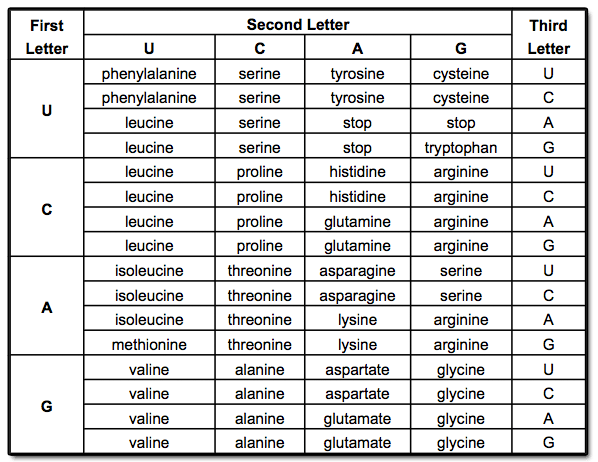
What amino acid is represented by the codon CAG?
a)
Aspartic Acid
b)
Histidine
c)
Glutamine
d)
Methionine
98.
What is the correct amino acid for the following codon:
 CAA
a)
Arg
b)
Met
c)
Gln
d)
Val
99.

This type of mutation codes for a stop codon, stopping protein synthesis prematurely

a)
Missense
b)
Nonsense
c)
Silent
d)
Deletion
100.

A type of substitution mutation in which NO amino acids change is called 

a)
Missense
b)
Nonsense
c)
Silent
d)
Deletion
101.
DNA molecule segment is : TTACGCAAG
The mutated DNA segment is TTCGCAAG. This is an example of ___ mutation.
a)
Substitution
b)
Deletion
c)
Insertion
d)
Inversion
102.
What is a Gene?
a)
A segment of RNA that encodes for a protein
b)
A chromosome
c)
A segment of DNA that encodes for a protein
d)

A type of pants to wear

103.
What mutation has occurred here? 
T-G-A-C-C-A
T-G-A-G-C-A
a)
Substitution
b)
Deletion
c)
Insertion
d)
Frameshift 
104.
Original: ATC CAT
Mutation: ATC GCAT
What mutation occurred?
a)
deletion
b)
insertion
c)
silent
d)
transverse
105.
A frameshift mutation can occur with either _________ or __________ mutations.
a)
Addition, division
b)
Deletion, substitution
c)
Addition, substitution
d)
Addition, deletion
106.

Which type of mutation is MOST LIKELY to cause the greatest disruption?

a)

Frameshift

b)

Silent

c)

Point

107.

Part of a chromosome is repeated

a)

Gene Mutation

b)

Point Mutation

c)

Deletion Mutation

d)

Duplication Mutation

108.
If green is dominant over purple, then what is the genotype for this individual?
a)
Purple
b)
Green
c)
GG
d)
gg
109.

What is a form of a gene called (ex: one may code for brown hair color, while the other codes for blonde...but both code for the phenotypic trait of hair color)

a)
Genesis
b)
Elective traits
c)
Alleles
d)
Quadrants
110.
If a pea plant were homozygous recessive for height, how would its alleles be represented?
a)
TT
b)
Tt
c)
tt
d)
tT
111.
Tt is-
a)
homozygous dominant
b)
homozygous recessive
c)
heterozygous
d)
none of these
112.
Another word for homozygous is...
a)
purebred
b)
hybrid
c)
heterozygous
d)
dominant
113.
Which of the following best describes a GENOTYPE?
a)
The allele/genetic makeup of an organism.
b)
The physical expression of a trait.
114.
The letters on the TOP AND SIDE of a punnett square represent ______________.
a)
The combination of alleles in offspring.
b)
The possible alleles given by the parents following meiosis.
c)
The genotype and phenotype of offspring.
d)
The results of genetic mutations in offspring.
115.

What is the predicted percentage of homozygous recessive offspring in this cross?

a)

0%

b)

25%

c)

50%

d)

75%

116.

Two brown eyed parents (Bb) have a baby. What is the chance the baby is blue eyed? (b = blue)

a)
0 %
b)
25%
c)
50%
d)
75%
117.
Homozygous is when...
a)
the alleles are the same
b)
the alleles are different
c)
the alleles are absent
d)
the alleles are present
118.
Heterozygous is when...
a)
the alleles are the same
b)
the alleles are different
c)
the alleles are absent
d)
the alleles are present
119.
In a heterozygous genotype, the ___________ allele takes over in the phenotype.
a)
recessive
b)
dominant
c)
lower case letter
d)
both 
120.
a)

INCREASES GENETIC VARIATION

b)

TAKES PLACE IN PROPHASE I

c)

CROSSING OVER

d)

ALL ARE TRUE

121.
Which process and type of resulting cells are represented?
a)
mitosis, gametes
b)
mitosis, body cells
c)
meiosis, gametes
d)
meiosis, body cells
122.
A male shark has 40 chromosomes in each of its sex cells. How many would be present in its body cells?
a)
20
b)
40
c)
80
d)
160
123.
What phase is  shown in the picture?
a)
anaphase 1
b)
anaphase 2
c)
metaphase 1
d)
telophase 1
124.
What phase is shown here?
a)
Prophase II
b)
Metaphase I
c)
Metaphase II
d)
Anaphase I
125.
What type of inheritance do two alleles have if their traits blend together? 
a)
Incomplete Dominance
b)
Co-Dominance
126.

When one allele is not dominant over the other, resulting in both traits expressed in a heterozygous individual.....

a)

Incomplete Dominance

b)

Codominance

127.

In cattle red coats are represented as RR, and white coats are represented as WW.


What is the genotype for Roan color?

a)

RR

b)

RW

c)

WW

128.
A calico cat shows both the traits for orange fur and black fur. What kind of allele expression is this?
a)
Incomplete Dominance
b)
Co dominance
c)
Independent assortment
d)
Recessive inheritance
129.
How many alleles does an individual have for each trait?
a)
1
b)
2
c)
3
d)
4
130.
This type of inheritance pattern shows BOTH traits in possible offspring
a)
complete dominance
b)
incomplete dominance
c)
co-dominance
d)
dominant pattern
131.
Which of the following statements is true regarding blood types?
a)
A and O are codominant, B is recessive.
b)
B and O are codominant, A is recessive.
c)
A and B are codominant, O is recessive.
d)
A , B and O are all codominant with each other.
132.
Blood type is determined by _______ alleles
a)
One
b)
Two
c)
Multiple
133.

In a pedigree, squares represent _______

a)

males

b)

females

134.

In a pedigree, a person AFFECTED by a trait is

a)

shaded

b)

unshaded

135.

Assuming a trait is AUTOSOMAL DOMINANT, what genotype would make a person UNAFFECTED?

a)

AA

b)

Aa

c)

aa

d)

XAY

e)

XaY