
 Worksheets
Unit 4 Evolution Practice Test
Total questions: 90
Worksheet time: 2hrs 13mins

A trait that helps an organism survive and reproduce
variation
adaptation
species
evlolution

Charles Darwin
Charles Derwin
Charlie Darwin
Chris Darwin

What did Charles Darwin observe in finch populations of the Galapagos Islands off the coast of South America?
different species on different islands
all species on one of the islands
identical species on all the islands
the same species as North America

Currently, there are thirteen different species of finches on the Galapagos Islands.
true
false

The main differences between different species of finch include
their beak size and shape.
the type of diet.
the color of feathers and body size.
all of them.
Genetic evidence supports which of the following explanations for the presence of 13 different finch species on the Galapagos Islands?
Each of the 13 species was founded by the independent migration of a different species from the mainland to the islands.
Many years ago, more than 13 different species of birds migrated to the islands. The current 13 finch species are the only species that survived.
It's not clear based on the DNA evidence whether the 13 species arose from a single migration of one species or multiple migrations of several species from the mainland to the islands.
Many years ago, a small population of a single finch species migrated to the islands and evolved into the current 13 species.

In 1977, Daphne Major experienced a severe drought. The figure shows the beak depths of the initial population of medium ground finches before the drought (red bars), and of the drought survivors (black bars). What do the data show? Select all that apply.
The most common beak depth of the initial population (red bars) was 8.8 mm. A very small proportion of individuals with this beak depth survived the drought.
Finches with smaller beaks had a survival advantage in the 1977 drought.
The most common beak depth of the surviving population (black bars) was 10.3 mm.
Finches with larger beaks had a survival advantage in the 1977 drought.

The top figure shows the beak depths of the 1976 finch population (red bars) before the drought, and the population after the drought (black bars). The lower figure shows the beak depths of the offspring of the drought survivors in 1978. What do these figures tell us?
The average beak depth of the 1978 offspring population is larger than that of the original 1976 population.
The finches that survived the drought (black bars in first graph) had offspring (red bars in second graph) with on average much larger beaks than their parents.
The offspring (red bars in second graph) had a smaller range of beak depths - from smallest to largest - than their parents (black bars).
The size of the offspring population in 1978 is much larger than the initial 1976 population, before the drought.

Which statement about this graph is correct?
The size finch population did not change over time.
The population was at its lowest in December of 1977.
The population was at its lowest in April of 1976.
The population increased over time.

Which statement about this graph is NOT corret?
During wet season of 1973, the rainfall was
200 mm.
During dry season of 1978, the rainfall was
12 mm.
The rainfall was the highest during 1977 seasons.
During wet season of 1978, the rainfall was
175 mm.

What was the mean beak depth of finches that did not survive the drought?
9.11 mm
8.5 mm
9 mm
9.5 mm

What was the mean beak depth of finches that survived the drought?
10.5 mm
9 mm
10 mm
9.67 mm

Different finch species have beaks of different shapes and sizes. These different beak structures are evidence of
different finch species adapting to different environments over many generations.
different finch species with different beak structures coming to the Galápagos Islands from the mainland.
different finch populations being evolutionarily related.
individual birds changing their beak characteristics so that they could feed efficiently.
The process of organisms changing over time; organisms with traits better suited to their environment tend to survive and reproduce.
Variation Mode
Natural Selection
Artificial Selection
Gene Pool Analysis
The differences of the same trait among individuals of the same species (hair color, eye color, height, etc.).
Natural Selection
Artificial Selection
Phenotypic Potpourri
Variation
A process in which humans choose specific traits they want and breed organisms together for those specific traits.
Natural Selection
Unnatural Selection
Artificial Intelligence
Artificial Selection
Artificial Selection may occur in both plant and animal species.
True
False

What type of graph is this?
line graph
bar graph
histogram
pie chart

Which of the following are heritable traits in finches?
beak length
wing length
beak depth
all of them are

Individuals are said to have high fitness when they are
not well suited to their environment and die without reproducing
not well suited to their environment and leave few offspring
well suited to their environment can survive and reproduce
well suited to their environment can survive but do not reproduce

What is true about 1978 surviving finch offspring?
The least common beak depth was 8.8 mm.
The least common beak depth was 9.8 mm.
The most common beak depth was 8.8 mm.
The most common beak depth was 9.8 mm.
What is NOT true about 1978 surviving finch offspring?
The minimum beak depth was 7.3 mm.
The maximum beak depth was 11.3 mm.
There were 20 finches with 8.8 mm beak depth.
The mean beak depth was 9.8 mm.


According to Seasonal rainfall on Daphne Major graph, the total amount of rainfall in 1973 was
212 mm
162 mm
25 mm
0 mm

Which statement about the graph is correct?
The number of finches increased from 1976 to 1977.
The number of finches did not change much from 1975 to 1978.
The number of finches reached its lowest in .December of the 1977.
The number of finches in December of 1977 reached 400.

Which statement about the graph is FALSE?
In 1973, there was a total of 1,290 Tribulus seeds available.
During the wet seasons of the 1973, 1976, 1977 there was always more Tribulus seeds than during dry season.
The dry season of 1977 produced more Tribulus seeds than the wet season of that year.
The highest number of Tribulus seeds was available during the wet season of 1973.

According to this graph,
Finches with larger beaks survived the drought of 1977.
Finches with medium beak depth eat only seeds of medium size.
Finches with smaller beak depth prefer smaller seeds.
Finches with large beak depth eat only seeds of large size.

Which statement is correct about the graph?
The amount of seeds available increased from 1976 to 1977.
The total seed biomass available for finches to eat decreased from January to July of 1976.
The total seed biomass available for finches to eat increased from January to July of 1978.
The total seed biomass available for finches to eat was the highest in January, 1976.

In which of the years studied was average beak size the largest?
1977
1980
1982
1984

Which of the following statements best summarizes this data?
Average beak size stayed about the same except during wet years.
Average beak size decreased during dry years and increased during wet years.
Average beak size increased during the dry years and decreased during wet years.
Average beak size changed randomly.

What is the average beak size in 1982?
9.41 mm
9.41 cm
9.81 cm
9.81 mm
What happened in 1977 that affected the finch population?
volcanic eruption
new predators arrived
excessive rainfall
a terrible drought began
What trait made the greatest difference between life and death of the finches?
weight
beak length
wing length
leg length

Beak sizes of 200 ground finches in 1976 are shown in the graph. What is the most common beak depth in 1976?
8.3 mm
8.8 mm
9.3 mm
9.8 mm

The graph shows the beak sizes of finches in 1976 in gray bars and the finches that survived the drought of 1977 in black bars. What was the most common beak size of the survivors?
8.8 mm
9.3 mm
9.8 mm
10.3 mm
What is the weather pattern like on Daphne Major?
Rain year around
2 seasons, wet and dry
Dry Year around
Traditional 4 seasons

Using the above graph, what observation can you make?
Birds like bigger seeds
Finch's average beak size are larger during a drought year
Finch's average beak size are larger during a rainy year
More finch's have a medium size beak
Which of the following is the collection of life's remains found in sedimentary rock?
natural selection
homologous structures
Charles Darwin
the fossil record
Similar structures with different purposes found in different species are known as _____
vestigial structures
DNA
homologous structures
the fossil record
The study of organisms at their earliest stage of life
embryology
the fossil record
DNA
vestigial structures
DNA and RNA are known as types of ________
vestigial structures
transitional fossils
trace fossil
genetic material

The picture shows a/an ___________
homologous structure
vestigial structure

The picture shows a/an ___________
homologous structure
vestigial structure

Which structure is shown in the picture?
analogous structure
homologous structure
vestigial structure
DNA

Genetic differences between organisms of the same species are:
variation
adaptation
behavior
environment
People are making antibiotic resistance worse by... (Pick 2)
Taking antibiotics only when they need them
Not finishing the full course of prescribed antibiotics
Not sharing antibiotics with others
Taking antibiotics for when they have a virus
Antibiotic resistant bacteria can
Survive
Reproduce
Pass on the resistant gene to their offspring
All of the above
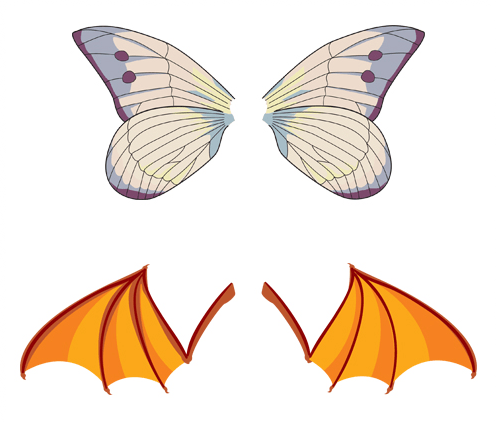

Whales have pelvic bones. What type of structure does this best represent?
Homologous structure
Analogous structure
Vestigial structure
None of the above

According to Figure 1, in Generation 4 the population of lava filed dark mice was
1
2
10
11
On Light colored soil, the Pocket Mice with (a) fur are less likely to get eaten. On (b) soil, the mice with dark fur are (c) likely to get eaten. This is because they in with the environment. If the mouse does not blend in, it might get (d) and will not be able to (e) to pass on its traits.
Genetic mutations....
Happen every time a new cell is made
Happen randomly
Almost never happen
Can not be passed on to offspring

Think about the rock pocket mice. How did some of the mice first have dark fur?
mutation
fitness
adaptation
survival
According to Figure 1, in Generation 2 the population of sandy soil dark mice was
1
3
9
11
According to Figure 1,
The population of dark mice on lava field decreased over time.
The population of dark mice on lava field increased over time.
The population of dark mice on lava field flactuated over time.
The population of dark mice on lava field stayed the same over time.
According to Figure 1,
The population of light mice on lava field decreased over time.
The population of light mice on lava field increased over time.
The population of light mice on lava field flactuated over time.
The population of light mice on lava field stayed the same over time.

While __________ is random, __________ is not.
mutation; natural selection
natural selection; mutation
natural selection, variation
variation, mutation

What has caused the fur color traits of the rock pocket mice to change over time?
Individual mice changed their traits in order to survive.
Mice with light fur color moved to golden desert and mice with dark fur color moved to black lava rock.
Mice with that fur that matched their environment were more likely to survive, reproduce, and pass on their genes to the next generation.
In order to survive, the mice passed on genes that allowed their offspring to blend into their environment.

Which visual shows the distribution of fur color traits you would expect JUST AFTER the lava?
1
2
3
4

Which visual shows the distribution of fur color traits you would expect BEFORE the lava?
1
2
3
4

On black lava, light fur is a ________ trait for the rock pocket mouse.
adaptive
non-adaptive
neutral (neither helpful nor harmful)

On golden sand, light fur is a ________ trait for the rock pocket mouse.
adaptive
non-adaptive
neutral (neither helpful nor harmful)

What SELECTION PRESSURES are acting on the rock pocket mice in the Valley of Fire?
Visual predators like owls or coyotes
An environment of golden sand or black rock
Both visual predators and the surface color of the environment
How have 340 breeds of dogs emerged from wolves?
natural selection has allowed the toughest dogs to survive
humans have selectively bred dogs for desired traits
wolves have a diverse gene pool that contains many variations
dogs have been scattered by humans to many new places

What does the similarity of these structures tell us about these organisms?
They grow at different rates
they have a common ancestor
They evolved slowly
They do the same thing

Change over time is
evolution
generation
growth
biogenesis
Match the following pictures with the words they represent

Analogous Structure

Homologous Structure

Adaptation

Artificial selection

Natural selection
Evolution affects a(n) _____.
organism
population
environment
biosphere
vestigial structures, like the tail bone, are
No longer used
Serve an important role in our body
allow us to connect with animals
serve multi-purposes
Natural selection results in change over time by acting on traits that are ____.
Mutated
New
Old
Heritable

The diagram below shows a portion of the fossil record in sedimentary rock. Different rock layers and fossils are clearly visible.
Layer B contains the second-oldest fossils.
Layer A contains the most recently formed fossils.
The fossils in layer B are older than those in layer D.
The preserved remains or traces of an organism that lived in the past.
Adaptation
Relative Dating
Fossils
Evolution

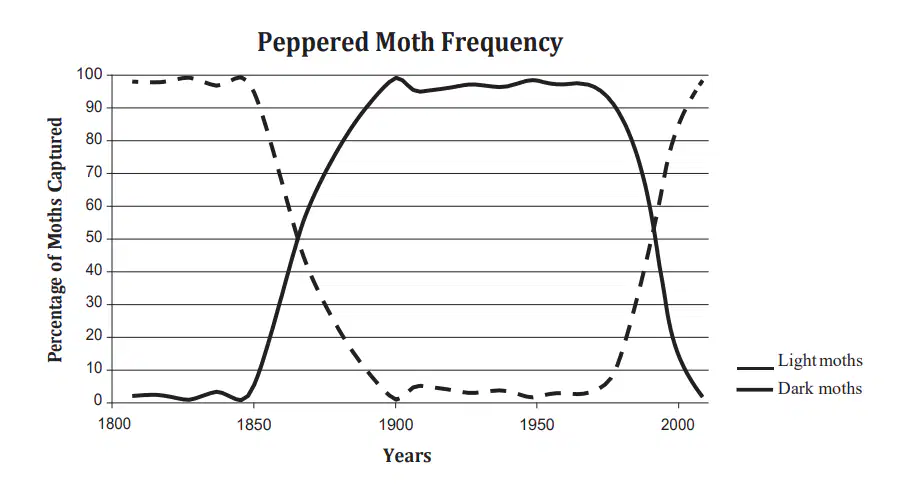
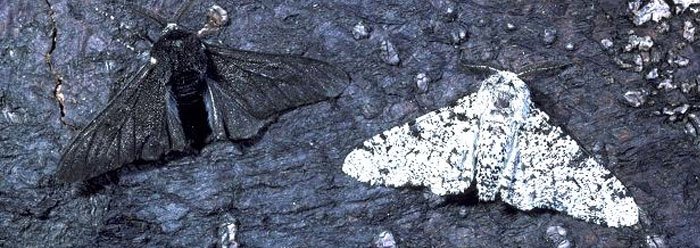
Which moths were more prevalent before 1850?
light moths
dark moths
both
none
Which moths were more prevalent between 1900 and 1950?
light moths
dark moths
both
none
How did the percantage of light and dark moths change between 1850 and 1900 ?
the percentage of light moths decreased while the percentage of dark moths increased
the percentage of light moths increased while the percentage of dark moths decreased
the percentage of light moths was the same as the percentage of dark moths
What caused the soot to cover the trees in Great Britain from 1780 to 1830?
burning coal
setting fires
black wind
dead moths
Do organisms "decide" to evolve and change?
Yes, they know they need to change to survive
No, they change because of natural selection

According to Model 1 - Desktop Swab Results,
Variants P, Q, R, S were triclosan resistant because they were killed with triclosan
Variant S was triclosan resistant becuse it was killed by triclosan.
Variants P, Q, R, S were triclosan resistant because they were not killed with triclosan
Variant S was triclosan resistant becuse it was not killed by triclosan.
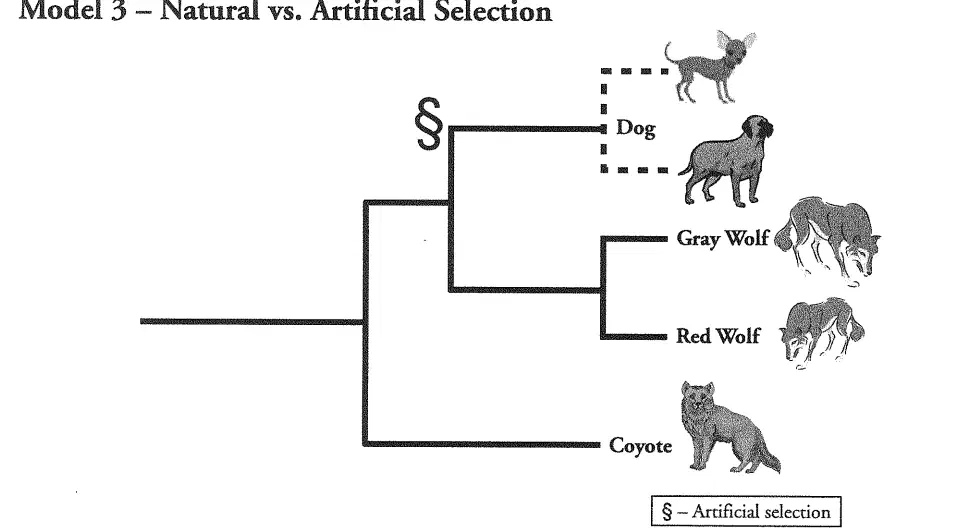
According to Model 3, Natural vs. Artificial Selection
(mark all that are correct)
Dogs, wolves and coyotes do not come a common ancestor.
Dogs, wolves and coyotes come from a common ancestor.
Wolves and dogs are more closely related than wolves to coyotes.
Wolves and coyotes are more closely related than wolves to dogs.

