
 Worksheets
BG Biology EOC Review 2023
Total questions: 134
Worksheet time: 2hrs 46mins
A (a) is the smallest unit of life
Cells are the smallest unit of...
(a)
Where are proteins assembled (factories)?
(a)
Mitochondria
Converts chemical energy from food into a usable form - (power plant)
Vacuoles
Storage containers - Only found in plant cells
Lysomes
Breakdown lipids, carbs, proteins (Recycling center)
Nucleus
Contains DNA in a Eukaryotic Cell.
Centrioles
Short microtubles arragned in a cylindrical tube
Passive Transport
No energy required from the cell
Diffusion
Net movement of particles from an area of high concentration to low
Dynamic Equilibrium
Continuous movement of molecules, BUT, no overall change
Facilitated Diffusion
Diffusion through transport proteins
Osmosis
Diffusion of water across a semipermeable membrane
Active Transport Requires: (3)
Energy
Against concentration gradient
NO ENERGY
Molecular Transport - through transport proteins or pumps
(a) selection is when humans choose traits of an organism like breeding dogs
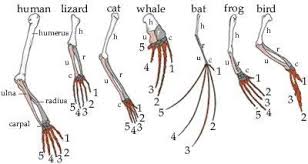
Match the following pictures with the words they represent

Analogous Structure

Homologous Structure

Adaptation

Artificial selection

Natural selection

Organism

Population

Community

ecosystem

biosphere

Codominance

incomplete dominance

genetic variation

Convergent evolution

divergent evolution

According t the key, an insect that has wings covered by an exoskeleton and a round shape is what?
(a)
Skeletal System
the system that provides support and red blood cell production
Endocrine System
the system that secretes different types of hormones to regulate body functions
Excretory System
the system that removes waste from the body
Immune System
the system that protects against disease
Circulatory System
the system that transports oxygen and nutrients to the body
Muscular System
the system responsible for the movement of the human body
Nervous System
the system that controls and transmits signals between different parts of the body
Digestive System
the system that breaks down food so that the body can absorb nutrients
Integumentary System
the system that protects the body from the outside world
Respiratory System
the system that supplies the blood with oxygen
Identify 3 structures of the muscular system
lungs
heart
biceps
triceps
pectorals
Identify 3 structures of the integumentary system
skin
hair
nails
femur
spleen
Identify 3 structures of the digestive system
esophagus
stomach
heart
lungs
intestines
Identify 3 structures of the respiratory system
lungs
stomach
bronchi
trachea
ovaries
Which of the following converts food into energy for the cell?
vacuole
mitochondria
cytoplasm
cell membrane

Mitochondria
Converts chemical energy from food into a usable form - (power plant)
Vacuoles
Storage containers - Only found in plant cells
Lysomes
Breakdown lipids, carbs, proteins (Recycling center)
Nucleus
Contains DNA in a Eukaryotic Cell.
Centrioles
Short microtubles arragned in a cylindrical tube
(a) selection is when humans choose traits of an organism like breeding dogs
Match the following pictures with the words they represent
Analogous Structure
Homologous Structure
Adaptation
Artificial selection
Natural selection
Organism
Population
Community
ecosystem
biosphere
According t the key, an insect that has wings covered by an exoskeleton and a round shape is what?
(a)
Plant cells are able to produce their own food. This process happens in which structure?
cell wall
chloroplast
mitochondrion
vacuole
What will most likely be the result as humans move into new areas, forests are clear cut and housing developments are built?
Global temperatures will decrease because trees are removed.
Many organisms will lose their homes because their habitats have been destroyed.
Better sanitation in the area will reduce the amount of pollution.
The rainfall in the area will increase because there will be increased runoff.
What activity most contributes to the depletion of the ozone layer?
burning of fossil fuels
release of CFCs
deforestation
overuse of fertilizers


In the graph to the right, what is the population of deer at the carrying capacity of the environment?
3
7
70
40


Before mitosis begins, which happens before the nucleus starts dividing?
The cytoplasm separates.
The DNA replicates.
The sister chromatids separate.
The homologous chromosomes cross over.
What is the function of autotrophs in the carbon cycle?
to use oxygen to produce glucose
to take in excess water
to use carbon dioxide to produce glucose
to feed on herbivores
A strand of DNA has these bases:
AGC CAT GTA TAC
What is the complementary DNA strand?
ACG GAT CTA TAG
TCG GTA CAT ATG
TGC CTA GAT ATC
UCG CUA CAU AUG

This diagram shows a Paramecium, a unicellular protist. When a chemical is added to the pond water in which the Paramecium lives, the Paramecium stops moving. Which structure is most likely affected?
1
2
3
4
Which graph best illustrates the growth of a population introduced into an environment with limited resources?


Which will most likely result in a negative growth rate in the human population of a country?
The death rate is higher than the birth rate
The birth rate is higher than the death rate
The country has improved economic conditions
The country has made improvements in sanitation
Why are many farmers encouraged to plant different types of crops on the same land throughout the year?
It prevents insects from destroying crops
It provides more food to other countries
It allows for more genetic variation in palnts
It helps preserve the quality of the soil



Having freckles is dominant over not having freckles. If two individuals heterozygous for freckles have a child, what is the probability the child will have freckles?
0%
25%
50%
75%
Identical twin girls are separated at birth and cared for by two different families. After twenty years, the twins have different heights and weights. What is most likely the cause of these differences?
One twin had a genetic condition that prevented her from growing tall.
The DNA of one twin was different from the DNA of the other twin.
Each twin was provided a different diet and physical activities.
The proteins made by one twin were different than the proteins made by the other twin.
Which statement best describes natural selection?
As the weather changes, organisms that are able to find shelter need less energy to live.
Organisms that eat only plants need less food than organisms that eat animals.
Organisms better adapted to their environment are more likely to reproduce and pass on their traits to their offspring.
Small organisms are more likely to survive than larger organisms.
Some scientists claim recent evidence suggests birds should be reclassified to share more taxonomic groups with dinosaurs. What type of evidence would provide the best support for this claim?
evidence showing birds shared similar habitats with dinosaurs
evidence showing birds shared similar nutritional requirements as dinosaurs
evidence showing birds shared similar behaviors with dinosaurs
evidence showing birds shared a common genetic history with dinosaurs

This is a dichotomous key for selected arthropods. To which order does the caddis fly belong?
Acarina
Diptera
Siphonaptera
Trichoptera

The example shown of these 2 mammals incubating their offspring in a pouch provides evidence that they______.
belong to the same species
must range great distances to eat
have very similar skeletal structures
are descended from a common ancestory

Based on the map shown, which organisms are more closely related?
1 and 4
2 and 6
7 and 8
2 and 3

Which beetles are more fit for the environment?
Green beetles
Brown beetles
What is biological fitness?
Being able to escape from predators
Being among the strongest in a population
Being able to survive, find a mate, and produce offspring.
Being ale to survive long enough to reach adult age.

Based on the cladogram, the chimp will be more closely related to the _________.
Hagfish
Salamander
Lizard
Mouse

Based on the dichotomous key, which organism is purple and has a pointy hump?
Deerus octagis
Deerus humpis
Derus purplinis
Derus deafus

Which two trees are the most closely related?
Taiwan beech and Taiwan catkin yew
Taiwan catkin yew and Lodgepole pine
Lodgepole pine and Japanese maple
Japanese maple and Taiwan beech

Which organisms belong to the kingdom bacteria?
Organisms 1 and 2
Organisms 3 and 4
Organisms 1 and 4
Organisms 2 and 3
A student noticed that the freshwater plant, Elodea, produced bubbles when placed in direct light. What could the student most likely conclude?
Bubbles of carbon dioxide were produced as a result of photosynthesis.
Bubbles of oxygen were produced as a result of photosynthesis.
Bubbles of carbon dioxide were produced as a result of cellular respiration
Bubbles of oxygen were produced as a a result of cellular respiration
Plant cells are able to produce their own food. This process happens in which structure?
cell wall
chloroplast
mitochondrion
vacuole

These diagrams show a variety of cells from the same organism. How can cells from the same organism have such different shapes and functions?
As each cell differentiates, the DNA changes so that each type of cell has different DNA once it reaches maturity.
Mutations in the cells' nuclei lead to new combinations of DNA, resulting in different shapes and functions in the different types of cells.
During differentiation, different parts of the DNA in each type of cell are activated, resulting in the different structure and function of the cells.
During differentiation, different types of cells produce proteins which destroy the nonactive DNA, leading to cell specialization.
Which statement best explains how sweating during exercise maintains homeostasis?
It regulates mineral concentrations in cells.
It regulates body temperature.
It maintains water balance.
It maintains sugar balance in cells.
Which statement best explains why animals are considered heterotrophic?
They are able to produce food through the process of photosynthesis.
They are able to produce food through the process of respiration.
They are able to obtain nutrients by decomposing plant and animal tissue.
They are able to obtain nutrients by consuming other organisms or their products.
How mitosis and meiosis similar?
both have two cell divisions
both require DNA replication
both produce gametes
both involve crossing over
Which process requires energy from food to help a cell maintain homeostasis?
a phosphate ion being released from ATP
a phosphate ion being added to ADP
the conversion of glucose to oxygen
the creation of RNA from DNA
How are meiosis and fertilization a benefit to sexually reproducing organisms?
All offspring will have the most desirable traits from each parent.
All offspring will have traits that are identical to their siblings but different from their parents.
All offspring will have unique genetic variations and sets of alleles.
All offspring will have the same probability of acquiring mutations in their genes.
Which statement describes the offspring produced from asexual reproduction?
All of the offspring are identical to each other.
All of the offspring are unique to each other.
Half of the offspring have genetic material similar to the original cell.
Half of the offspring have physical characteristics similar to the original cell.

Which action will occur if a checkpoint during a cell cycle finds that the DNA was unsuccessfully replicated?
The cell will divide quicker with less DNA.
The cell will grow proteins to replace DNA.
The cell will perform the cell cycle in reverse.
The cell will not complete the cell cycle.
How does natural selection improve a population?
The individual organisms that are best suited to the future environment survive, and their gene types increase in the population.
The individual organisms that are best adapted to the current environment survive, and their gene types increase in the population.
The individual organisms that are best suited to the previous environments are removed and cause the population size to decrease.
The individual organisms that are best suited to another environment are removed and the population size to decrease.
Which information can the fossils provide?
They show how a modern elephant would have looked millions of years ago.
They provide evidence of what structures are similar between the mastodon and elephant.
They provide detailed information on how the mastodon raised its young.
They show how an elephant would have attracted a mate in the past.

Which process does photosynthesis and respiration have in common?
The water cycle
The nitrogen cycle
The carbon cycle
An increase in human population leads to _______________ in natural resources.
the increase
the depletion
no change
Planting trees reduces which gas in the air?
carbon
carbon dioxide
oxygen
nitrogen
What is the benefit of planting different crops during the same year?
There is no benefit.
increase carbon monoxide
decrease phosphorus
improve soil quality
What are the effects of deforestation?
increase of biodiversity, loss of wildlife, and decreased soil erosion
loss of biodiversity, loss of wildlife, and increased soil erosion
What can lead to an increase of the moose population?
Increase in predators
Decrease in moose predators
Decrease in food
Cowbirds lay their eggs in other nests. What type of behavior is this?
learned behavior
innate (instinct) behavior
social behavior
What are two characteristics of AEROBIC HETEROTROPHS?
Uses CO2 and makes own food
Uses CO2 and cannot make own food
Uses O2 and makes own food
Uses O2 and cannont make own food
What three factors influence ecosystem stability?
food, shelter, and amount of CO2
shelter, disease, and amount of CO2
disease, amount of CO2, and food
food, shelter, and disease

The four butterflies in the illustration represent the offspring in the F1 generation. Which statement is best supported by the phenotypes of these offspring?
The F1 generation is composed only of males.
Two of the offspring in the F1 generation will not be able to reproduce.
The F1 generation is the result of a dihybrid cross.
Two of the offspring in the F1 generation will experience a spontaneous mutation

Food webs such as the one shown were first used in 1927 by the animal ecologist Charles Elton. The food web below represents the feeding relationships among organisms in an Alaskan ecosystem. An environmental change that removed which of these organisms from the ecosystem would cause the most instability in the ecosystem?
Auklets
Foxes
Salmon
Zooplankton

Some students used vinegar to dissolve a way the shells of three eggs and used these eggs as models of human red blood cells. The students observed the changes in the eggs when they were placed in different solutions. Which statement best describes the role of the cell membrane in this model?
The cell membrane is an impermeable barrier that prevents water from entering the cell.
The cell membrane allows solutions to enter the cell, which causes the cell to shrink.
The cell membrane allows water to enter and leave the cell.
The cell membrane removes solutes from the environment.

Viruses are considered nonliving because they need a host to reproduce.
True
False
What do both prokaryotic and eukaryotic cells contain?
membrane-bound organelles
linear chromosomes
cytoplasm
a nucleus
Which will most likely cause an increase in the frequency of genetic mutations in humans?
increased exposure to mold spores in the air
increased exposure to rising levels of atmospheric CO2
increased exposure to bacteria in drinking water
increased exposure to X-rays
Identical twin girls are separated at birth and cared for by two different families. After twenty years, the twins have different heights and weights. What is most likely the cause of these differences?
One twin had a genetic condition that prevented her from growing tall.
The DNA of one twin was different from the DNA of the other twin.
Each twin was provided a different diet and physical activities.
The proteins made by one twin were different that the proteins made by the other twin.


Which disease most likely occurs after excessive exposure to ultraviolet radiation?
malaria
asthma
skin cancer
polio
Hitchhiker’s thumb (H) is dominant to no hitchhiker’s thumb (h). A woman who does not have hitchhiker’s thumb marries a man who is heterozygous for hitchhiker’s thumb. What is the probable genotypic ratio of their children?
0% Hh : 100% hh
50% Hh : 50% hh
75% Hh : 25% hh
100% Hh : 0% hh
What is the function of autotrophs in the carbon cycle?
To use oxygen to produce glucose
To take in excess water
To use carbon dioxide to produce glucose
To feed herbivores
What is the difference between the full classification of organisms and their scientific names?
The full classification of organisms and their scientific names vary in different countries.
The scientific names of organisms include the order and family of the organisms, but the full classification includes only the species name.
The full classification of organisms will include more categories of organisms than their scientific names.
The scientific names of organisms include a single nomenclature, but the full classification includes various nomenclatures.

What is happening at the part labeled #2 in this model of the carbon cycle?
factories are pumping pollution into the air
decomposers are consuming carbon dioxide from dead things
cellular respiration is taking place using sunlight and releasing oxygen
photosynthesis is taking place, using carbon dioxide from the atmosphere
What is a hypothesis?
the thing changed on purpose in the experiment
an explanation about what you observed
using your 5 senses to gather data
an educated guess about the outcome of an experiment
Controls don't
receive experimental treatment
keep things the same
keep the experiment the same
keep procedures the same
The _____________ holds the DNA, and controls the functions of eukaryotic cells.
Nucleus
Nuclear Membrane
Mitochondria
Chloroplast
Bacteria are considered what?
Eukaryotes
Prokaryotes
Having freckles is dominant over not having freckles. If two individuals heterozygous for freckles have a child, what is the probability the child will have freckles?
0%
25%
50%
75%
Which statement best describes natural selection?
As the weather changes, organisms that are able to find shelter need less energy to live.
Organisms that eat only plants need less food than organisms that eat animals.
Organisms better adapted to their environment are more likely to reproduce and pass on their traits to their offspring.
Small organisms are more likely to survive than larger organisms.
Some scientists claim recent evidence suggests birds should be reclassified to share more taxonomic groups with dinosaurs. What type of evidence would provide the best support for this claim?
evidence showing birds shared similar habitats with dinosaurs
evidence showing birds shared similar nutritional requirements as dinosaurs
evidence showing birds shared similar behaviors with dinosaurs
evidence showing birds shared a common genetic history with dinosaurs
This is a dichotomous key for selected arthropods. To which order does the caddis fly belong?
Acarina
Diptera
Siphonaptera
Trichoptera


Which of the following genotypes is homozygous dominant?
Yy
yY
yy
YY
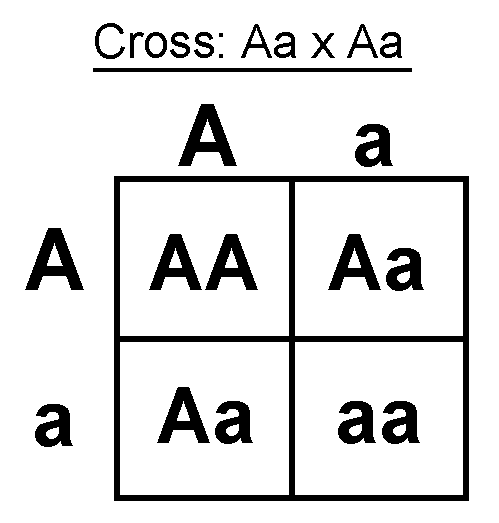
What is the genotypic ratio of the offspring?
3:1
1:3
1:2:1
2:2
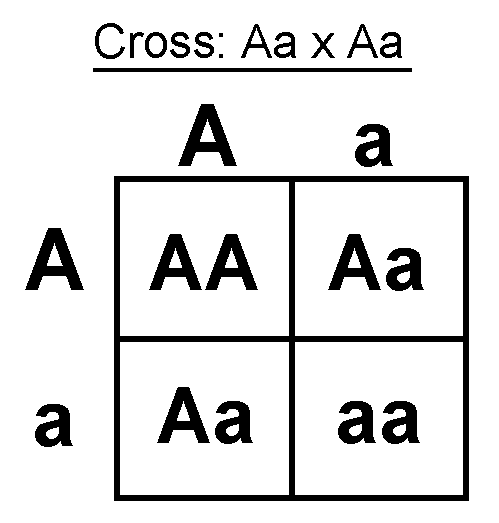
What are the phenotype percentages of the offspring?
(A-Brown fur color; a-white fur color)
50 % Brown fur and 50% White fur
25 % Brown fur and 75% White fur
75 % Brown fur and 25% White fur
0% Brown fur and 100% White fur

