
 Worksheets
MP4 TEST
Total questions: 100
Worksheet time: 2hrs 48mins

This fossil turtle and this living hawk both have a structure in their neck called the atlas bone. What best explains why both species have an atlas bone?
The turtle and hawk are different species, so they must not share an ancestor population. They inherited their atlas bone structure from separate ancestor populations
The turtle and hawk both share the same ancestor population that had an atlas bone. They inherited this structure from the ancestor population.
It is impossible to say. Fossils are very old; therefore, we cannot make observations of the turtle’s ancestors, and we cannot explain its body structures.
All species have their own specific body structures, so it is a coincidence that this turtle and hawk each happen to have the atlas bone structure.

This ctenophore, this sea cucumber, and this cuttlefish have similarities and differences in their body structures. What does the information about these structures tell you about the ancestors of these species?
All three species share an ancestor population, but the sea cucumber and the cuttlefish share a more recent ancestor population. This is why they share the intestine structure.
None share an ancestor population because different species cannot share an ancestor population. It is a coincidence that these species have some of the same body structures.
Sea cucumbers and cuttlefish share an ancestor population, but they must not share an ancestor with the ctenophore because ctenophores don’t have the intestine structure.
We cannot make observations of ancestor populations from the past. It is impossible to explain ancestors with only the information about the body structures of different species.

What does this diagram show?
All three species share a common ancestor, but the African elephant and Sumatran tiger are more closely related to each other than they are to the Norway rat.
All three species share a common ancestor, but the Sumatran tiger and Norway rat are more closely related to each other than they are to the African elephant.
The Sumatran tiger, African elephant, and Norway rat are not related and come from separate lines of evolutionary history.
All three species share a common ancestor and are equally related to each other.
The body structures for a population of chimpanzees were stable for a long time. Then, their body structures changed, making the chimpanzees stronger. Why did this happen?
Organisms naturally become stronger over time.
It is impossible to say without more information.
The chimpanzee population wanted to be stronger.
Their environment must have changed.

The diagram provided here is an evolutionary tree. It shows how groups of organisms are related through a shared evolutionary history. Which of the following provides the best evidence that can be used to create this diagram?
The habitats in which the animals live
Competition between organisms for resources
Similarities and differences in body structures
Observations of interactions in the wild

Whales, which live in the water, have hips. These structures are important for carrying the weight of animals that walk on land. Finding this body part in animals that don’t walk on land is best explained how?
Whales have evolved this structure because it might be useful in the future.
Whales are able to interbreed with other animals that have hips.
Whales have a diet that includes other animals that have this structure.
Whales share a common ancestor with animals that walk on land.

In the front limb diagram, what does the shared structures indicate about the evolutionary relationships among the organisms?
They are not related because they use them for different purposes.
They have evolved from a common ancestor.
There is no way of knowing if these organisms are related just by looking at their bones.

Comparing the embryos of different animals can show relationships that can’t be seen when comparing the fully formed animals. Why is this the case?
Each embryo is unique; even embryos of animals of the same species can be different.
When observing embryos, microscopes can be used to reveal more detail.
Embryos can have parts that are not present in the fully formed animals.
Fully formed animals are sometimes missing limbs or other body parts.

Over the evolutionary history of a certain kind of fish, the trend is for an increasing number of teeth. The data table provides information for several examples. A fossil of a new species of this type of fish (W. amatequorum) is discovered. The complete fossil skeleton is found, and it has 34 teeth. The most reasonable estimation for the age of this fossil would be which of the following?
About 20 million years old
About 30 million years old
About 70 million years old
About 100 million years old

The bones of the forelimbs (wing or arm) of three animals are shown in the illustration. What is the most reasonable conclusion that can be drawn from a comparison of these structures?
Birds and bats are closely related to each other while humans are unrelated to both
The common ancestor of birds and bats must have had wings and flown.
Humans live in habitats very different from the habitats of both birds and bats.
Humans and bats share a closer evolutionary history with each other than with birds.
In a cladogram, when does a group of organisms branch off?
when a new trait evolves
when an ancestor becomes extinct
when it is discovered
then it becomes large enough
The sequence of heritable changes that occurred among species since the origin of life on Earth
Diversity
Fossil record
Evolutionary history
Anatomy


Which of the following is the name of the ancient supercontinent formed 280 Million Years ago.
Pangea
Gondwanda
Laurasia
Neverland

Kinetic Energy is the energy of _________
thermal
movement
potential
atoms
Everything has thermal energy
False
True
All matter is made up of atoms that are constantly moving
True
False
Thermal energy is the __________ _________ energy of moving particles
total potential
average potential
average kinetic
total kinetic
Hot things have ____________ thermal energy than cold things
more
less
same
potato
Objects with MORE MASS have______________
lower potential energy
lower number of atoms
higher thermal energy
higher temperature
Cold things often have a _________ kinetic energy because_______
lower; particles are moving around less
lower; particles are moving around more
higher; particles are moving around the same
higher; particles do not move
Potential energy is the _________
energy of movement
same as kinetic energy
stored energy inside of something
potato
For objects that have the SAME mass, which object will have a HIGHER thermal energy?
the object with the higher temperature
the object with the lower temperature
the objects will have the same temperature
the objects have no temperature
Which will have the LOWEST thermal energy?
Large mug of hot coffee
Baby bottle with warm milk
Gatorade jug of cold Gatorade
Large frozen puddle
Energy is the ability to do __________
bonds
work
atoms
molecules
Law of Conservation of Mass says...
Energy is always created and destroyed
Energy is only in hot things
Energy can be destroyed easily
Energy cannot be created or destroyed


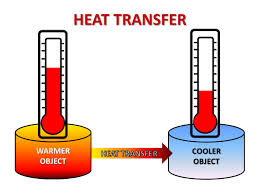

The breaking down of rocks and other materials on the Earth's surface.
Weathering
Erosion
Deposition
Exfoliation
The process by which rock and soil are moved from one place to another is called-
Chemical weatherin
Erosion
Mechanical weathering
Deosition
Over millions of years, the shape of mountains on Earth's surface can change to low hills and then rolling plains. These changes are most likely caused by-
Folding and faulting
Volcanoes and Earthquakes
Human activity
Weathering and Erosion

Which type of sediment does wind erosion most strongly affect?
Loose, sandy soil
Wet rocks
Wet, compacted soil
Dry, compacted soil
What is the difference between weathering and erosion?
Erosion breaks down the rocks, and weathering carries the broken pieces away.
Erosion carries broken pieces away, and weathering builds the pieces back up into another land mass.
Weathering carries broken pieces away, and erosion builds the pieces back up into another land mass.
Weathering breaks down rocks, and erosion carries the broken pieces away.

_____________ is the dropping off/ depositing of rocks.
Metamorphosis
Deposition
Weathering
Erosion
Which of the following is NOT one of the main factors that cause Weathering?
plant roots
Fast flowing lotic water
cycle of water freezing and melting in cracks
gravity
What is a diagram that shows what the inside of something looks like?
crosses
cross section
cross out
cross fit
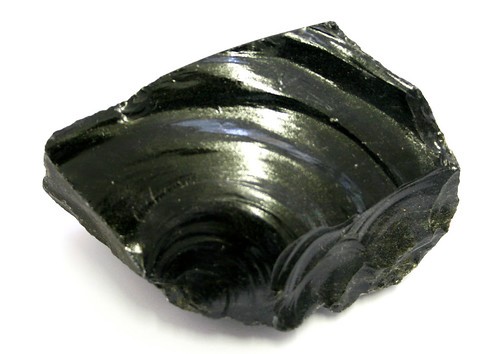
The rock type that forms when magma cools and becomes solid is
metamorphic
igneous
sedimentary
marble
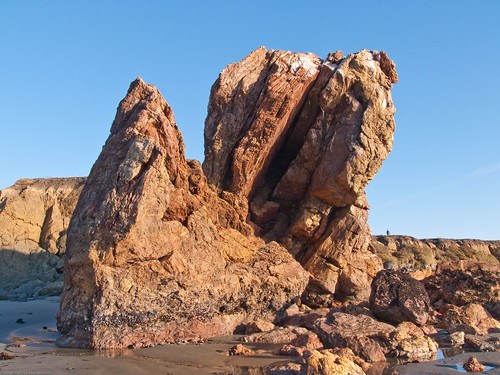
Which type of rock is formed when heat or pressure deep underground changes existing rock?
igneous
metamorphic
sedimentary
marble
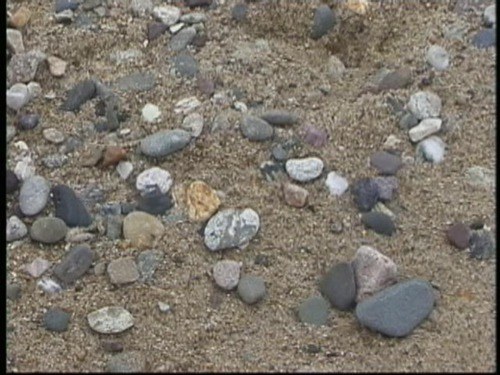
Small pieces of rock are
magma
grains
sediment
particles
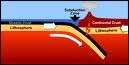
The process by which rock material moves under earth's outer layer and into the mantle due to plate motion is
abduction
subduction
reduction
action
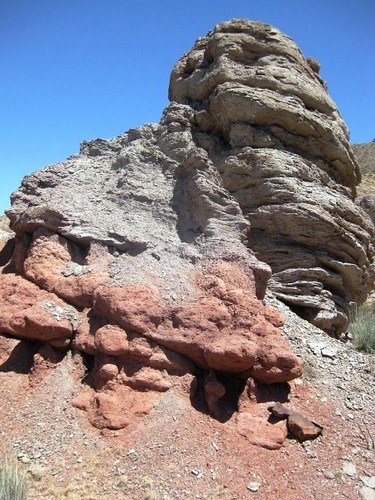
What is the process of rock breaking down into smaller pieces due to wind or moving water?
weather
weathering
washer
wash out
Changes in the _________ variable cause changes in the _________ variable.
independent; dependent
dependent; independent
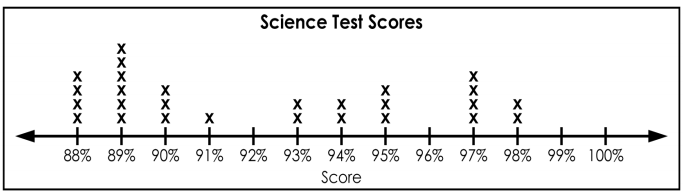

According to the pie chart, what uses the most water in a house?
Shower
Faucet
Clothes Washer
Toilet


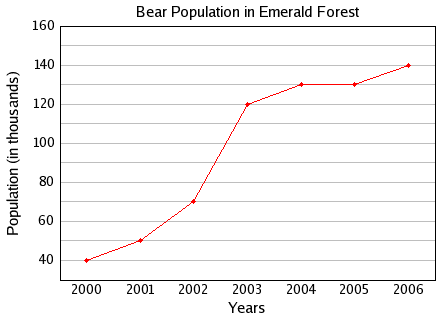
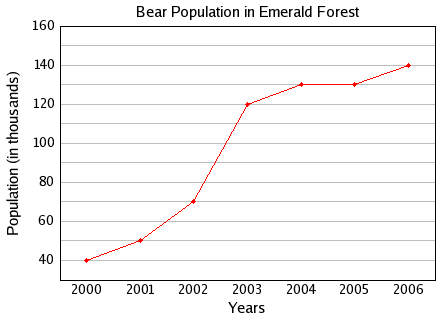
Between which two years did the bear population remain constant or the same?
2004 and 2005
2001 and 2002
2005 and 2006
2000 and 2001

What is the trend in New York snowfall between January and May?
It increased
It decreased
It stayed the same
According to scientists, the Earth is approximately this many years old.
4.6 billion
13.7 billion
7.0 billion
5.0 billion
3.4 million
This is the actual age of something.
absolute age
relative age
superposition
uniform
fossils
This is the age of rocks and geologic features as compared with other rocks and geologic features nearby.
relative age
absolute age
superposition
cross-cutting relationships
inclusions
According to this Principle, in undisturbed rock layers, the oldest rocks are on the bottom.
Superposition
Original Horizontality
Lateral Continuity
Cross-cutting Relationships
Uniformitarianism
According to this Principle, if one geologic feature cuts across another feature, the feature that it cuts across is older.
Cross-Cutting Relationships
Superposition
Original Horizontality
Lateral Continuity
Inclusion
These are the preserved remains or evidence of ancient living things.
fossils
corals
teachers
rocks
boomers
Principal stating that an igneous intrusion or fault is always younger than the rock it is cutting through.
Relative Age Dating
Superposition
Original Horizontality
Cross Cutting Relationships
Fossils made from organisms that were fairly common and existed only during a certain span of time, used to determine the age of rock layers.
Index Fossils
Unconformities
Inclusions
Trace Fossils


Which of the following describes what is meant by Natural Selection?
An organism will survive no matter what its adaptations may be
An organism with adaptations that do not allow it to reproduce as effectively as others will survive.
An organism with adaptations that allow it to obtain resources and reproduce more effectively than others will survive.
No organisms will survive.
Mutations are always harmful to an organism's survival.
True
False
In Survival of the Fittest Darwin believed
The organism with adaptations that allow it to fit into its environment better is the one that will survive and reproduce.
The organisms without the adaptations to fit into its environment is the one that will survive.
Which of the following is an environmental pressure that might affect the survival of a species?
Predators
Seasonal Changes
Disease
All of the Above
Adaptations can be:
camouflage
ability to survive cold weather
hunting skills
all of the above

What is most likely to happen to moth populations in the picture shown?
Light moths--hunted easily, dark moths--population increase
Dark moths--hunted easily, dark moths--population increase
Light moths--hunted easily, light moths--population increase
Lights moths will change their color to match dark moths.
How do you "win" at natural selection?
survive
go extinct
survive & reproduce

Due to pollution, a pond becomes darker over time. Which trait variation became more common?
light fish
dark fish
A planet that has the conditions necessary to support life is ______________________.
not possible
habitable
Mars is similar to Earth because they are both
gas planets
rocky planets
have trees on them

What information can you gain from this histogram?
The population has high distribution
The population has low variation
The population has high variation
The population has no variation

What can you tell about this population of Thornpalms from the histogram?
High water storage is an adaptive trait
It has a non-adaptive trait
It has medium to high variation
It has low variation

Which population has more guppies with large spots?
Both
Population in Brazil
Population in Venezuela
Not enough data

Which population has the largest number of tall giraffes?
Niger
Somalia
Both
No enough information

How does waterproof feathers help penguins survive in the Antarctic. (Choose all that apply)
Helps keep them warm and dry
Helps them blend in
Helps them swim in cold waters
Helps them see further in cold weather

Which histogram has more variation?
A
B
C
The both have the same amount of variation
According to scientists, whales are more closely related to lemurs than to clownfish.
Which evolutionary tree correctly shows the relationship between whales, lemurs, and clownfish?



