wayground logo

Free Printable Worksheets

Font size

S
M
L
XL
Worksheets

Unit 4 & 5 Review Quizziz

Total questions: 139

Worksheet time: 4hrs 40mins

Name
Class
Date
1.

What is the percent by mass of oxygen in MgO? Hint: The attached image is an example of a worked problem other than this one.

a)

20%

b)

40%

c)

50%

d)

60%

2.
a)

16.00

b)

1.01

c)

17.01

d)

18.02

3.

a)

5.60%

b)

11.20%

c)

88.79%

d)

18.02%

4.

a)

5.60%

b)

11.20%

c)

88.79%

d)

18.02%

5.

a)

28.01

b)

58.93

c)

117.86

d)

44.01

6.

a)

27.29%

b)

36.35%

c)

72.27%

d)

1.34%

7.

a)

27.29%

b)

36.35%

c)

72.27%

d)

1.34%

8.

a)

201.25

b)

84.32

c)

52.32

d)

36.32

9.

a)

56.93%

b)

28.83%

c)

14.24%

d)

18.98%

10.

a)

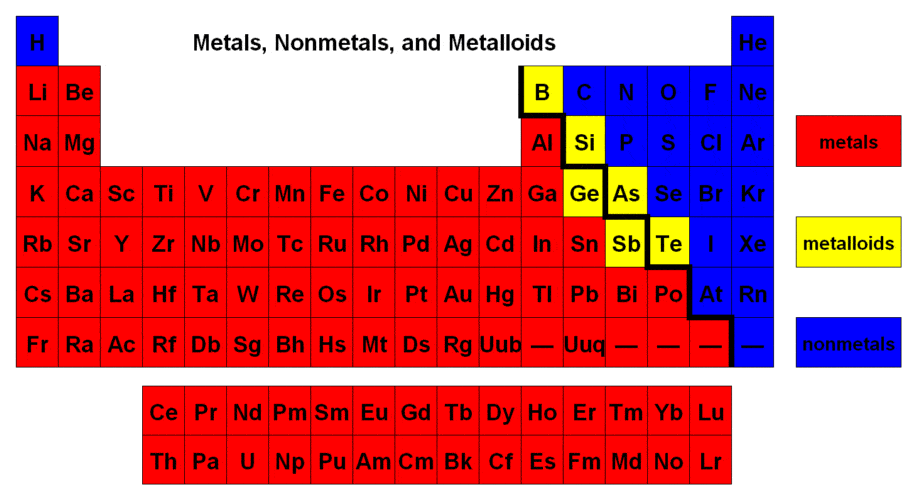
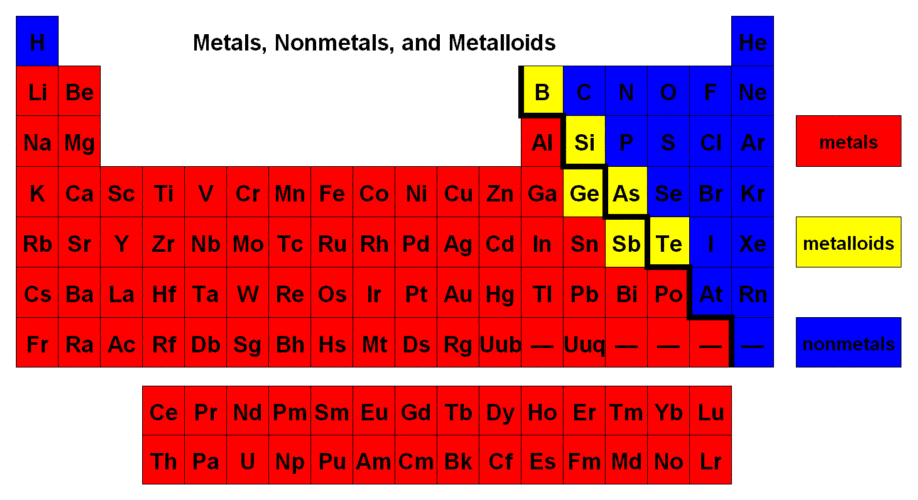
56.93%

b)

28.83%

c)

14.24%

d)

18.98%

11.
What elements generally make an ionic bond?
a)
metal and nonmetal
b)
2 or more nonmetals
c)
metal
d)
none of the above
12.
When forming an ionic bond, a metal atom
a)
Gains electrons to form a cation
b)
Loses electrons to form a cation
c)
Gains electrons to form an anion
d)
Loses electrons to form an anion
13.
What elements generally make a covalent bond?
a)
metal and nonmetal
b)
2 or more nonmetals
c)
metal
d)
none of the above
14.
In chemical compounds, covalent bonds form when
a)
the electronegativity difference between two atoms is very large.
b)
electrons are completely transferred between two metals.
c)
pairs of electrons are shared between two nonmetal atoms.
d)
two nonmetal atoms are attracted to each other by opposite charges.
15.
An ionic bond forms when 
a)
Valence electrons are shared
b)
a sea of mobile electrons surround the cations
c)
valence electrons are transferred between atoms
d)
none of the above
16.
Predict the bond that will form between Be and F.
a)
Ionic
b)
Covalent
17.
Predict the bond that will form between Se and Cl.
a)
Ionic
b)
Covalent
18.
Predict the bond that will form between Sr and S.
a)
Ionic
b)
Covalent
19.
A chemical bond between oppositely charged ions.
a)
compound
b)
ion
c)
covalent bond
d)
ionic bond
20.
A chemical bond formed between shared atoms.
a)
chemical bond
b)
covalent bond
c)
oxidation #
d)
ionic bond
21.
Substance made from two or more combined atoms. 
a)
ion
b)
covalent bond
c)
ionic bond
d)
compound
22.
Force that holds together atoms in a substance.
a)
compound
b)
ion
c)
chemical bond
d)
ionic bond
23.
How many elements make up this compound?
a)
6
b)
4
c)
2
d)
3
24.

Is this compound Ionic or Covalent: Ca3(PO4)2

a)

ionic

b)

covalent

25.

What type of bond will conduct electricity in a dissolved state?

a)

ionic

b)

covalent

26.

Which type of reaction is:

H2 + O2 → H2O

a)

Synthesis

b)

Decomposition

c)

Single Displacement

d)

Double Displacement

27.

Which type of reaction is:

NiCl2 → Ni + Cl2

a)

Synthesis

b)

Decomposition

c)

Single Displacement

d)

Double Displacement

28.

Which type of reaction is:

MgI2 + Br2 → MgBr2 + I

a)

Synthesis

b)

Decomposition

c)

Single Displacement

d)

Double Displacement

29.

Which type of reaction is:

NaCl + AgNO3 → NaNO3 + AgCl

a)

Synthesis

b)

Decomposition

c)

Single Displacement

d)

Double Displacement

30.

Which type of reaction is:

PbCl2 + AgNO3 → Pb(NO3)2 + AgCl

a)

Synthesis

b)

Decomposition

c)

Single Displacement

d)

Double Displacement

31.

Which type of reaction is:

NH3 + HCl → NH4Cl

a)

Synthesis

b)

Decomposition

c)

Single Displacement

d)

Double Displacement

32.

Which type of reaction is:

Al(OH)3 → Al2O3 + H2O

a)

Decomposition

b)

Double Displacement

c)

Synthesis

d)

Single Displacement

33.

Which type of reaction is:

3Ca + 2AlCl3 --> 3CaCl2 + 2Al

a)

Synthesis

b)

Decomposition

c)

Single Displacement

d)

Double Displacement

34.

In an exothermic reaction, energy is __________.

a)

taken in or absorbed

b)

given out or released

35.

In an endothermic reaction, energy is __________.

a)

taken in or absorbed

b)

given out or released

36.

Is photosynthesis an exothermic or endothermic reaction?

a)

Endothermic

b)

Exothermic

37.

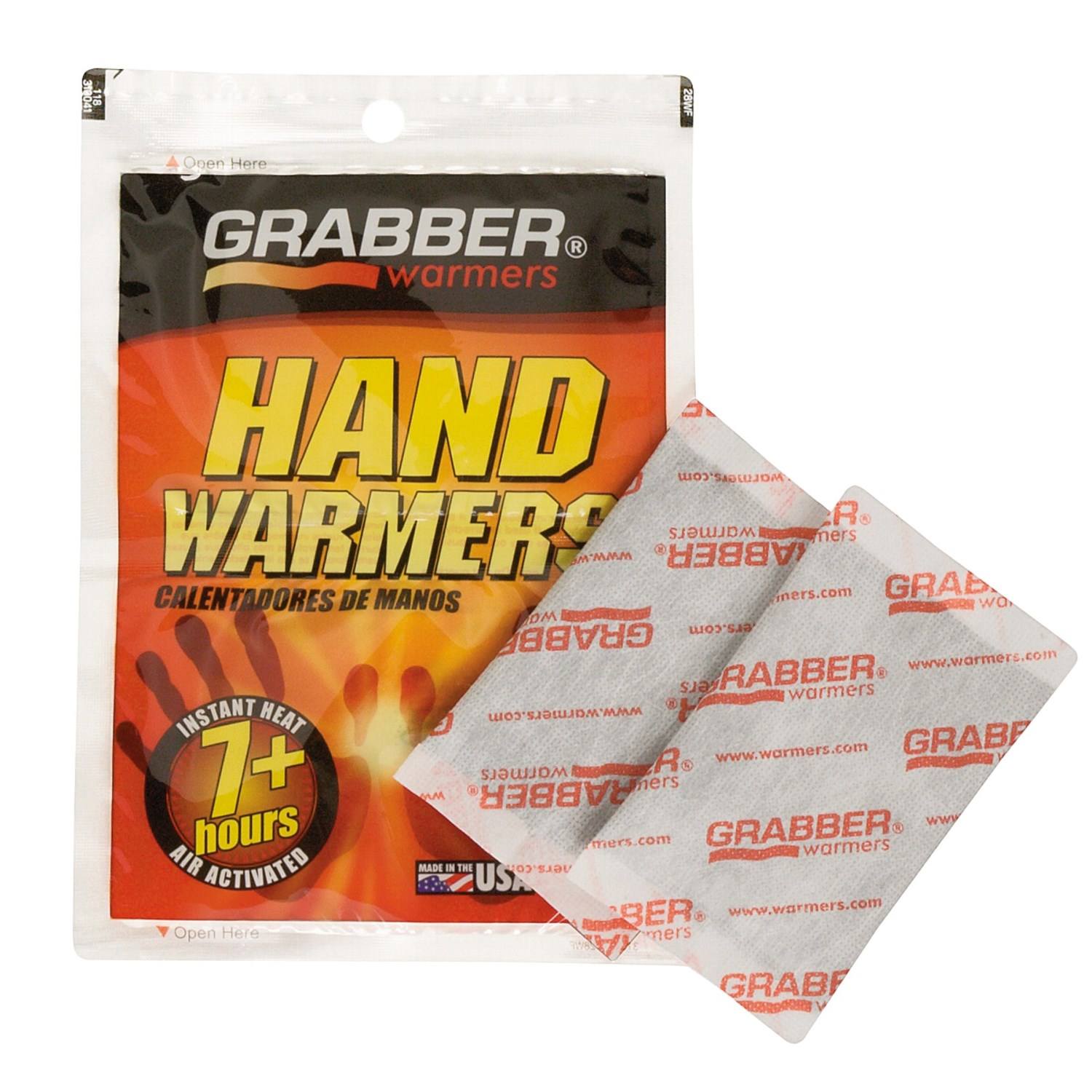
What type of reaction occurs in a hand warmer?

a)

Exothermic

b)

Endothermic

38.

Energy is a product in

a)

endothermic reactions

b)

exothermic reactions

39.

Energy is a reactant in

a)

exothermic reactions

b)

endothermic reactions

40.

This graph shows an

a)

endothermic reaction

b)

exothermic reaction

41.

This graph shows an

a)

endothermic reaction

b)

exothermic reaction

42.

In which type of reaction do two or more substances combine to form one new compound?

a)

Synthesis

b)

Decomposition

c)

Single Displacement

d)

Double Displacement

43.

In which type of reactions does one compound break down to form two or more simpler substances?

a)

Synthesis

b)

Decomposition

c)

Single Displacement

d)

Double Displacement

44.

In which type of reaction does one element take the place of another element in a compound?

a)

Synthesis

b)

Decomposition

c)

Single Displacement

d)

Double Displacement

45.

In which type of reaction do the ions of two compounds switch places?

a)

Synthesis

b)

Decomposition

c)

Single Displacement

d)

Double Displacement

46.

What are the products of this reaction? Use the +2 ion for copper

Cu+ AgNO3-->

a)

Cu(NO3)2+Ag

b)

CuNO3 + Ag

c)

CuAg+NO3

d)

Cu+ AgNO3

47.
Write a balanced reaction for this reaction
Zn(s) + H2SO4(aq) -->
a)
Zn(SO4)2 + H
b)
ZnSO4 + H2
c)
ZnSO4 + H
d)
Zn2SO4 + H2
48.

Write a balanced equation for this DR reactions. Use the +3 ion for iron

NaOH + Fe(NO3)3 -->

a)

NaFe + OH(NO3)3

b)

2NaNO3 + 3Fe(OH)3

c)

NaNO3 + FeOH

d)

3NaNO3 + Fe(OH)3

49.
Write a Balanced Equation for this reaction:
C2H4 + 2 O2 -->
a)
C2O2 + H4
b)
CO2 + HOH
c)
CO + H
d)
2 CO2 + 2H2O
50.
Predict the products for the this reaction:
AgNO3 + KCl --> 
a)
AgCl + KNO3
b)
AgK + ClNO3
c)
AgNO3 + KCl
d)
KAg + NO3Cl
51.

Predict the products for the decomposition of potassium chlorate: KClO3. Assume that one product is oxygen gas

a)

KCl + O2

b)

K2O + Cl2

c)

K + ClO3

d)

K + ClO2

52.
Predict the products for the this reaction:
K + HCl --> 
a)
KCl + H2
b)
KHCl 
c)
KH + Cl2
d)
KCl + H
53.
Predict the products for the this reaction:
Mg + CuCl2 --> 
a)
MgCl2 + Cu
b)
MgCl + Cu
c)
MgCu + Cl2
d)
CuMg + Cl2
54.
Predict the products for the this reaction:
AgNO3 + KCl --> 
a)
AgCl + KNO3
b)
AgK + ClNO3
c)
AgNO3 + KCl
d)
KAg + NO3Cl
55.
What type of reaction is this?
2 C6H14 + 19 O2 --> 12 CO2 + 14 H2O
a)
Single Replacement
b)
Double Replacement
c)
Combustion
d)
Decomposition
56.
The symbol for a substance dissolved in water is
a)
(s)
b)
(l)
c)
(g)
d)
(aq)
57.
Which of the following equations represents the balanced synthesis reaction of iron (III) and oxygen?
a)
Fe + 3 O2 → Fe2O3
b)
3 Fe + 3 O2 → 2 Fe2O3
c)
2 Fe + O2 → Fe2O3
d)
4 Fe + 3 O2 → 2 Fe2O3
58.
Write a balanced reaction for this SR reaction
Sn(s) + NaNO3(aq) -->
a)
NaSn + NO3
b)
SnNO3 + Na
c)
NR
d)
SnN3O3 + Na
59.
Write a balanced equation for this DR reactions
NaOH + Fe(NO3)3 -->
a)
NaFe + OH(NO3)3
b)
2NaNO3 + 3Fe(OH)3
c)
NaNO3 + FeOH
d)
3NaNO3 + Fe(OH)3
60.

silver oxide decomposes into...

a)

silver + oxide

b)

silver + oxygen + hydrogen

c)

silver + hydroxide

d)

silver + oxygen

61.
___C3H8 +___O2 --> ___CO2 + ___H2O
a)
1,5,3,4
b)
2,10,6,8
c)
already balanced
d)
1,5,5,4
62.
__Al + __Fe3N2 -->__AlN + __Fe
a)
already balanced
b)
4,2,4,6
c)
2,1,2,3
d)
1,2,1,3
63.
__Na + __Cl2 --> __NaCl
a)
1,1,2
b)
2,1,2
c)
2,1,1
d)
already balanced
64.
__H2O2 --> __H2O + __O2
a)
already balanced
b)
2,1,1
c)
2,2,1
d)
2,1,2
65.
__(NH4)3PO4 + __Pb(NO3)4 --> __Pb3(PO4)4 + __NH4NO3
a)
2,1,1,6
b)
1,2,2,3
c)
4,3,1,12
d)
4,2,1,12
66.
__BF3 + __Li2SO3 --> __B2(SO3)3 + __LiF
a)
2,3,1,3
b)
2,3,1,6
c)
4,4,2,12
d)
3,3,1,9
67.
_P4+_O  _P2O3
a)
3 P4+1 O→ 2 P2O3
b)
1 P4+1 O→ 2 P2O3
c)
1 P4+ 3 O→ 2 P2O3
d)
1 P4+ 2 O→ 3 P2O3
68.
_AgNO3 + _Cu _Cu(NO3)2 + _Ag
a)
2 AgNO3 + 2 Cu → 3 Cu(NO3)2 + 1 Ag
b)
2 AgNO3 + 1 Cu → 1 Cu(NO3)2 + 2 Ag
c)
1 AgNO3 + 2 Cu → 2 Cu(NO3)2 + 1 Ag
d)
3 AgNO3 + 2 Cu → 3 Cu(NO3)2 + 2 Ag
69.
_BaS + _PtF2  _BaF2 + _PtS
a)
1 BaS + 1 PtF2 → 1 BaF2 + 1 PtS
b)
4 BaS + 2 PtF2 → 1 BaF2 +  1 PtS
c)
1 BaS + 2 PtF2→ 2 BaF2 +  2 PtS
d)
1 BaS + 3 PtF2 →1 BaF2 +  2 PtS
70.
_AlBr3 + _K2SO _KBr + _Al2(SO4)3
a)
6 AlBr3 + 1 K2SO4 → 6 KBr + 1 Al2(SO4)3
b)
2 AlBr3 + 3 K2SO→ 6 KBr + 1 Al2(SO4)3
c)
1 AlBr3 + 1 K2SO→ 2 KBr + 3 Al2(SO4)3
d)
2 AlBr3 + 3 K2SO→ 1 KBr + 2 Al2(SO4)3
71.
How many Hydrogen are in 4H2O?
a)
6
b)
8
c)
2
d)
4
72.
How many Magnesium are in 10MgCl2?
a)
10
b)
5
c)
20
73.
How many O's are in Al₂(SO₄)₃
a)
4
b)
12
c)
7
d)
24
74.

Coefficients in chemical formulas...

a)

Multiply just the first atom

b)

Add to the subscripts at the end of the molecule

c)

Multiply elements without subscripts

d)

Multiply EVERYTHING!

75.
Is this balanced?
Al + O2 → 2Al2O3
a)
Yes
b)
No
76.
NH4+
a)
nitrogen hydride
b)
ammonium
77.
CN-
a)
cyanide
b)
carbon nitride
78.
OH-
a)
hydronium
b)
hydroxide
79.
NO3-
a)
nitrate
b)
nitrite
80.
SO42-
a)
sulfate
b)
sulfite
81.
PO43-
a)
phosphate
b)
phosphorus oxide
82.
CO32-
a)
carbon oxide
b)
carbonate
83.
ClO3-
a)
chlorite
b)
chlorate
84.
C2H3O2-
a)
acetate
b)
carbon hydroxide
85.
CrO42-
a)
chromium oxide
b)
chromate
86.
What is the name of Al(NO3)3?
a)
Aluminum trinitrate
b)
Monoaluminum nitrate
c)
Aluminum (III) nitrate
d)
Aluminum Nitrate
87.
What is the name of Mg(OH)2?
a)
Magnesium Hydride
b)
Magnesium Dihydride
c)
Magnesium Dihydroxide
d)
Magnesium Hydroxide
88.
Ammonium
a)
NH4+
b)
NO3-
c)
NO2-
d)
MnO4-
89.
Cyanide
a)
CrO4-2
b)
Cr2O4-2
c)
CO3-2
d)
CN-
90.
Hydroxide
a)
Cr2O4-2
b)
Cr2O4-2
c)
O3-2
d)
OH-
91.
What is the name of this polyatomic ion?  CO3-2
a)
Carbonate
b)
Chromate
c)
Carbonite
d)
Chlorate
92.
acetate
a)
C2H3O21-
b)
C3H2O31-
c)
C2H2O31-
d)
C3H3O21-
93.
If an atom becomes an ion with a 2+ charge, what does that mean?
a)
It has lost 2 electrons
b)
It has gained 2 electrons
c)
The atom is in period 2
d)
The atom has an atomic # of 2
94.
How do the following two elements bond together?
Cr3+  O2-         
a)
CrO
b)
Cr3O2
c)
Cr2O3
d)
CrO3
95.
How do the following two elements bond together?
K1+  S2- 
a)
KS
b)
K8S
c)
K6S3
d)
K2S
96.
What is the formula for magnesium chloride?
a)
MgCl
b)
Mg2Cl
c)
MgCl2
d)
Mg(ClO3)2
97.
What is the formula for copper(I) sulfate?
a)
Cu(SO3)
b)
Cu(SO4)
c)
Cu2(SO3)
d)
Cu2(SO4)
98.
Which of these combinations is an ionic compound made of?
a)
Metal and Metal
b)
Nonmetal and Nonmetal
c)
Metal and Nonmetal
d)
Cation and Cation
99.

Hydrogen nitrite (nitrous acid)

a)
H2NO3
b)
HNO3
c)
HNO2
d)
H2NO2
100.
What is the element/ion symbol for Iron(III)?
a)
Fe
b)
Fe3+
c)
Fe3-
d)
Fe(III)
101.
What is the name of the compound Li(OH)?
a)
lithium hydrogen oxide
b)
lithium hydroxide
c)
lithium hydride
d)
lithium oxide hydride
102.
The chemical formula for an ionic compound of potassium and oxygen is
a)
KO.
b)
K2O.
c)
K2O2.
d)
KO2.
103.
Name this compound: 
Ca(CO3)
a)
Calcium carbon oxide
b)
Calcium (II) carbonate
c)
Calcium carbonate
d)
Carbonate (I) calcide
104.
What is the formula for sodium nitrate?
a)
Na3(NO)
b)
Na(NO)
c)
Na3(NO3)
d)
Na(NO3)
105.
What is the compound made between Chlorate and Magnesium
a)
Cl2Mg
b)
(ClO3)2Mg
c)
MgCl2
d)
Mg(ClO3)2
106.
How do the following two elements bond together?
Pb4+  O2-       
a)
PbO
b)
Pb4O2
c)
PbO2
d)
Pb2O4
107.
The name of FeCl₂ is
a)
iron chloride
b)
iron (II) chloride
c)
iron (I) chloride
d)
iron dichloride
108.
The name of Cu₃N₂ is
a)
copper (III) nitride
b)
copper (II) nitride
c)
copper nitride
d)
tricopper dinitride
109.
Whats the formula
Sr+2  +  (CO3)-2
a)
Sr(CO3)
b)
Sr(CO3)2
c)
Sr1(CO)5
d)
Sr(CO5)
110.
What is the formula for Copper II Sulfide?
a)
CuS
b)
Cu₂S
c)
CuS₂
d)
CuSO₃
111.

The electrons in a polar covalent molecule are shared...

a)

Evenly

b)

Unevenly

c)

Electrons are not shared

d)

None of the Above

112.

The electrons in a nonpolar covalent molecule are shared...

a)

Evenly

b)

Unevenly

c)

Electrons are not shared

d)

None of the Above

113.

The electrons in an ionic molecule are shared...

a)

Evenly

b)

Unevenly

c)

Electrons are not shared

d)

None of the Above

114.

In a polar covalent bond, the electrons gather around...

a)

The atom with the Greatest Electronegativity

b)

The atom with the Lowest Electronegativity

c)

Each atom Equally

d)

None of the Above

115.

In a nonpolar covalent bond, the electrons gather around...

a)

The atom with the Greatest Electronegativity

b)

The atom with the Lowest Electronegativity

c)

Each atom Equally

d)

None of the Above

116.

The polarity of a bond is determined by...

a)

The sum of the electronegativities of the two atoms

b)

The difference in the electronegativities of the two atoms

c)

The charges of the atoms

d)

None of the Above

117.

Partial charges are present in which type of bond?

a)

Ionic

b)

Nonpolar Covalent

c)

Polar Covalent

d)

Both Polar Covalent and Ionic

118.

In a polar covalent bond, which atom will have a partial positive charge? (choose 2 correct answers)

a)

The atom that attracts fewer electrons

b)

The atom with the greater electronegitivity

c)

The atom that attracts more electrons

d)

The atom with the lower electronegativity

119.

A diatomic molecule like O2 is always _____ because electrons are shared _____

a)

nonpolar; unequally

b)

polar; equally

c)

nonpolar; equally

d)

polar; unequally

120.

What must the difference in electronegativity between two atoms be in order for the bond between them to be nonpolar covalent?

a)

less than 0.4

b)

greater than 1.7

c)

between 0.4 and 1.7

d)

exactly 0

121.

Order the types of bonds based on the charge of their molecules. (lowest amount of charge to greatest)

a)

Polar Covalent --> Ionic --> Nonpolar Covalent

b)

Ionic --> Nonpolar Covalent --> Polar Covalent

c)

Ionic --> Polar Covalent --> Nonpolar Covalent

d)

Nonpolar Covalent --> Polar Covalent --> Ionic

122.
The most electronegative atom in the periodic table is:
a)
Fluorine
b)
Helium
c)
Neon
d)
Francium
123.

In this lab hydrogen peroxide breaks down to produce H2O steam and oxygen gas. What type of chemical reaction is it?

2H2O2 (l)  ---> 2H2O(g) + O2 (g)

a)

Synthesis

b)

Decomposition

c)

Single Replacement

d)

Combustion

124.

This reaction is exothermic because it releases heat making H2O steam.

a)

True

b)

False

125.

What is present in the foam from the chemical reaction that causes the wooden splint to relight?

a)

Hydrogen Peroxide

b)

Sodium Iodide

c)

H2O

d)

Oxygen Gas

126.

What is this?

a)

It's a flask.

b)

Rubber Gloves.

c)

Hydrogen Peroxide.

d)

Food Coloring.

127.

What's this?

a)

It's a flask.

b)

It's food coloring.

c)

It's yeast.

d)

It's a graduated cylinder.

128.

Draw an elephant toothpaste reaction.

129.

What's this?

a)

It is a rubber glove.

b)

It is food coloring.

c)

It is yeast.

d)

It is dish soap.

130.

What's this?

a)

It's food coloring.

b)

It's Yeezt.

c)

It's yeast.

d)

It's dish soap.

131.

What's this?

a)

It's food coloring.

b)

It's hydrogen peroxide.

c)

It's an elephant.

d)

It's dish soap.

132.

Draw me an elephant brushing it's teeth.

133.

What are these?

a)

They are rubber gloves.

b)

It is elephant toothpaste.

c)

It is a graduated cylinder.

d)

It's a flask.

134.

This is dish (a)   .

135.

What are these called?

a)

They are rubber gloves.

b)

They are Teachers.

c)

They are chemicals.

d)

They are graduated cylinders.

136.

Draw what will happen if you are too close to elephant toothpaste.

137.

What should you wear when doing this experiment?

a)

Rubber hat, cool shoes.

b)

Rubber gloves, yellow, hat, underwear.

c)

food coloring, flask, and a graduated cylinder.

d)

Lab coat, safety glasses, and rubber gloves.

138.

What else can we do with yeast?

a)

We can use it for baking.

b)

We can eat it.

c)

We can make a bomb.

d)

We should throw it at our friends.

139.

How do you spell - - - - - - - -

(a)