
 Worksheets
Honors Biology Disease Storyline Bank
Total questions: 119
Worksheet time: 2hrs 27mins
The process of DNA replication is called semi conservative because it results in
none of these
Two DNA molecules. One original molecule and one with two new strands
two exact copies with new strands
two DNA molecules, each with 1 original strand and one new.
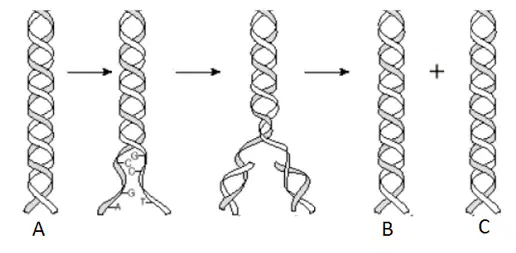
The image shows the process of
DNA Replication
Protein Synthesis
Photosynthesis
Cellular Respiration
Where does DNA replication take place? Where is DNA located in a cell?
Mitochondria
Nucleus
Ribosome
Cytoplasm
In the DNA model pictured, click on the nucleotide.
In the DNA model pictured, click on the Sugar-Phosphate backbone.
In the DNA model pictured, click on the base pair.
In the DNA model pictured, click on the hydrogen bond (between the base pair).

A cell will spend most of its time in which part of the cell cycle?
Interphase
M-phase
Cytokinesis
Mitosis
What could happen if there's a mutation that causes a checkpoint protein not to work the way it is supposed to work (no longer stops the cell cycle)?
Uncontrolled cell division/ cancer
Cells don't divide at all
Cells die
Cells divide like normal
Apoptosis is
programmed cell death
Uncontrolled cell division/growth
Normal cell division
When the cell no longer divides
A dog has 78 total chromosomes (39 pairs). It's diploid (2n) number would be:
78
39
0
156
A dog has 78 total chromosomes (39 pairs). It's haploid (n) number would be:
78
39
0
156
Somatic (body) cells have diploid or haploid number of chromosomes?
Haploid
Diploid
Which karyotype shows the DNA in a haploid cell?
Which karyotype shows the DNA after DNA Replication?
A newly discovered creature has 14 chromosomes in its body cells. How many chromosomes would it have gotten from its father?
14
28
7
Which of the following is not a reason a cell would go through mitosis?
Tissue is growing or needs to be repaired
Gametes need to be produced
An organism is going through asexual reproduction
Increased genetic diversity, needing two parents, requires more time and energy, all describe which type of reproduction?
Asexual
Sexual
Less genetic diversity, only needs one parent, quick and easy, relies on mitosis, all describe which type of reproduction?
Asexual
Sexual
In which type of cell division does crossing over occur?
mitosis
meiosis
Which event is an important factor in increasing variety among sexually reproducing organisms?
crossing over
gene linkage
testcross
mitosis
Select the image that represents meiosis:


What can cancer cells do that normal cells cannot?
they do everything the same
they regenerate their telomeres, preventing them from aging
they go through cellular division
they grow
What is the end result of mitosis?
2 identical body cells
2 gametes
2 zygotes
2 different body cells


Apoptosis is
the process of programmed cell death
the process of programmed cell growth
the process of programmed cell birth
the process of programmed cell regulation
True or False: Having healthy tumor suppressor genes is an advantage to fighting cancer.
True
False
What is the complementary mRNA strand for the following DNA strand? TGA GTT TGT
CAU CAA ACA
ACU CGG ACA
ACU CAA ACA
ACT CAA ACA
What is the mutation present in the following DNA strands?
TGA ATG GAC
TGA ACG GAC
insertion of Cytosine
deletion of Thymine
substitution of Cytosine to Adenine
substitution of Thymine to Cytosine
What gene is often mutated to become inactive which can lead to cancers?
p57
EVR 1
p53
telomerase

Use the codon wheel to determine the amino acid sequence below:
AUU CCG UUG GAG
Methionine - Leucine- Leucine - Aspartic Acid
Isoleucine - Proline - Leucine -Aspartic Acid
Isoleucine - Proline - Leucine -Glutamic Acid
Asparagine - Arginine - Phenylalanine - Glycine
A nitrogen base is lost from the healthy DNA strand. What do we call this mutation?
substitution
insertion
point mutation
deletion
The Hayflick limit involves
the size a cell can reach before dividing
a cell dividing about 50 times before it reaches senescence
telomeres lengthening with each cell division
None of the choices

If the DNA of a gene reads as follows what would the final amino acid sequence be?
CAC - TGA - TTA - ATG
Histidine - Threonine - Lysine - Glycine
Histidine - Stop - Lysine - Methionine
Valine - Threonine - Asparagine - Tyrosine
Telomeres ___ with each cell division
lengthen
shorten


Each 3 letter unit is called a
codon
amino acid
RNA
DNA
What are versions of genes
genetics
heredity
eggs
alleles
"AA, Aa, aa" are examples of what?
dihybrid crosses
monohybrid crosses
phenotypes
genotypes
Blue eyes and brown eyes are examples of what?
prismatic coloration
phenotypes
genotypes
masking traits
If the genotype is "Bb", what is this called?
homozygous
heterozygous
If the genotype is "bb", what is this called?
homozygous dominant
homozygous recessive
heterozygous dominant
heterozygous recessive


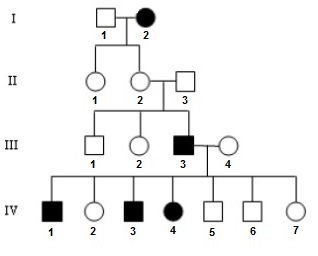
Is this pedigree dominant, recessive, or sex-linked recessive?
Dominant
Recessive
Sex-Linked Recessive

Which phase does the image represent?
Prophase I
Metaphase I
Anaphase I
Telophase I
Which part of meiosis produces diversity in gametes?
DNA replication
Prophase
Crossing-over
Cytokinesis
Meiosis produces daughter cells that are genetically _________ each other.
identical to
different from
superior to
inferior to

Identify the phase of meiosis.
Anaphase I
Anaphase II
Telophase I
Telophase II
A pair of chromosomes having the same gene sequences, each derived from one parent
Sister Chromatids
Homologous Chromosomes
Proto-Oncogenes
Oncogenes
What is the purpose of the cell cycle checkpoints?
To make sure the cell isn't duplicating too fast
They were there by chance and happen to help reduce the chances of cancer
To make sure that all parts of the cell are healthy to avoid mutations

Identify the phase of meiosis in the image.
Prophase I
Prophase II
Telophase I
Telophase II
The daughter cells produced by meiosis are also called __________.
somatic cells
stem cells
germ cells
gametes


What can cancer cells do that normal cells cannot?
they do everything the same
they regenerate their telomeres, preventing them from aging
they go through cellular division
they grow
The scientist who said that cells lose DNA with each cell division and therefore will only divide a finite number of times is
James Watson
Leonard Hayflick
Albert Einstein
Rachel Carson
A nitrogen base is lost from the healthy DNA strand. What do we call this mutation?
substitution
insertion
point mutation
deletion
How many more (not total) copies of p53 gene do elephants have compared to humans?
2 times
40 times
20 times
10 times

What is the relationship between cancer rates and the body mass of animals?
The larger the animals the higher the cancer rates
The smaller the animal the lower the cancer rates
There is no correlation between cancer rates and body size
The small the animal the higher the cancer rates
How is facial tumor disease spread between Tasmanian devils?
biting
virally passed on
grooming
through mating
In a healthy cell, if p53 identifies a mutation in the DNA of a cell it will
destroy it
not allow it to move to the next phase until it is repaired
allow the cell to continue dividing
attack and destroy the DNA

The image is what a student saw when looking at a tissue sample under a microscope. Most of the cells in this tissue are in which phase?
Interphase
M-Phase/Mitosis
Somatic (body) cells have diploid or haploid number of chromosomes?
Haploid
Diploid
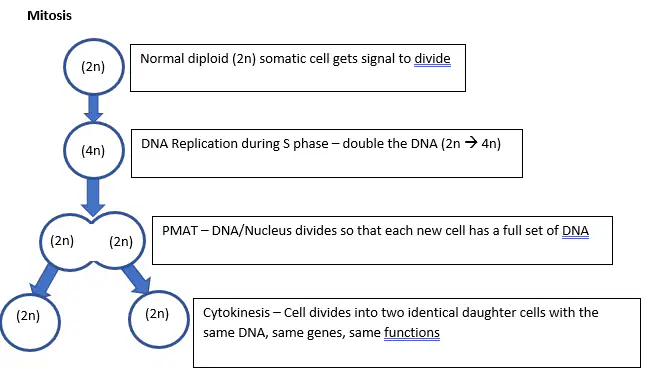
Haploid
Diploid
Homologous chromosomes are
Identical copies of a chromosome from the same parent
pairs of the same type of chromosome, one from mom and one from dad
different sets of chromosomes all from the same parent.
In relation to the cell cycle and cancer, a mutation in this gene is like having your foot stuck on the gas pedal.
oncogene
tumor suppressor gene
DNA repair gene
How many more copies of p53 gene do elephants have compared to humans?
2 times
40 times
20 times
10 times
What is the relationship between cancer rates and the body mass of animals?
The larger the animals the higher the cancer rates
The smaller the animal the lower the cancer rates
There is no correlation between cancer rates and body size
The small the animal the higher the cancer rates
How is facial tumor disease spread between Tasmanian devils?
biting
virally passed on
grooming
through mating
In a healthy cell, if p53 identifies a mutation in the DNA of a cell it will
destroy it
not allow it to move to the next phase until it is repaired
allow the cell to continue dividing
attack and destroy the DNA
Telomeres ___ with each cell division
lengthen
shorten
True/False: the more copies of p53 an organism has the more likely they will develop cancer.
True
False

region of repetitive nucleotide sequences at each end of a chromosome, which protects the end of the chromosome from deterioration
centromere
telomere
cytoplasm
chromatid
What enzyme do some cells have that can increase the length of telomeres?
DNA polymerase
RNA polymerase
DNase
telomerase
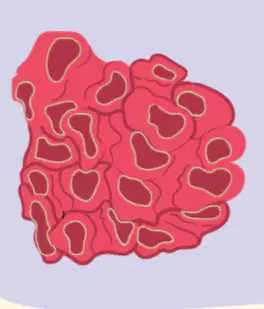
Are these normal or cancer cells?
Cancer cell
Normal cell
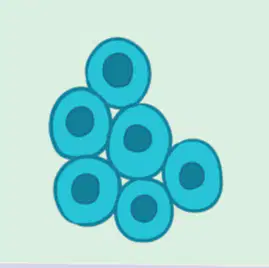
Are these normal or cancer cells?
Cancer cell
Normal cell
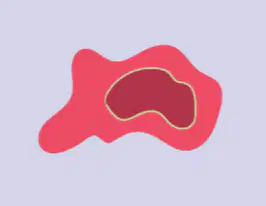
Are these normal or cancer cells?
Cancer cell
Normal cell
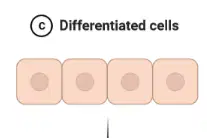
Are these normal or cancer cells?
Cancer cell
Normal cell
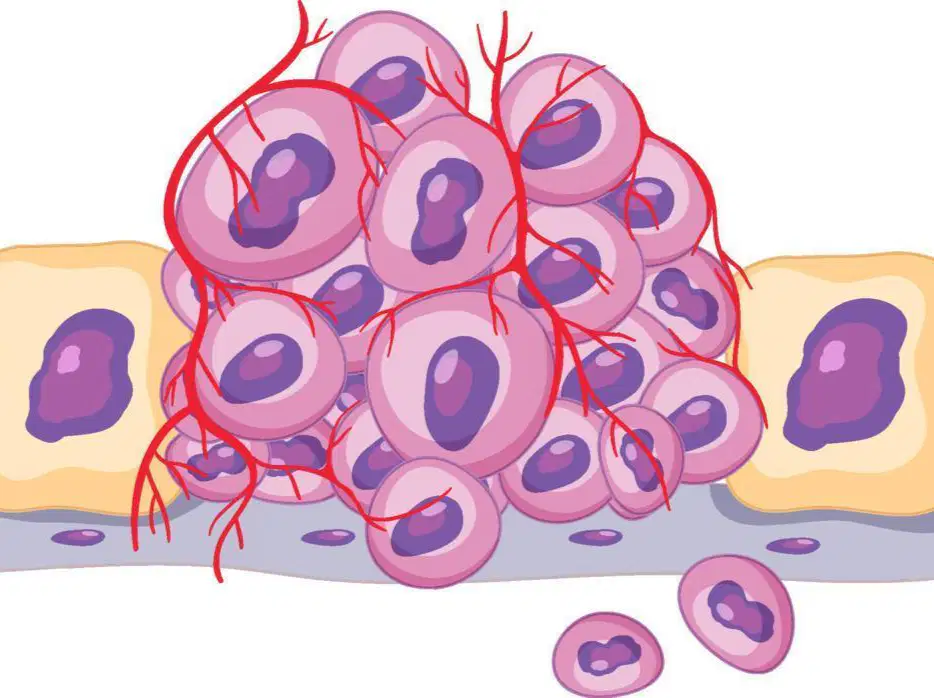
Are these normal or cancer cells?
Cancer cell
Normal cell

Which of the following is true of the two types of cell growth?
normal cells cannot control their growth
cancer cells grow at a slower rate than normal cells
cancer cells grow at a faster rate than normal cells
normal cell growth results in more cels being produced
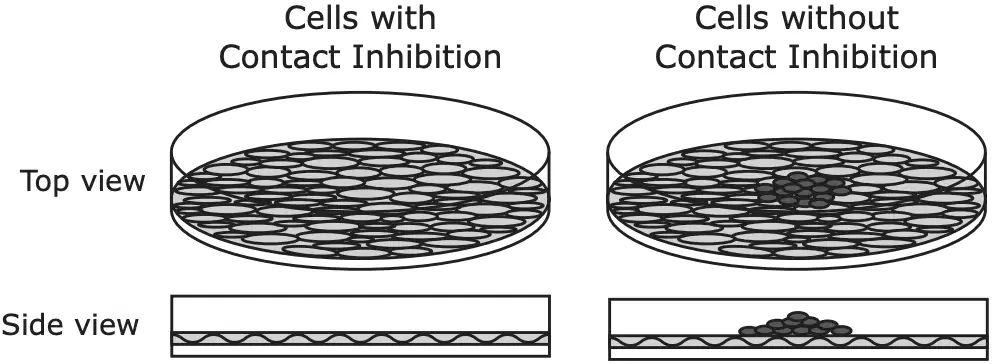
Normal cells have a contact inhibition feedback mechanism that prevents the cells from replicating when other cells are touched. A diagram of cells with contact inhibition and cells without contact inhibition is shown. Which statement best describes what will happen to cells in an organism that lack contact inhibition?
The cells will continue to grow, causing a tumor in the body.
The cells will replicate normally, replacing body cells that die.
The cells will replicate until the food supply for each cell is used, causing each cell to die.
The cells will stop replicating once one layer is produced, as other body cells will crowd them out.
What causes cancer?
Errors in the regulatory process of the cell cycle that results in uncontrolled cell growth
There is no known cause for cancer
Viruses and other pathogens infecting cells
It is an infectious disease cause by contact with an infected person
in which phase of the cell cycle do cells spend most of their time?
Interphase
Prophase
Metaphase
Telophase
Cytokinesis
When is apoptosis initiated?
When DNA damage is repaired.
When cells are removed from the cell cycle.
When DNA damage cannot be repaired.
tumor suppressor genes
oncogenes

Wound healing and mitotic rates in the damaged cornea of a mouse. The level of DNA
replication in corneal epithelial cells in mice is high in the morning and low in the
afternoon/evening. As a consequence, injury in the morning is expected to lead to accelerated
entry into mitosis and wound repair compared to injury in the afternoon/evening. Shaded
areas indicate dark periods and ZT stands for Zeitgeber Time (24 hour period).
Based on the information provided, when is the level of DNA replication higher in mice eye
cells? (1 point)
morning
its always the same
evening

What stage is represented with this image?
Interphase
Prophase
Metaphase
Anaphase
Telophase

What stage is represented by this image?
Prophase
Metaphase
Anaphase
Telophase

What stage is represented by this image?
Prophase
Metaphase
Anaphase
Telophase
A ________________is a critical point where stop and go signals can regulate the cycle
tumor
checkpoint
growth factor
oncogene

Which of the following describes a difference between normal cells and cancer cells?
Cancer cells are all the same size and shape.
Caner cells divide at a normal rate.
Cancer cells have a normal amount of chromosomes or DNA.
Cancer cells have a larger nucleus and darker than usual.

How are cancer cells different from normal cells?
Damaged normal cells self destruct
The chromosomes of cancer cells are normal
Normal cells vary in size and shape
All are correct

Which statement is true about the graph?
Caner cells multiply quicker than normal cells.
Normal cells multiply quicker than cancer cells.
Cancer cells and normal cells multiply at the same rate.
The scientist who said that cells lose DNA with each cell division and therefore will only divide a finite number of times is
James Watson
Leonard Hayflick
Albert Einstein
Rachel Carson
What purpose do telomeres serve (select all that apply)?
they protect the coding regions of chromosomes
they code for proteins
they help cancer progress
they help maintain genome stability
Select the sentence from the article that BEST explains why collecting cells is important to medicine.
Cells are the building blocks of life.
We are all made up of cells.
Scientists study them to learn more about diseases.
Those cells were named HeLa cells.
Who are the HeLa cells named after.
Henry lacks
Lucy
Henrietta Lacks
Hoola Lukes

