
 Worksheets
Final exam
Total questions: 140
Worksheet time: 35hrs 0mins
How many degrees is Earth's axis tilted?
97.3 degrees
23.5 degrees
27.8 degrees
90 degrees
Spring happens when the sun:
shines more directly in the northern hemisphere.
shines more directly in the southern hemisphere.
shines more directly at the equator.
shines more directly on the poles.
How long does it take for the earth to make one full rotation on it's axis?
24 hours
365 days
1 year
365.25 days
On the day of the summer solstice there will be:
more sunlight that day than any other day of the year.
less sunlight that day than any other day of the year.
equal amounts of day and night.
Why do we experience the changing of seasons on the Earth?

At position C, in the Northern hemisphere it would be _____?

What happens when the area in which you live tilts away from the sun?
The imaginary line that separates the northern and southern hemispheres is called the....
Day and night is caused by the _____________ of Earth on its axis.
Name the season with the longest day
Spring
Fall
Summer
Winter
If the Earth suddenly stopped having seasons, what could be the likely causes?
The Moon disappeared.
The Earth is no longer tilted.
The Earth's rotation has increased.
The Earth moved farther away from the Sun.
When the Northern Hemisphere is pointing towards the Sun, what season is the Southern Hemisphere experiencing?
Summer
Spring
Winter
Fall

During winter, the sun's rays are ____________________________.
Direct
Indirect

During summer, the sun's rays are ____________________________.
Direct
Indirect

During summer, the sunlight covers ____________________________.
more of Earth's surface area
less of Earth's surface area

During winter, the sunlight covers ____________________________.
more of Earth's surface area
less of Earth's surface area
Direct rays of sunlight are ___________.
more intense
less intense
Indirect rays of sunlight are ___________.
more intense
less intense
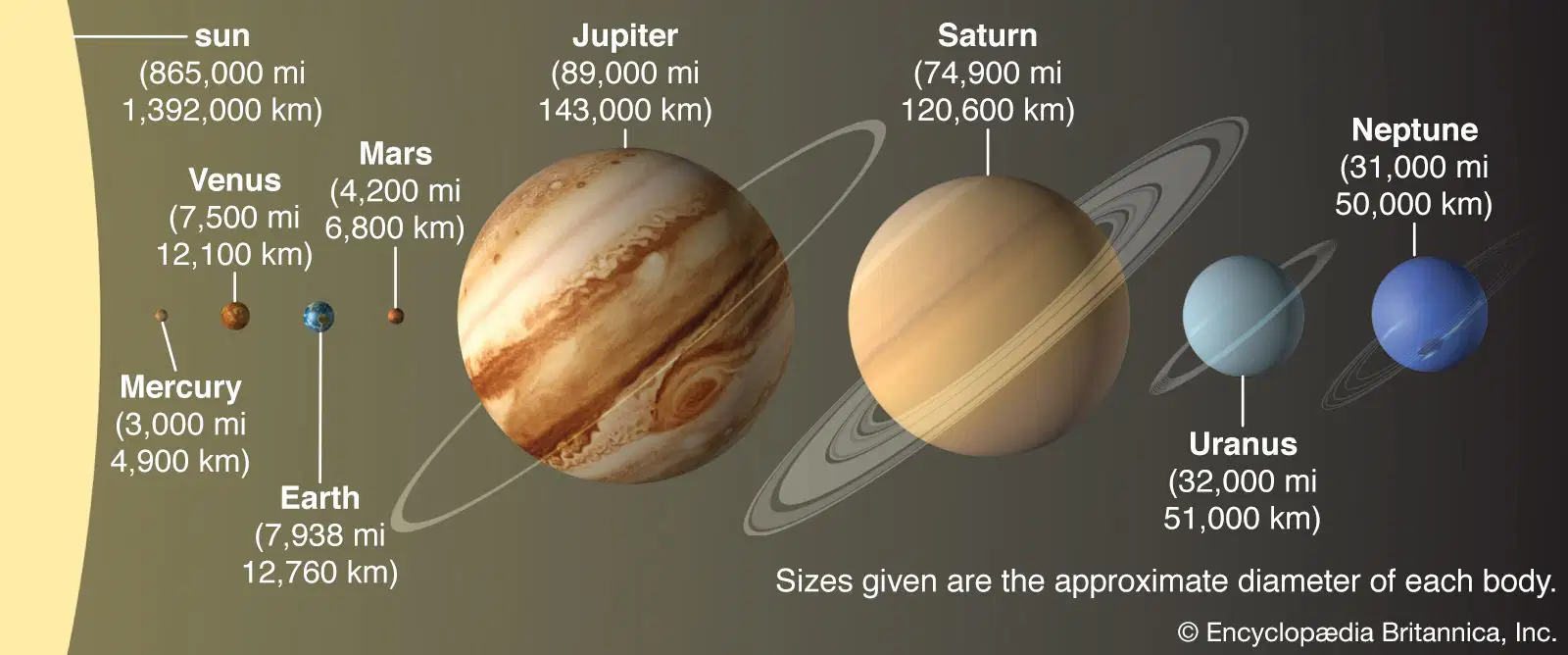
This is the first planet from the Sun; it is very hot in the day and very cold in the night.
Mercury
Neptune
Earth
Jupiter
What are large chunks of rocks and metal in space?
Earth
comet
asteroids
gibbous
The fourth planet from the Sun; also known as the "red planet."
Neptune
Mercury
Earth
Mars
These are the 4 planets (Mercury, Venus, Earth, Mars) are known as
terrestrial planets
gas giants
dwarf planets
solar planets
These are the four planets the Sun; Jupiter, Saturn, Uranus, and Neptune are classified as
terrestrial planets
gas giants
solar planets
the best planets

Where is the Asteroid Belt located in the Solar System?
near Neptune
between Mercury and Venus
between Mars and Jupiter
around the Sun

Which planet has the most gravity?
Earth
Mars
Neptune
Jupiter
What factor causes one planet to have more gravity than other planets
The planets mass
The planets size
Terrestrial planets have more gravity
Gas giants have more gravity

This causes day and night...
Earth's revolution or orbit
Earth's rotation or spin
Tectonic Plates
Gravity

This causes Earth's seasons...
Earth's revolution and tilt on its axis
Earth's rotation or spin
Tectonic Plates
Gravity

An equinox is
When there is a long day and short night
When there is a short day and long night
When there is equal day and equal night

If it is summer in the Northern hemisphere, it is what season in the southern hemisphere?
Summer
Fall
Winter
Spring

If it is fall in the northern hemisphere, what season is it in the southern hemisphere?
Summer
Fall
Winter
Spring

If it is spring in the northern hemisphere, what season is it in the southern hemisphere?
Summer
Fall
Winter
Spring
The outer planets are also called ________.
terrestrial planets
larger planets
gas giants
farthest planets
A natural satellite that orbits the planet.
rotation
earth
moon
sun
The path one objects in space takes around another.
tilt
orbit
revolution
rotation
____ rocks form when rock buried deep inside the earth change without melting or weathering
igneous
sediment
metamorphic
sedimentary
A rock that has cooled fast and may look like glass.
igneous
metamorphic
sedimentary
sediment
Movement of the Earth's tectonic plates creates extreme _____ below Earth's surface.
compaction/cementation
weathering/erosion
heat/pressure
explosions/exchanges
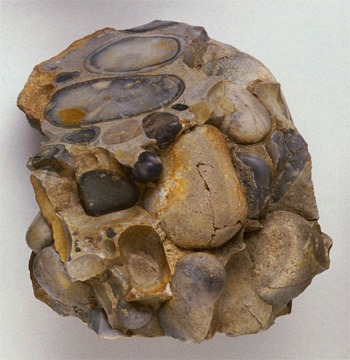
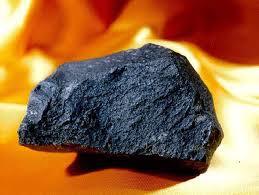
This rock was found near the mouth of a volcano. What type of rock is this?
Sedimentary
Extrusive Igneous
Metamorphic
Intrusive Igneous
Which type of rock results from melting and cooling of magma?
Igneous
Metamorphic
Sedimentary
clastic

The best answer for section "A" in the diagram
metamorphic/melting
compaction/cementation
weathering/erosion
heat/pressure

The best answer for section "C" in the diagram
metamorphic/melting
compaction/cementation
weathering/erosion
heat/pressure

The best answer for section "B"
metamorphic/melting
compaction/cementation
weathering/erosion
heat/pressure
Rocks are combinations of one or more _______________ that we find in nature.
asteroids
minerals
sediments
metals
Magma erupts from a volcano and cools quickly on the Earth's surface to form
extrusive igneous rock
intrusive igneous rock
sedimentary rock
metamorphic rock
Magma that cools slowly underneath Earth's surface hardens into
extrusive igneous rock
intrusive igneous rock
metamorphic rock
magma

Metamorphic rock melts to form
extrusive igneous rock
magma
sediments
intrusive igneous rock


Which factor determines the crystal shape of a mineral?
arrangement of atoms
presence of impurities
reflection of light
The breaking down of rocks and other materials on the Earth's surface.
Weathering
Erosion
Deposition
Exfoliation
The process by which rock and soil are moved from one place to another is called-
Chemical weatherin
Erosion
Mechanical weathering
Deosition
This type of weathering in which rock is physically broken into smaller pieces.
Chemical weathering
Erosion
Mechanical weathering
Deposition
What do we call the process in which rock is broken down by changes in its chemical makeup.
Chemical weathering
Mechanical weathering
Erosion
Deposition

The image above depicts the effects of chemical weathering breaking down limestone. Which type of chemical weathering causes this reaction?
Acid rain
Oxidation
Exfoliation
Abrasion
Over millions of years, the shape of mountains on Earth's surface can change to low hills and then rolling plains. These changes are most likely caused by-
Folding and faulting
Volcanoes and Earthquakes
Human activity
Weathering and Erosion
What is the difference between weathering and erosion?
Erosion breaks down the rocks, and weathering carries the broken pieces away.
Erosion carries broken pieces away, and weathering builds the pieces back up into another land mass.
Weathering carries broken pieces away, and erosion builds the pieces back up into another land mass.
Weathering breaks down rocks, and erosion carries the broken pieces away.

The tallest sand dunes in North America are found in Great Sand Dunes National Park and Preserve in Colorado. These dunes were formed from the sand at the bottom of a dry lake bed. Which of the following agents is most likely responsible for the formation of the sand dunes?
Wind
Water
Ice
Gravity

_____________ is the dropping off/ depositing of rocks.
Metamorphosis
Deposition
Weathering
Erosion

What should the students conclude from the results of the experiment?
Rock A weathers slower
A crushed rock weathers faster
Rock B weathers faster
A crushed rock weathers slower
Sand settles on the beach after waves dropped it there. This is an example of...
weathering
erosion
deposition
Water mixed with carbon forming carbonic acid that eats away at marble and limestone.
mechanical weathering
chemical weathering
Small islands made of sediment called deltas form at the end of rivers
weathering
erosion
deposition
A plant takes root in a small crevice of rock, as the plant grows, its roots push on the edges of the rock, breaking it
mechanical weathering
chemical weathering
Sand dunes are large piles of sand that can be found in the desert. What causes these sand dunes to form?
water
wind
ice
volcanoes
The wind picks up all the smaller particles leaving behind only bigger rocks.
weathering
erosion
deposition
Statue of Liberty has changed colors over time because oxygen has caused the surface of the copper it is made of to change into a new chemical (just like copper pennies turn green). What kind of weathering is this?
chemical weathering
mechanical weathering
Canyons are formed by
earthquakes breaking rock layers apart.
wind smoothing out rock formations.
lava flowing from nearby volcanoes.
rivers carrying sediments that weather and erode land.
How does freezing water cause the weathering of rocks? The freezing water
keeps the rocks in place
expands cracks and breaks rocks
makes the rocks last longer
causes rocks to fall in landslides
A cliff formed near the ocean. Which statement best describes how this cliff formed?
warm air melted the rock
sun rays evaporated the rock
ocean waves washed away rock
plant roots pushed away the rock
Isotopes of an element have a different number of...
Protons
Neutrons
Electrons
Mass
How do you calculate mass number?
Mass x percent
Protons + Electrons
Protons + Neutrons
Neutrons + Protons + Electrons
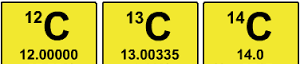
Why do these three Carbon atoms have different mass numbers?
different number of electrons
different number of protons
different number of neutrons
they are brothers

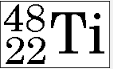
When it's nuclei expands
When it's electrons explode
When it's nuclei behave
When it is going through radioactive decay.
a stable atom
a less stable atom
the exact same atom but with less pure energy
empty space
The outermost chemical layer of the Earth is called the
Mantle
Lithosphere
core
Asthenosphere
The mechanical layer of the Earth that is represented by the presence of tectonic plates is the
Lithosphere
Crust
Core
Mesosphere
Why radioactive decay plays a significant role in Earth’s internal heat?
Spontaneous nuclear disintegration of radioactive elements produced
thermal energy
Radioactive element can be found anywhere in the planet.
When radioactive element decays, it produces heat.
All of the these.
How much is the approximate terawatts in the flow of heat in Earth’s interior
to its surface?
41 terawatts
43 terawatts
47 terawatts
49 terawatts
neutrons & mass number
atomic number and neutrons
atomic number
protons, atomic number, and mass number
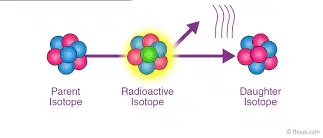
What does this picture represent?
atoms
isotopes
radioactive decay
fission
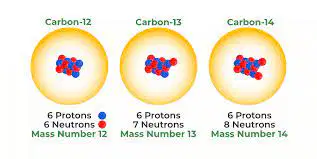
What does this picture represent?
atoms
isotopes
dogs
radioactive decay

What is radioactivity in the mantle responsible for?
convection currents and plate tectonics
life
the atmosphere
dogs
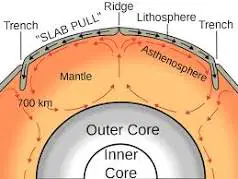
What do the circular arrows in the asthenosphere represent?
pathways
convection currents
lava
convergent

Which subatomic particle does the GREEN( ) circle represent?
proton
neutron
electron
nucleus
Where does Earth's internal heat come from?
The Sun
The pressure in the Earth
Gravity
Heat of Formation and Radioactive decay
A space object spinning is...
Rotation
Revolution
Axis
An imaginary line that a space object spins on is...
Rotation
Revolution
Axis
A space object goes around another object is...
Rotation
Revolution
Axis
What causes moon phases? (SELECT TWO ANSWERS)
The earth's shadow
The moon revolving around the earth
The moon reflects light from the sun
The rotation of the moon

What is the missing phase?


What is the missing phase?


What is the missing phase?

What happens as the moon revolves around the earth?
The shadow gets darker and darker.
The illuminated (lit) side gets lighter and lighter.
The shadow slowly disappears until it's fully lit, then the lit part slowly disappears until it's completely dark.
Can you see the moon during the day?
Yes
No

What moon phase comes after this?


True or False: The moon is always half lit by the sun.
True
False
True or False: We have moon phases because the earth casts a shadow on the moon.
True
False

What is the result of the moon's orbit being tilted?
A lunar eclipse EVERY month
A lunar eclipse every few years

When the lit part of the moon is getting bigger, we call that ...
Waxing
Waning

When the lit part of the moon is getting smaller, we call that ...
Waxing
Waning
A resource that we can use more than once is called a _____ resource.
Renewable
Nonrenewable
Reusable
Recyclable
True or False: It is possible to make more nonrenewable resources in our lifetime.
True
False
What is deforestation?
Cutting down trees in a forest.
Planting new trees on empty land.
Using trees to produce oxygen.
Looking for new types of medicine in a forest.
Which of the following is a renewable resource?
Solar power
Wood from trees
Oil used for gasoline
Coal that powers a factory
Fossil fuels are produced over _____ of years.
Hundreds of millions of years
Thousands of years
hundreds of years
every year
Why are trees considered natural resources?
People use them to make paper, lumber, fuel, and other products.
They provide shade.
They are a source of firewood
They can grow back after they are cut down.


Any useful material found in nature.
natural resources
alternative
renewable
nonrenewable

How do fossil fuels affect the environment?
Expensive
Leaves fossils at earth's surface
Causes air pollution when burned
Bonds sediment.
Natural Resources/Energy can be classified into..
Renewable and non renewable
Natural and non renewable
Renewable and Natural
All of them
Why are some areas of Earth concentrated with minerals while others are not.
some areas of Earth have past or current volcanic activity
minerals can only form near water
some areas of Earth were swamps in the past
the climate is too warm in certain areas
A natural hazard occurs when a natural process...
causes major damage and harms humans.
poses a danger to any part of the earth.
changes the physical features of the earth.
impacts everyday life for humans.
What affects the distribution of metals and minerals on Earth?
Climate- temperate regions
Geological processes, plate tectonics and volcanoes
ancient rainforests and swamps
Biodiversity
What affects the distribution of biodiversity on Earth?
Geological process, plate tectonics and volcanoes
Climate- temperature regions
Ancient rainforests and swamps
dogs
What affects the distribution of fossil fuels on earth?
geological process, plate tectonics and volcanoes
Climate- temperate regions
teachers
Ancient rainforests and swamps
Which type of ecosystem has a better chance of surviving difficulty?
low biodiversity
no biodiversity
high biodiversity
biochemical factors

