wayground logo

Free Printable Worksheets

Font size

S
M
L
XL
Worksheets

Earth Science Final Review

Total questions: 104

Worksheet time: 2hrs 36mins

Name
Class
Date
1.

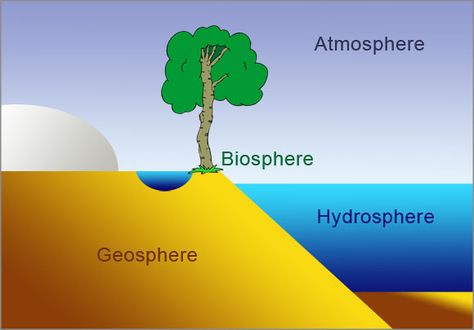
All living things on earth are part of the....

a)

Biosphere

b)

Geosphere

c)

Hydrosphere

d)

Cryosphere

2.

Earth is divided into four different spheres. Which statement is true about the interaction between two of these spheres?

a)

An animal burrowing is an interaction between the hydrosphere and the lithosphere.

b)

A plant receiving water from precipitation is an interaction between the biosphere and the hydrosphere.

c)

An ice cap providing shelter for an arctic animal is an interaction between the biosphere and the lithosphere.

d)

The formation of the Grand Canyon is an example of an interaction between the biosphere and the atmosphere.

3.

Mountains are a part of which system?

a)

Lithosphere

b)

Atmosphere

c)

Hydrosphere

d)

Biosphere

4.

The atmosphere is...

a)

all of earths water

b)

the gaseous layer that envelopes the earth.

c)

all the rock on earth

d)

all living things

5.
What is the correct order (starting from the surface) of Earth's layers?
a)
crust, mantle, inner core, outer core
b)
mantle, outer core, inner core, crust
c)
inner core, outer core, mantle, crust
d)
crust, mantle, outer core, inner core
6.

Where do convection cycles happen?

a)

core

b)

mantle

c)

crust

7.

What is the heat source for convection in the Earth?

a)

The sun

b)

Molten rock in the mantle

c)

Radioactive decay in the Core

8.

A place where two plates slip past each other, moving in opposite directions, is known as a _______

a)

transform boundary

b)

divergent boundary.

c)

convergent boundary.

d)

rift valley.

9.

The place where two plates come together is known as a _______

a)

transform boundary.

b)

divergent boundary.

c)

convergent boundary.

d)

rift valley.

10.
What type of boundary is in this image?
a)
convergent plate boundary
b)
divergent plate boundary
c)
transform plate boundary
d)
subduction
11.
The Coriolis Effect is caused by
a)
Earth rotating around the sun
b)
Earth rotating on its axis
c)
The tides
d)
Gravity
12.
What happens to a current when it comes in contact with a continent or landmass?
a)
It continues over the continent
b)
It stops
c)
It changes direction
d)
It is absorbed by the land
13.
Warm ocean currents generally come from
a)

The North Pole

b)

The South Pole

c)

The Equator

d)

Both the North and South Poles

14.
The large, circular surface-current pattern found in each ocean.
a)
California Current
b)
Surface Current
c)
Gyre
d)
Global Conveyor Belt
15.

What causes wind?

a)

Differences in air pressure

b)

Differences in gravity

c)

Difference in oxygen

d)

Differences in the thermosphere

16.

What causes differences in air pressure?

a)

Even heating of the Earth

b)

Even cooling of the earth

c)

Uneven heating of the earth

d)

Global warming

17.

In which direction would a western wind flow?

a)

From east to west

b)

From west to east

c)

From north to south

d)

From south to north

18.
Wind belts are always named according to...
a)

How strong they are

b)

What temperature they are

c)

Where they blow to

d)

Where they come from

19.
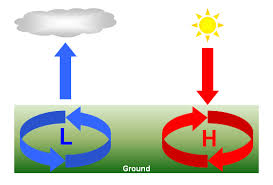
What kind of breeze is this & what time of day/night would it form?
a)
Land breeze - daytime
b)
Land breeze - nighttime
c)
Sea breeze - daytime
d)
Sea breeze - nighttime
20.
Wind always blows from areas of _______ to areas of ______ pressure.
a)
hot; cold
b)
low; high
c)
high; low
d)
cold; hot
21.
The process by which rocks are broken down chemically or physically is known as:
a)
Weathering
b)
Erosion
c)
Deposition
d)
Transportation
22.
Process that breaks down rocks and minerals into smaller pieces but doesn't change composition.
a)
Gully erosion
b)
Deposition
c)
Erosion
d)
Mechanical weathering
23.

Process where rock and minerals undergo changes in composition.

a)

Chemical weathering

b)

Frost wedging

c)

Soil profile

d)

Exfoliation

24.
Removal and transport of weathered materials from one location to another.
a)
Erosion
b)
Deposition
c)
Weathering
d)
Chemical weathering
25.

An area which all water drains to the same spot.

a)

Watershed

b)

Tributary

c)

Drainage divide

d)

Riparian zone

26.

Which type of stream is pictured?

a)

Straight Channel

b)

Braided

c)

Meandering

d)

Flat

27.

Which stream feature is pictured?

a)

Oxbow Lake

b)

Cutbank

c)

Point Bar

d)

Delta

28.

The cross sections show a three-stage sequence in the development of a glacial feature. Which glacial feature has formed by the end of stage 3?

a)

Kettle lake

b)

Finger lake

c)

Drumlin

d)

Parallel scratches

29.
_____ are are lines deposited at bottom or along sides of glaciers.
a)
Eskers
b)
Till
c)
Erratics
d)
Moraines
30.
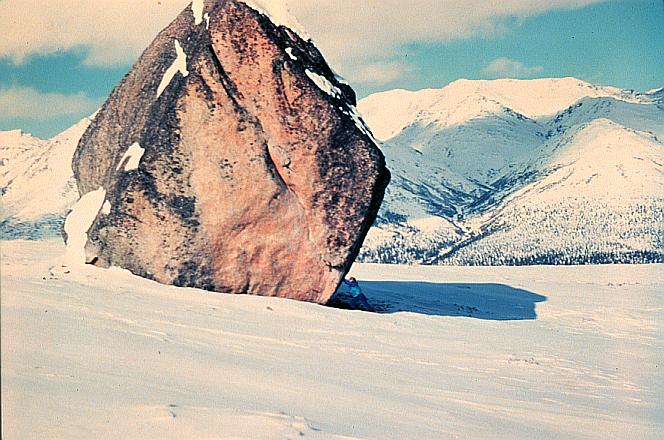
_____ are enormous boulders transported and deposited by glaciers, often far from their source region.
a)
Till
b)
Erratics
c)
Moraines
d)
Fjords
31.
The process of plants losing water through their leaves is called ____.
a)

Condensation

b)

Evaporation

c)

Transpiration

d)

Exhaling

32.
What is the most abundant gas in the atmosphere?
a)

Hydrogen

b)

Oxygen

c)

Helium

d)

Nitrogen

33.
What converts nitrogen into a useable form for plants and animals?
a)

Bacteria

b)

Fungi

c)

Rain

34.
Which nutrient is not cycled through the atmosphere?
a)
carbon
b)
nitrogen
c)
phosphorous
d)
water
35.

What is the process of rain, snow, or hail falling from the sky?

a)

evaporation

b)

condensation

c)

precipitation

d)

runoff

36.
Identify the cycle pictured.
a)
The Water cycle
b)
The Carbon cycle
c)
The Nitrogen cycle
d)
The Phosphorus cycle
37.
Identify the cycle pictured.
a)
The Water cycle
b)
The Carbon cycle
c)
The Nitrogen cycle
d)
The Phosphorus cycle.
38.
How do animals get nitrogen?
a)
the atmosphere 
b)
eating other organisms
c)
rainwater
d)
lightning 
39.
Identify the cycle pictured.
a)
The Water cycle
b)
The Carbon cycle
c)
The Nitrogen cycle
d)
The Phosphorus cycle
40.
Respiration is the process by which ____________ is consumed and _______________ is produced.
a)
Carbon, Oxygen
b)
Oxygen, Carbon dioxide
c)
H20, oxygen
d)
Carbon, H2O
41.
Photosynthesis
a)
absorbs CO2
b)
releases CO2
42.

Positive or Negative Feedback Loop?

A organization posts an advertisement with a very "click-baity" title and image on a social media platform. The title and image draw in people to click on the ad. As the ad receives more views, the algorithm shows the ad to more people.

a)

Positive Feedback Loop

b)

Negative Feedback Loop

43.

Positive or Negative Feedback Loop?

A thermostat in a central heating system can determine the temperature of your living room. It switches the air conditioner on when the temperature increases to a predetermined level and shuts it off when it cools to another level. The room temperature remains within a comfortable level regardless of the temperature outside.

a)

Positive Feedback Loop

b)

Negative Feedback Loop

44.

What has the highest albedo?

a)

the oceans

b)

Ice in the Arctic or Antarctic

c)

the ground

d)

roads

45.
Albedo can best be described as...
a)
the temperature at the equator
b)
the amount of solar radiation absorbed
c)
the amount of solar radiation reflected
d)
the air pressure during El Nino
46.

Which cycle is the slowest?

a)

Carbon

b)

Phosphorus

c)

Nitrogen

d)

Hydrologic

47.

Why are the cycles so important? Choose all that apply.

a)

They are essential to life

b)

They help us understand environmental problems

c)

They are really cool!

48.

Which is a MAJOR cause of acid rain?

a)

spraying pesticides on crops

b)

burning fossil fuels for energy

c)

dumping sewage in rivers

d)

using Nuclear power stations

49.

Acid rain can damage

a)

Drinking water sources

b)

Aquatic (water) life

c)

Architecture / buildings

d)

All options are correct

50.

The pH scale ranges from

a)

0 to 14

b)

0 to 7

c)

0 to 5

d)

0 to 28

51.

On the pH scale, anything below 7.0 is

a)

acidic

b)

alkaline

c)

basic

52.

Ocean acidification is

a)

the ongoing decrease in the pH value of the Earth's oceans

b)

a change in the properties of ocean water that can be harmful for plants and animals

c)

All options are correct

53.

Which molecule makes water acidic?

a)

Carbonate Ions

b)

Carbon Dioxide

54.
As the ocean becomes more acidic, the pH of the water
a)
increases
b)
decreases
55.
What happens to the temperature if more greenhouse gases are released into the atmosphere?
a)
Temperature goes up
b)
Temperature goes down
56.
 Which of the following activities contributes the most to carbon emissions globally?
a)
Deforestation
b)
Agriculture
c)
Burning fossil fuels
d)
Respiration
57.

How does eutrophication cause the death of aquatic organisms

a)

the build up of carbon dioxide in the water

b)

the lack of nitrogen in the water

c)

the lack of carbon dioxide in the water

d)

the lack of oxygen in the water

58.

The two critical nutrients in eutrophication are... (select two)

a)

nitrates

b)

phosphates

c)

carbon dioxide

d)

dissolved oxygen

59.
Climate is ______.
a)
what the air is like outside
b)
the temperature of a day
c)
pattern of weather in a place over many years.
60.

The condition of the atmosphere, such as temperature, cloud cover, wind speed and rainfall is:

a)

climate

b)

weather

c)

trend

d)

season

61.
The location where warm air mass is replacing a cooler air mass
a)

cold front

b)

warm front

c)

icy front

d)

storm front

62.
The location where cold air mass is replacing a warm air mass
a)

storm front

b)

hot front

c)

warm front

d)

cold front

63.
_______ affects weather because the further north or south you go from the Equator, the less solar energy (heat).
a)
altitude
b)
latitude
c)
sunlight
d)
atmosphere
64.
The layer of the atmosphere where weather occurs is the _.
a)
thermosphere
b)
stratosphere
c)
mesosphere
d)
troposphere
65.

What type of storm can produce tornadoes?

a)

Multicell Cluster

b)

Squall Line

c)

Cyclone

d)

Supercell

66.
Which system results in drier, fairer weather?
a)
high pressure
b)
low pressure
c)
hurricane
d)
weather system
67.
Clouds are made up of tiny drops of ______ or ice. The moisture in the cloud affects the weather.
a)
dust
b)
water
c)
cloud particles
d)
precipitation
68.
Which location probably has the greatest annual rainfall?
a)
A
b)
F
c)
C
d)
D
69.
Which climate zone is found at the blue X?
a)
Tropical
b)
Temperate
c)
Polar
70.

A tornado is not officially classified as a tornado until:

a)

It reaches over 80 mph

b)

It travels at least 1 mile

c)

It picks up and spins around a cow

d)

It connects the ground to the clouds

71.
Which city has the highest rainfall in July? 
a)
Iquitos ( Graph on Left)
b)
Monrovia (Middle Graph)
c)
Normanton (Graph on Right)
d)
None of the above
72.
Which month has the lowest average temperature?
a)
December
b)
November
c)
January
d)
February 
73.

Which of the following has caused repeating 100,000-year cycles of ice ages in the past?

a)

an increase in sun spots

b)

several major volcanic eruptions

c)

changes in Earth's orbit and the tilt of its axis

d)

continental drift

74.
Which of the following is the best conclusion that can be made from this graph?
a)
atmospheric carbon dioxide levels have been decreasing since 1960
b)
Hawaii has a lot of carbon dioxide
c)
humans have been working hard to decrease carbon dioxide levels
d)
atmospheric carbon dioxide levels have increased steadily since 1960
75.

The main human activity that releases greenhouse gases is

a)

using public transportation and there by reduce the affects of greenhouse gases.

b)

burning fossil fuels

c)

texting on cellphones

d)

eating meat

76.
 What is the greenhouse effect?
a)
The warming of a planet due to trapped radiation.
b)
The cooling of Earth due to air pollution.
c)
The heating of a solid, such as a rock.
77.
How does the concentration of carbon dioxide in the atmosphere affect climate?
a)
As carbon dioxide concentrations increase, temperatures increase
b)
As carbon dioxide concentration increase, temperatures decrease.
c)
Carbon dioxide concentrations have no affect on climate
d)
As carbon dioxide concentrations increase, temperatures become more random.
78.

Choose which answer(s) are possible effects of rapid atmosphere warming:

a)

Increased hurricanes and typhoons

b)

Increased diseases

c)

Disastrous forest fires

d)

Starvation of the poorest populations

79.

What landform causes the rain shadow effect?

a)

Mountains

b)

Lakes

c)

Plains

d)

Valleys

80.

A natural resource is....

a)

a resource that forms much more slowly than it is consumed

b)

a natural resource that can be replaced at the same rate at which it is consumed

c)

any natural material that is used by humans

81.

What kind of resource can be regenerated or replenished by biochemical cycles?

a)

a renewable resource

b)

a nonrenewable resource

c)

a synthetic product

d)

a fossil fuel

82.

a nonrenewable resources is...

a)

any natural material that is used by humans

b)

a natural resource that can be replaced at the same rate at which it is consumed

c)

a resource that forms much more slowly than it is consumed

83.

An accurate definition of Sustainability is

a)

meeting population needs

b)

meeting the needs of the present without compromising the ability of future generations to survive

c)

meeting the needs of the future without worrying about todays

d)

meeting the food needs of animals

84.

The three areas of sustainability are

a)

Physical, Economic, Political

b)

Environmental, Social, Physical

c)

Economic, Environmental, Social

d)

Physical, Political, Social

85.
Fossil fuels are classified as nonrenewable because they.......
a)
require expensive equipment
b)
take millions of years to replace
c)
can be found all over 
d)
provide all the energy we use
86.
Why do we depend on fossil fuels? 
a)
Electricity, transportation, and heating
b)
Food
c)
Sunlight
d)
Growing, building muscle, calcium
87.
Why is burning fossil fuels harmful? 
a)
then we won't have any fossil fuels if we burn them all
b)
They can get extremely hot
c)
Increases the amount of greenhouse gases in the air
d)
this would destroy fossils
88.
Why is solar energy considered renewable energy?
a)
It's cheaper than fossil fuels
b)
The sun's energy would not run out for billions of years
c)
Solar energy recharges batteries
d)
All of them
89.
_____________ power is electricity produced by flowing water.
a)
Solar 
b)
Wind 
c)
Hydroelectric 
d)
water
90.
Heat transferred from beneath the surface of Earth and used to produce energy for human use is...
a)
Hydropower
b)
Wind Energy
c)
Geothermal Energy
d)
Solar Energy
91.
What is a disadvantage of wind power?
a)
We have too many rainy days in US
b)
It is not always windy in some places
c)
Companies charge too much to make the wind blow
d)
The sun is not always out
92.

Which of the following are sustainable practices for agriculture?

a)

terrace farming

b)

contour plowing

c)

crop rotation

d)

deforestation

93.

Integrated pest management uses ________ to take care of pests,

a)

pesticides

b)

nature

c)

aquaculture

d)

All of the above

94.

What is the best way to CONSERVE water use in an agricultural setting...

a)

low flow toilets

b)

reuse cooling water

c)

drip irrigation

d)

high power overhead irrigation

95.

Which of the following is likely to be affected by the rapidly growing human population?

a)

amount of land for agriculture

b)

amount of clean water

c)

quality of the air

d)

all of the above

96.
To prevent groundwater contamination, sanitary landfills are:
a)
Located far from populated areas
b)
Lined with plastic and clay
c)
Covered with cement
d)
Located on slopes so that water runs downhill
97.
Which gas is produced at landfills?
a)
Methane
b)
Ethanol
c)
Hexane
d)
Diesel
98.

What happens to plastic waste?

a)

It is a biodegradable material so it eventually disintegrates

b)

It never fully goes away, it just breaks into little pieces

c)

There is no such thing as plastic waste, all plastic is recycled

d)

It is dumped in the ocean for fish to eat
99.

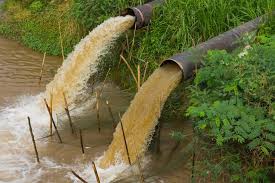
Point or Non-Point Pollution: Chemicals released from an Industrial Plant directly into a river

a)

Point

b)

Non-Point

100.

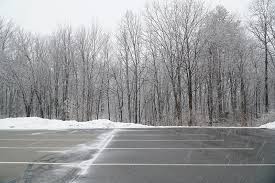
Point or Non-Point Pollution: Snow melts in parking lots and carries oils into nearby waterways

a)

Point

b)

Non-Point

101.

What is the main cause of air pollution?

a)

plowing fields and releasing dust

b)

using solar power

c)

burning fossil fuels

d)

using water power

102.
Which of these is a disadvantage of hydrogen fuel
a)
produces pollution
b)
expensive and flammable
c)
heavy and weak
d)
ugly and rare
103.

Bio-fuels are...

a)

an examples of fossil fuels

b)

non-renewable sources of fuel

c)

renewable fuels produced from plant material.

d)

Fuels which produce a lot of green house gases

104.
Which is NOT a way to decrease your ecological footprint?
a)
Eating less meat and processed foods
b)
Walking or biking to school
c)
Turning off electricity and water when you're not using it. 
d)
Driving a large car around for fun.